
How to Identify Mid Century Modern Furniture from Photos
A practical guide to identifying Mid Century Modern furniture through photos, covering key visual markers like tapered legs, organic curves, and joinery details that separate authentic pieces from lookalikes.
What You're Looking At When You See Mid Century Modern
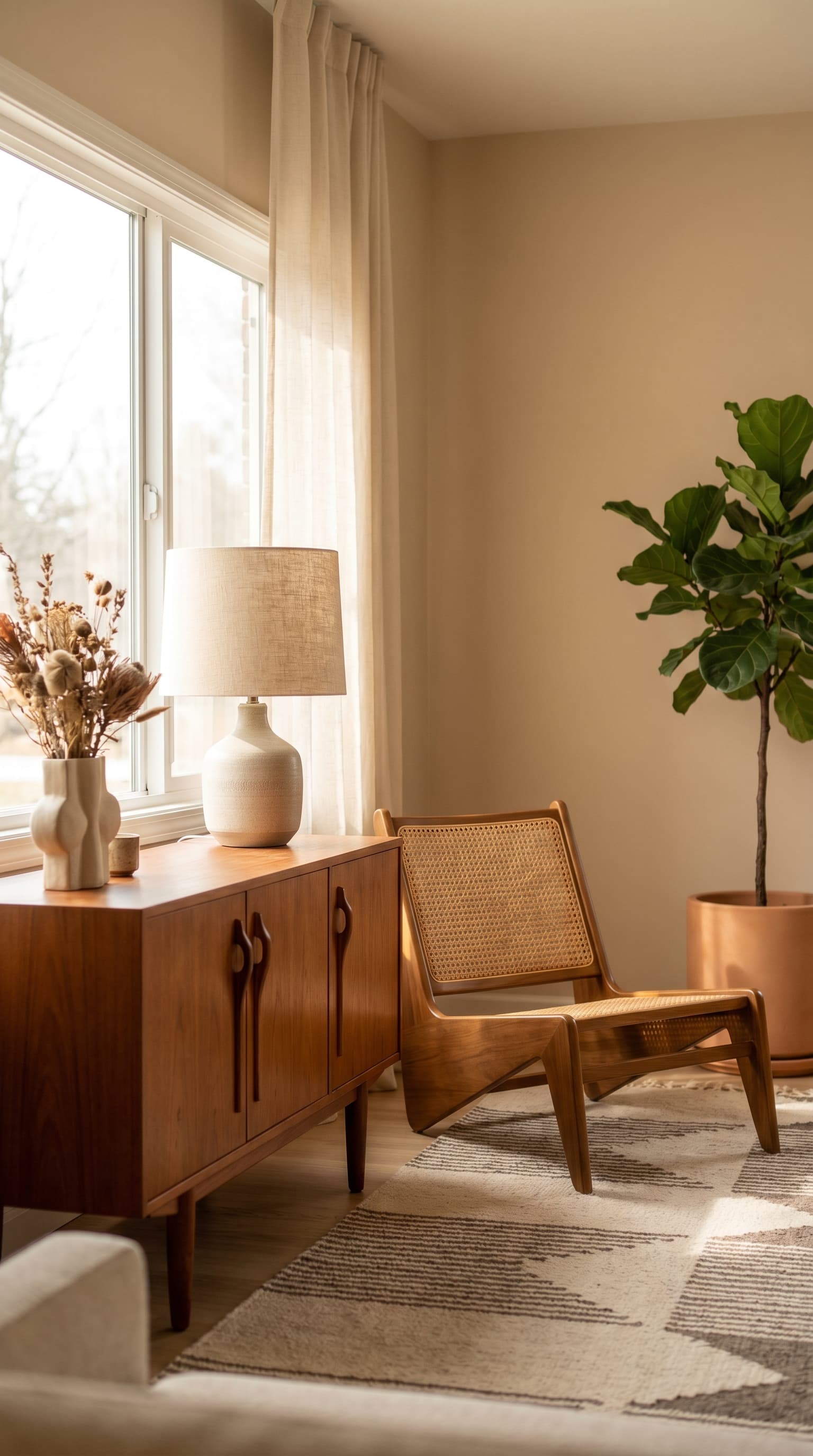
When you're scrolling through estate sale photos or examining a thrift store find on your phone, how to identify Mid Century Modern furniture comes down to recognizing a specific set of design choices that dominated American and Scandinavian furniture from roughly 1945 to 1969. You're looking for pieces that rejected ornament in favor of function, swapped carved details for clean lines, and embraced new materials like molded plywood and fiberglass.
Mid Century Modern isn't just "old and simple." It's a deliberate aesthetic born from postwar optimism, new manufacturing techniques, and designers who believed beautiful furniture should be accessible. The style has clear visual DNA, and once you know what to look for in photos, you can spot it across rooms, decades, and price points.
Visual Checklist: How to Identify Mid Century Modern Furniture from Photos
Start with these physical markers. Most authentic MCM pieces will show several of these characteristics together.
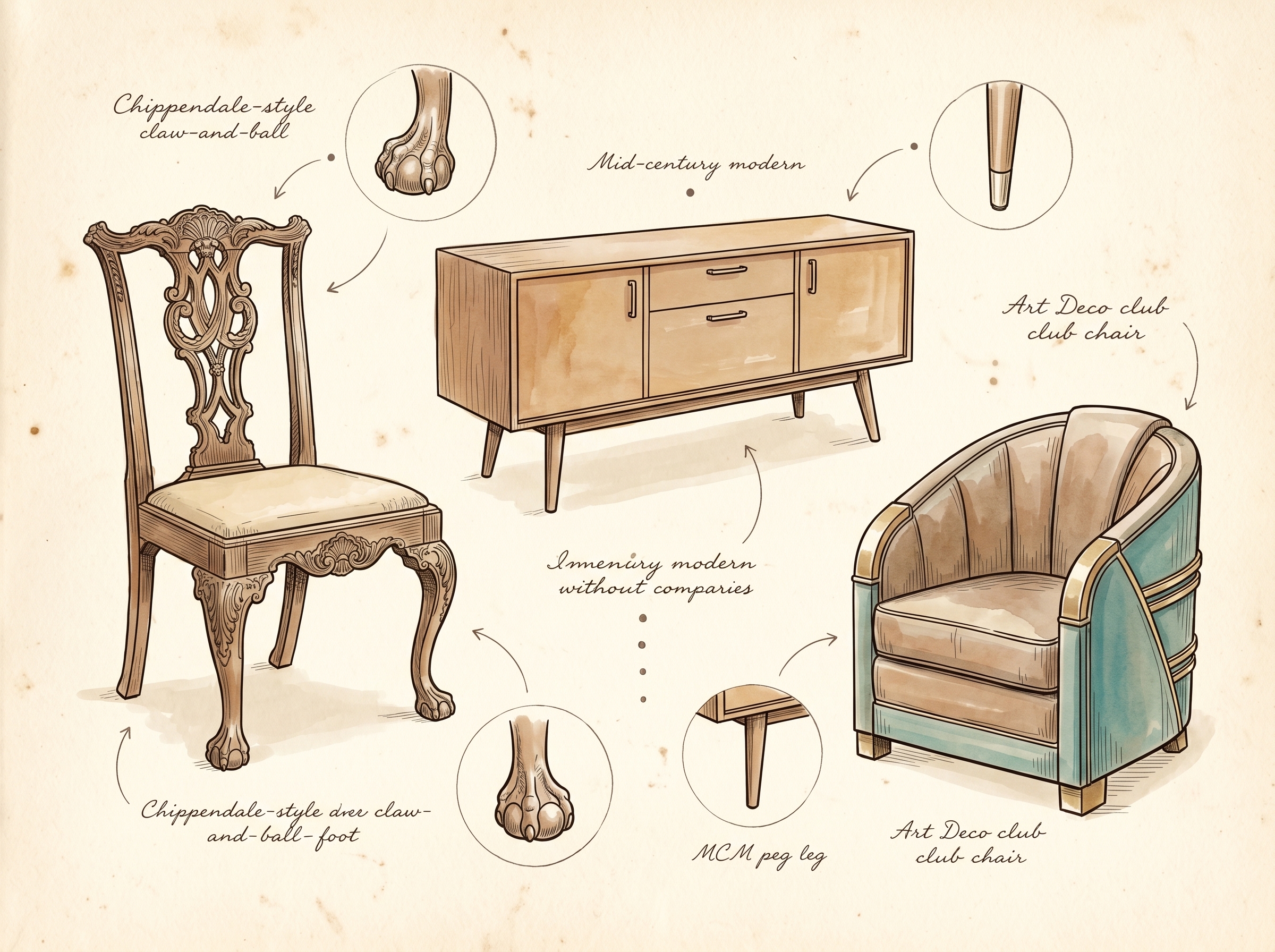
Legs and supports: Tapered legs are the most recognizable MCM signature. Look for wood legs that start thicker at the top and narrow toward the floor, often ending in small brass or rubber feet. Splayed legs that angle outward are equally common. Hairpin legs (thin metal rods bent into a hairpin shape) appear on budget and designer pieces alike. Avoid assuming thick, straight legs or cabriole curves mean Mid Century Modern.
Wood tones and grain: Teak, walnut, and rosewood dominate the palette. The wood is usually finished to show off natural grain rather than painted or heavily stained. Danish teak has a warm, golden-brown tone. American walnut tends darker. If you see heavy distressing, black paint, or wood that looks artificially aged, you're likely looking at a reproduction or a later style.
Joinery and construction: Quality MCM furniture often uses visible joinery as a design element. Dovetails, finger joints, and mortise-and-tenon work appear on drawer fronts and case sides. Plywood edges are sometimes left exposed and celebrated rather than hidden. Bentwood curves—especially on chairs—signal molded plywood construction, a hallmark of designers like Eames and Aalto.
Hardware and pulls: Handles are minimal or absent. When present, expect simple wood pulls, slim metal bars, or recessed finger grooves cut directly into drawer fronts. Ornate brass pulls, ceramic knobs, or anything resembling Victorian hardware doesn't fit the MCM vocabulary.
Upholstery and materials: Original upholstery often features bold, geometric patterns or solid colors in burnt orange, mustard yellow, olive green, or teal. Leather, vinyl, and woven fabrics were all common. Cushions are usually thin and firm, not overstuffed. Chromed steel, molded plastic, and fiberglass appear on chairs and tables from this era—materials that were cutting-edge at the time.
Proportion and form: MCM furniture sits low to the ground. Sofas, chairs, and credenzas have a horizontal emphasis. Curves are organic and sculptural, not frilly. Backs and arms flow in gentle arcs. Shelving units are often asymmetrical, with staggered compartments and open display space.
Common Style Confusions That Trip Up Collectors
Mid Century Modern gets confused with several other styles, especially when you're identifying furniture from photos without handling the piece.
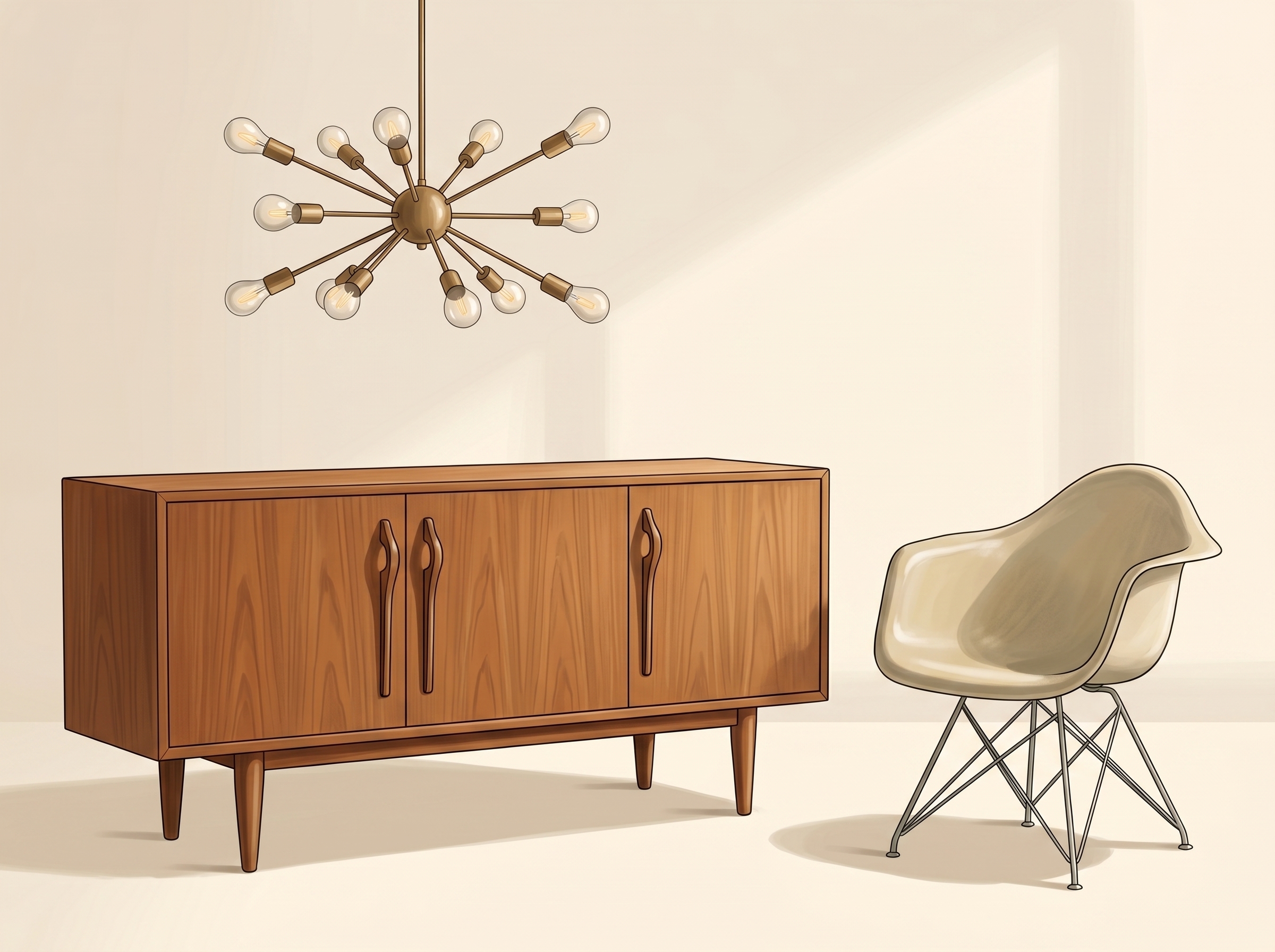
Danish Modern vs. Mid Century Modern: Danish Modern is a subset of MCM, but not all Mid Century is Danish. Danish pieces tend to have warmer teak tones, more refined joinery, and a focus on craftsmanship. American MCM can be more experimental with materials like molded plastic and fiberglass. If you see a teak credenza with impeccable dovetails and a maker's mark from a Scandinavian company, it's Danish Modern within the broader MCM umbrella.
Modernist vs. Mid Century Modern: Modernist furniture spans a longer timeline, starting in the 1920s with Bauhaus and continuing through the 1970s. Early Modernist pieces are often more severe, with tubular steel and geometric shapes. MCM softens the edges, adds organic curves, and embraces wood warmth. A Marcel Breuer chair from 1928 is Modernist but not Mid Century. An Eames lounge chair from 1956 is both.
1970s furniture: The line blurs as you approach 1970. Some pieces from the early '70s still follow MCM principles, while others shift toward heavier, earthier forms with thicker wood and chunkier proportions. If the piece feels heavy, blocky, or leans into macramé-adjacent vibes, it's likely crossed into the next decade.
Reproductions and "MCM-style" furniture: Modern retailers produce endless MCM-inspired pieces. Photos alone can't always reveal construction quality, but look for telltale signs: perfectly uniform wood grain (suggesting veneer over particleboard), plastic "wood" legs, overly shiny finishes, and hardware that's slightly off in proportion. Authentic MCM furniture usually shows some age—minor wear, patina, or fading—unless it's been impeccably stored.
How to Use Photo Identification to Narrow It Down
Photos are your best tool when you can't examine a piece in person, but not all photos are equally useful for identifying Mid Century Modern furniture.
Leg and base shots: Always look for clear photos of how the piece meets the floor. Tapered legs, angled supports, or hairpin bases are instant MCM indicators. If the seller hasn't included this angle, it's worth asking.
Joinery close-ups: Zoom in on drawer fronts, corners, and edges. Exposed dovetails or finger joints suggest quality construction typical of the era. Hidden or stapled joinery can signal a reproduction.
Maker's marks and labels: Many MCM manufacturers labeled their work. Look for photos of the underside, back panels, or inside drawers. Labels from companies like Herman Miller, Knoll, Lane, Bassett, or Danish makers like Johannes Andersen and Arne Vodder add authenticity and value. Even generic "Made in Denmark" stamps help confirm origin.
Overall proportion in context: A photo that shows the piece in a room gives you scale. MCM furniture should look low, lean, and balanced. If it dominates the space or looks top-heavy, it may not be true to the style.
Wear patterns and patina: Authentic pieces from the 1950s and '60s will show some use. Look for fading on wood exposed to sunlight, minor scratches, or areas where finish has worn thin. Reproductions often look too perfect or artificially distressed.
For pieces you're unsure about, taking your own photos with attention to these details makes identification faster and more accurate. Focus on legs, joinery, labels, and any unique curves or construction details. The more angles you capture, the easier it is to distinguish real MCM from later imitations.
Let Your Photos Do the Detective Work
Once you know how to identify Mid Century Modern furniture from visual cues, the next step is confirming what you've found. Tocuro uses your photos to identify furniture pieces and provide context on style, era, and estimated value ranges based on current market signals. Upload clear shots of the piece—especially legs, joinery, and any labels—and get feedback that goes beyond guessing.
Whether you're sorting through inherited furniture, hunting estate sales, or trying to decide if that online listing is worth the drive, photo identification helps you move from "I think this might be Mid Century" to "I know what I'm looking at." And when you're confident in the style, you can dig deeper into understanding furniture eras and spotting authentic pieces before you buy.
Photo identification
Identify Your Furniture
Use Tocuro to identify your item from a photo and get an estimated value range when market data is available.