
How to Identify Furniture Style: A Visual Checklist for Collectors
Identifying furniture style doesn't require a degree in design history. This guide walks you through a visual checklist—from leg shapes to hardware—so you can name your piece with confidence and avoid common style confusions.
What You're Really Trying to Name
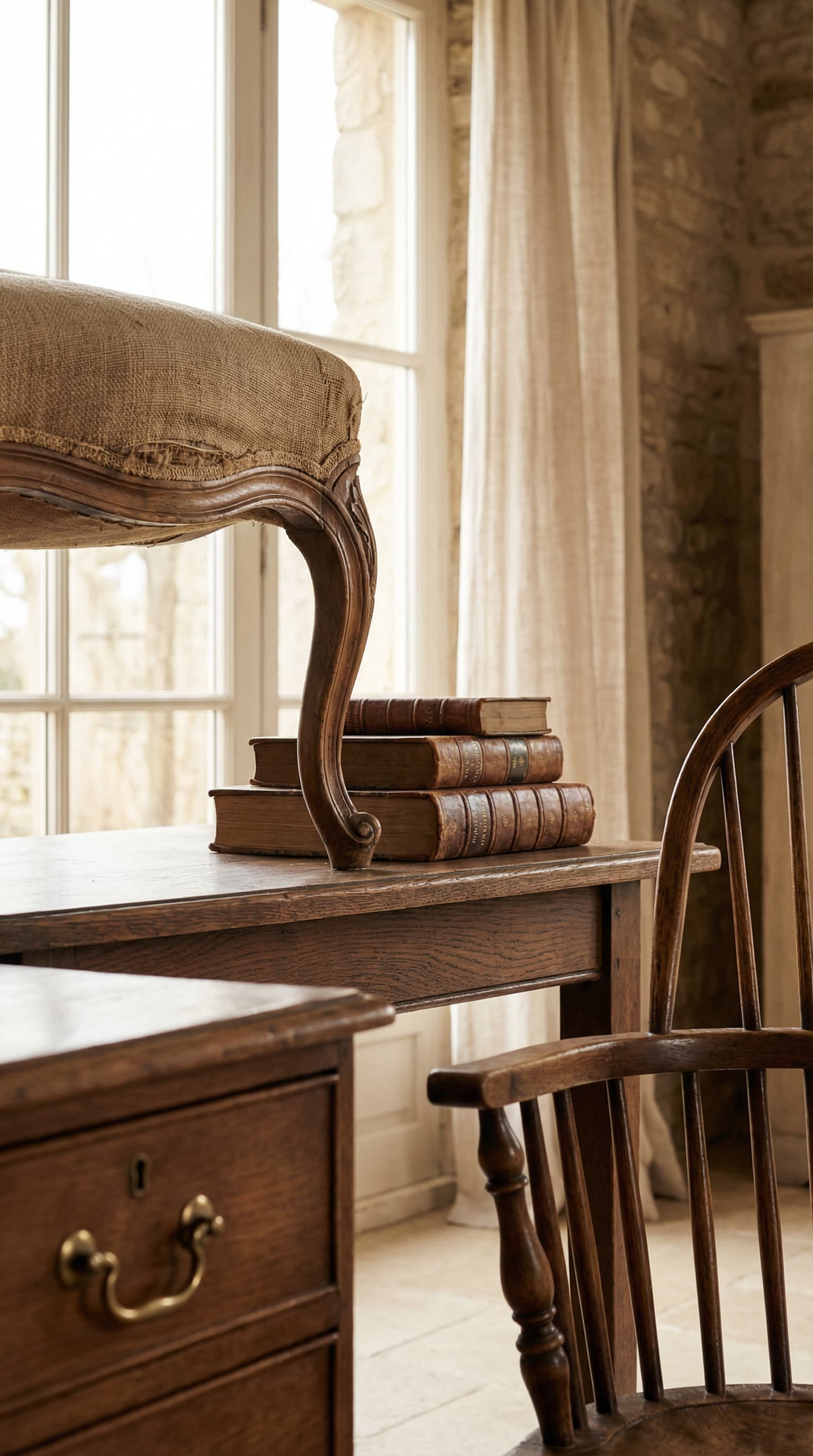
When you ask how to identify furniture style, you're usually looking at a piece and trying to attach the right label—Victorian, Mid-Century Modern, Arts and Crafts—to match what you're seeing. Style isn't about memorizing dates or designers. It's about recognizing visual patterns: how legs are shaped, what kind of hardware was used, whether the piece is plain or fancy, heavy or light.
Furniture styles reflect the tastes and technologies of their time. A cabriole leg with ball-and-claw feet signals one era; tapered legs and clean lines signal another. Once you know what to look for, the style names start to make sense.
Visual Checklist to Identify Furniture Style
Use this checklist to break down what you're seeing into identifiable clues. Work through each category, and the style will often reveal itself.
Leg Shape and Structure
Legs are one of the fastest style indicators.
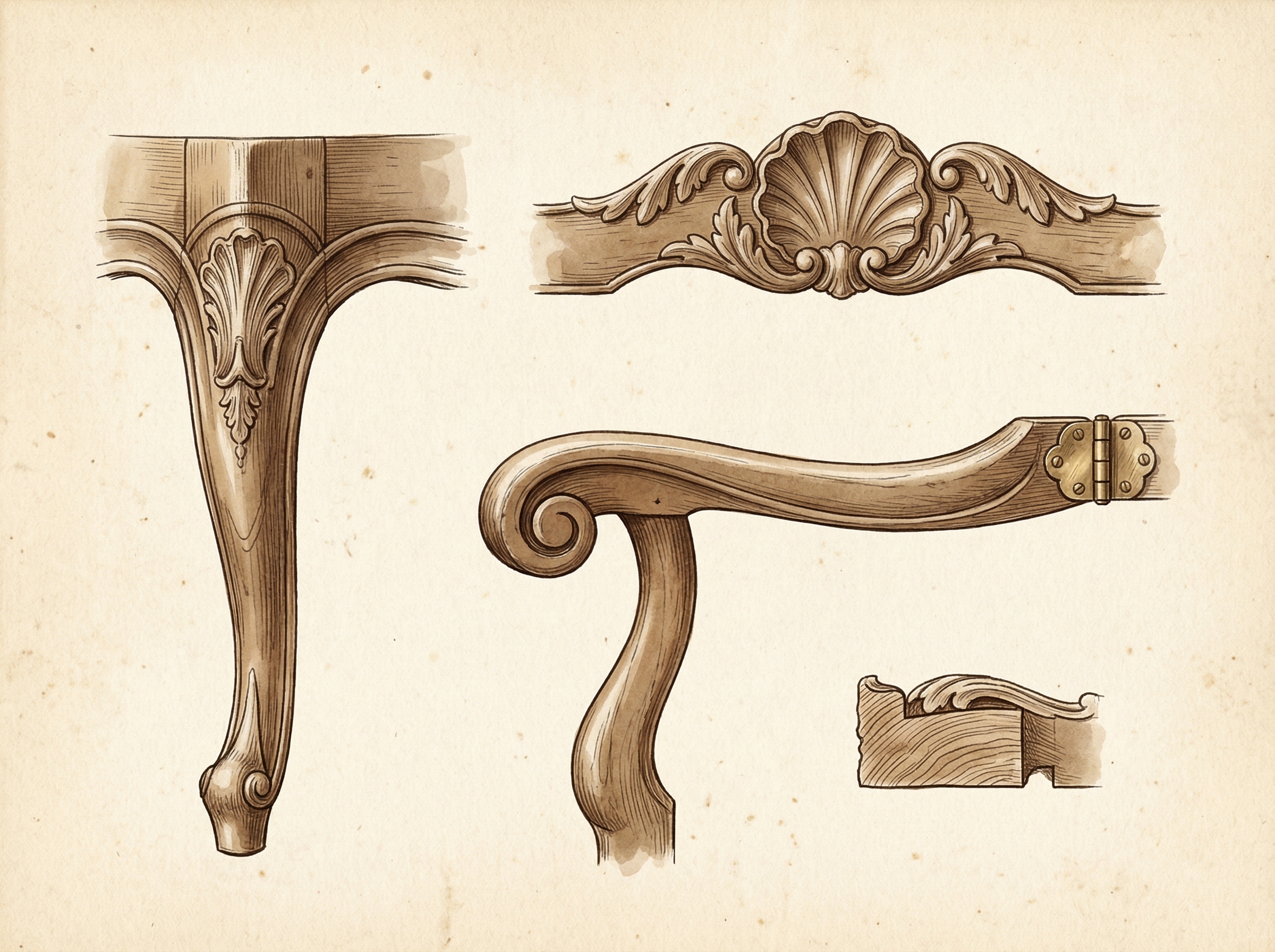
- •Cabriole legs (curved, S-shaped): Queen Anne, Chippendale, French Provincial
- •Turned legs (round, lathe-shaped): Jacobean, Colonial, Victorian
- •Tapered legs (straight, narrowing toward the floor): Federal, Hepplewhite, Neoclassical
- •Saber legs (curved outward): Regency, Empire, Greek Revival
- •Block legs (square, chunky): Mission, Arts and Crafts, some Colonial
- •Splayed legs (angled outward): Mid-Century Modern, Scandinavian
If the legs are hidden or minimal, that's a clue too—many modern and contemporary pieces minimize or eliminate visible legs entirely.
Ornamentation and Carving
How much decoration does the piece have, and where?
- •Heavy carving (florals, shells, scrolls): Baroque, Rococo, Victorian
- •Inlay and marquetry (contrasting wood patterns): Federal, Sheraton, Art Deco
- •Geometric motifs: Art Deco, Arts and Crafts, Mission
- •Minimal or no ornament: Shaker, Mid-Century Modern, Scandinavian, Bauhaus
- •Gothic arches or trefoils: Gothic Revival, some Victorian
- •Classical motifs (urns, columns, acanthus leaves): Neoclassical, Empire, Greek Revival
If you're looking at plain, unadorned wood, you're likely in the Arts and Crafts, Shaker, or Mid-Century Modern family.
Hardware and Fasteners
Pulls, hinges, and escutcheons offer strong dating and style clues.
- •Brass drop pulls (teardrop shape): William and Mary, Queen Anne
- •Brass bail pulls (curved handle): Chippendale, Federal, Hepplewhite
- •Glass or ceramic knobs: Victorian, Colonial Revival, some Mid-Century
- •Hammered or wrought hardware: Arts and Crafts, Mission
- •Sleek metal or recessed pulls: Mid-Century Modern, Scandinavian, Contemporary
- •Ornate cast brass: Victorian, Renaissance Revival
Original hardware is a gift—it helps confirm both style and age. Replaced hardware can make identification trickier.
Wood Type and Finish
The wood and how it's finished can narrow the field.
- •Mahogany: Chippendale, Federal, Victorian, Empire
- •Walnut: Queen Anne, Victorian, Mid-Century Modern
- •Oak: Mission, Arts and Crafts, Gothic Revival
- •Cherry: Colonial, Shaker, Federal
- •Teak: Mid-Century Modern, Scandinavian
- •Pine: Colonial, Shaker, Country, some Victorian painted pieces
- •Painted or lacquered finishes: Art Deco, some Victorian, Shabby Chic reproductions
A dark, glossy finish might suggest Victorian or Empire. A natural, oiled finish often points to Mid-Century Modern or Arts and Crafts.
Overall Proportions and Silhouette
Step back and look at the piece as a whole.
- •Heavy, blocky, vertical: Gothic Revival, Mission, some Victorian
- •Curvy, flowing, asymmetrical: Rococo, Art Nouveau
- •Symmetrical, balanced, restrained: Federal, Neoclassical, Shaker
- •Low, horizontal, clean-lined: Mid-Century Modern, Scandinavian
- •Ornate, tall, imposing: Victorian, Renaissance Revival, Baroque
Proportions tell you a lot about the cultural moment a piece came from—whether it valued grandeur or simplicity, formality or comfort.
Common Style Confusions When You Try to Identify Furniture Style
Even experienced collectors mix up closely related styles. Here's where the most confusion happens.
Victorian vs. Edwardian
- •Victorian: Heavier, darker woods, more carving, often mahogany or walnut
- •Edwardian: Lighter, more restrained, often inlaid satinwood or painted finishes
Edwardian pieces feel like a breath of fresh air after the visual weight of high Victorian.
Arts and Crafts vs. Mission
- •Arts and Crafts: Broader term, includes British influences, can be lighter or more decorative
- •Mission: American subset, typically oak, blocky, rectilinear, minimal ornament
All Mission is Arts and Crafts, but not all Arts and Crafts is Mission.
Mid-Century Modern vs. Danish Modern
- •Mid-Century Modern: American term, broader range, includes both sleek (Eames) and organic (Noguchi)
- •Danish Modern: Specifically Scandinavian, usually teak, warmer tones, refined joinery
Danish Modern is a subset of Mid-Century Modern, but with a distinct regional flavor.
Federal vs. Hepplewhite
- •Federal: American neoclassical style, 1780s–1820s
- •Hepplewhite: English designer whose work influenced Federal style
Many American Federal pieces are called "Hepplewhite-style," but true Hepplewhite is English.
Colonial vs. Colonial Revival
- •Colonial: Made during the colonial period (pre-1780s), hand tools, irregular joinery
- •Colonial Revival: Made 1876–1950s, machine-made, romanticized version of early American styles
Colonial Revival pieces can look old but lack the irregularities and tool marks of true Colonial work.
How Photo Identification Helps You Identify Furniture Style
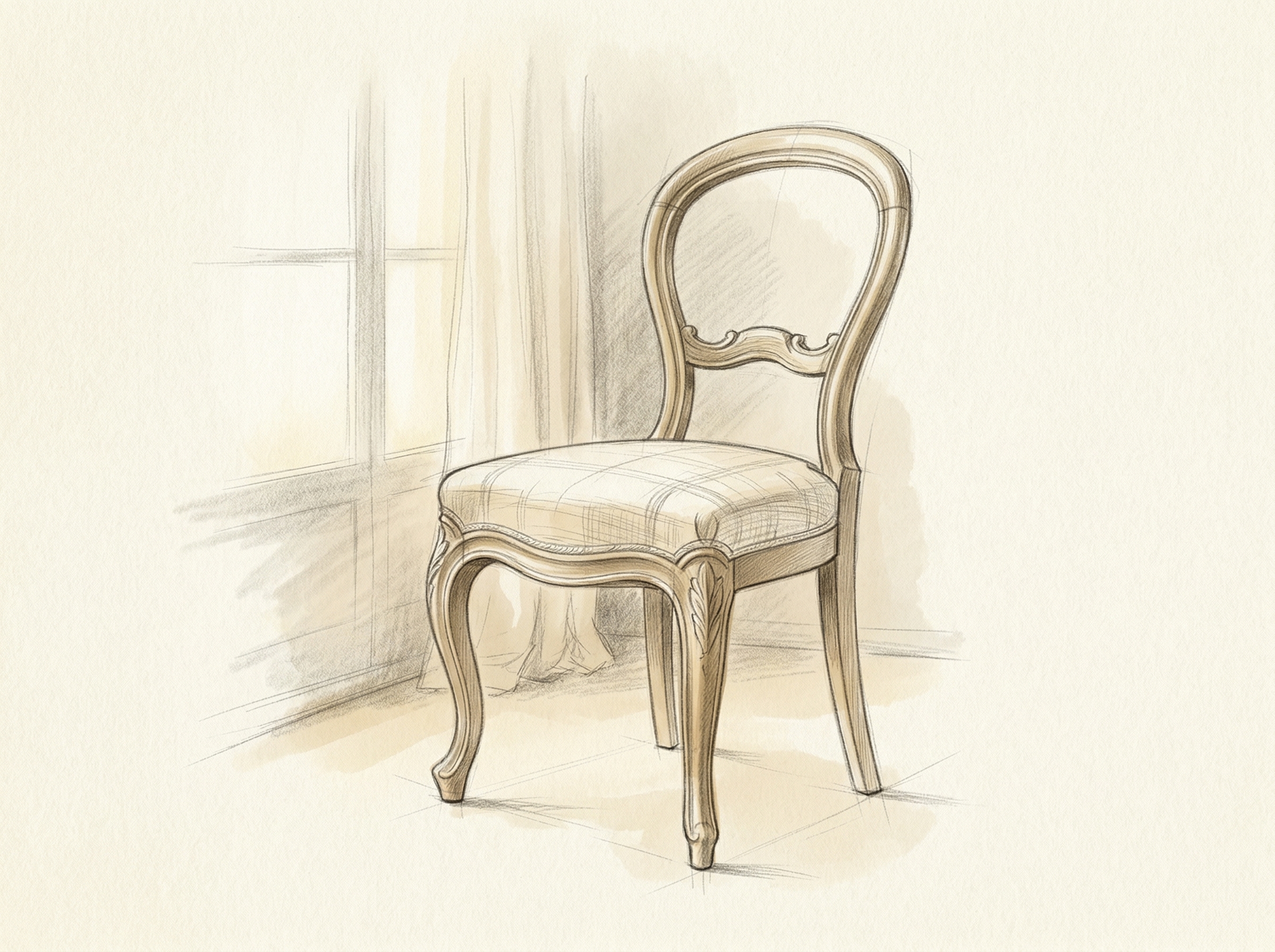
Once you've worked through the checklist, you'll have a shortlist of possible styles. That's where photo-based identification becomes invaluable.
Tools like Tocuro let you upload images of your piece and compare visual details against a broad dataset of known furniture. The app recognizes leg shapes, hardware types, wood grain, and proportions—then suggests likely style matches based on what it sees.
Which Photos Help Most
For style identification, focus on:
- •Full front view: Shows overall proportions and symmetry
- •Leg detail: Captures shape, turning, or carving
- •Hardware close-up: Reveals original or replaced pulls, hinges, locks
- •Side profile: Shows depth, curves, and structural details
- •Any carved or inlaid areas: Confirms ornament style
Good lighting and sharp focus make a difference. Blurry photos of a carved detail won't help narrow the style.
What Photo Tools Can and Can't Do
Photo identification works well when you're choosing between a few similar styles—Is this Federal or Hepplewhite? Arts and Crafts or Mission? It's less effective when a piece has been heavily altered, refinished, or is a later reproduction.
If your piece mixes styles (a Victorian base with replaced Mid-Century legs, for example), photo tools may flag the inconsistency rather than provide a single answer. That's useful information.
For more on how to photograph furniture for identification, see How to Identify Furniture Fast: What to Look for and Photograph.
Start Identifying Your Furniture
You don't need to memorize every furniture style to get a confident answer. Work through the visual checklist—legs, ornament, hardware, wood, proportions—and you'll quickly narrow the possibilities.
When you're ready to confirm what you're seeing, Tocuro helps you identify furniture style from photos. Upload clear images, and the app analyzes visual details to suggest likely matches. You get 7 free identifications per day, and the count resets daily, so you can work through multiple pieces without commitment.
Start with the piece in front of you, and let the details do the talking.
Photo identification
Identify Your Furniture
Use Tocuro to identify your item from a photo and get an estimated value range when market data is available.