
How to Identify Antique Sofas: A Frame-to-Fabric Guide for Collectors
This guide explains how to identify antique sofas by examining frame construction, upholstery tacks, leg styles, and joinery. It shows which photos capture the most useful dating clues and helps you avoid common misidentifications when evaluating sofa age and authenticity.
How to Identify Antique Sofas: A Frame-to-Fabric Guide for Collectors
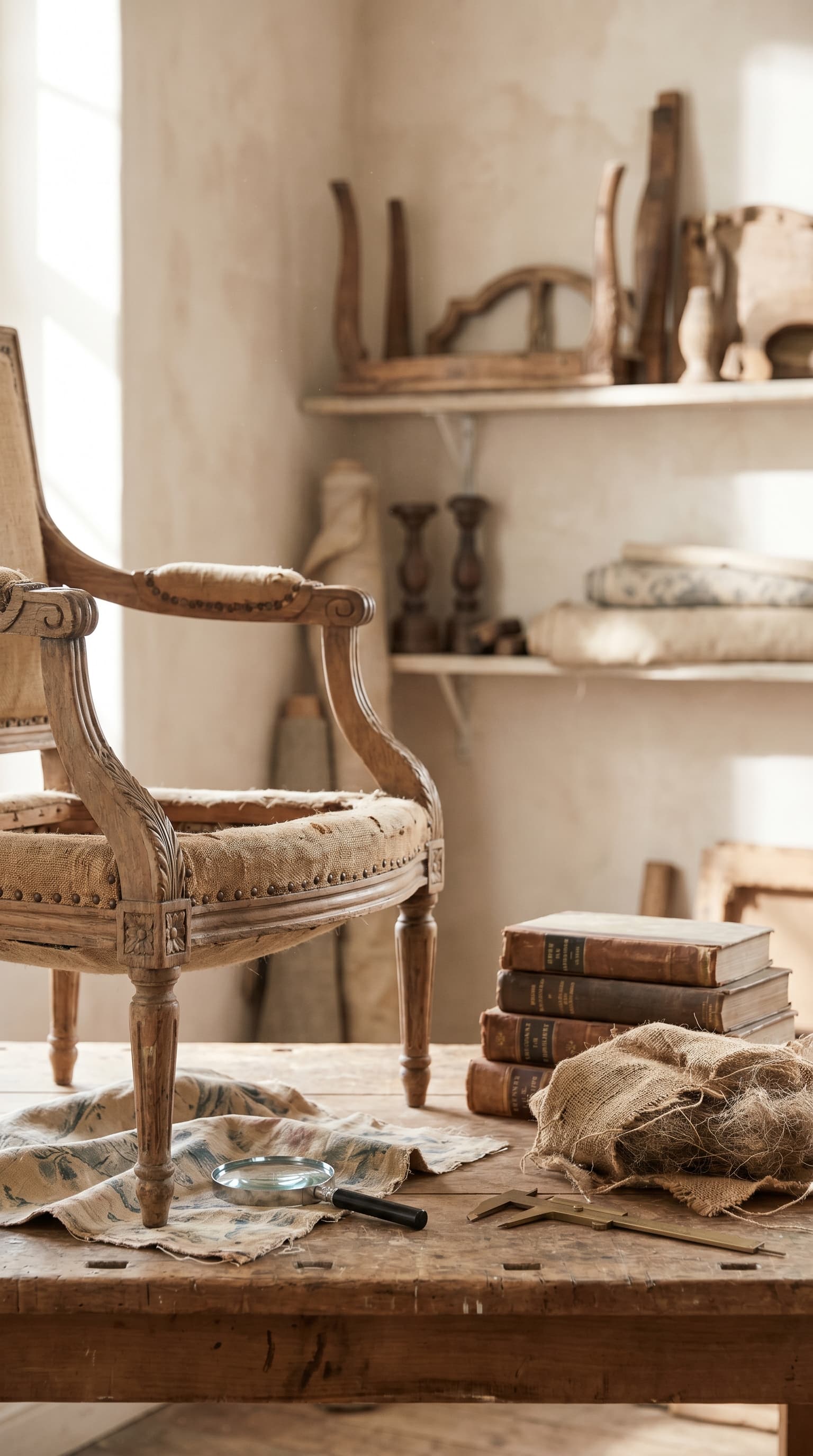
Learning how to identify antique sofas means looking past the fabric to the bones underneath. Most sofas and settees have been reupholstered multiple times, so the velvet or damask tells you nothing about age. What matters is the frame construction, the way legs attach, the type of fasteners holding the upholstery, and the joinery methods used in the hardwood skeleton. These structural clues separate a genuine Federal settee from a 1920s revival piece or a department store reproduction.
Unlike chairs, sofas offer fewer visible inspection points when fully upholstered. You need to know exactly where to look and what details actually indicate period construction.
What Clues Matter When Identifying Antique Sofas
Frame Construction and Wood Choice
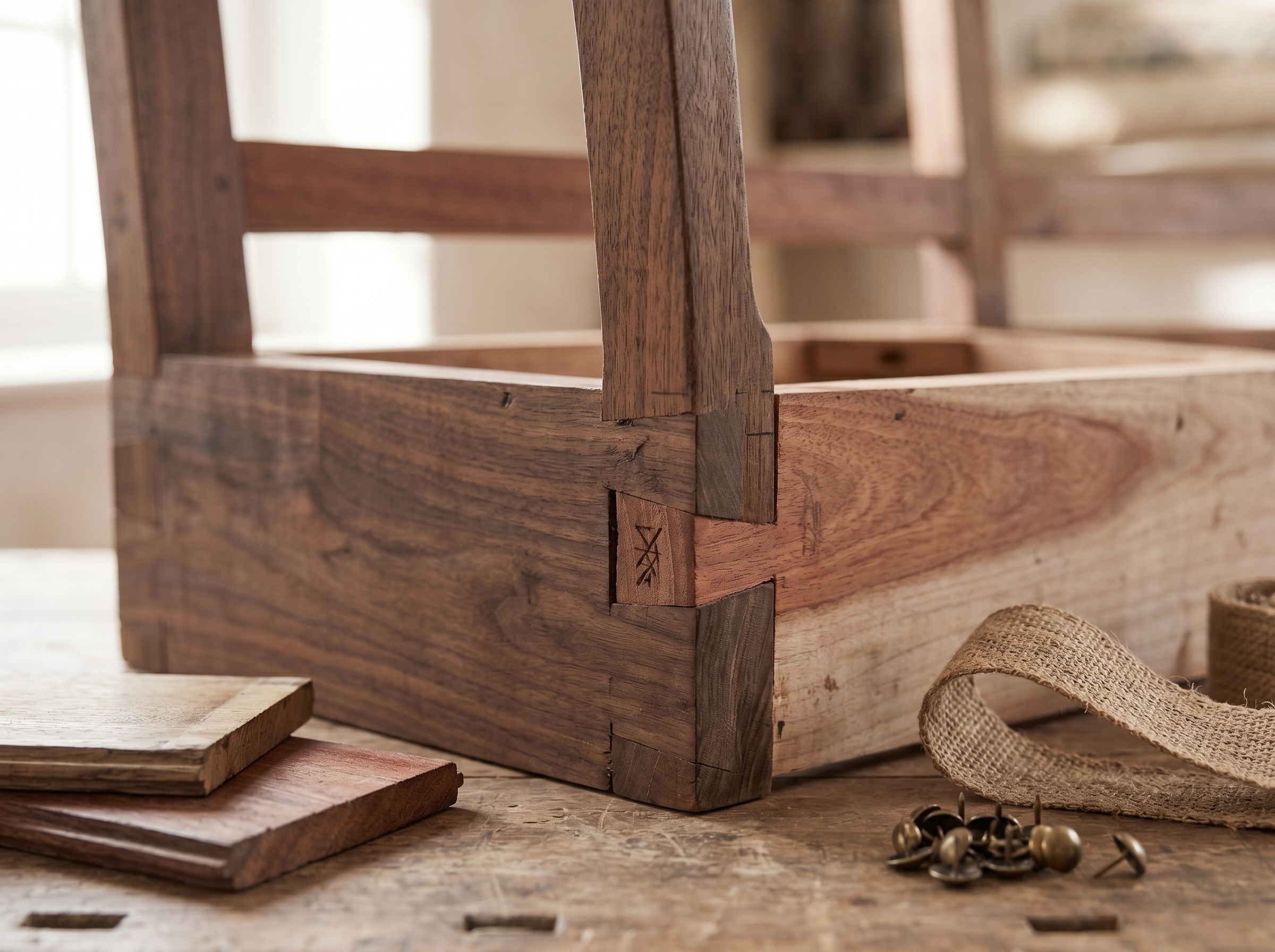
Authentic antique sofas use hardwood frames—typically walnut, mahogany, or birch depending on the period. Turn the piece over or examine any exposed wood at the back or underside. Hand-planed surfaces show slight irregularities and tool marks that differ from modern milled lumber. Pre-1850 frames often incorporate mortise-and-tenon joinery secured with wooden pegs rather than screws.
Look for secondary woods in unexposed areas. A sofa with a mahogany show frame and pine or poplar backing rails follows period-correct practices. Reproduction pieces sometimes use the same wood throughout or substitute plywood in hidden structural areas.
Upholstery Tack Patterns
The fasteners holding fabric and webbing reveal manufacturing era. Hand-forged tacks used before the 1850s have irregular heads and shanks with visible hammer marks. Machine-cut tacks from the mid-1800s show consistent stamping but still differ from modern wire nails. The spacing and pattern matter too—period upholsterers placed tacks at irregular intervals, while factory work creates mechanically even rows.
Pull back dust covers or examine tack lines under the base. Multiple layers of tacks indicate reupholstering history, which is normal. But the deepest layer should show period-appropriate fasteners if the frame is genuinely antique.
Leg Styles as Period Indicators
Sofa legs follow the same stylistic evolution as antique chairs, but they're often shorter and heavier to support greater weight. Federal and Empire settees from 1790–1840 feature turned or reeded legs, sometimes with carved paw feet or brass casters. Victorian pieces from the 1850s–1900s show more ornate carving—cabriole legs with scrolled toes, heavily carved ball-and-claw feet, or turned legs with decorative bosses.
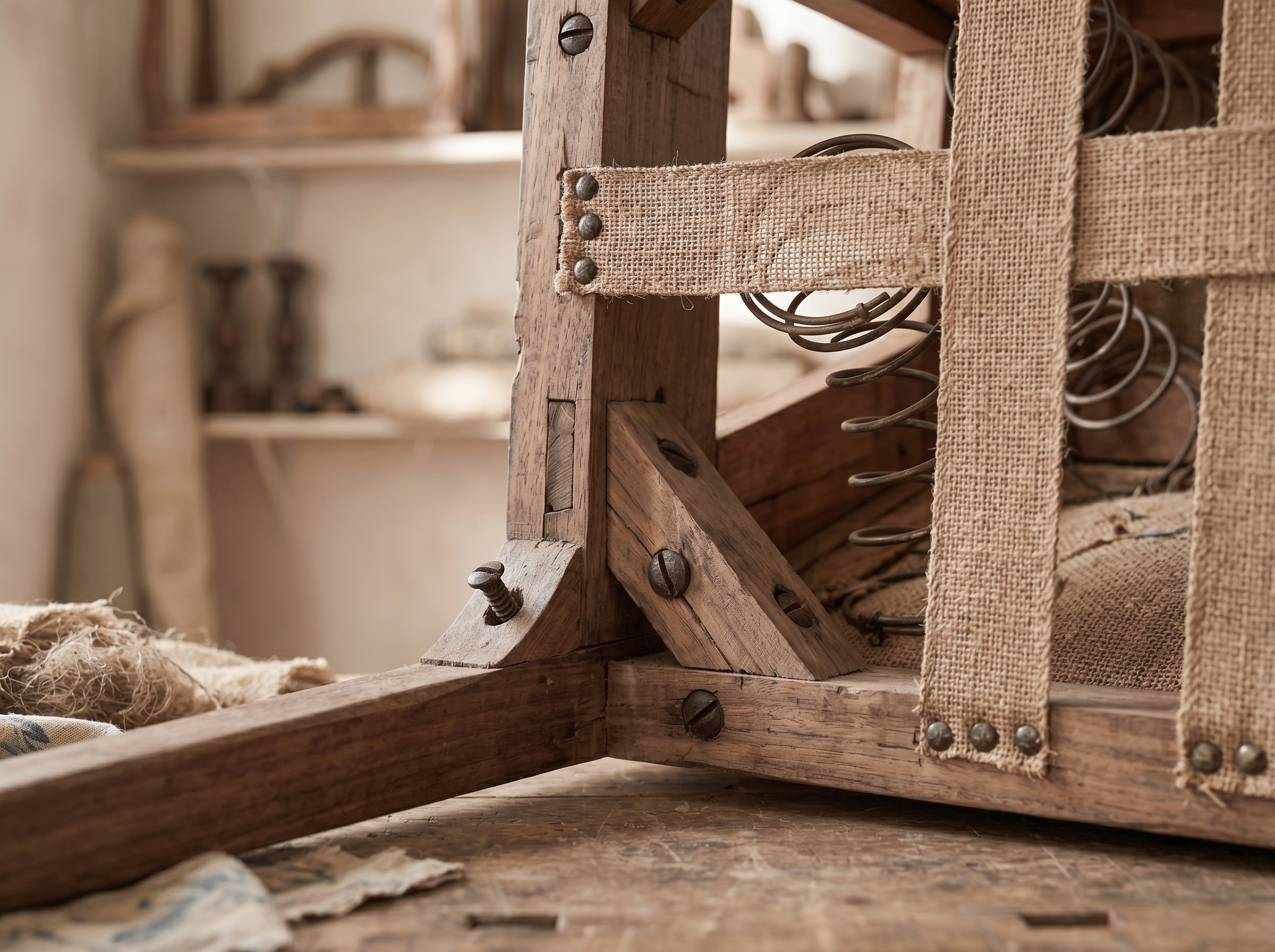
Examine how legs attach to the frame. Period construction typically uses mortise-and-tenon joints reinforced with corner blocks glued and pegged in place. Modern reproductions often rely on metal brackets or dowel-and-screw assembly you can spot from underneath.
Springs and Webbing Systems
Coil springs weren't widely used in American sofas until the 1830s and became standard by the 1850s. Earlier pieces used jute webbing stretched across the frame with horsehair or down cushioning. If you can access the underside, hand-tied coil springs with eight-way knotting indicate quality period construction or expert restoration. Zig-zag (sinuous) springs date to the 1950s and later—an automatic disqualifier for genuine antique status.
Original webbing shows age-appropriate wear, fiber breakdown, and staining. Perfectly clean webbing means recent work, which is fine if the frame itself passes other tests.
Carved Details and Crest Rails
The top rail and arm treatments follow recognizable period patterns. Empire and Regency settees (1810–1840) often feature scrolled arms with carved rosettes or acanthus leaves. Victorian pieces lean into heavier, more elaborate carving—finger-roll arms, tufted backs, and heavily carved crest rails with fruit, floral, or rococo motifs.
Hand carving shows slight asymmetries and tool marks under magnification. Machine carving from the late 1800s onward creates more uniform, repetitive patterns. Modern reproductions sometimes use applied molded resin details instead of carved wood.
What Photos to Take for Antique Sofa Identification
Photographing a sofa properly means capturing the structural evidence, not just the overall look.
Underside and frame: Flip smaller settees or crawl under larger sofas. Photograph the frame joinery, corner blocks, and any visible maker's marks or labels. Capture tack patterns and webbing attachment points. These images often provide the most conclusive dating evidence.
Leg attachment and feet: Photograph each leg where it meets the frame, from multiple angles. Close-ups should show joinery method, any corner blocking, and whether legs are original or replaced. Include detail shots of feet, casters, or carved terminals.
Back and side details: Photograph the back frame where it's visible, including any exposed wood, labels, or stamps. Side views should show arm construction and how arms join the back and seat frame.
Hardware and fasteners: Close-up shots of any exposed tacks, nails, screws, or hinges help date construction methods. If you see multiple layers of upholstery tacks, photograph them clearly.
Carved or decorative elements: Document crest rails, arm scrolls, and any carving in sharp focus. These details help identify style periods and craftsmanship quality.
Avoid relying on fabric photos alone. Upholstery rarely survives more than 30–50 years without replacement, so it tells you nothing about the frame's age.
Common Misidentifications When Dating Antique Sofas
Revival Styles Mistaken for Originals
The 1920s–1940s saw massive production of Colonial Revival, Victorian Revival, and French Provincial-style sofas. These pieces often use solid wood, hand-rubbed finishes, and careful detailing that can fool casual observers. The giveaway is usually in the joinery—look for Phillips-head screws (post-1930s), staples, or glue blocks instead of pegged mortise-and-tenon joints. Revival pieces also tend toward lighter proportions and more uniform machine carving.
Reupholstered Frame Age Confusion
A beautifully reupholstered Victorian sofa with modern fabric, springs, and webbing is still a Victorian sofa if the frame dates correctly. Don't reject a piece just because the upholstery is newer. Likewise, don't assume old-looking fabric means an old frame—reproduction damask and horsehair stuffing are widely available.
Settee vs. Sofa Terminology
Settees are smaller, typically seating two people, with more refined proportions. Sofas are larger and designed for three or more. The terms overlap historically, but calling a large Victorian sofa a "settee" or vice versa can confuse research and valuation. Pay attention to scale and period-appropriate terminology.
Married Parts and Replacements
Many antique sofas have replacement legs, rebuilt arms, or grafted-on crest rails. A frame with a genuine 1850s back and 1920s replacement legs isn't fully original. Look for wood color mismatches, different joinery methods within the same piece, or legs that don't match the overall style. Married pieces can still have value, but authenticity affects pricing.
What Tocuro Can Help Resolve
Identifying antique sofas from photos requires comparing frame details, leg styles, and construction methods against known period examples—exactly what Tocuro's identification system does well. Upload clear photos of the underside, leg joinery, and any carved details, and Tocuro analyzes them against market data and historical furniture patterns to estimate age, style, and value range.
The system handles the most common identification challenges: distinguishing revival styles from originals, spotting machine vs. hand construction, and recognizing regional American and European forms. You'll get an estimated date range and value based on current market signals, though this isn't a formal appraisal.
Tocuro works for more than just sofas—upload photos of settees, recamiers, fainting couches, and other upholstered seating to understand what you own before you buy or sell.
Start Identifying Your Sofa Today
Knowing how to identify antique sofas means looking where the evidence actually lives—in the frame, the joinery, and the hardware, not the fabric. The right photos combined with market-informed analysis give you reliable answers faster than hours of manual research.
Identify your antique sofa by uploading photos to Tocuro. You'll get an estimated age, style, and value range based on structural details and market comparables—so you know exactly what you're working with.
Photo identification
Identify Your Furniture
Use Tocuro to identify your item from a photo and get an estimated value range when market data is available.