
How to Identify Antique Chairs: A Photo-Based Guide to Dating and Styles
Identifying antique chairs requires looking at specific details that reveal age and origin. This guide shows you which chair features matter most, what photos to capture, and how to avoid common dating mistakes when evaluating chairs from images.
How to Identify Antique Chairs: A Photo-Based Guide to Dating and Styles
Chairs tell stories through their legs, backs, and joints. When you're trying to identify antique chairs from photos, you're essentially reading a visual language of turnings, splats, and construction methods that changed dramatically across centuries. A cabriole leg points to one era, a spindle back to another, and hand-cut dovetails to a specific window of craftsmanship.
The good news? Chairs follow predictable patterns. The challenge? Reproductions copy those patterns, and amateur restorations muddy the evidence.
What Clues Matter When You Identify Antique Chairs
Leg Style and Turnings
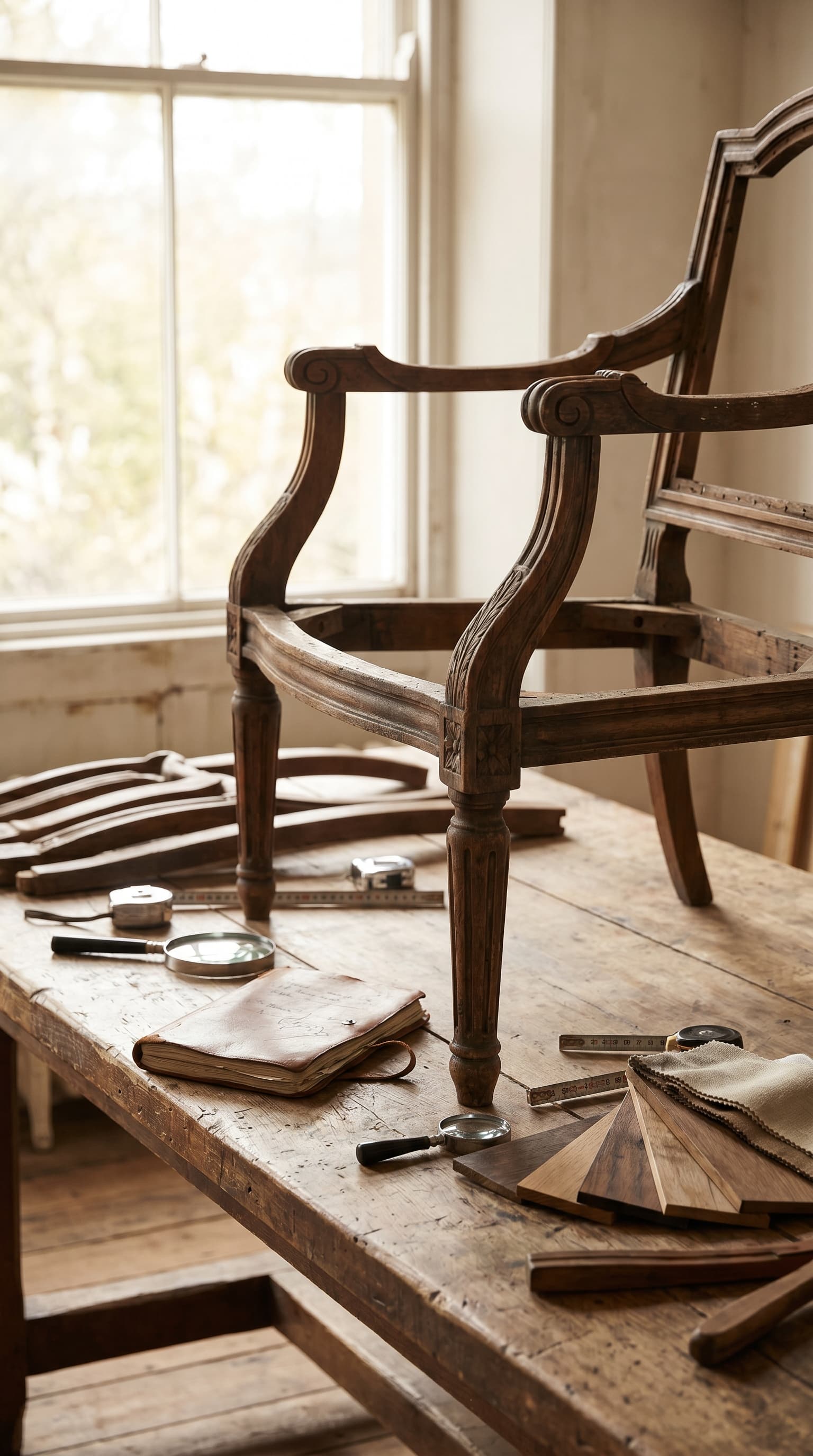
Chair legs are the fastest way to narrow down an era. Straight, tapered legs suggest Federal or Sheraton styles (1780s–1830s). Cabriole legs with ball-and-claw feet point to Queen Anne or Chippendale (1720s–1780s). Heavy spiral turnings signal William and Mary or Jacobean work (1690s–1720s). Spool turnings became popular during the Victorian cottage furniture boom (1840s–1890s).
Look at how the leg meets the seat rail. Earlier chairs often show mortise-and-tenon joints secured with wooden pegs visible from the outside. Later mass-produced chairs used hidden screws or glue blocks.
Back Splat Design
The back splat—that vertical piece between the seat and top rail—changed with every furniture fashion. Pierced splats with intricate carving suggest high-style Chippendale. Solid, vase-shaped splats appear on Queen Anne chairs. Horizontal slats stacked between posts indicate ladder-back country chairs, often dating to the 18th or early 19th century.
Balloon backs became fashionable in the 1830s–1850s. Press-molded plywood backs with fruit or floral motifs scream Victorian parlor chair from the 1870s–1890s.
Seat Construction
Flip the chair or photograph the underside. Hand-planed seat boards show irregular tool marks and uneven thickness—common before the 1850s. Circular saw marks (perfect arcs) date a piece after 1840. Bandsaw marks (straight, parallel scratches) suggest post-1860 work.
Rush seats woven in geometric patterns appear on country chairs throughout the 18th and 19th centuries. Drop-in upholstered seats became standard on formal dining chairs by the mid-1700s. Spring seats with coil construction signal post-1850 comfort-focused designs.
Joinery and Hardware
Hand-cut dovetails on drawer rails (if the chair has them) look irregular with varying angles—a sign of pre-1860 work. Machine-cut dovetails show uniform spacing and identical angles.
Check screws in photos. Hand-filed screws with off-center slots and irregular threads date before 1850. Machine-made screws with centered slots and even threads became standard after that. But be careful: many chairs have been repaired, so one modern screw doesn't disqualify an otherwise period piece.
Wood and Finish
Mahogany dominated high-style American furniture from 1750–1850. Walnut was popular earlier (1690–1750) and experienced a revival in the 1870s–1890s. Oak reigned in the Arts and Crafts movement (1900–1920). Pine, maple, and cherry frequently appear in country chairs across all periods.
Original finishes darken unevenly, concentrating in crevices and protected areas while wearing thin on high-touch spots like arm tops and seat edges. A perfectly uniform stain suggests refinishing.
What Photos to Take to Identify Antique Chairs
Full Profile Views
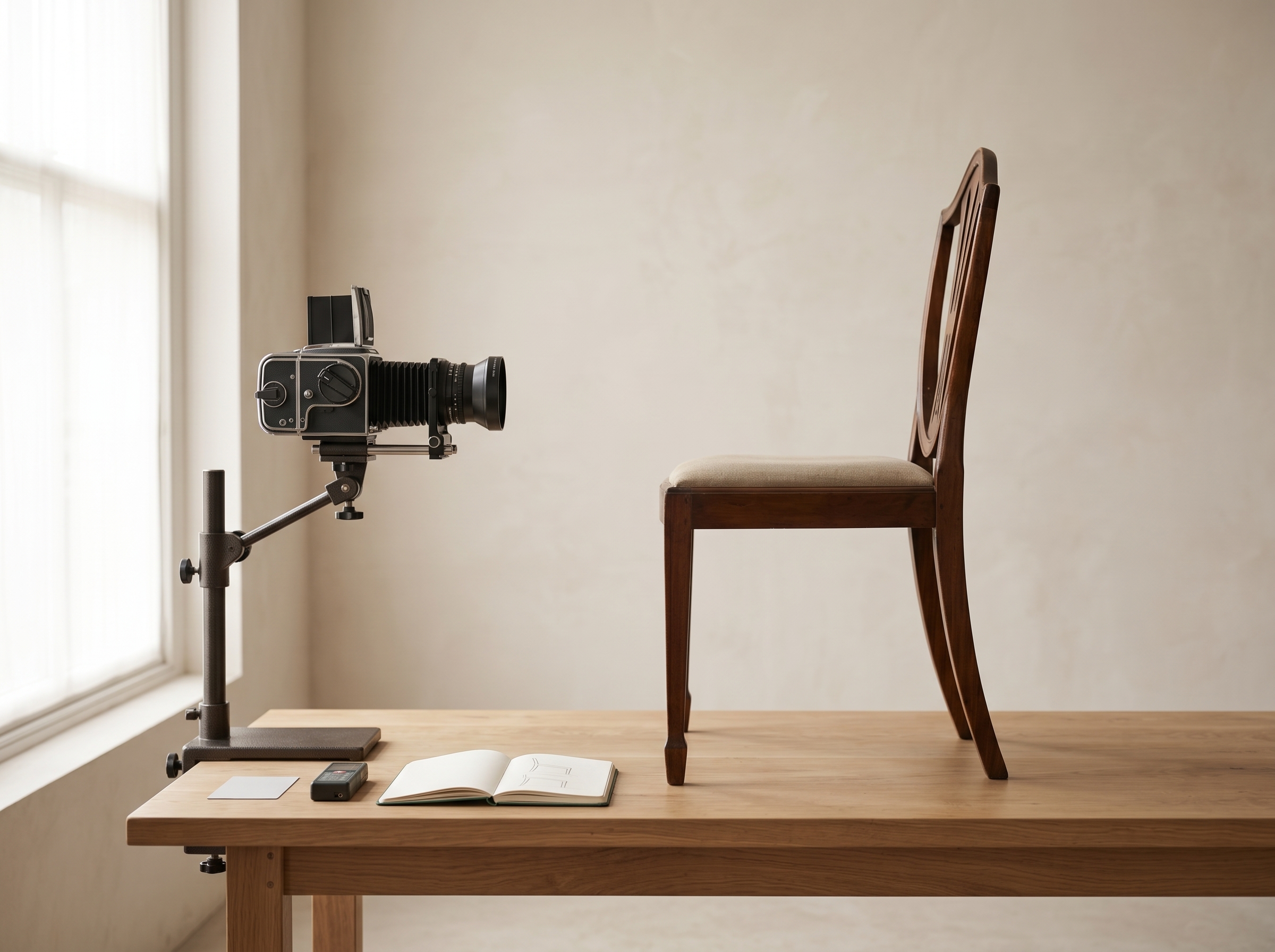
Capture the chair from the side at eye level. This angle shows leg shape, seat height, back rake, and overall proportions that define period styles. One photo from each side catches asymmetries that reveal hand construction or repairs.
Close-Ups of Joints
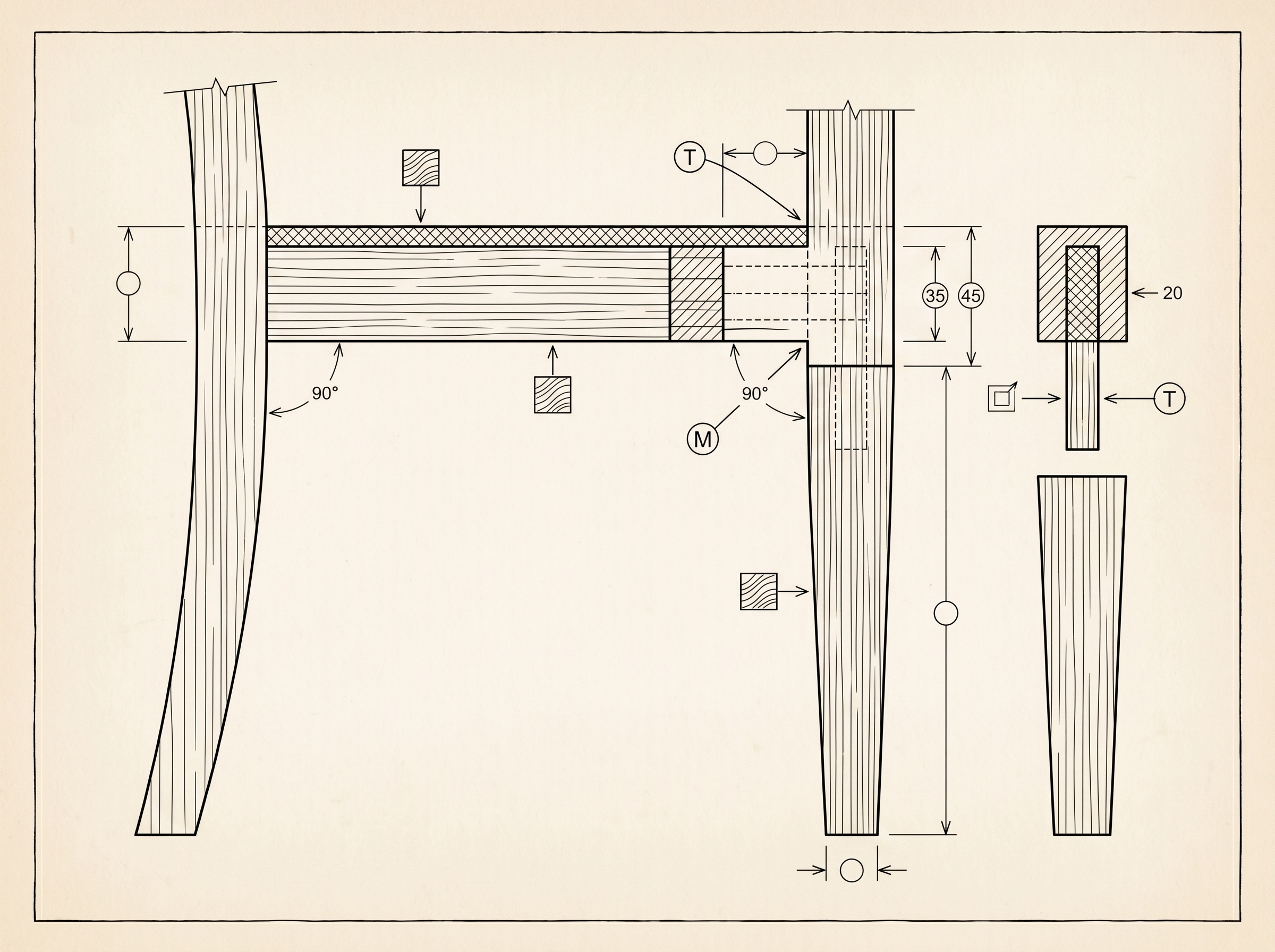
Photograph where legs meet rails, where the back attaches to the seat, and any visible joinery. Get close enough to see peg holes, tool marks, and joint gaps. These details separate 18th-century workmanship from 20th-century reproductions.
Underside of the Seat
This is where makers left the most honest evidence. Flip the chair carefully and shoot straight up at seat boards, corner blocks, and rail connections. Look for hand-planing irregularities, saw marks, old glue drips, and original construction methods.
Back Splat Details
If the splat has carving or piercing, photograph it with good lighting from multiple angles. Shallow, crisp carving often indicates machine work. Deep, slightly irregular carving suggests hand tools. Wear patterns in carved valleys point to age.
Hardware and Marks
Capture any maker's marks, labels, stamps, or stencils—usually found on the underside or back. Photograph screws, nails, and metal braces closely enough to see thread patterns and patina. These small details carry outsize dating power.
Common Misidentifications When You Identify Antique Chairs
Centennial Reproductions as Period Originals
The 1876 Centennial sparked a massive Colonial Revival that produced thousands of chairs copying 18th-century styles. These 1880s–1920s reproductions often show machine-cut dovetails, uniform turnings, and modern hardware despite looking old at first glance. Check joinery and saw marks closely.
Refinished Chairs as Untouched
Many antique chairs have been stripped and restained so many times that their surface offers no clues about age. A refinished 1780 chair can look identical to a 1980 copy if you only judge by finish. Focus on construction and proportions instead.
Victorian Updates as Original Design
Earlier chairs were often "modernized" during the Victorian era with added casters, raised backs, or reupholstered seats with springs. These hybrid pieces confuse identification because they blend two periods. Look for inconsistencies in wood color, tool marks, and construction methods between different parts.
Country Chairs as Earlier Than They Are
Rustic, hand-made chairs continued in rural areas long after factories dominated cities. A country ladder-back with irregular turnings might look 18th-century but actually date to 1880. Provincial furniture doesn't follow neat timeline rules, so style alone can mislead.
Married Sets as Original
Dining chair sets were often assembled from similar but not identical chairs over decades of use and attrition. Six "matching" chairs might include four originals, one close copy, and one outright reproduction. When evaluating sets from photos, examine each chair individually for consistent joinery, turnings, and wood grain.
What Tocuro Can Help Resolve
Even experienced collectors hit walls when chair details conflict or when subtle variations separate a valuable original from a skilled copy. Tocuro's photo-based identification draws on market signals and comparative data to help date chairs and estimate value ranges based on what similar examples actually sell for.
Upload clear photos showing the angles that matter—legs, splat, underside, and joints—and Tocuro analyzes the visual evidence against thousands of documented chairs. It's particularly helpful when you're comparing your chair to reference pieces or trying to understand why two similar-looking chairs have different values. The estimated value ranges come from real market signals, though they're not formal appraisals.
You get 7 free identifications per day, and the count resets daily, so you can work through multiple chairs or compare details across several photos.
Start Identifying Your Chairs
Chairs reward close looking. A single photo of the right detail—a hand-cut dovetail, an irregular turning, a worn mortise—can pin down a century and a region. Once you know what clues matter and how to photograph them, you'll spot the difference between 1780 and 1880, between a country piece and a high-style original, between honest age and skillful reproduction.
Ready to identify your chair? Upload your photos to Tocuro and get detailed insights based on the visual evidence you've captured. Whether you're evaluating an estate-sale find or researching a family heirloom, good photos turn guesswork into informed decisions.
Photo identification
Identify Your Furniture
Use Tocuro to identify your item from a photo and get an estimated value range when market data is available.