
How to Buy Vintage Furniture: A Collector's Guide to Shopping Smart
Buying vintage furniture takes more than good taste. This guide walks you through the on-the-ground workflow: what to inspect quickly, which pieces deserve a second look, and how to organize your finds so you can build a collection that matters.
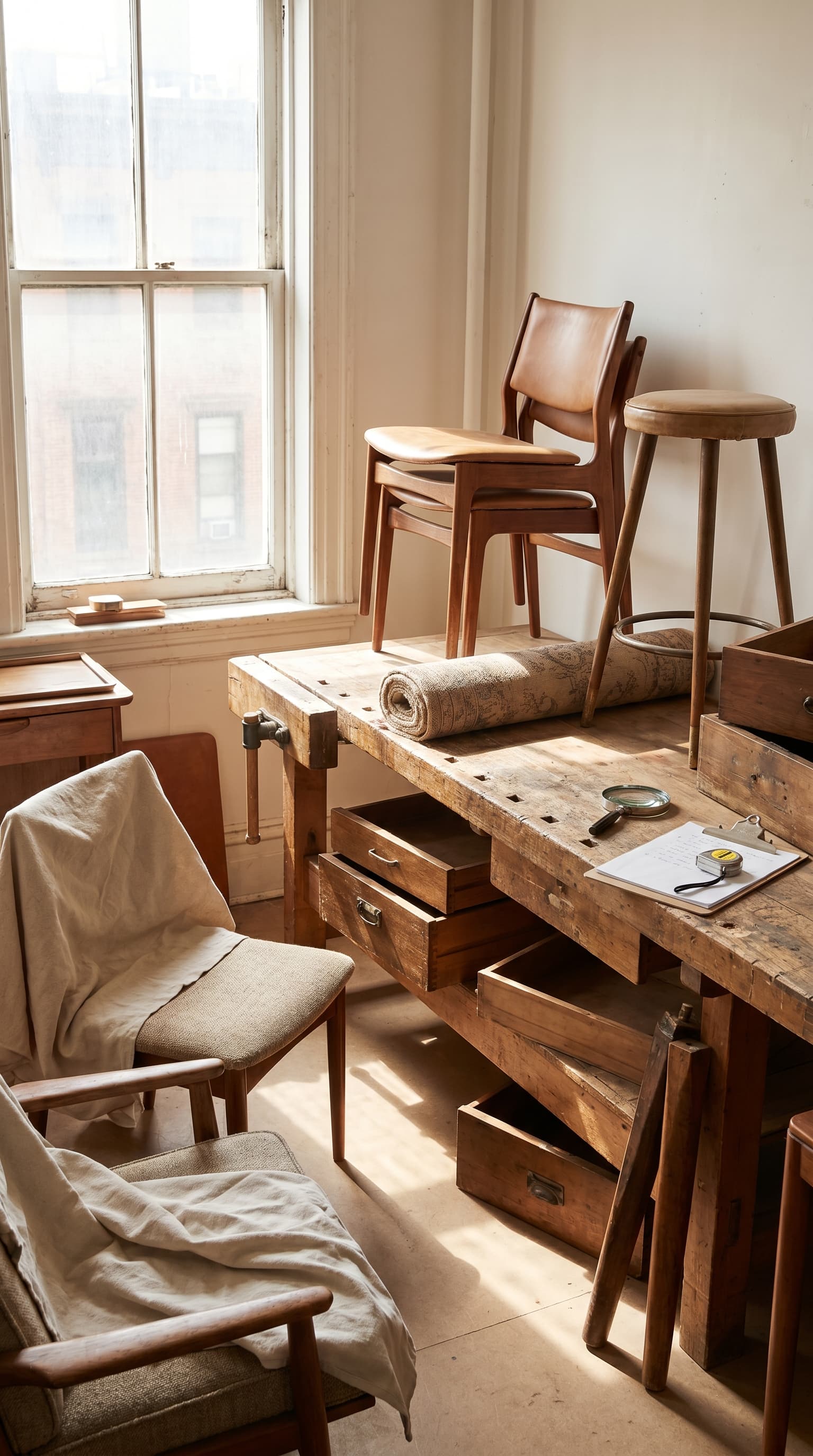
How to Buy Vintage Furniture Without Regrets
Buying vintage furniture is exciting until you get it home and realize the drawer won't close, the finish is too damaged to salvage, or you paid $200 for something worth $40. The difference between a great find and a mistake often comes down to knowing what to check in the moment—and which pieces are worth pausing to research before you hand over cash.
This guide covers the real-world workflow: how to assess condition fast, spot pieces that deserve deeper investigation, and keep track of what you're learning so you can make smarter decisions over time.
What to Check Fast When You're Looking at a Piece
You don't always have time to pull out your phone and research every piece. Here's what to check physically, in under two minutes, to avoid the most common buying mistakes.
Open every drawer and door. Sticking drawers, warped doors, and missing hardware are fixable—but only if you know about them before you buy. Check that runners are intact, pulls are original or at least period-appropriate, and nothing smells like mold or smoke that won't air out.
Look at the joinery. Dovetails, mortise-and-tenon joints, and hand-cut details suggest older, often better-made furniture. Staples, particleboard, and machine-cut uniformity usually mean newer or lower-quality construction. You don't need to be an expert—just notice whether joints are tight, glued, or coming apart.
Check the finish and wood condition. Surface wear is normal. Deep cracks, active woodworm holes, or veneer lifting off in sheets are red flags. A piece that needs refinishing can still be a good buy, but factor in the work (or cost) before you commit.
Test stability. Sit on chairs. Lean on tables. Open cabinet doors while supporting the piece. Wobbly legs or loose frames can sometimes be tightened, but if structural components are split or missing, walk away unless you're buying it for parts.
Look for maker's marks, labels, or stamps. Flip the piece over, check drawer bottoms, pull out drawers to see the back panel. A label or stamp can turn a $50 sideboard into a $500 one—or help you identify a reproduction quickly.
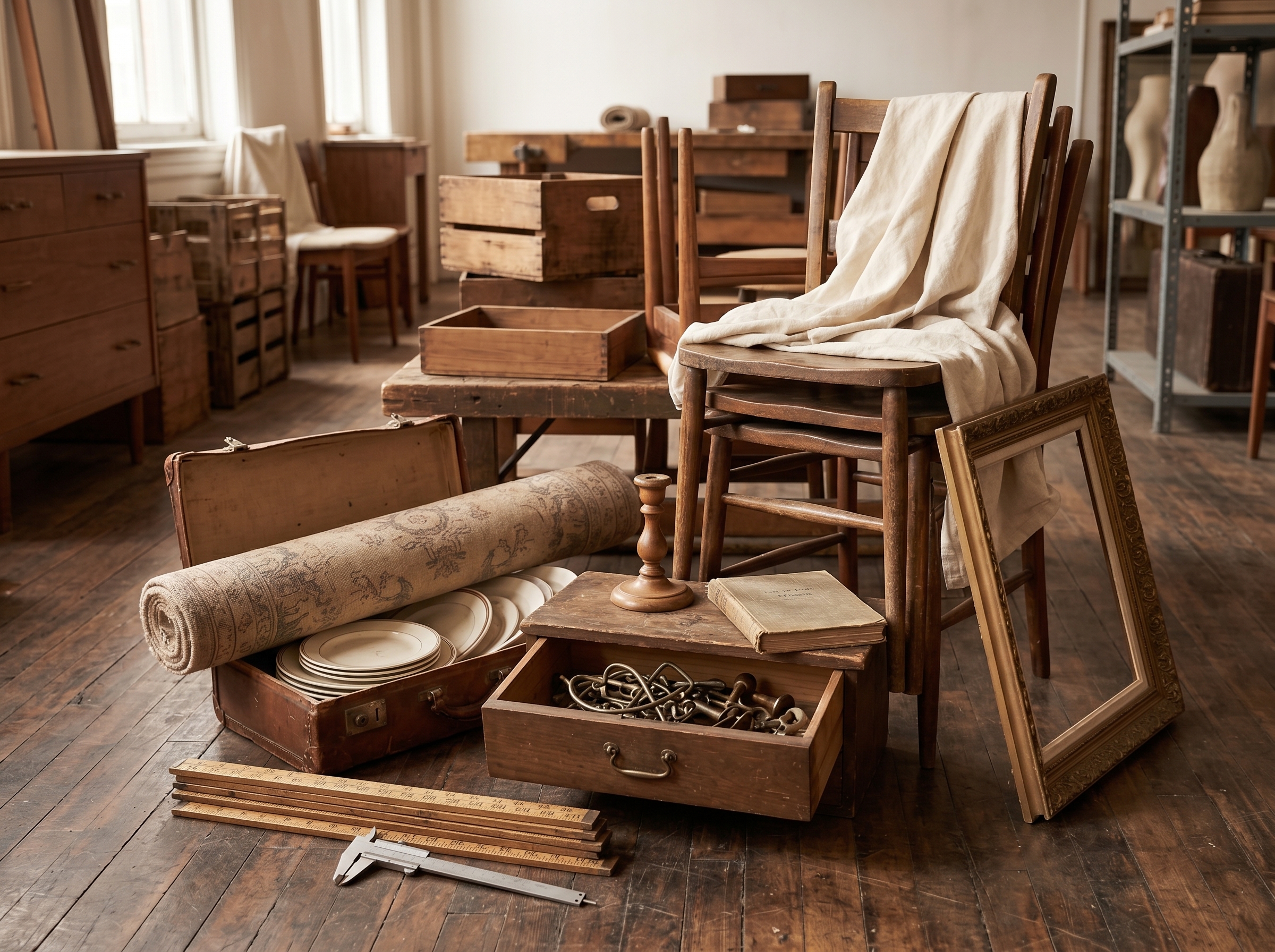
How to Buy Vintage Furniture That's Actually Worth Researching
Some pieces deserve more than a quick once-over. Here's what signals it's worth snapping photos and digging deeper before you buy.
Unusual form or design. If a piece looks different from the standard midcentury credenza or farmhouse table you've seen a dozen times, it might be a regional maker, a designer original, or an early example of a style. Don't assume every cool-looking piece is valuable, but do pause to investigate.
High-quality materials or construction. Solid hardwood, hand-cut dovetails, inlaid details, or original glass and hardware often indicate a piece made to last. These details don't guarantee high value, but they do suggest the furniture was made with care—and those pieces tend to hold up better and appreciate more over time.
Anything with a maker's mark you don't recognize. A stamped name, a branded drawer, or a metal tag means someone thought their work was worth signing. Even if you've never heard of the maker, that's a signal worth researching. Regional furniture makers, small-batch manufacturers, and early 20th-century studios can all be collectible.
Pieces in original or near-original condition. Vintage furniture that hasn't been painted over, refinished carelessly, or modified is harder to find every year. If the finish is worn but intact, the hardware is original, and the proportions haven't been altered, that's a piece worth considering even if it's not your style.
Midcentury modern, Art Deco, or Arts and Crafts styles. These movements remain popular with collectors, and certain makers command strong prices. If you spot clean lines, tapered legs, geometric inlay, or hand-hammered hardware, take a moment to research the piece—especially if it's priced like generic used furniture.
For help identifying styles and periods quickly, see our guide to antique furniture styles.
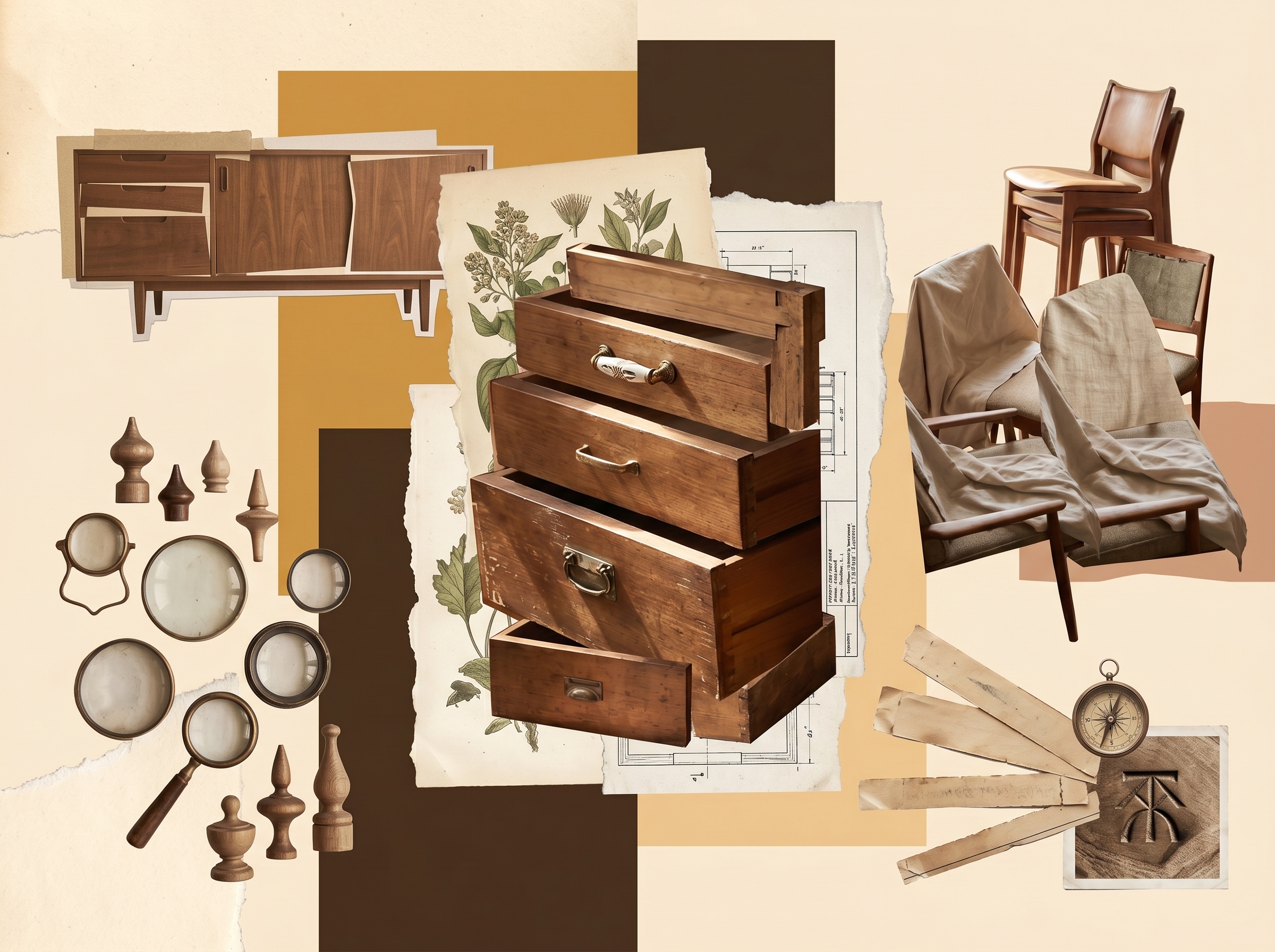
What to Do When You Find Something Interesting
You're at a shop, estate sale, or flea market. You spot a piece that ticks a few boxes. Here's the workflow that helps you decide whether to buy.
Take photos immediately. Capture the overall piece, close-ups of joinery and hardware, any marks or labels, and condition issues. Good photos help you research on the spot—or later, if you're not sure.
Use a photo-based ID tool. Apps like Tocuro let you identify furniture from photos and get an estimated value range in seconds. That gives you a baseline to work from while you're still in the shop, so you know whether the asking price is reasonable or wildly inflated.
Check comparable sales. If you have a name or style, search sold listings on eBay, Chairish, or 1stDibs. Don't compare asking prices—look at what actually sold, and adjust for condition. A perfect example in a design gallery will always be priced higher than a worn piece at a flea market.
Factor in transport and restoration. A $100 dresser that needs $200 in repairs and $50 in truck rental isn't a deal. Be honest about whether you'll actually refinish it, reupholster it, or hire someone who will.
Negotiate, but know your ceiling. Vintage furniture pricing is subjective, and most sellers will come down a bit. But don't talk yourself into overpaying just because you've invested time researching. If the price doesn't make sense, walk away.
For more on evaluating value quickly, see our guide to antique furniture valuation.
How Tocuro Fits Into the Vintage Furniture Buying Workflow
When you're buying vintage furniture in the field, you need answers fast. Tocuro helps you identify pieces from photos, estimate value ranges based on current market signals, and save everything you're considering into one organized collection.
Snap a photo of a credenza, and Tocuro identifies the style, era, and likely maker if there are visible marks. You get an estimated value range so you know whether the $250 price tag is fair, a steal, or a pass. And if you're not ready to buy but want to remember the piece, you can save it to your collection with notes and photos for later.
You get 7 free identifications per day, and the count resets daily—plenty for a weekend of thrifting furniture or browsing estate sales. Higher-volume usage requires payment, but the free tier works well for casual collectors building a collection over time.
Tocuro isn't just for furniture. It works on ceramics, glassware, lighting, textiles, and most other vintage and antique categories, so you can use one tool across everything you collect.
Build Your Vintage Furniture Collection With Confidence
Buying vintage furniture gets easier the more you do it. You start recognizing quality, spotting red flags faster, and knowing which pieces are worth the effort. But every collector benefits from a system that keeps track of what they've seen, what they've learned, and what they're still hunting for.
Build your collection on Tocuro and keep all your photos, research, and notes in one place. Whether you're furnishing a home, flipping pieces for profit, or just collecting what you love, having a system makes every buying decision clearer.
Start identifying your finds today, and buy vintage furniture with the confidence that comes from actually knowing what you're looking at.
Collector workflow
Build Your Collection
Save your finds, track what you own, and turn one-off discoveries into a collection.