
Glass Maker Marks: How to Find and Read Etched and Pressed Marks
Glass maker marks on etched and pressed glassware can help identify manufacturers and pattern lines, but reading them requires knowing where to look and what limitations they have. This guide shows you how to locate marks, interpret what they tell you, avoid common misreads, and photograph them effectively.
Glass Maker Marks: How to Find and Read Etched and Pressed Marks
Glass maker marks on etched and pressed glassware come in several forms—acid-etched signatures, impressed mold marks, paper labels, and engraved codes. Unlike the clear backstamps you find on porcelain or pottery, glass marks can be subtle, easily worn, or entirely absent. Knowing where to look and what to expect helps you identify your piece and avoid frustration when a mark doesn't reveal everything you hoped it would.
Where to Find Glass Maker Marks
Most glass maker marks appear on the base or underside of a piece, but the location varies by manufacturer and production method.
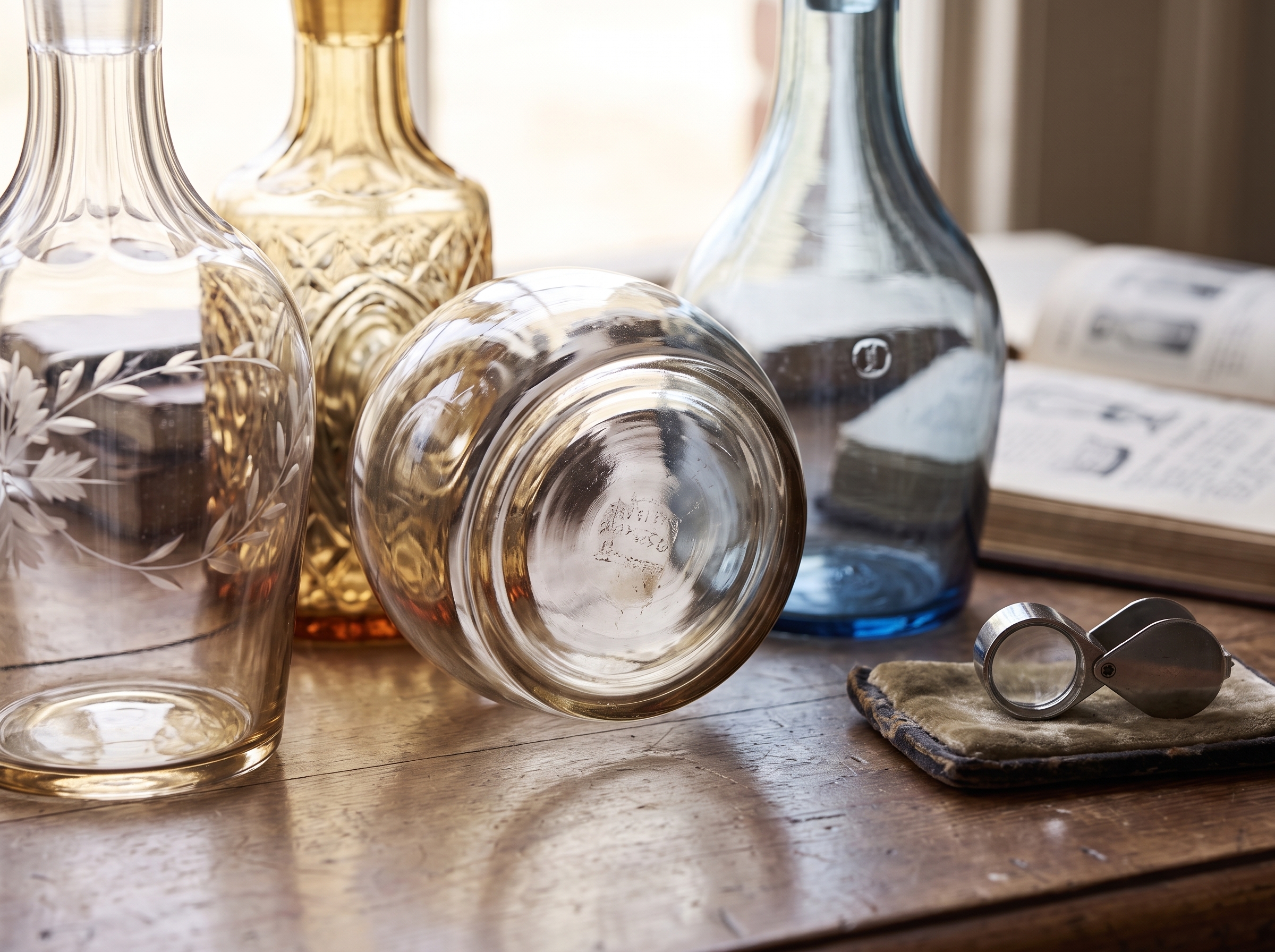
Base or pontil area: The most common spot. Turn bowls, vases, compotes, and stemware upside down. Look for acid-etched script signatures (common on high-end cut and etched glass), impressed marks from the mold, or engraved logos. Pontil marks—the rough or polished spot where the piece was broken from the glassblower's rod—sometimes appear alongside or within the mark.
Inside the rim or foot: Some manufacturers placed small etched marks inside the rim of bowls or on the inner edge of a stemware foot. Tilt the piece under good light and rotate it slowly.
Edge of the pattern: Pressed glass sometimes carries a manufacturer's initial or symbol incorporated into the pattern itself, often along the outer edge or in a decorative medallion. These are easy to miss if you're only checking the base.
Paper labels: Many mid-century and later pieces relied on foil or paper labels rather than permanent marks. These labels fall off or wear away, leaving no mark at all. If you see adhesive residue, a label was likely present.
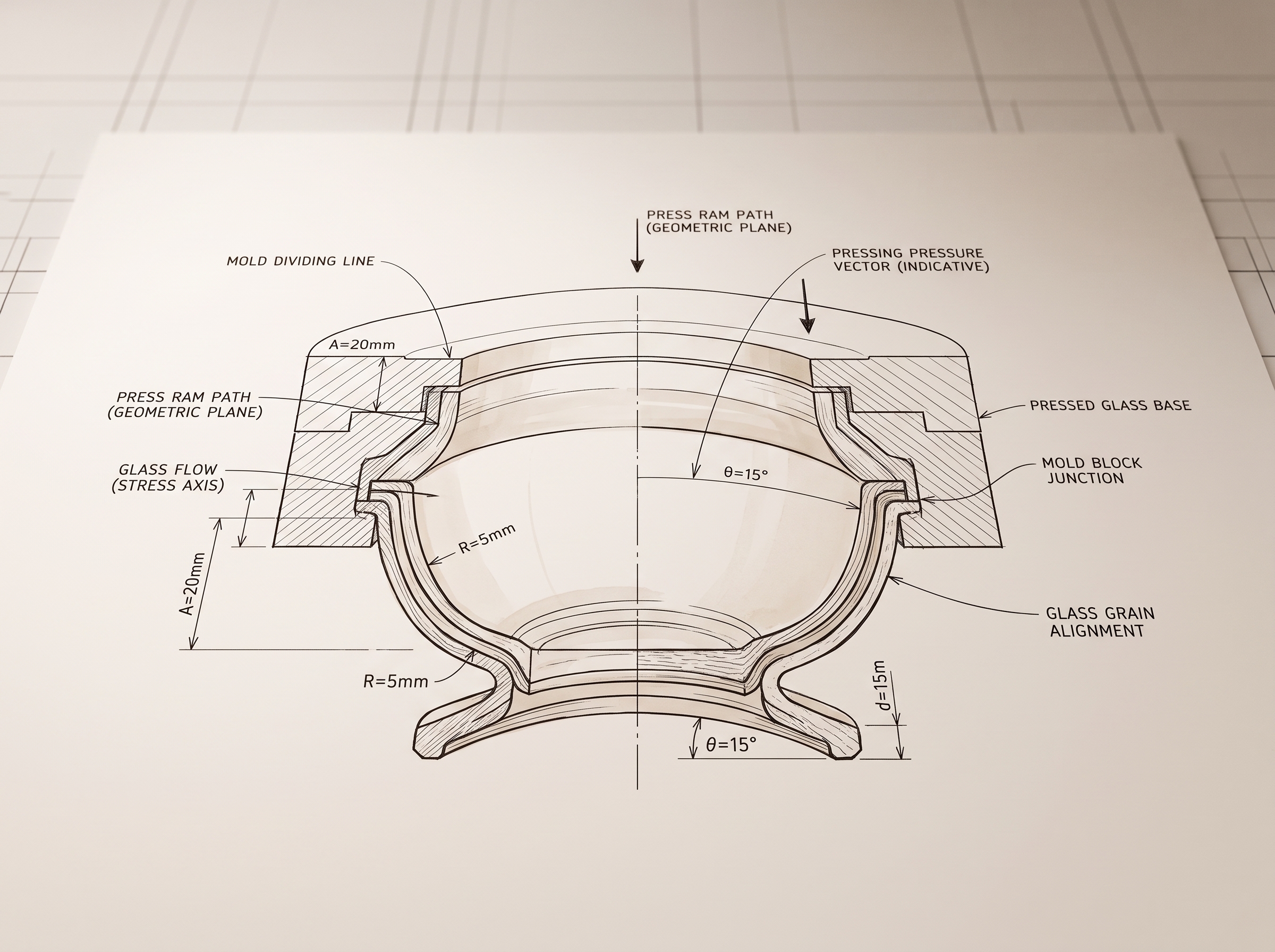
Mold seams and numbers: Pressed glass often shows faint mold numbers or letters along seams. These aren't maker marks but can help narrow down the pattern or production run when cross-referenced with catalog records.
What Glass Maker Marks Can and Cannot Tell You
Glass marks help, but they're not as definitive as marks on other materials. Here's what they reveal—and what they don't.
What marks can tell you
A clear acid-etched signature like "Hawkes," "Libbey," or "Steuben" confirms the manufacturer and often suggests a premium line. Pressed glass marks with company initials (like "IG" for Imperial Glass or "N" in a circle for Northwood) identify the maker and sometimes the era, since many companies changed their marks over time. Mold numbers, when present, can help you match a piece to a specific pattern name in reference books.
What marks cannot tell you
A mark alone won't tell you the exact year a piece was made, especially for long-running patterns. Many companies used the same mark for decades. Unmarked glass isn't necessarily less valuable or less authentic—plenty of high-quality pieces, including early American pressed glass and much Depression-era glass, were never marked. A mark also won't confirm a piece's value without considering condition, rarity, pattern, and market demand. Reproductions and later runs sometimes carry the same marks as earlier pieces, especially when a company was sold or revived.
Common Misreads of Glass Maker Marks
Glass marks are small, subtle, and easy to confuse. Here are the mistakes collectors make most often.
Mistaking mold numbers for dates: A "7" or "52" impressed into the base is almost always a mold or batch number, not a year. True date codes are rare on glass.
Confusing wear with absence: Acid-etched marks fade with repeated washing and handling. What looks unmarked may have once carried a signature. Check under magnification and raking light.
Assuming all script is the same: "Hawkes" and "Heisey" can look similar in script. Photograph the mark and compare it to verified examples rather than guessing.
Overlooking pattern-specific marks: Some manufacturers marked only certain lines. An unmarked piece from the same maker might be from a budget line or an earlier production period.
Reading adhesive as a mark: Glue residue from an old label can look like etching or an impression. Gently clean the area with water before deciding.
Confusing reproductions with originals: Companies like Fenton and Mosser reproduced classic patterns and sometimes used similar marks. Look at glass quality, weight, and sharpness of detail, not just the mark.
How Photos of Glass Maker Marks Improve Results
Glass marks are notoriously hard to read in person, and even harder to describe in writing. A clear photo captures details you might miss and makes identification faster and more accurate.
Lighting and angle
Raking light—shining a flashlight or phone light at a low angle across the mark—reveals shallow etching, impressed letters, and mold seams that disappear under direct overhead light. Take several photos with the light source from different directions.
Close-up and context
Shoot a close-up of the mark itself, getting as close as your camera will focus. Then take a wider shot showing the base and the mark's location. Context helps confirm what's a maker mark versus a mold number or pattern element.
Multiple marks
If your piece has a pontil mark, mold seam, signature, and pattern elements, photograph all of them. Each one adds information.
Full piece for pattern identification
Since many glass pieces aren't marked at all, include photos of the overall shape, pattern details, color, and any decorative elements. Pattern and form often matter more than the mark when identifying and valuing glass.
Get Help Identifying Your Glass Maker Marks
When a mark is faint, worn, or ambiguous, a second set of eyes helps. Tocuro uses your photos to identify glass maker marks, match patterns, and provide estimated value ranges based on current market signals. Upload images of the mark, base, and full piece for the most accurate results. Identify your item and see what your glass reveals.
Unlike other materials with standardized hallmarking systems—like silver or jewelry—glass marks follow no universal rules. Different manufacturers used different methods, and many used none at all. That makes good photos and pattern knowledge just as important as finding a mark. Focus on what's there, not what you wish were there, and you'll get closer to a confident identification.
Photo identification
Identify Your Mark
Use Tocuro to identify your item from a photo and get an estimated value range when market data is available.