
Georgian Furniture Identification: How to Recognize the Style from Photos
Georgian furniture features distinctive symmetry, rich mahogany construction, and classical proportions. This guide helps you identify authentic Georgian pieces through key visual markers including wood choices, hardware styles, and construction techniques.
Georgian Furniture Identification: How to Recognize the Style from Photos
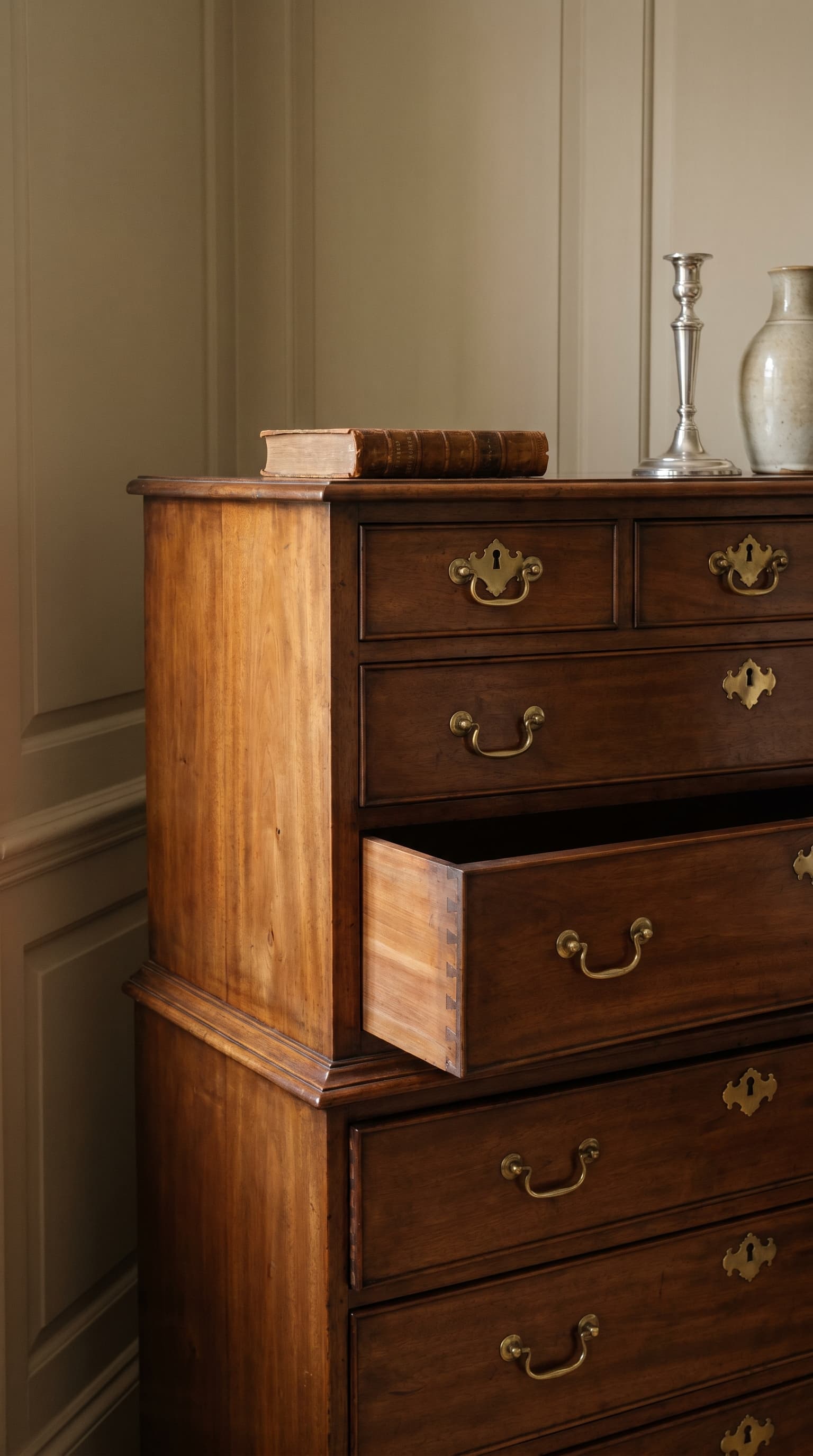
You've found a chest of drawers with perfect symmetry, warm mahogany wood, and elegant brass pulls. The proportions feel balanced and refined, but nothing about it screams for attention. You might be looking at Georgian furniture—a style that dominated English and American homes from 1714 to 1830. Georgian furniture identification relies on spotting restraint, classical balance, and quality craftsmanship rather than showy ornament.
The Georgian era spanned four King Georges and produced furniture that still influences design today. Unlike the ornate curves of Queen Anne or the heavy drama of Victorian pieces, Georgian furniture speaks through proportion and subtle detail.
What You're Actually Looking At
Georgian furniture encompasses several sub-styles—Early Georgian (1714-1750), Mid-Georgian (1750-1780), and Late Georgian (1780-1830). Each period shares core principles but shows evolution in detail.
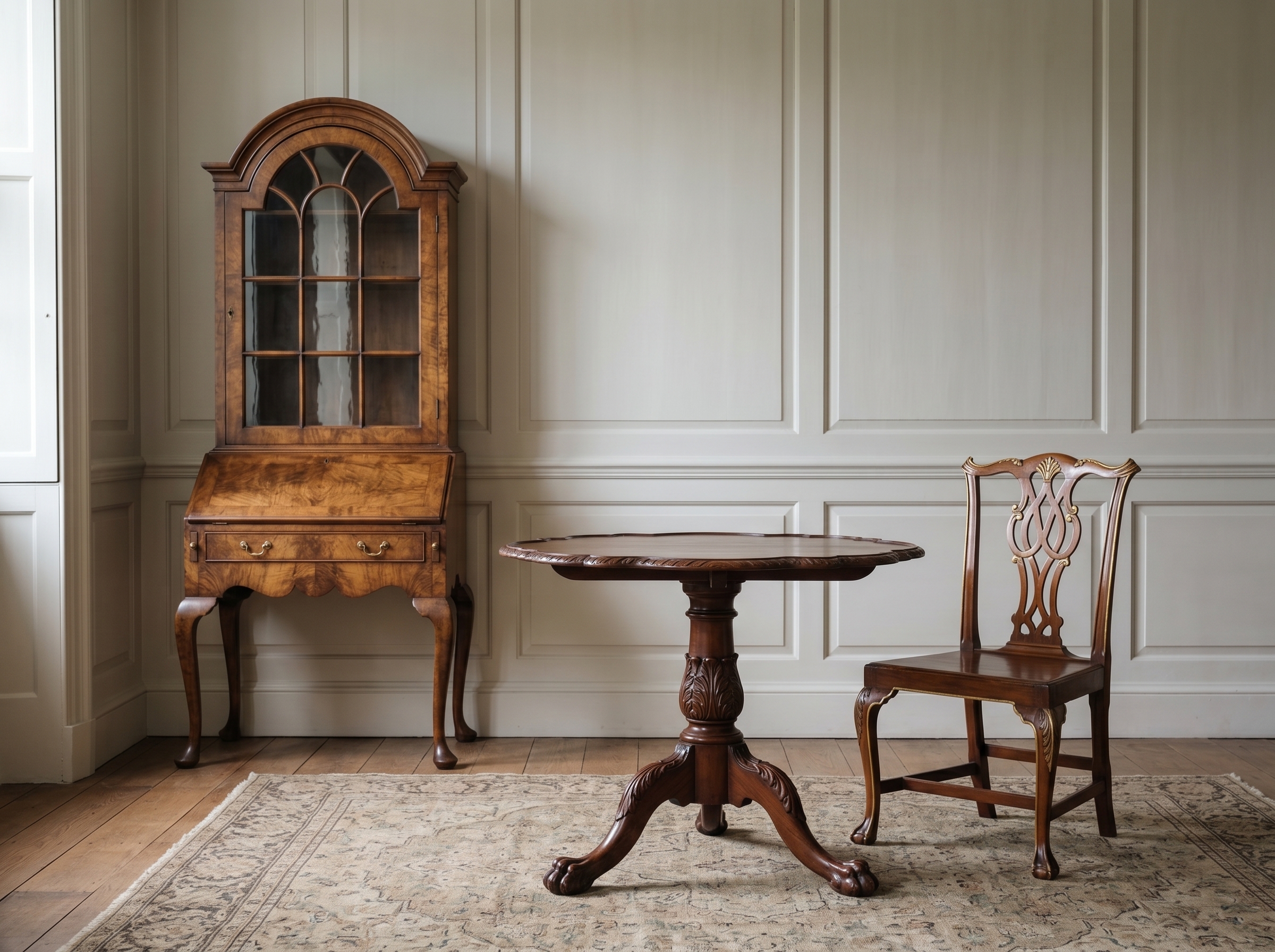
Early Georgian pieces often feature walnut construction and cabriole legs inherited from Queen Anne design. Mid-Georgian furniture—the classic period—showcases mahogany, straight lines, and Chippendale influences. Late Georgian work incorporates neoclassical motifs and lighter woods like satinwood.
All Georgian furniture prioritizes function within elegant form. A Georgian secretary isn't just storage—it's a carefully balanced composition where every drawer, door, and divider sits in mathematical harmony.
Visual Checklist for Georgian Furniture Identification
Wood and construction
- •Mahogany dominates mid and late Georgian (1750-1830)
- •Walnut appears in early pieces (1714-1750)
- •Satinwood and rosewood used for inlay and banding
- •Solid wood construction with hand-cut dovetails
- •Grain runs vertically on drawer fronts
Proportions and symmetry
- •Perfect bilateral symmetry—left matches right exactly
- •Classical proportions based on architectural principles
- •Rectangular forms with straight or gently bowed fronts
- •Height-to-width ratios feel balanced, never exaggerated
- •Bracket or straight feet, never ball-and-claw
Hardware and details
- •Brass pulls, handles, and escutcheons
- •Bail pulls (swing handles) with decorative backplates
- •Backplates often feature simple geometric or classical shapes
- •Original hardware shows wear patterns and patina
- •Locks typically brass with visible keyholes
Decorative elements
- •Minimal carved ornament compared to later styles
- •Inlay work in contrasting woods
- •Dentil molding (small rectangular blocks) on cornices
- •Fluted columns on larger case pieces
- •Pediments (triangular or broken-arch tops) on tall pieces
Form-specific markers
- •Chests: straight bracket feet, cockbeading around drawers
- •Tables: square or gently tapered legs, sometimes fluted
- •Chairs: straight or slightly curved backs, upholstered seats
- •Secretaries: symmetrical door and drawer arrangements
Common Georgian Furniture Identification Confusions
Georgian vs. Chippendale
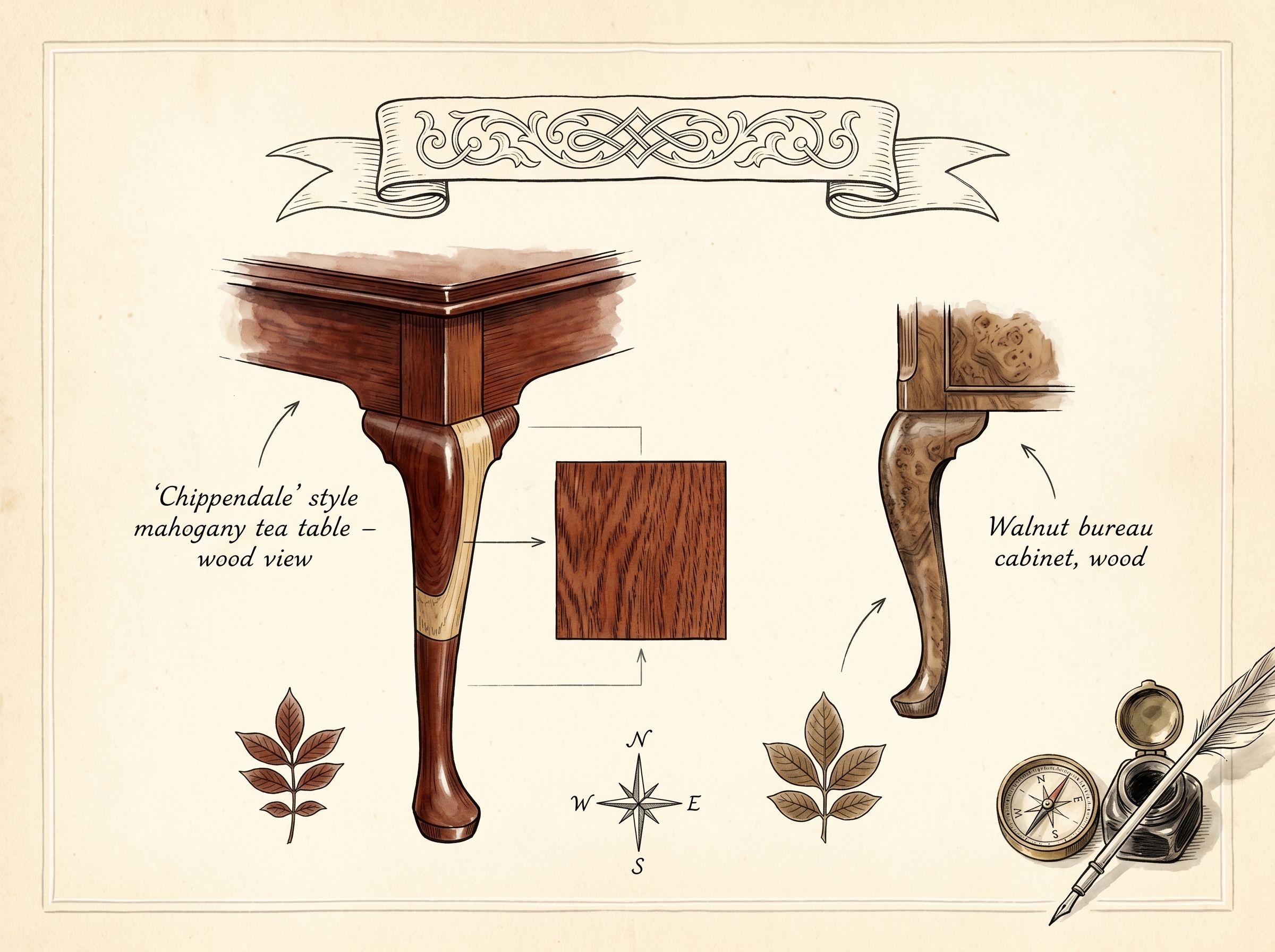
Chippendale is actually a Georgian-era style (mid-1700s). Thomas Chippendale worked during the Georgian period, but not all Georgian furniture is Chippendale. Chippendale tends toward more elaborate carving—think pierced chair backs and ball-and-claw feet. General Georgian pieces show more restraint. If you see extensive rococo carving or Chinese fretwork, you're likely looking at Chippendale rather than broader Georgian work.
Georgian vs. Federal
American Federal furniture (1780-1820) overlaps with Late Georgian and shares many traits. Both use mahogany, inlay, and neoclassical motifs. Federal pieces often feature more delicate proportions, American eagle motifs, and influences from French Directoire design. If your piece has patriotic American symbols or unusually slender legs, consider Federal rather than English Georgian.
Georgian vs. Victorian
Victorian furniture followed Georgian and looks dramatically different. Victorian pieces embrace curves, heavy carving, and dark finishes. Georgian maintains straight lines and restraint. If you see naturalistic carving (fruits, flowers, animals) or exuberant curves, you've moved into Victorian territory. Georgian stays disciplined.
Georgian vs. Georgian Revival
The early 1900s saw widespread Georgian Revival production. These pieces copy Georgian forms but often use modern construction methods. Look for machine-cut dovetails, plywood backs, or perfect uniformity that hand tools couldn't achieve. Revival pieces can fool you from across the room—details reveal the truth.
How to Use Photo Identification to Narrow It Down
Start with overall proportion
Take a straight-on photo showing the full piece. Georgian furniture photographs reveal balance immediately. Draw an imaginary vertical line down the center—both sides should mirror perfectly. Measure visual weight: Georgian pieces feel stable, never top-heavy or stretched.
Photograph the wood grain close-up
Mahogany grain shows distinctive depth and figure. Capture drawer fronts, case sides, and any inlay work. True mahogany displays reddish-brown tones with varied grain patterns. Walnut shows chocolate brown with strong grain. Later veneers or stains won't show the depth of period solid wood.
Capture hardware detail
Photograph brass pulls, escutcheons, and hinges from multiple angles. Look for wear patterns where hands have touched metal for decades. Original Georgian hardware shows smooth patina, not bright polish. Photograph the attachment points—original hardware often shows slight indentations or adaptation marks.
Document joinery and construction
Pull out drawers and photograph dovetails. Hand-cut dovetails show slight irregularity—pins and tails won't perfectly match across drawers. Photograph drawer bottoms: Georgian drawers typically feature solid wood bottoms with grain running front to back. Check for tool marks on unfinished surfaces.
Photograph feet and base details
Georgian feet tell stories. Bracket feet should show hand-shaping, not perfect machine curves. Photograph where feet meet the case—original attachments show period construction methods. Replacements often reveal themselves through different wood, fresh cuts, or mismatched design.
Check for maker's marks or labels
Photograph any writing, labels, or marks you find. Georgian cabinetmakers sometimes signed work, left chalk marks, or applied paper labels. These rarely survive, but when they do, they're identification gold.
Get Expert Help with Your Georgian Furniture
Identifying Georgian furniture from photos becomes easier when you know what markers matter most. Symmetry, mahogany construction, brass hardware, and classical proportions combine to create the Georgian look. But period variations, regional differences, and later reproductions can still puzzle even experienced collectors.
When you need a second opinion, Tocuro helps identify furniture from photos using market signals and visual markers. Upload clear images showing overall form, close-ups of wood and hardware, and construction details like dovetails. You'll get an estimated style period and value range—helpful context when deciding whether that chest is genuinely Georgian or a well-made revival piece.
The Georgian period produced furniture built to last centuries. Many pieces remain in active use, valued for both their history and their timeless design. Understanding what you're looking at helps you appreciate the craftsmanship—and make informed decisions about care, restoration, or value. Your photos hold more information than you might think. Focus on the details that matter, and Georgian furniture reveals its identity.
Photo identification
Identify Your Furniture
Use Tocuro to identify your item from a photo and get an estimated value range when market data is available.