
Furniture Styles: A Complete Guide to Naming What You Own
A comprehensive overview of furniture styles from the 1600s to today, helping collectors understand the visual differences between periods and design movements.
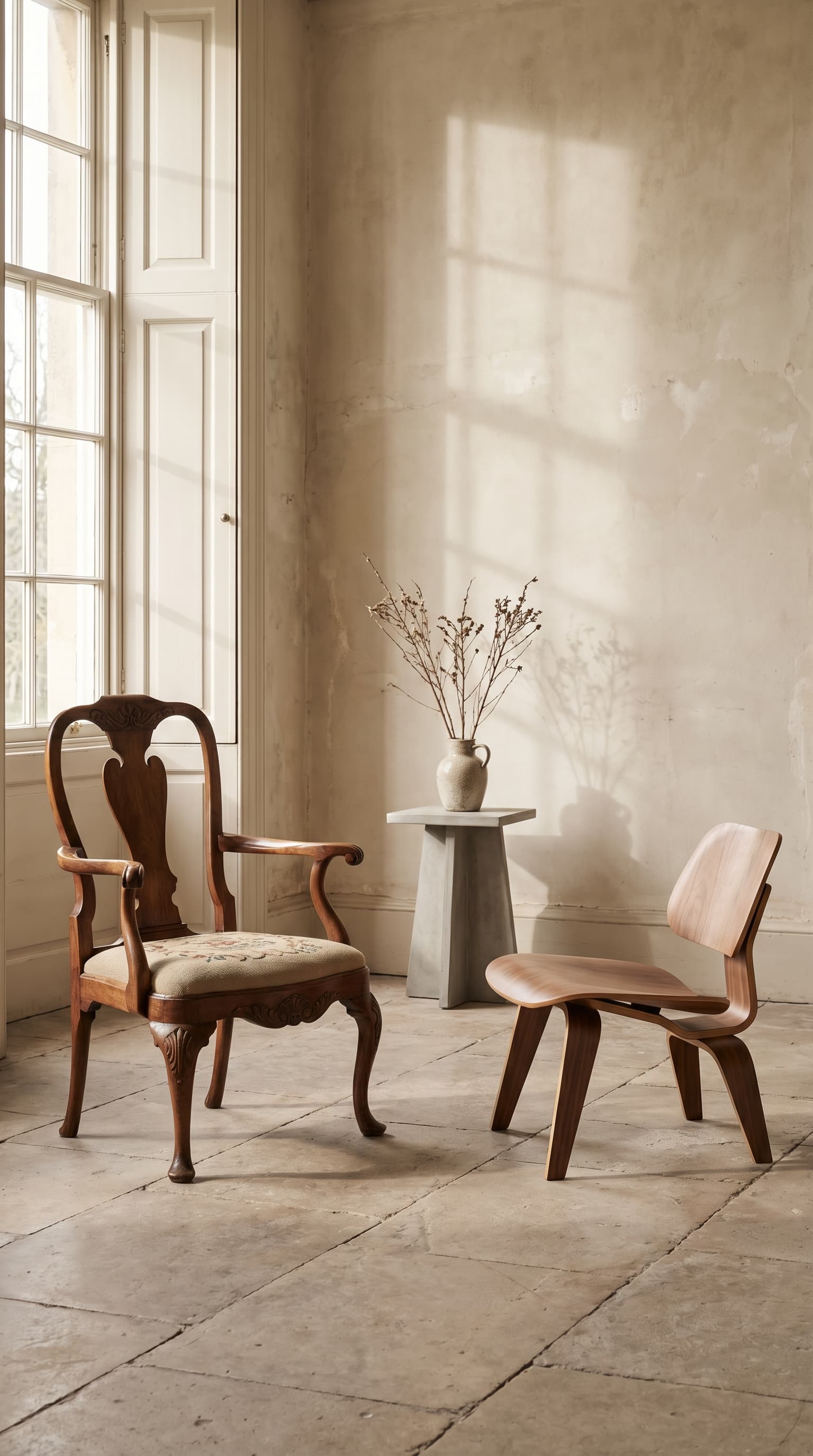
Furniture Styles: A Complete Guide to Naming What You Own
When you're staring at a cabinet, chair, or table and wondering what to call it, you're really asking about furniture styles—the visual language that connects design choices to specific eras, movements, and makers. Understanding furniture styles helps you date pieces, research their origins, estimate value, and talk knowledgeably with other collectors.
This guide covers the major furniture styles you'll encounter, from formal period pieces to mass-market revivals, and how to tell them apart when you're standing in front of something you can't quite name.
What You're Actually Trying to Name
Furniture styles fall into a few broad categories that can overlap:
Period styles reflect the time and place they were made. Queen Anne, Chippendale, Federal, and Empire are named after monarchs, cabinetmakers, or political eras. These pieces follow specific design conventions tied to their original context.
Revival styles borrow from earlier periods but were made decades or centuries later. Victorian Gothic Revival, Colonial Revival, and Neoclassical furniture reinterpret older forms with newer materials and construction methods.
Design movements like Arts & Crafts, Art Nouveau, Art Deco, and Mid-Century Modern represent deliberate breaks from tradition. These styles prioritize new aesthetics, materials, or philosophies about how furniture should look and function.
Regional and vernacular styles include pieces like Shaker, Mission, French Provincial, and American Country. These often blend period influences with local craft traditions and available materials.
Most furniture you encounter won't be a pure example of one style. Makers mixed influences, and later manufacturers created hybrids to suit changing tastes.
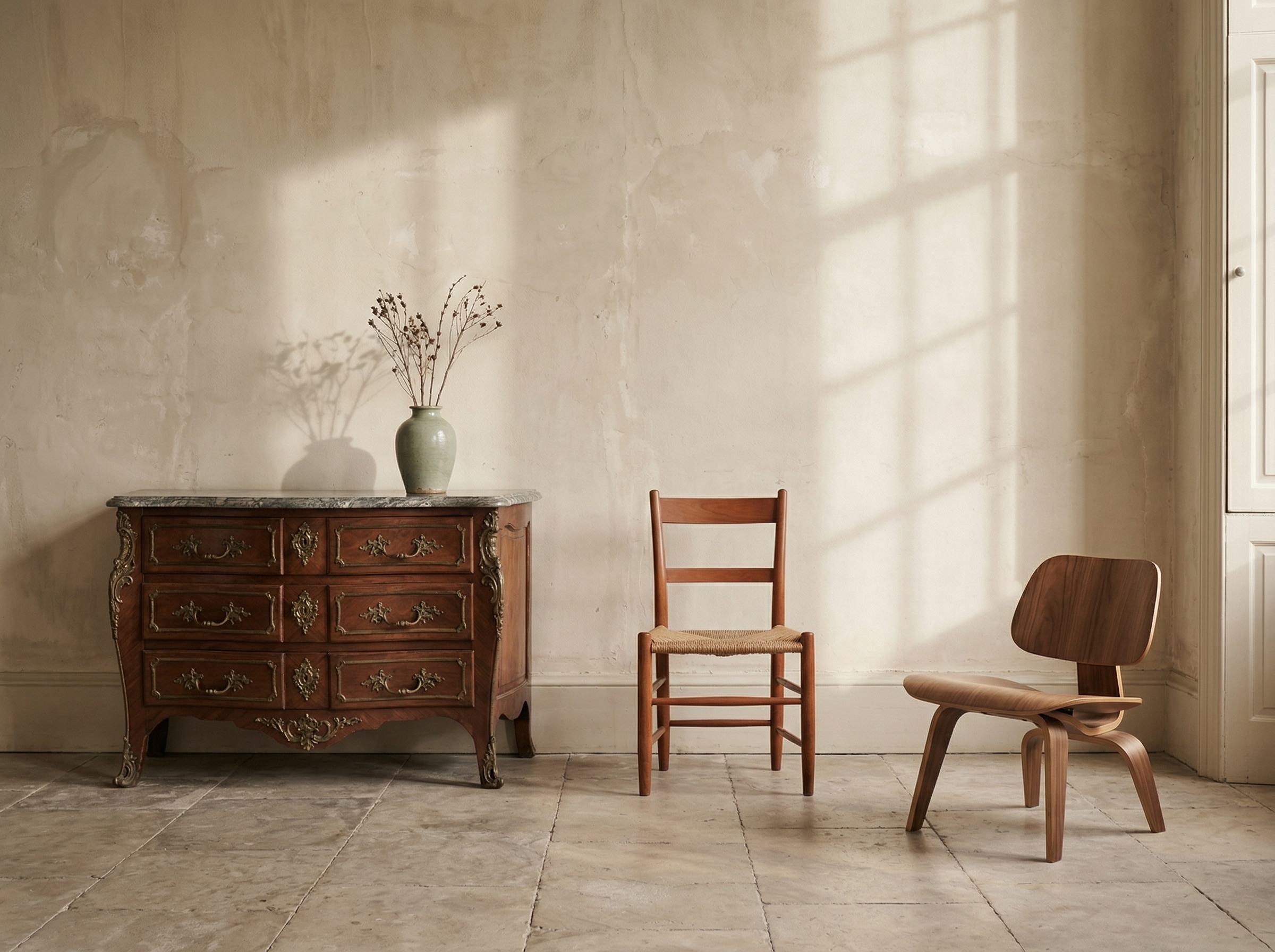
Visual Classification Checklist for Furniture Styles
Start with these observable features to narrow the field:
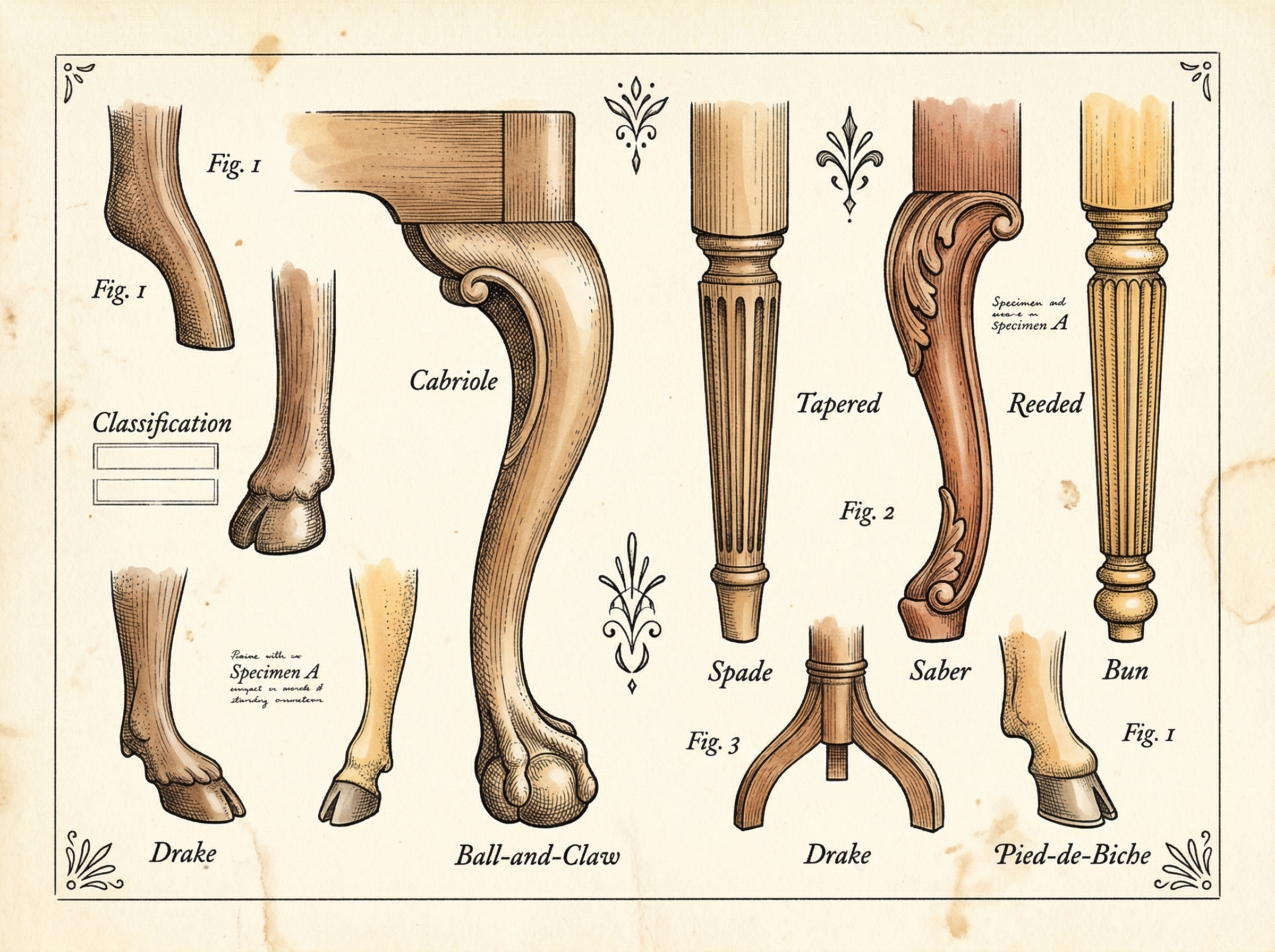
Legs and feet are the fastest clue. Cabriole legs with pad or ball-and-claw feet suggest Queen Anne or Chippendale. Straight, tapered legs point toward Federal or Hepplewhite. Turned legs with stretchers are common in earlier Colonial pieces. Splayed, tapered legs with minimal decoration usually mean Mid-Century Modern.
Ornamentation level separates styles quickly. Heavy carving, gilt, and applied decoration suggest Victorian, Rococo Revival, or Renaissance Revival. Clean lines with little or no carving point toward Shaker, Mission, Federal, or Mid-Century Modern. Inlay and marquetry appear in Federal, Hepplewhite, and some Art Deco.
Wood type and finish offer context. Dark, glossy finishes were popular in Victorian and Empire styles. Natural wood with visible grain suggests Arts & Crafts, Mission, or Mid-Century Modern. Painted finishes appear in Colonial, Scandinavian, and some cottage styles.
Proportions and silhouette reveal design philosophy. Tall, vertical lines with Gothic arches suggest Victorian Gothic Revival. Low, horizontal forms with angular or organic curves point toward Mid-Century Modern. Delicate, refined proportions indicate Federal or Hepplewhite. Chunky, sturdy construction fits Arts & Crafts or Mission.
Hardware and joinery help date and classify. Brass pulls with bail handles suggest Colonial or Federal. Wooden knobs fit Shaker or Arts & Crafts. Recessed or integrated pulls indicate Mid-Century Modern. Dovetail joints visible from the outside suggest handmade or earlier construction.
Common Furniture Style Confusions
Even experienced collectors mix these up:
Victorian vs. Edwardian: Victorian (1837–1901) covers dozens of substyles, from heavy Rococo Revival to lighter Eastlake. Edwardian (1901–1910) is generally more refined, with lighter woods and simpler lines. But late Victorian and early Edwardian pieces can look nearly identical.
Mission vs. Arts & Crafts: Mission is a subset of Arts & Crafts, but not all Arts & Crafts is Mission. Mission furniture emphasizes straight lines, exposed joinery, and quarter-sawn oak. Broader Arts & Crafts includes more decorative elements and varied materials.
Colonial vs. Colonial Revival: True Colonial furniture (1600s–1700s) is rare, handmade, and shows tool marks consistent with period construction. Colonial Revival (1876–1950s) imitates Colonial forms but uses modern joinery, machine tooling, and different finishes.
Mid-Century Modern vs. Danish Modern: Danish Modern is a subset of Mid-Century Modern, characterized by organic curves, teak or rosewood, and Scandinavian makers like Hans Wegner or Finn Juhl. American Mid-Century Modern includes sharper angles, varied materials, and designers like Eames or Knoll.
Art Deco vs. Art Moderne: Art Deco (1920s–1930s) features geometric patterns, exotic materials, and decorative flourishes. Art Moderne (Streamline Moderne, 1930s–1940s) simplifies those ideas into smoother, more aerodynamic forms with less ornamentation.
Empire vs. Federal: Both appeared in early 1800s America. Federal (1780s–1820s) is lighter, more delicate, with inlay and tapered legs. Empire (1800s–1840s) is heavier, with carved columns, claw feet, and darker finishes influenced by Napoleonic styles.
How to Use Photo Identification to Narrow Furniture Styles Down
Photographing your piece systematically makes style identification faster and more accurate.
Capture the full silhouette first. Step back and photograph the entire piece straight-on from the front, side, and back. This reveals proportions, leg style, and overall form—the foundation of style classification.
Zoom in on details that signal specific styles. Photograph carved elements, inlay patterns, hardware, joinery at drawer corners, and any maker's marks or labels. These micro-features confirm or rule out candidate styles.
Document construction clues by opening drawers and photographing dovetails, interior finishes, and how pieces connect. Machine-cut dovetails suggest post-1860s. Hand-cut irregularities point earlier. Plywood or particleboard usually means post-1940s.
Shoot legs and feet from multiple angles. The shape, turnings, carving, and how they attach to the body are diagnostic. A single photo of a cabriole leg with a ball-and-claw foot can eliminate dozens of style possibilities.
Include any labels, stamps, or marks even if they seem unreadable. Furniture makers, retailers, and upholsterers left clues that help date and attribute pieces.
If you're still stuck after reviewing your photos, Tocuro identifies furniture styles from your images and provides context about period, design movement, and value range. You get 7 free identifications daily to work through a collection or compare similar pieces. Upload clear photos showing the features above, and you'll get specific style names to guide further research.
Major Furniture Styles at a Glance
Here's a quick tour of styles you'll encounter most often:
Queen Anne (1700s–1750s): Cabriole legs, pad or drake feet, minimal carving, curved lines, walnut or mahogany.
Chippendale (1750s–1780s): Ball-and-claw feet, carved details, pierced splats, heavier than Queen Anne, mahogany.
Federal/Hepplewhite (1780s–1820s): Tapered legs, delicate inlay, shield-back chairs, light proportions, mahogany or satinwood.
Empire (1800s–1840s): Heavy, dark mahogany, carved columns and claw feet, classical motifs, bold proportions.
Victorian (1837–1901): Broad category including Rococo Revival (curves, carving), Gothic Revival (pointed arches), Renaissance Revival (architectural elements), and Eastlake (geometric incising).
Arts & Crafts/Mission (1880s–1920s): Straight lines, exposed joinery, quarter-sawn oak, minimal ornament, handcrafted aesthetic.
Art Nouveau (1890s–1910s): Flowing, organic curves, floral motifs, whiplash lines, exotic materials.
Art Deco (1920s–1930s): Geometric patterns, exotic veneers, chrome or lacquer, stepped forms, glamorous details.
Mid-Century Modern (1945–1970s): Clean lines, organic or angular forms, teak, walnut, molded plywood, functional design.
Colonial Revival/Traditional (1876–present): Reproductions or interpretations of earlier American styles, machine-made, varied quality.
When Photos and Visual Comparison Aren't Enough
Some pieces defy easy classification because makers blended styles, buyers customized orders, or later owners altered original forms. Regional workshops also created hybrids that don't fit textbook definitions.
If you've photographed details, compared features, and still can't pin down a style name, that's normal. Furniture history is messier than design books suggest. Upload your photos to Tocuro to get an identification based on visual analysis and market data. The app provides style names, estimated date ranges, and value context even for pieces that don't fit neatly into one category.
For a deeper dive into visual identification techniques, see How to Identify Furniture Style: A Visual Checklist for Collectors. If you're wondering whether something is antique, vintage, or reproduction, How to Identify Antique Furniture walks through the photo evidence that reveals age and origin.
Understanding furniture styles turns mystery pieces into research projects and helps you know what you own, what it's worth, and where it fits in design history.
Photo identification
Identify Your Furniture
Use Tocuro to identify your item from a photo and get an estimated value range when market data is available.