
Furniture Stamps Identification: What Marks Can and Cannot Tell You
Furniture stamps appear on hidden surfaces and can indicate maker, retailer, or factory origin—but they don't always prove age or authenticity. Understanding what marks reveal, where they're typically found, and how to photograph them helps collectors make smarter decisions.
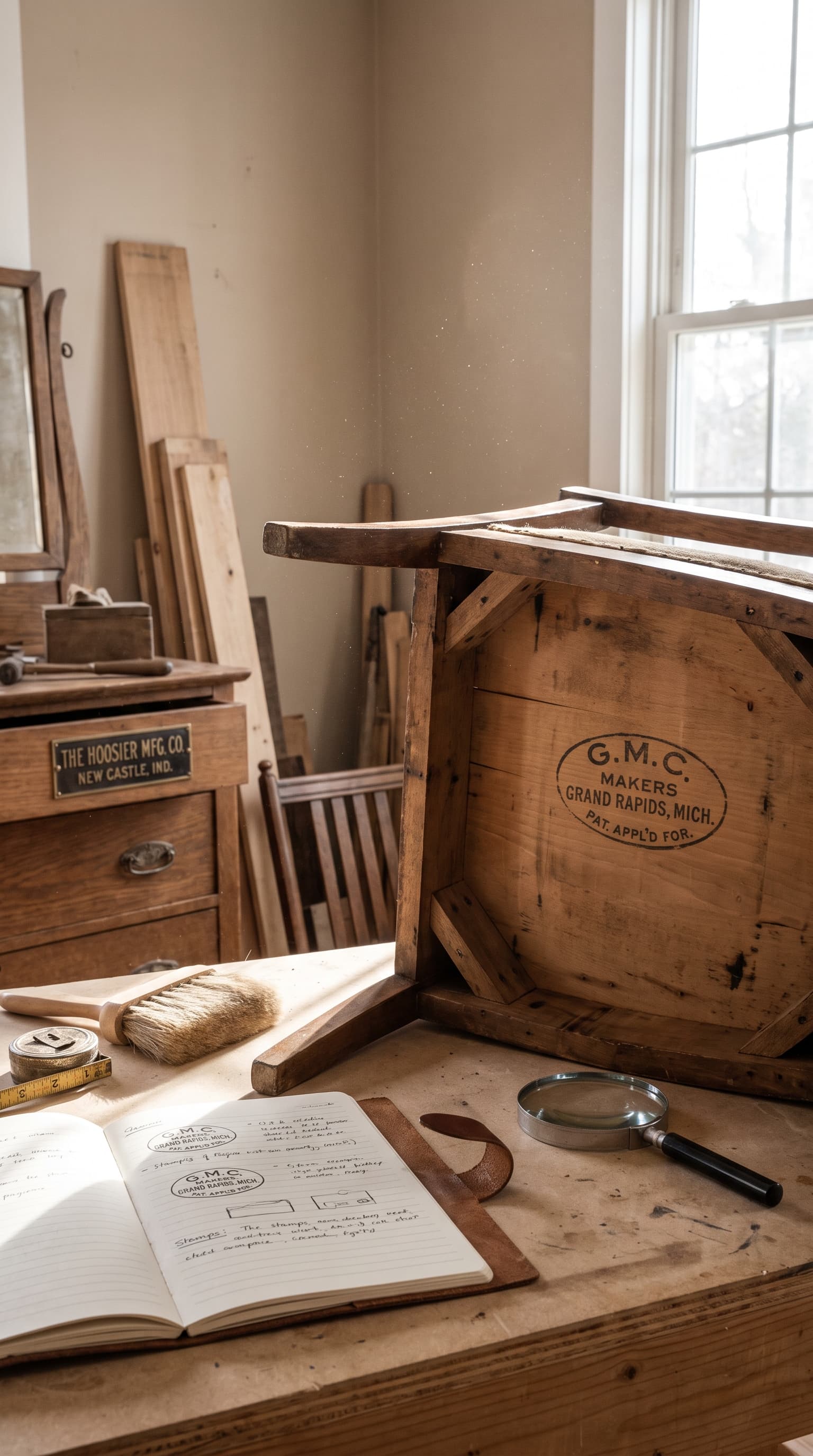
Where Furniture Stamps Typically Appear and What They May Indicate
Furniture stamps identification starts by knowing where to look. Most stamps, labels, and ink marks hide on surfaces customers never saw—the underside of drawers, the back of case pieces, inside cabinets, or beneath table aprons. Manufacturers, retailers, and workshop foremen placed these marks for inventory control, quality assurance, or shipping records, not for buyers.
A stamped mark may indicate the maker's name, a retailer who sold the piece, a patent date, a model number, or a factory inspector's code. Some stamps are crisp and legible; others fade to barely visible smudges after decades of handling and humidity. The location, ink type, and surrounding construction clues all matter when you're trying to date a piece or verify its story.
Unlike silver hallmarks or pottery backstamps, furniture marks were never standardized. Two identical stamps can mean different things depending on whether the piece is American, European, or Asian. That's why furniture stamps identification requires context—joinery style, hardware, wood species, and finish all work together to build a complete picture.
What Furniture Stamps Can and Cannot Tell You
What Stamps Can Reveal
A clear maker's stamp or paper label can confirm attribution when the style, construction, and materials align. Large American manufacturers like Stickley, Heywood-Wakefield, or Kittinger stamped or branded thousands of pieces, and these marks help narrow production windows when cross-referenced with known catalog designs.
Retailer stamps—from department stores like Marshall Field's or regional furniture dealers—indicate where a piece was sold, which can suggest regional manufacturing centers and approximate date ranges. Patent dates on metal tags provide a terminus post quem: the piece cannot be older than that date, though it may be decades newer.
Factory codes, lot numbers, and inspector marks sometimes appear alongside maker stamps. These rarely mean much to collectors, but they can help researchers trace specific production runs or confirm factory provenance when documented records survive.
What Stamps Cannot Prove Alone
A furniture stamp does not prove age without supporting evidence. Stamped names were reused, copied, and counterfeited. A "Chippendale" stamp on a chair does not mean Thomas Chippendale made it—it usually signals a 20th-century reproduction inspired by his published designs.
Stamps also cannot override what the construction reveals. If you find a stamped mark claiming 18th-century origin on a piece with machine-cut dovetails and plywood panels, the mark is either fraudulent or misunderstood. Antique furniture condition grading and joinery details outweigh any label when authenticity is in question.
Many high-quality period pieces carry no marks at all. Regional cabinetmakers, custom commission work, and European guild furniture often lack stamps entirely. Absence of a mark does not mean a piece is less valuable—it just means identification relies on style, materials, and construction instead.
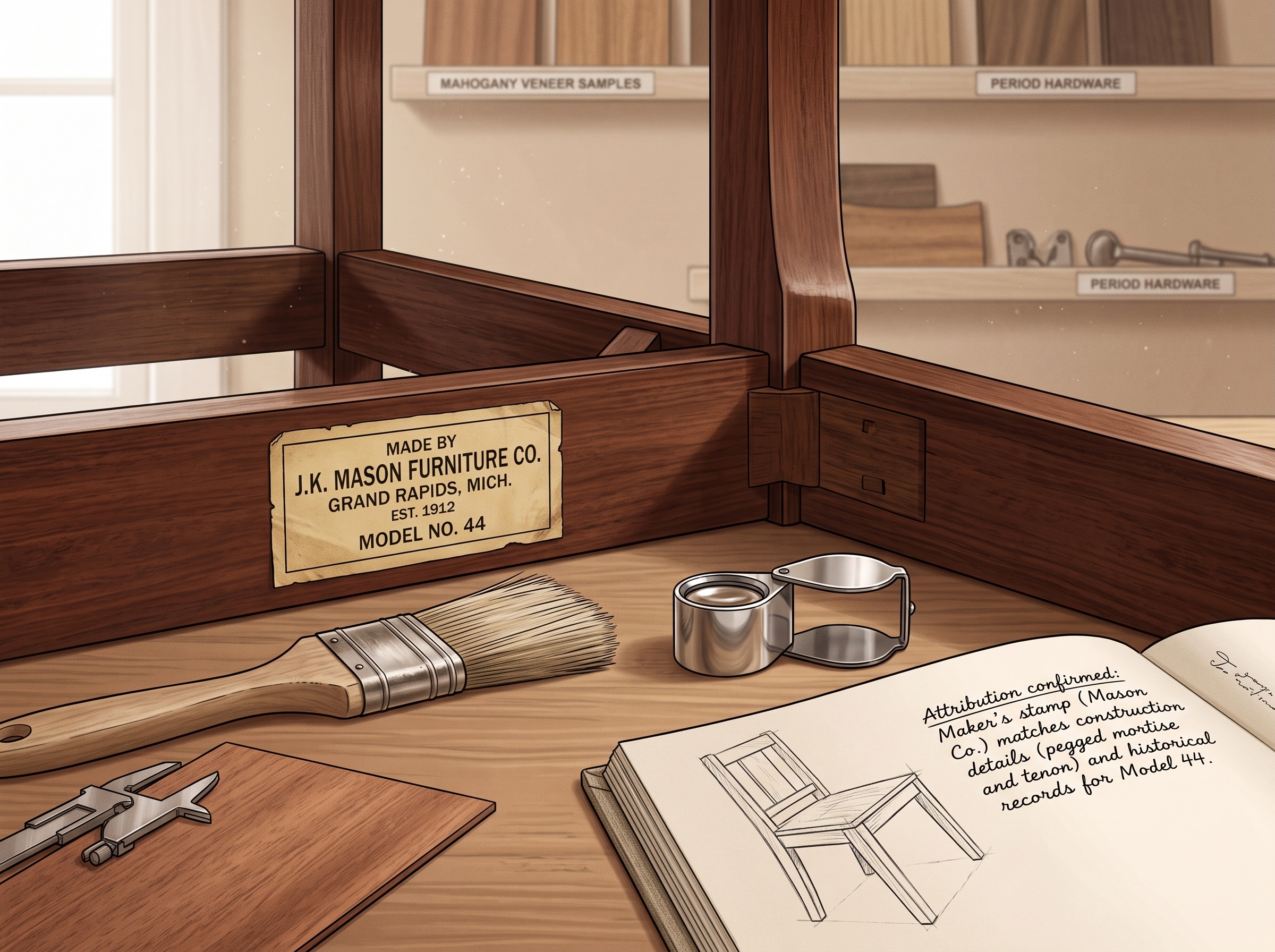
Common Misreads in Furniture Stamps Identification
Confusing Patent Dates with Manufacturing Dates
A patent date stamped on hardware or a metal tag indicates when a specific mechanism or design feature was patented, not when your piece was made. A chair stamped "Patent 1890" could have been manufactured in 1895, 1920, or 1950 if the patent remained in use. Cross-reference the date with joinery, finish, and hardware style to estimate actual age.
Assuming "Handmade" or "Antique" Stamps Are Authentic
Reproduction furniture from the 1920s onward often carried stamps reading "Colonial Revival," "Handmade," or even fake 18th-century names to evoke nostalgia. These marketing stamps were intentionally vague, designed to suggest age without making false legal claims. If the stamp uses suspiciously antique-sounding language but the dovetails are machine-cut, you're likely looking at a mid-century reproduction.
Mistaking Shipping Marks for Maker Marks
Freight companies, auction houses, and wholesalers stamped pieces during transit. A cryptic code or initial on the back of a secretary desk might be a warehouse inventory mark rather than a maker's signature. These stamps are often stenciled in blocky sans-serif type or applied with rubber stamps, unlike the branded or engraved marks craftsmen used.
Interpreting Numbers as Dates
Numbers stamped on furniture can mean dozens of things: model numbers, production lot codes, upholsterer's records, price codes, or inventory tallies. A four-digit number like "1887" might be a model number for a 1950s dining set rather than a manufacturing year. Look at the number's context—format, placement, and accompanying symbols—before jumping to conclusions.
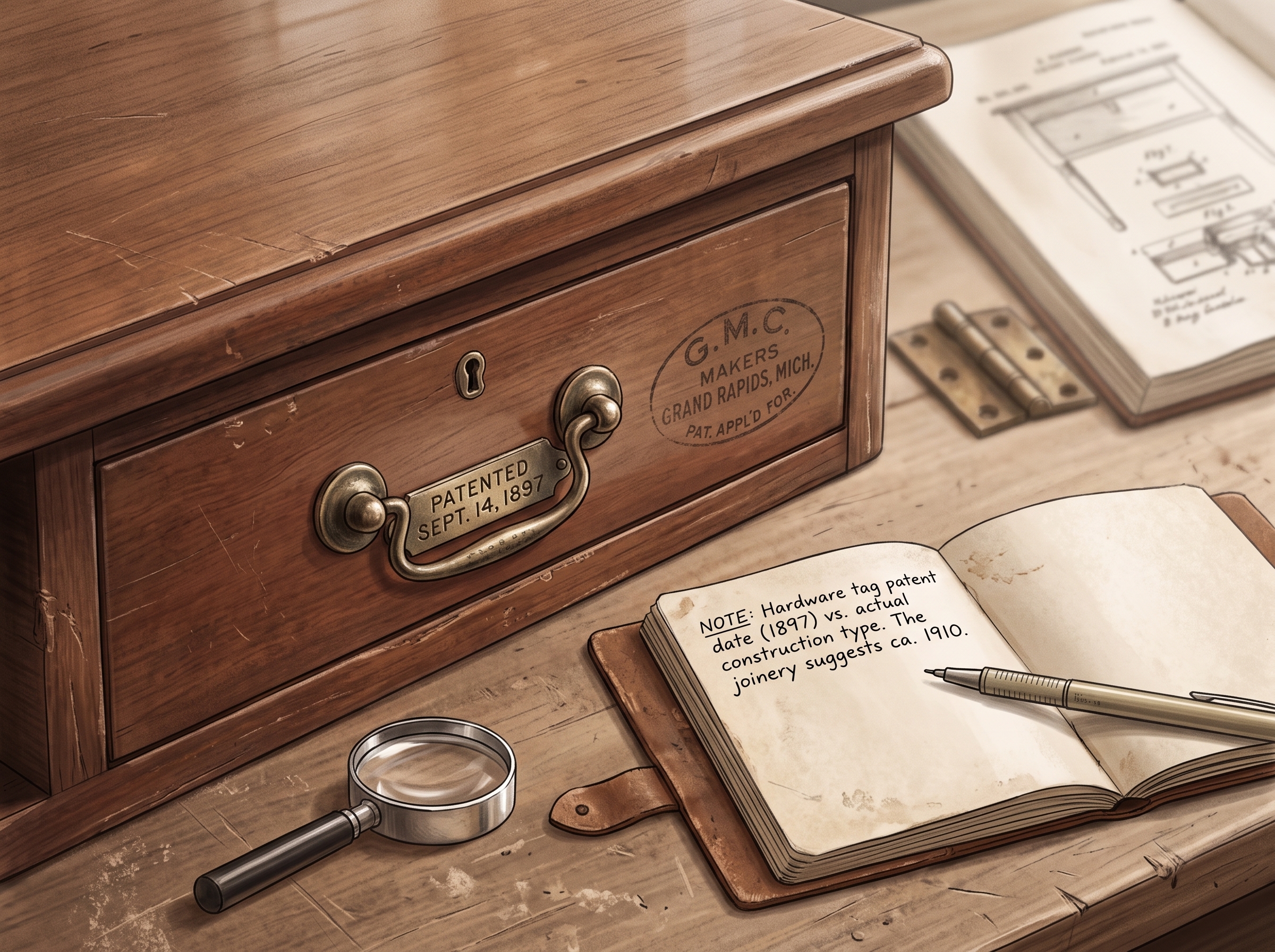
How Photos of Furniture Stamps Improve Identification Results
Photographing marks well makes the difference between a useful ID and a guess. Clean, well-lit close-ups reveal details your eye might miss: faint letters, overlapping stamps, or tool marks that indicate how the stamp was applied.
Use natural light or a bright LED, and avoid flash directly over the mark—it can wash out shallow impressions. Photograph the stamp straight-on, not at an angle, so text remains legible. Include a wide shot showing the mark's location on the piece, then zoom in for detail. If the stamp is faint, try side-lighting to create shadow contrast that makes letters pop.
Capture more than just the mark itself. Photograph the surrounding joinery, wood grain, and any adjacent construction features. A stamp on the underside of a chest of drawers means more when you also show the drawer slides, back panel, and corner blocks. Context helps separate authentic marks from added reproductions or wholesale tags.
If the mark includes a paper label, photograph it carefully without peeling or touching it. Fragile labels disintegrate quickly, and even well-meaning handling can destroy legibility. A clear photo preserves the information even if the label doesn't survive storage or transport.
Getting the Full Picture with Tocuro
Furniture stamps identification works best when marks combine with construction evidence, style analysis, and material clues. A single photo of a stamp rarely tells the whole story, but several images showing joinery, hardware, and overall form can narrow attribution and date range significantly.
Tocuro identifies furniture from photos by analyzing marks alongside construction details, giving you context a stamp alone cannot provide. The app draws on market signals to estimate value ranges based on what similar pieces actually sell for, not just what a name or date might imply. When you're trying to understand a stamped piece—or a piece with no marks at all—Tocuro helps you see what the evidence really supports.
Photo identification
Identify a Furniture Stamp
Use Tocuro to identify your item from a photo and get an estimated value range when market data is available.