
Figurine Marks Identification: How to Read Base Marks and Factory Stamps
A practical guide to locating, reading, and photographing marks on figurine bases to identify maker, age, and origin—plus what marks can't tell you and common misreads to avoid.
Understanding Figurine Marks Identification
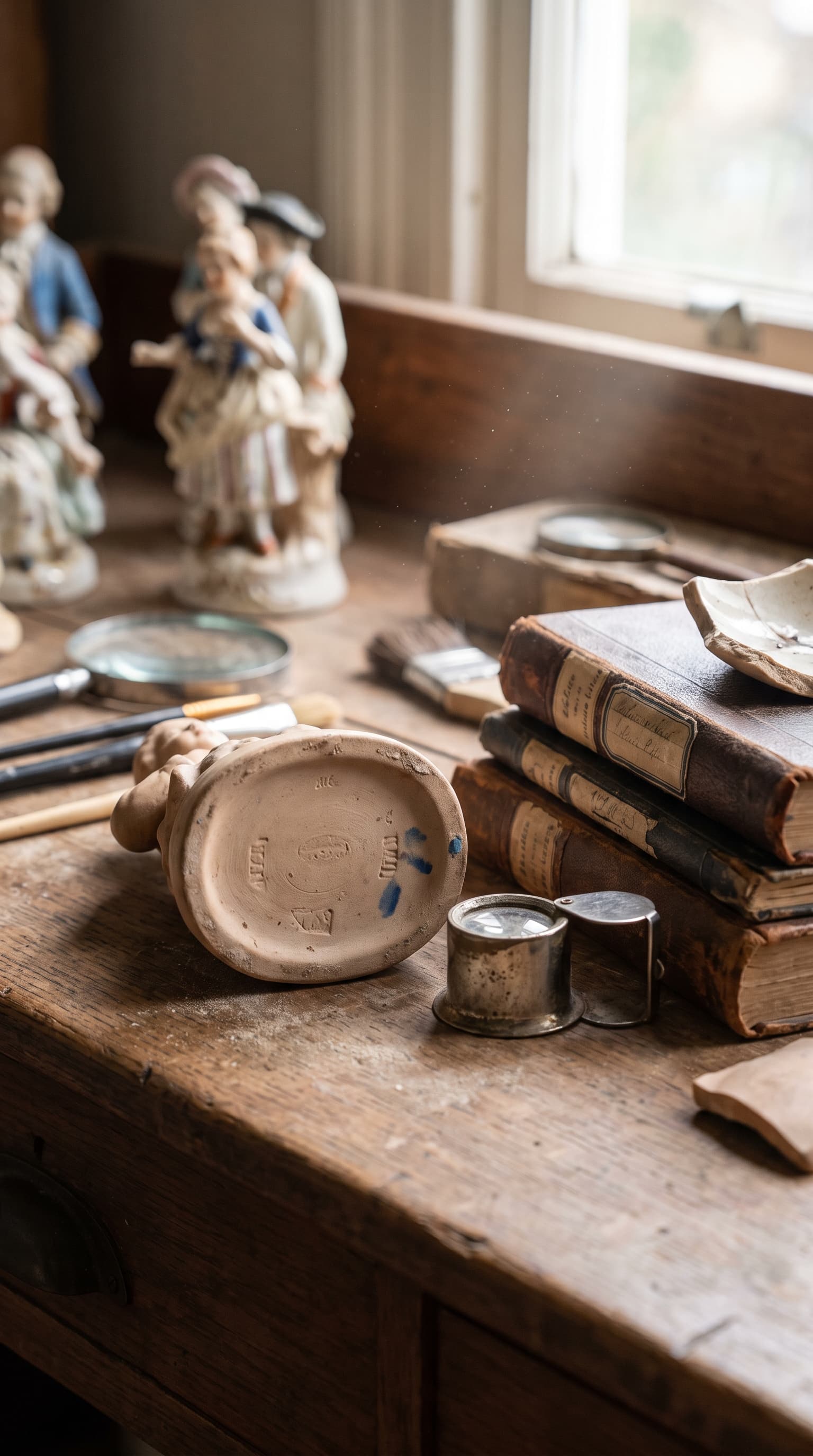
Figurine marks identification starts with knowing where to look and what you're actually seeing. Those stamps, incised marks, and painted symbols on the bottom of ceramic and porcelain figurines can reveal maker, country of origin, and production era—but only if you know how to read them correctly. Most marks sit on the base, but not all marks mean what you think they mean, and some figurines carry no marks at all.
Whether you've inherited a collection or found a piece at an estate sale, understanding base marks helps you move from "pretty statue" to "identifiable object with history." This guide walks you through finding marks, interpreting what they reveal, avoiding common mistakes, and capturing the photos that lead to accurate identification.
Where to Find Marks on Figurines
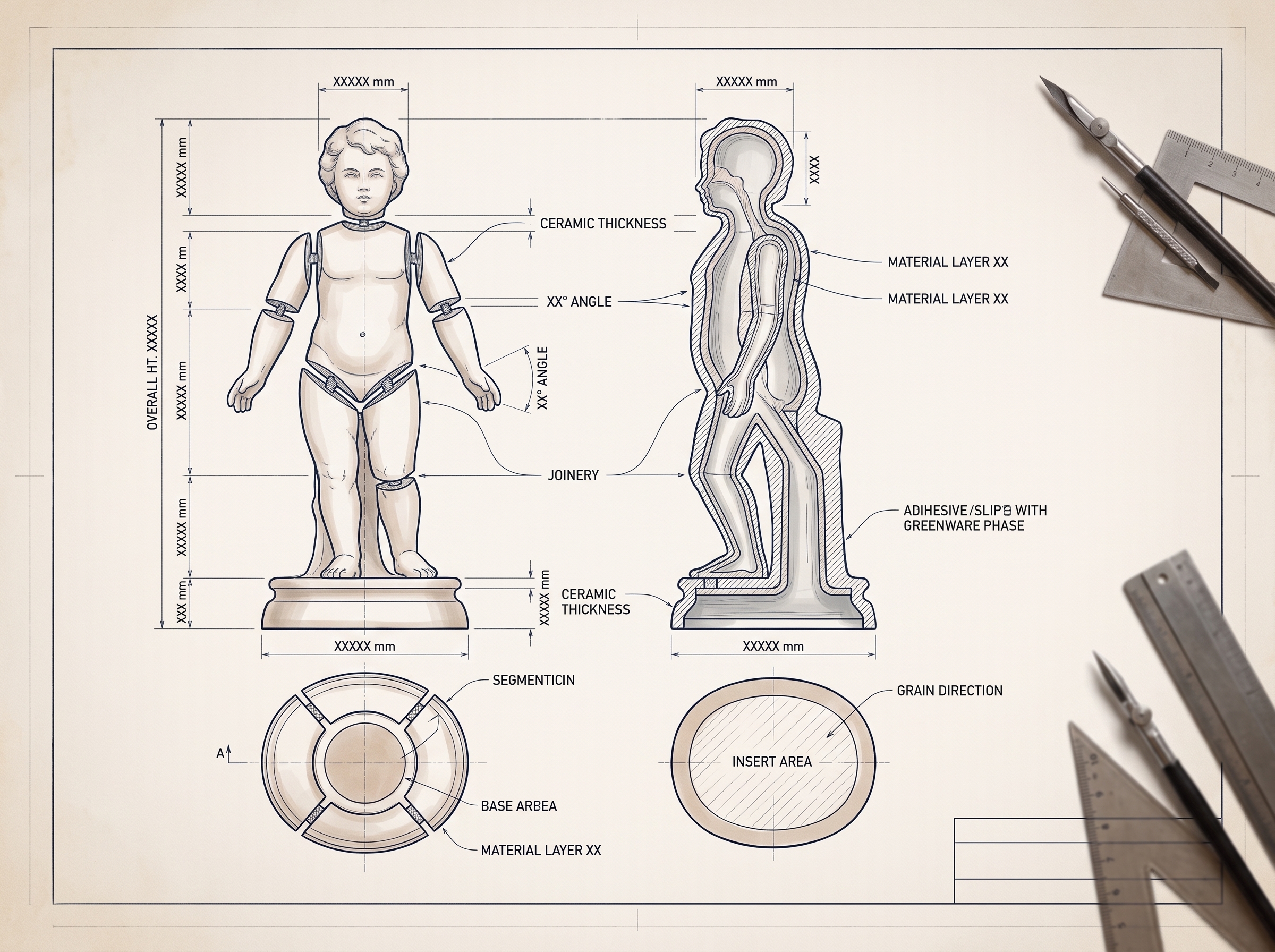
Most figurine marks sit on the flat base where the piece rests. Turn the figurine upside down and look for:
Incised marks cut into wet clay before firing, often appearing as shallow grooves or stamped impressions. These can include maker names, model numbers, or country of origin.
Underglaze marks painted or printed directly onto the bisque before the final glaze coating. Blue marks under clear glaze are common on older European porcelain.
Overglaze marks applied after glazing and firing, sometimes appearing as decals or painted stamps. These tend to wear more easily than underglaze marks.
Paper labels were popular on mid-century figurines, especially Japanese imports. Most labels have fallen off by now, but adhesive residue or label fragments sometimes remain.
Occasionally, marks appear on the back of a figurine rather than the base—particularly on wall-mounted pieces or figures with integrated bases. Check inside hollow openings on larger pieces, too. Makers sometimes marked the interior where a base plug would cover the stamp.
Some mass-produced figurines carry no marks at all. Unmarked doesn't always mean worthless, but it makes precise identification harder.
What Figurine Marks Can and Cannot Tell You
Base marks answer some questions clearly and leave others wide open.
What marks reveal
Maker identity is the most common information. Established manufacturers like Royal Doulton, Lladró, Hummel, and Capodimonte used distinctive marks that evolved over decades. Even smaller studios often marked their work.
Country of origin appears on many marks, especially after trade laws required it. "Made in Japan," "Germany," or "Occupied Japan" (1947-1952) narrow down time and place.
Date ranges can be estimated when you know how a company's marks changed over time. Hummel marks, for example, shifted in recognizable ways from the 1930s through the 1990s. A mark with a specific trademark symbol or logo variation often corresponds to a documented production period.
Model numbers help identify specific designs within a maker's catalog. A Lladró figurine with a four-digit model number can be matched to production records.
What marks don't tell you
Exact production date rarely appears on marks. You'll usually identify a range—"1950s" or "1980-1990"—rather than a specific year.
Artist identity is uncommon on factory-produced figurines. Studio potters and individual sculptors may sign their work, but assembly-line pieces typically carry only company marks.
Original retail price or current value never appear in marks. Value depends on condition, rarity, demand, and market timing—not the mark itself.
Authenticity guarantees aren't automatic. Marks can be faked, especially on high-value makers like Meissen or Royal Copenhagen. A mark is one data point among many, including material, quality, and construction details.
Common Misreads When Identifying Figurine Marks
Certain marks trip people up repeatedly.
"Capodimonte" marks flood the market, but many are reproductions or outright fakes. Genuine antique Capodimonte is rare and valuable. Modern pieces stamped with a crown and "N" (the historic Naples mark) are usually mass-produced Italian or Asian reproductions from the last 50 years.
"Made in Occupied Japan" sounds rare, but millions of figurines carry this mark. Yes, it dates the piece to 1947-1952, but most examples are inexpensive novelties. The mark indicates timeframe, not value.
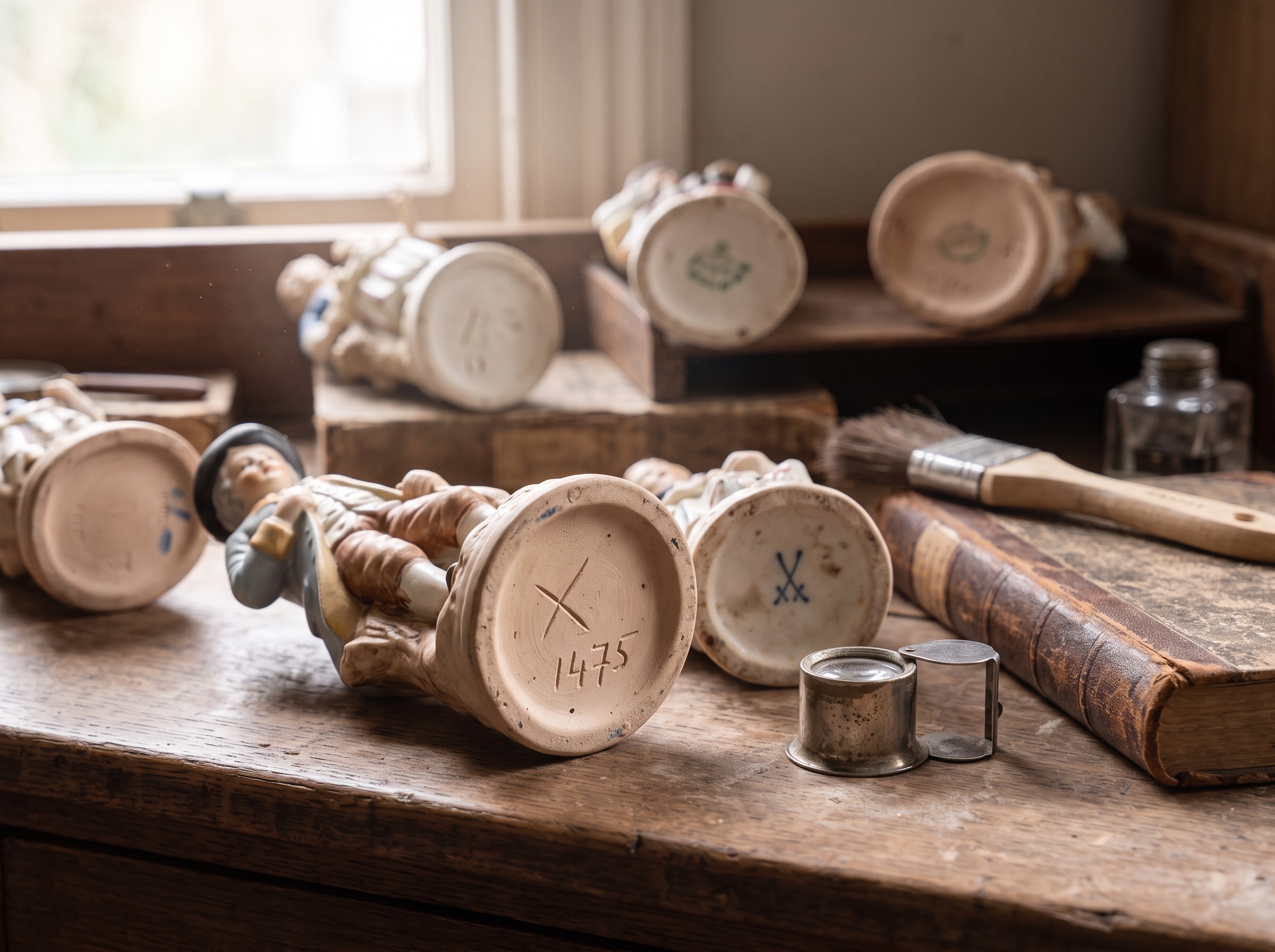
Crossed swords don't always mean Meissen. That famous mark has been copied, adapted, and imitated by dozens of makers. Real Meissen swords are painted underglaze in a specific style, with subtle variations by period. Printed or sloppy crossed swords usually indicate imitators.
Model numbers get confused with dates. A figurine stamped "1242" probably carries a catalog number, not a production year. Don't assume four digits equal a date.
Wear and dirt obscure marks. What looks like a smudge might be an important trademark symbol. Clean marks gently with a damp cloth—never scrub—and examine them under good light before jumping to conclusions.
Gold or elaborate marks don't guarantee quality. Plenty of inexpensive figurines feature fancy stamps designed to look impressive. The mark's content matters more than its decoration.
How Photos of Figurine Marks Improve Identification Results
A clear photo of a figurine's base mark delivers more useful information than a verbal description ever will.
Lighting matters most. Natural indirect light or a bright LED positioned at an angle reveals incised marks that disappear under flat overhead lighting. Shadows help surface details pop.
Focus on the entire mark first. Capture the full trademark, logo, or stamp in one shot so nothing gets cropped out. A partial mark can be misidentified.
Then shoot close-up details. If the mark includes small text, numbers, or symbols, zoom in until they're legible. Blurry text is useless for identification.
Include the whole base for context. Even unmarked areas matter. Glaze color, base shape, and unglazed rings (stilts or spur marks from firing) add clues about maker and age.
Photograph any numbers separately. Model numbers, mold marks, or artist initials often sit near but not inside the main trademark. Capture these separately so nothing is missed.
If the mark is worn, try different angles. Light raking across the surface at a low angle can reveal faint impressions invisible from straight above.
Multiple photos beat guesswork. When you submit a figurine for identification, quality mark photos—combined with full-figure images showing size, style, and condition—deliver the best results. Similar logic applies to related collectibles; for example, pottery marks identification and porcelain marks benefit from the same attention to lighting and detail.
Get Your Figurine Identified from Photos
Trying to decode a figurine mark on your own takes time, and it's easy to misidentify reproductions or misread worn stamps. Tocuro identifies figurines from photos and provides estimated value ranges based on current market signals. Upload clear images of the mark, base, and full figurine, and you'll get identification help along with context about maker, age, and what similar pieces are selling for. Value estimates aren't formal appraisals, but they give you a practical starting point.
You get 7 free identifications per day, and the count resets daily, so you can work through a collection without committing to a paid plan upfront. Whether you're trying to identify a single inherited piece or catalog an entire cabinet of figurines, start with quality photos of the marks.
FAQ
Can I identify a figurine without a mark?
Yes, but it's harder. Style, material, construction technique, and decorative details can narrow down maker and era even without a mark. Photos that show those details clearly improve your chances.
Do all valuable figurines have marks?
No. Some early porcelain figurines, studio pieces, and folk-art examples carry no marks but still hold value. Conversely, plenty of marked figurines are inexpensive mass-production pieces.
How do I clean a dirty mark without damaging it?
Use a barely damp soft cloth and gentle pressure. Avoid scrubbing, abrasives, or soaking. If the mark is painted overglaze, it can wear off, so be especially careful. When in doubt, photograph it dirty—shadows and grime don't prevent identification if the lighting is good.
What if my figurine has multiple marks?
Some pieces carry both a maker's mark and a retailer's label, or a factory stamp plus a decorator's signature. Photograph all marks separately. Each adds information.
Are figurine marks the same as pottery marks?
Broad overlap exists, especially for makers who produced both. The principles of pottery marks identification apply to ceramic figurines, though figurine marks often include model numbers and design codes more commonly than functional pottery does.
Photo identification
Identify Your Mark
Use Tocuro to identify your item from a photo and get an estimated value range when market data is available.