
Estate Sale Treasure Identification: Find What's Valuable Before You Buy
Master the art of identifying estate sale treasures on-site with practical tips for spotting valuable pieces, checking maker's marks and construction details, and using photo-based identification to research items before you commit to buying.
Estate Sale Treasure Identification: Find What's Valuable Before You Buy
The best estate sale finds happen in the first thirty minutes, when serious collectors are sorting treasures from junk at lightning speed. You spot a mahogany dresser with dovetailed drawers, a heavy ceramic vase with an unfamiliar mark, or a mid-century lamp that looks expensive—but you have maybe two minutes to decide if it's worth your money.
Estate sale treasure identification isn't about becoming an expert in everything. It's about knowing what to check fast, which details signal value, and how to research pieces before the good stuff disappears.
The Estate Sale Shopping Reality
Unlike flea markets where you can haggle and browse leisurely, estate sales move fast. The doors open, the crowd surges, and anything obviously valuable gets claimed immediately. Your advantage comes from spotting the sleepers—pieces that look promising but need quick verification.
You're competing with dealers, decorators, and other collectors who know exactly what they want. The difference between walking away with a $20 treasure worth $400 and overpaying for a reproduction comes down to checking the right details in the right order.

What to Check Fast at Estate Sales
Speed matters, but random checking wastes time. Focus your attention where it counts.
Maker's Marks and Signatures
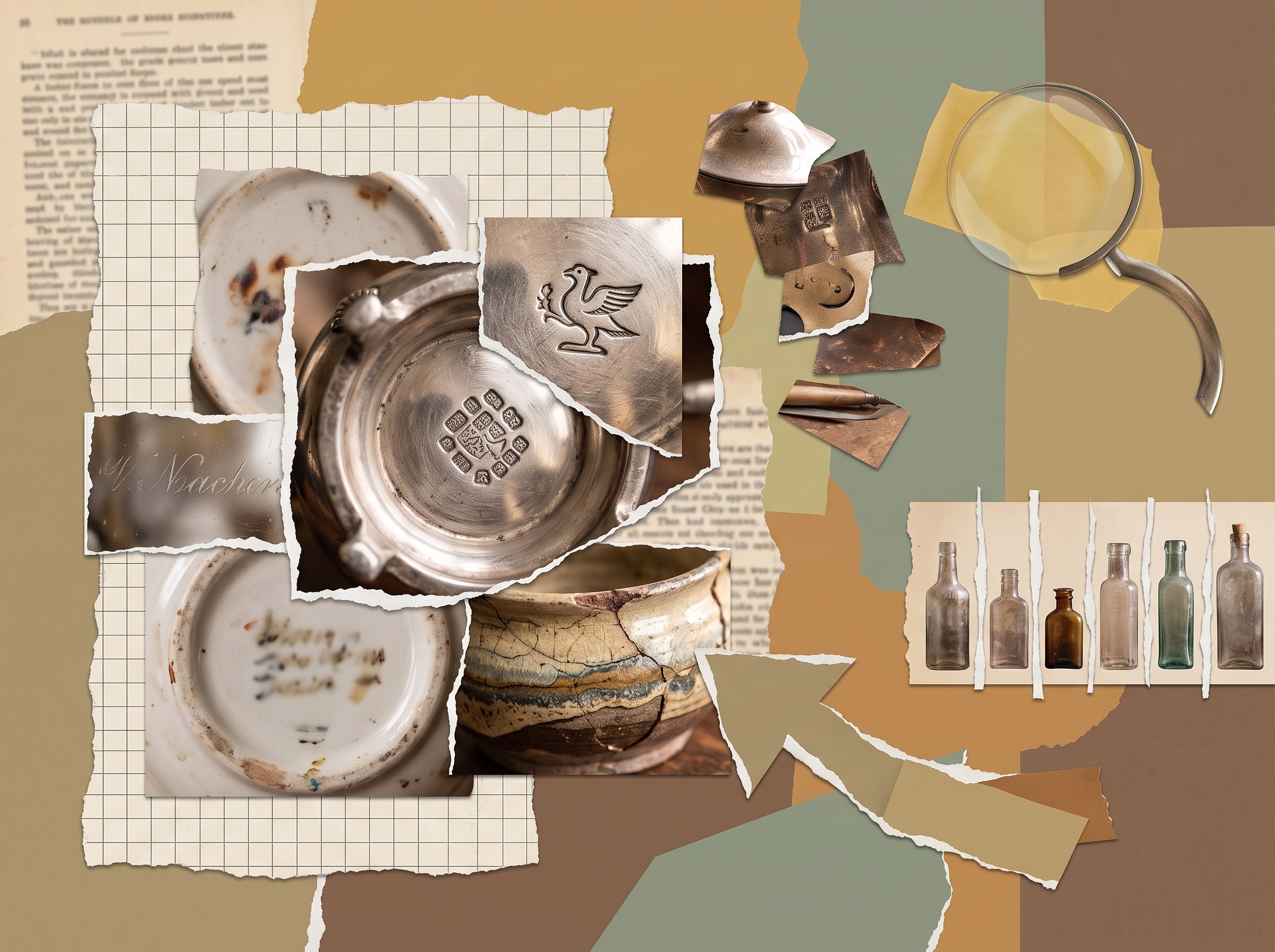
Flip over ceramics, check furniture drawer backs, examine jewelry clasps, and look at the bottom of lamps. Any mark, signature, stamp, or label changes the research equation. Even if you don't recognize it, a clear mark means you can identify it later.
For furniture, look inside drawers, on the back panels, and underneath. Paper labels deteriorate, but stamped or burned marks survive decades.
Construction and Materials
Real dovetail joints (the interlocking zigzag pattern) suggest quality and age. Hand-cut dovetails, with slight irregularities, often indicate pre-1900 construction. Uniform machine dovetails point to later production but still mean decent quality.
Heft matters for ceramics and glass. Cheap reproductions feel light. Quality pieces have substance. For metals, magnet tests separate steel from brass or bronze—if it sticks, it's not solid brass.
Condition That Affects Value
Damage you can't see in dim estate sale lighting will haunt you later. Check for:
- •Cracks in ceramics (run your fingernail along seams)
- •Replaced hardware on furniture (mismatched screws, different finishes)
- •Veneer lifting at edges
- •Loose joints that indicate major repair needs
- •Missing parts on anything mechanical
Some damage is acceptable if the price reflects it. But structural problems or missing components can make restoration cost more than the piece is worth.
The "Too Good" Red Flags
If a Tiffany-style lamp is priced at $35, it's almost certainly a modern reproduction. Estate sale organizers usually know the obvious valuable brands. Suspiciously low prices on recognized names deserve extra scrutiny.
Look for manufacturing shortcuts: mold seams on supposedly hand-blown glass, plastic mixed with older materials, or new-looking wear patterns on "antique" furniture.
Estate Sale Finds Worth Researching
Not everything needs deep investigation. Save your research energy for pieces that show these characteristics.
Items with Clear Provenance Markers
Anything with a maker's mark, artist signature, manufacturer label, or patent date gives you something to research. Even unknown marks matter—they provide search terms and identification anchors.
Period labels (store tags, exhibition stickers, old auction marks) add value and help with dating.
Quality Construction Above the Price Point
When a $40 chair has mortise-and-tenon joinery and quarter-sawn oak, something interesting is happening. Either the sale organizers missed it, or the style is currently out of fashion. Both situations create opportunity.
The same applies to sterling silver priced by the piece when it should be priced by weight, or art pottery marked down because the organizer doesn't recognize the maker.
Complete Sets and Original Pairings
Sets amplify value. Six matching dining chairs, a complete tea service, or a pair of original table lamps command premium prices. If you spot components of a set scattered across the sale, gathering them creates value.
Pieces from Desirable Eras or Styles
Mid-century modern, Art Deco, Arts and Crafts, and Victorian pieces cycle in and out of peak demand, but they maintain baseline interest. Items from these periods with good bones and original finish often reward patient research.
Even if the specific piece doesn't hit trending lists like What's Trending in Vintage & Antiques — Week of October 12, solid examples from collectible periods hold value.
How Tocuro Fits Your Estate Sale Workflow
The real trick at estate sales? Snap photos fast, research later, then circle back before checkout if something checks out.
When you spot a promising piece, take clear photos of:
- •The overall item from multiple angles
- •Any marks, signatures, or labels (close-up, in focus)
- •Construction details (joinery, hardware, attachment methods)
- •Condition issues you noticed
This takes about thirty seconds per item. Then step aside, pull out your phone, and let Tocuro identify what you're looking at from those photos. You'll get estimated value ranges based on actual market signals, not guesswork.
The workflow works because you're not blocking other shoppers or holding items hostage while you research. You're documenting possibilities, getting quick identifications, then making informed decisions about what deserves a second look.
Tocuro identifies items from photos, covering far more than just furniture—ceramics, glass, silver, lighting, artwork, and more. The estimated value ranges come from market signals rather than formal appraisals, giving you the context you need to decide if that $60 asking price is a steal or fair market.
For pieces with specific features worth checking, like unusual bed frames or antique clocks, you can dive deeper with guides like Antique Bed Frame Identification or Antique Clock Identification after you've established basic identity and potential value.
Your Estate Sale Treasure Identification Game Plan
Effective estate sale shopping means working systematically rather than randomly grabbing things that look old.
Arrive early, but use the first few minutes to survey the entire sale. Identify the three to five most promising categories based on what you collect or what shows quality construction.
Photograph first, identify second. Don't tie up items you're not ready to buy—it creates bad relationships with sale organizers and other collectors.
Research the pieces that show potential, not everything that catches your eye. Focus on items where the asking price sits well below your quick identification results.
If something checks out as valuable, examine it one more time for condition issues you might have missed. Then decide based on facts, not hope.
From Documentation to Decision
The gap between spotting a potential treasure and walking out with a good deal comes down to fast, accurate identification. Estate sales reward collectors who can verify value on-site, not those who grab first and research later.
Ready to identify your estate sale finds before you buy? Identify Your Item with Tocuro and get market-based value estimates from the photos you're already taking. Seven free identifications per day give you plenty of room to research an entire estate sale, with your count resetting daily so you're ready for the next one.
The best estate sale treasures go to collectors who know what they're looking at—or who know how to find out fast.
Photo identification
Identify Your Item
Use Tocuro to identify your item from a photo and get an estimated value range when market data is available.