
Estate Sale Tips: How to Shop Smart and Build a Collection That Matters
Estate sales offer collectors a chance to find quality pieces at competitive prices, but the environment is fast-paced and often overwhelming. This guide covers the essential estate sale tips you need: how to prioritize your time, what to inspect quickly, which items justify deeper research, and how to integrate photo-based identification tools into your collecting workflow.
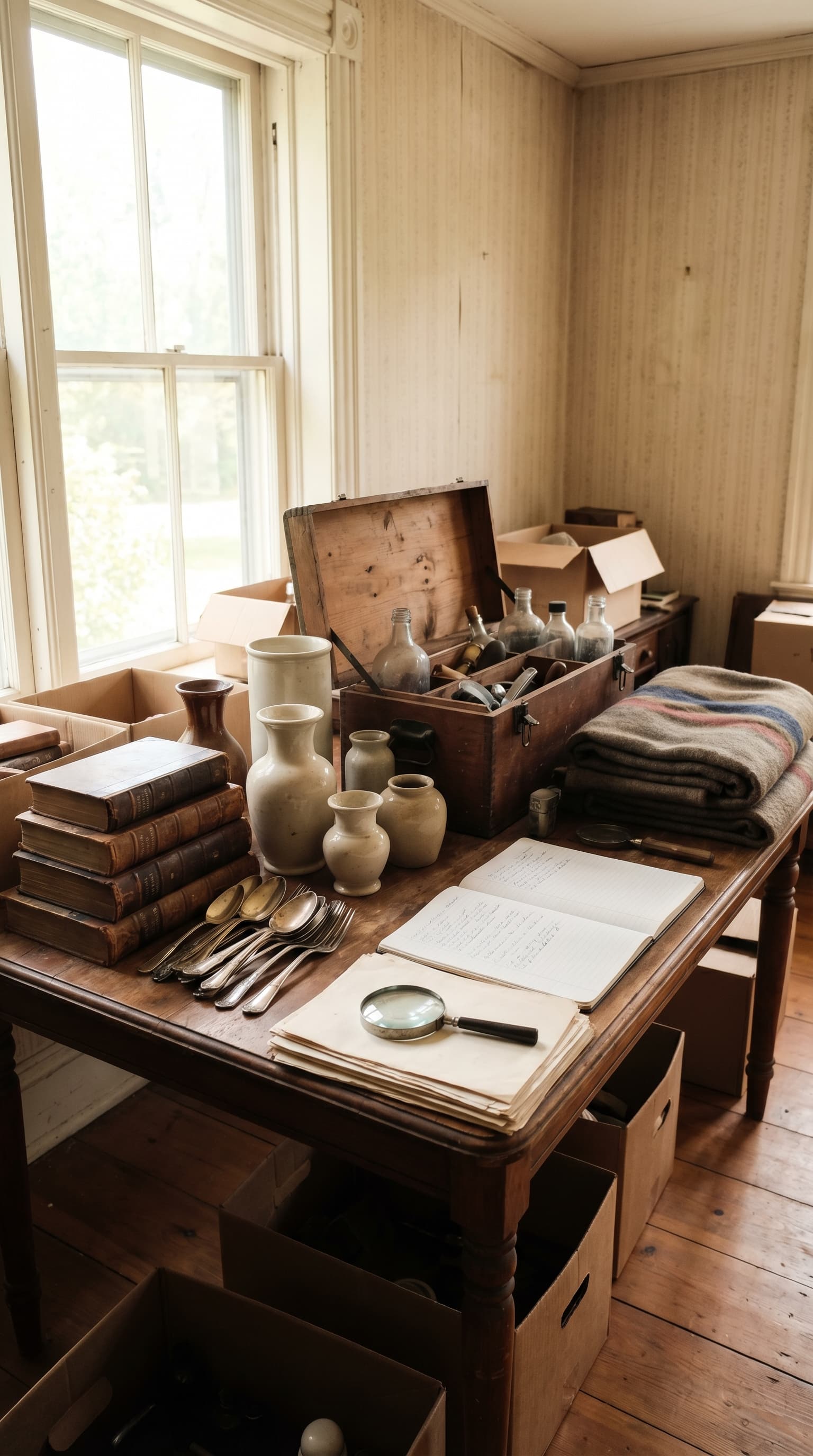
Estate Sale Tips: How to Shop Smart and Build a Collection That Matters
Estate sales move fast. You're often walking through someone's entire household with dozens of other shoppers, trying to spot quality pieces before they're gone. The best estate sale tips aren't about finding the absolute cheapest deal—they're about making smart collecting decisions under pressure, knowing what deserves a closer look, and building a collection with pieces that actually matter to you.
Whether you're hunting mid-century furniture, vintage glassware, or regional pottery, estate sales reward preparation and speed. Here's how to shop them like a collector.
Why Estate Sales Work for Collectors
Estate sales offer something thrift stores and online marketplaces often don't: context. You're seeing items in the environment where they were used, often with original groupings intact. That context can help you date pieces, spot unusual regional finds, and identify collections that were carefully assembled over decades.
Unlike auctions, estate sales let you handle items before you commit. You can open drawers, flip chairs, examine marks, and photograph details. The challenge is doing all of that efficiently when the clock is ticking and other buyers are doing the same.
What to Check Fast
You don't have time to research every piece on-site. Develop a quick triage system that helps you separate the maybes from the definite passes.
Condition red flags
- •What to scan: Structural damage, missing hardware, active pest damage, deep veneer lifting
- •Why it matters: Restoration costs add up fast, and some damage can't be fixed without specialized skills
Marks and signatures
- •What to scan: Maker's marks on ceramics, labels on furniture, stamps on silver, signatures on art
- •Why it matters: A clear mark lets you identify and research a piece later, even if you don't recognize it immediately
Construction clues
- •What to scan: Joinery type, hardware style, materials, finish quality
- •Why it matters: These details help you date a piece and assess whether it's worth further research
Completeness
- •What to scan: Missing lids, drawer pulls, table leaves, set components
- •Why it matters: Incomplete sets can still have value, but you need to know what you're buying
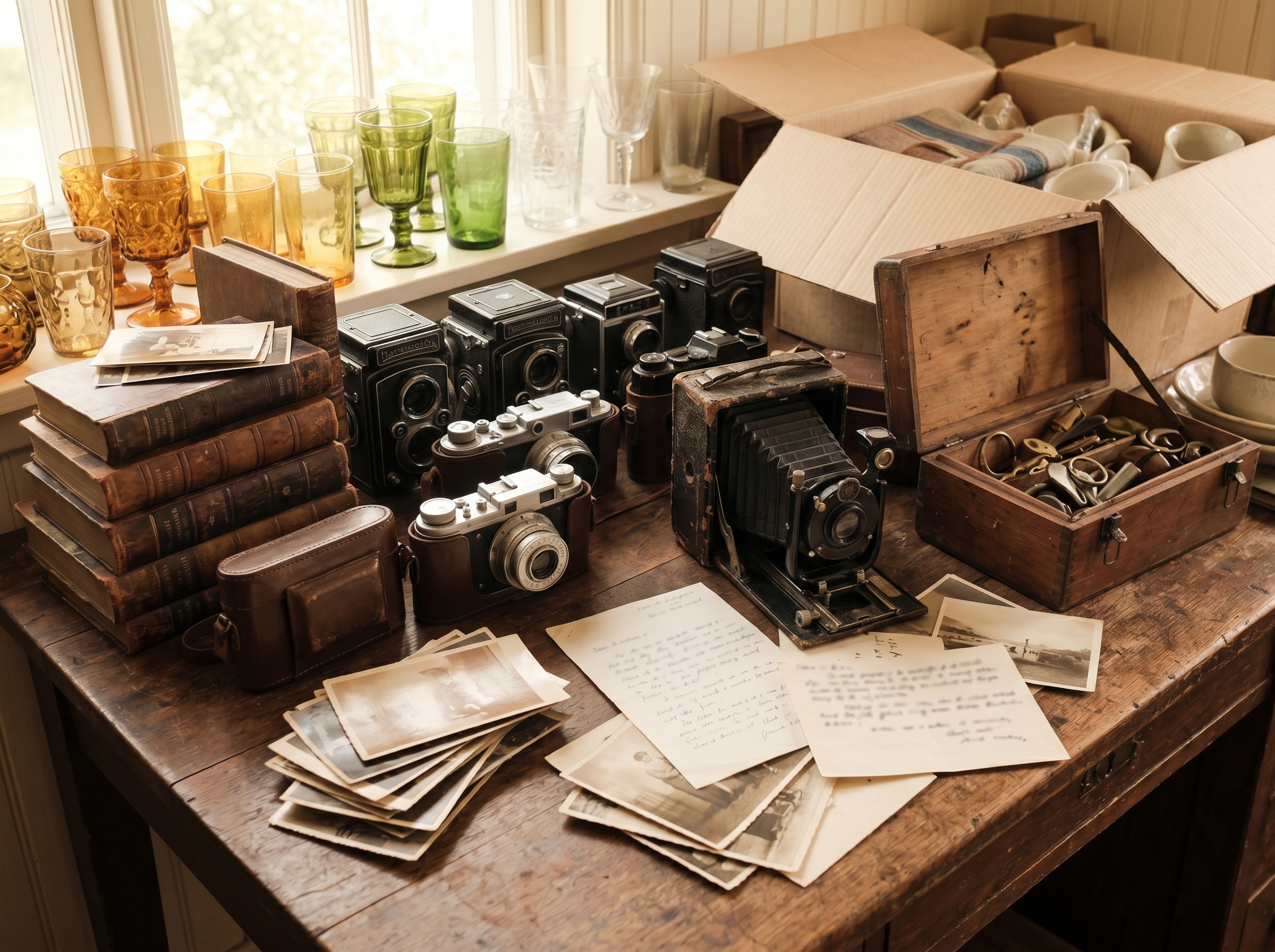
Take photos as you go. A quick shot of a maker's mark, a close-up of joinery, or a wide view of a full piece gives you research material later without slowing you down.
What Deserves Research Before You Buy
Some items justify pausing to identify them on the spot. Others can wait until you're home. Here's how to prioritize.
High-value categories worth immediate attention
Certain categories carry enough potential value that it's worth stepping aside to research before the sale ends:
- •Signed studio pottery or art glass: Makers matter enormously, and a quick identification can reveal whether a $40 bowl is actually worth $400
- •Mid-century designer furniture: Labels from Knoll, Herman Miller, or smaller regional makers turn ordinary-looking pieces into collectibles
- •Sterling silver or precious metals: Weight and marks determine baseline value; knowing what you're looking at prevents underpricing or overpaying
- •Regional or folk art: Local estate sales sometimes include work by regional artists whose names don't travel nationally but carry strong local value
For these categories, use an antique identification app to get a quick read. Snap a photo of the mark or signature, check the estimated value range, and decide whether the asking price makes sense.
Items you can research at home
Other finds are worth buying based on condition and price alone, then researching later:
- •Unmarked furniture in good condition: If the construction looks solid and the price is reasonable, buy it and identify it later using detailed photos of the joinery and hardware
- •Interesting ceramics or glass without obvious marks: Sometimes marks are hidden, worn, or simply not present—if the piece appeals to you and the price is low, take it home
- •Books, ephemera, and paper goods: First editions and rare prints have value, but unless you're an expert, it's easier to photograph and research them after purchase
The key is knowing your own budget tolerance. If a $20 gamble won't hurt, take the piece home and identify it properly. If you're looking at $200+, invest a few minutes in on-site research.
Estate Sale Tips for Building a Focused Collection
Estate sales can overwhelm you with variety. Stay focused on what you're actually collecting.
Arrive with a mental checklist
Know what categories you collect and what condition standards you're willing to accept. If you collect antique chairs, decide in advance whether you're okay with reupholstery work or only want ready-to-use pieces. If you're after depression glass, know which patterns you're still hunting.
Don't let "deals" derail your collection
A $5 vase might be a great price, but if it doesn't fit your collection, it's clutter. The best estate sale shoppers pass on bargains that don't serve their goals. Think like a curator, not a bargain hunter.
Use price drops strategically
Many estate sales discount unsold items on the final day—sometimes 50% or more. If you spot something you want but the price feels high, note the sale schedule and return later. Just know that popular items won't make it to discount day.
How Tocuro Fits Into Your Estate Sale Workflow
Estate sales don't give you time to dig through reference books or scroll auction archives. That's where photo-based identification changes the game.
When you're standing in a crowded living room trying to decide if a lamp is worth $75, pull out your phone, snap a photo, and let Tocuro identify it. You'll get the maker, era, style, and an estimated value range based on real market signals—not a formal appraisal, but enough information to make a confident decision.
Tocuro works for more than furniture. Photograph ceramics, glassware, silver, decor, and small collectibles. You get 7 free identifications per day, and the count resets daily, so you can use it across multiple sales without paying for casual use.
The workflow is simple:
- •Spot something interesting
- •Photograph the whole piece and any marks or labels
- •Get an identification and value range
- •Decide whether the asking price makes sense for your collection
It's not about replacing your own judgment—it's about adding speed and context when you need it most.
After the Sale: Cataloging Your Finds
Once you're home, photograph your purchases properly and research anything you didn't have time to identify on-site. Compare your estate sale finds to similar items in online archives, and add detailed notes to your personal catalog.
If you bought something unmarked, use Tocuro again with better lighting and more angles. Details you couldn't see under estate sale conditions often become clearer at home.
Start Building Your Collection Strategically
Estate sales reward the prepared collector. Walk in knowing what you're looking for, develop a fast inspection routine, and use tools that help you make decisions without slowing down.
Ready to identify your next find? Start collecting smarter with tools that work as fast as you do.
Collector workflow
Start Collecting
Save your finds, track what you own, and turn one-off discoveries into a collection.