
Estate Sale Finds: What to Save, Research, and Actually Bring Home
Estate sales offer everything from hidden treasures to charming junk. This guide helps collectors know what to check quickly, which estate sale finds deserve deeper research, and how to build a workflow that keeps you from missing the good stuff.
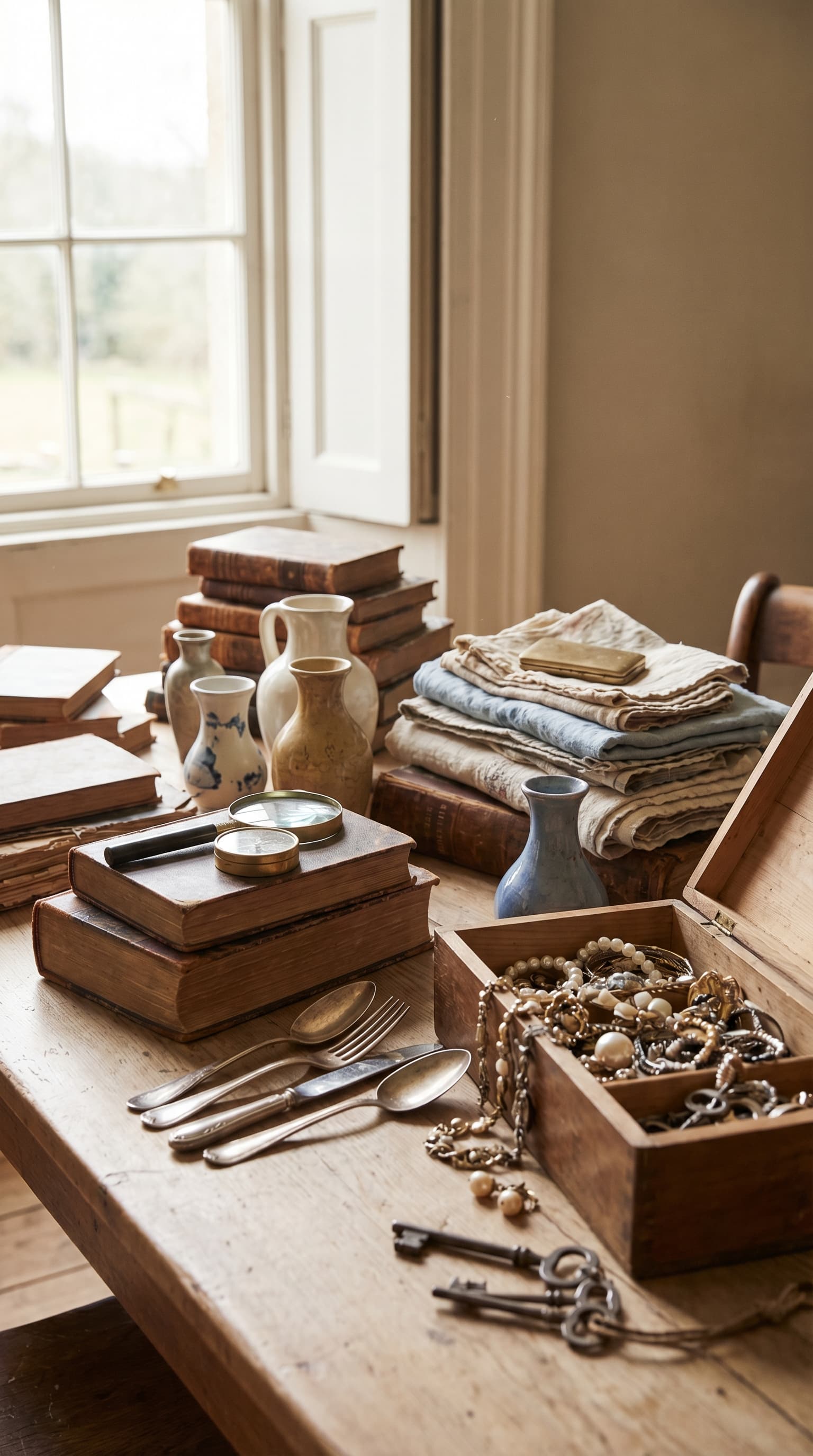
Why Estate Sale Finds Deserve a Different Approach
Estate sales aren't thrift stores. You're walking through someone's actual home, often with decades of accumulation across multiple rooms, basement storage, and garage shelves. The best pieces might be tucked behind everyday clutter, mis-tagged, or sitting in plain sight with no label at all.
Unlike curated antique shops, estate sale finds come with minimal research already done. That's your opportunity. Knowing what to check fast—and what's worth photographing for later research—makes the difference between walking out with a $20 treasure and leaving it for someone who recognized it five minutes after you did.
What to Check Fast at Estate Sales
You won't have hours. Estate sales move quickly, especially on the first day. Focus on these signals before you commit:
Maker's marks and signatures. Flip over ceramics, check the backs of frames, look under drawer bottoms, and scan the undersides of furniture. A clear mark lets you research on the spot or photograph it for later.
Material and construction. Solid wood, dovetail joints, hand-cut joinery, and heavy cast iron all signal older, often higher-quality work. If it feels suspiciously light or you see particle board and staples, it's likely mid-century mass production or newer.
Condition issues that affect value. Cracks in pottery, veneer lifting, missing hardware, broken mechanisms—these don't always disqualify a piece, but they change what it's worth and whether it's practical to bring home.
Unusual or specific details. Regional pottery, unusual glass colors, specific furniture forms (like spool cabinets or lawyer bookcases), or tools with patent dates can all indicate collectible categories worth digging into.
Don't get stuck researching one item for twenty minutes. Take clear photos of anything promising and keep moving. The goal is coverage first, deep research second.
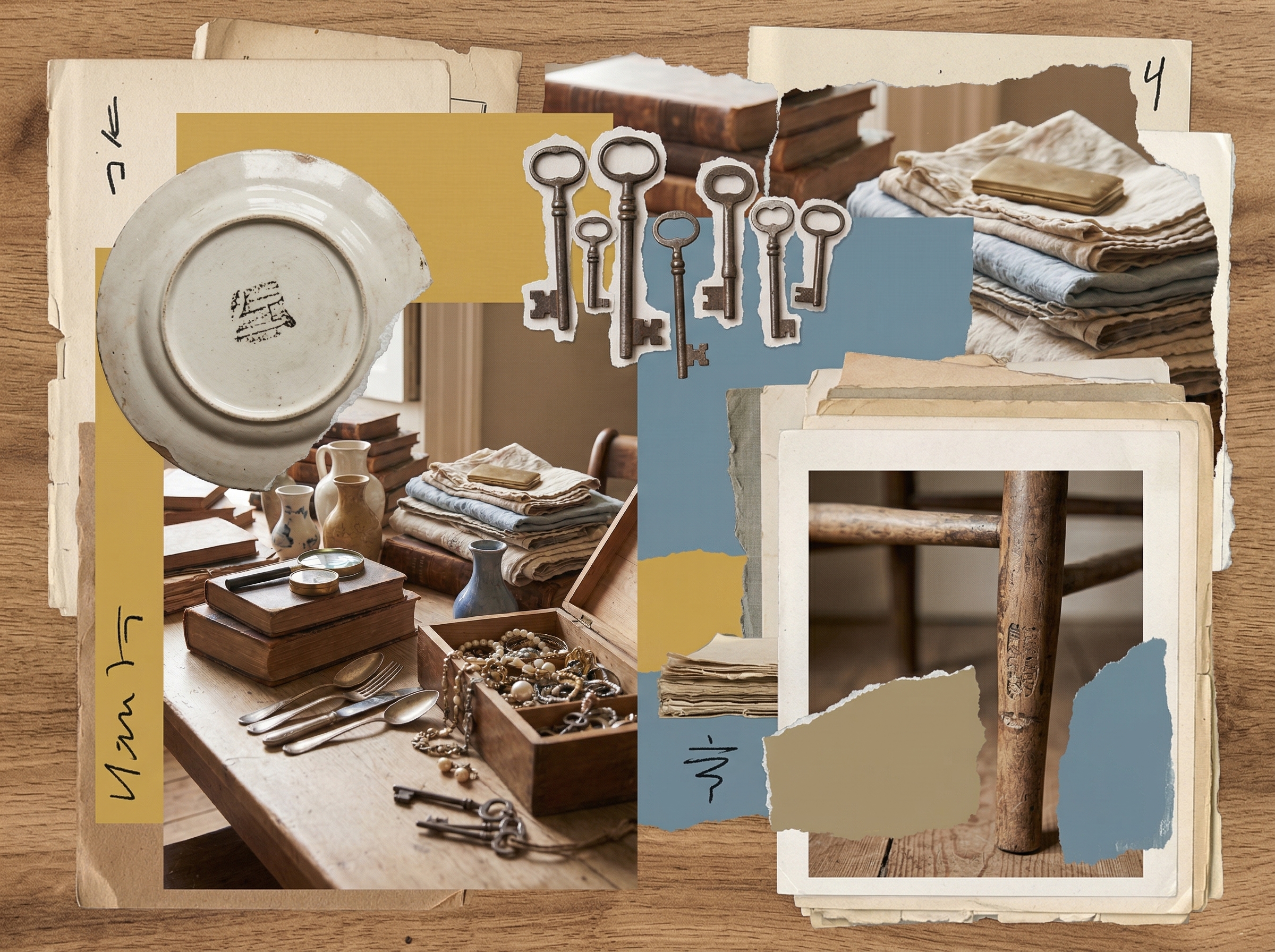
Estate Sale Finds Worth Researching
Not everything at an estate sale needs a second look. Here's what often rewards the extra effort:
Furniture with Intact Labels or Stamps
Manufacturer labels, even faded ones, let you trace production dates, regional makers, and design attribution. A partial stamp on a drawer or a paper label inside a cabinet can connect a piece to a known workshop or a documented furniture line. Photograph labels even if you don't recognize the name—many regional makers have strong collector followings that don't show up in general price guides.
Ceramics and Pottery with Marks You Don't Recognize
Estate sales often include local studio pottery, regional art pottery, and imported ceramics that don't appear in mainstream antique guides. A clear bottom mark is easy to research later, and some lesser-known potters have dedicated collectors willing to pay well above estate-sale pricing.
Sterling, Coin Silver, and Weighted Silver
Silver flatware, serving pieces, and tableware often get grouped together and priced by weight or arbitrary estimates. Check for "sterling," "925," or "coin" stamps. Weighted silver candlesticks and trophy cups have less melt value but can still be collectible for their form or maker. Knowing the difference helps you decide whether a piece is worth its asking price.
Glass with Unusual Colors, Patterns, or Forms
Depression glass, art glass, and pattern glass all have active collector markets, but identification can be tricky without experience. Colors like vaseline (uranium) glass, cobalt, and cranberry often signal collectible categories. Unusual forms—like cruets, epergnes, or biscuit jars—are worth researching even if the glass itself looks ordinary.
Tools, Advertising, and Ephemera
Vintage hand tools, especially those with maker's marks or patent dates, appeal to both users and collectors. Advertising tins, signs, and branded packaging from defunct companies can carry surprising value. Paper ephemera—postcards, trade cards, old photographs—often gets grouped in boxes and priced low, but specific subjects (occupational photos, regional views, early aviation) have dedicated buyers.
Textiles with Hand Work or Regional Characteristics
Quilts, embroidered linens, and woven coverlets show up frequently at estate sales. Hand-stitched quilts, especially those with documented patterns or dates, are worth researching. Regional weaving (like coverlets from Pennsylvania or the South) and hand-hooked rugs can have significant value if they're in good condition and well-documented.
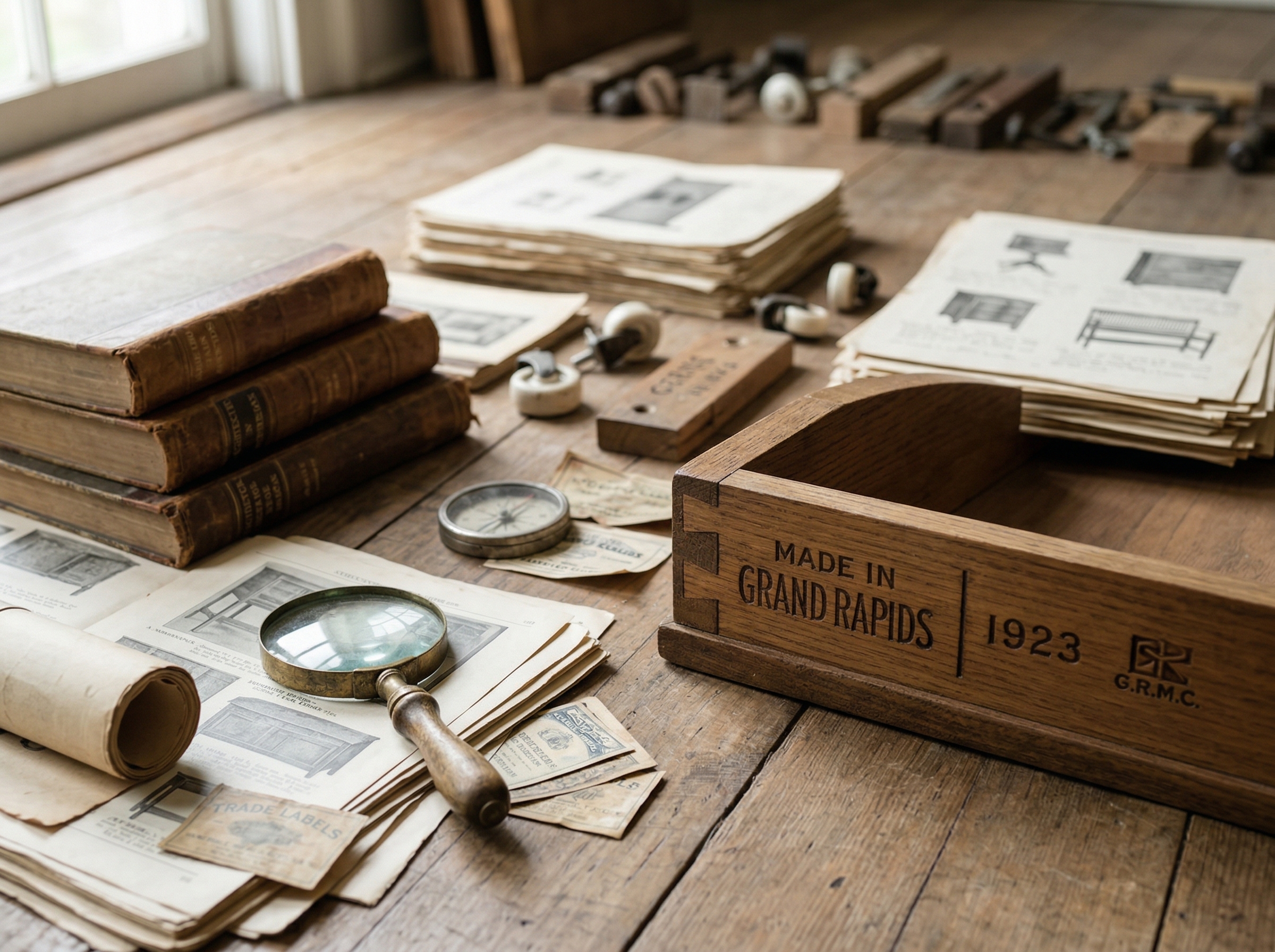
How to Use Tocuro in Your Estate Sale Workflow
Estate sales don't give you time to sit and search. You need fast answers while you're still on-site or shortly after you leave, before the next wave of buyers arrives.
Tocuro identifies items from photos and provides estimated value ranges based on current market signals. Snap a photo of a mark, a furniture detail, or an unusual object, and you'll get an identification and value estimate that helps you decide whether to go back for it or keep looking.
You get 7 free identifications per day, and the count resets daily—plenty for a typical estate sale visit. If you're hitting multiple sales in one day or working through a large estate, higher-volume usage is available.
The workflow is simple: photograph anything promising, get identifications while you're still browsing or on your way home, then decide what's worth a return trip or further research. You're not guessing or hoping you'll remember to look something up later. You're making informed decisions in real time.
For estate sale finds that turn out to be keepers, you'll have the research already done. For pieces that aren't quite right, you've saved yourself the hassle of hauling them home and researching after the fact.
What Not to Worry About
Estate sales can feel overwhelming, but you don't need to know everything:
Reproduction furniture. Most reproductions are obvious once you check construction and materials. If it's particle board, laminate, or has modern hardware, it's almost certainly newer than it looks.
Common transferware and flow blue. Unless it's marked by a desirable maker or in exceptional condition, common blue-and-white china is more decorative than valuable. Don't spend research time on unmarked pieces that look mass-produced.
Damaged or incomplete sets. A single teacup from a large set, a chair with a broken leg, or a clock missing its movement—these can be projects, but they're rarely worth researching unless the maker or form is exceptional.
Items priced at or above retail. Some estate sale companies do their homework. If a piece is already priced like it's in an antique mall, you're not finding a deal—you're paying someone else's research premium.
Start Building Your Estate Sale Strategy
The best estate sale finds come from knowing what to check quickly, what's worth photographing, and when to trust your instincts. You don't need to be an expert in every category—you just need a system that keeps you from walking past the good stuff.
Start collecting with Tocuro and turn estate sale browsing into confident buying. Identify items from photos, get value estimates based on real market signals, and build a workflow that works whether you're hunting locally or traveling to new sales.
Collector workflow
Start Collecting
Save your finds, track what you own, and turn one-off discoveries into a collection.