
Decorative Object Identification: How to Identify Items from Photos
Identifying decorative objects requires capturing the right details in your photos. This guide covers what clues matter most, which photos help identification, common misidentifications, and how photo-based tools like Tocuro can quickly identify items and provide estimated value ranges.
Decorative Object Identification: How to Identify Items from Photos
That unusual vase on your shelf, the ornate candlestick from an estate sale, or the mysterious figurine you inherited—decorative objects come in endless varieties, and identifying them often feels like detective work. Unlike furniture, where construction methods and joinery tell clear stories, decorative object identification depends on spotting subtler clues: materials, maker's marks, style details, and manufacturing techniques that separate handmade treasures from mass production.
The good news? Most identification clues are visible in photos if you know what to capture and where to look.
What Clues Matter Most for Decorative Object Identification
Successful identification starts with understanding which details actually narrow down possibilities.
Materials and construction methods reveal age and origin. Hand-blown glass shows pontil marks and irregularities. Early ceramics have visible throwing rings or hand-painting inconsistencies. Cast bronze develops specific patinas over decades. Modern reproductions often use uniform casting, perfect symmetry, and materials that didn't exist before certain dates.
Maker's marks and signatures are goldmines when present. Pottery marks, silversmith hallmarks, glass manufacturer logos, and artist signatures can pinpoint exactly who made an item and when. But not every piece carries marks—many quality items never had them, or marks wore away over time. China marks identification techniques apply to many ceramic objects beyond just dinnerware.
Style characteristics place objects in time and place even without marks. Art Nouveau flowing organic lines, Art Deco geometric patterns, Victorian fussiness, Mid-Century minimalism—each era left distinctive fingerprints. Regional traditions matter too: Japanese cloisonné differs noticeably from Chinese versions, Bohemian glass has different characteristics than American art glass.
Size and weight often separate originals from reproductions. Many replicas use lighter materials or scale down dimensions slightly. A bronze piece that feels surprisingly light might be spelter (zinc alloy) instead. A "heavy crystal" vase that's actually lightweight could be pressed glass.
Wear patterns and patina should match the supposed age. Real age shows up in predictable places—high points worn smooth, bases scratched from use, tarnish in recessed areas. Artificial aging rarely gets these details right.
What Photos Actually Help Identification
The right photos make identification possible. The wrong ones waste everyone's time.
Overall views from multiple angles establish form and proportion. Take straight-on shots from front, back, and both sides. For three-dimensional objects, four angles usually capture everything that matters. Use natural light near a window, not direct harsh sunlight.
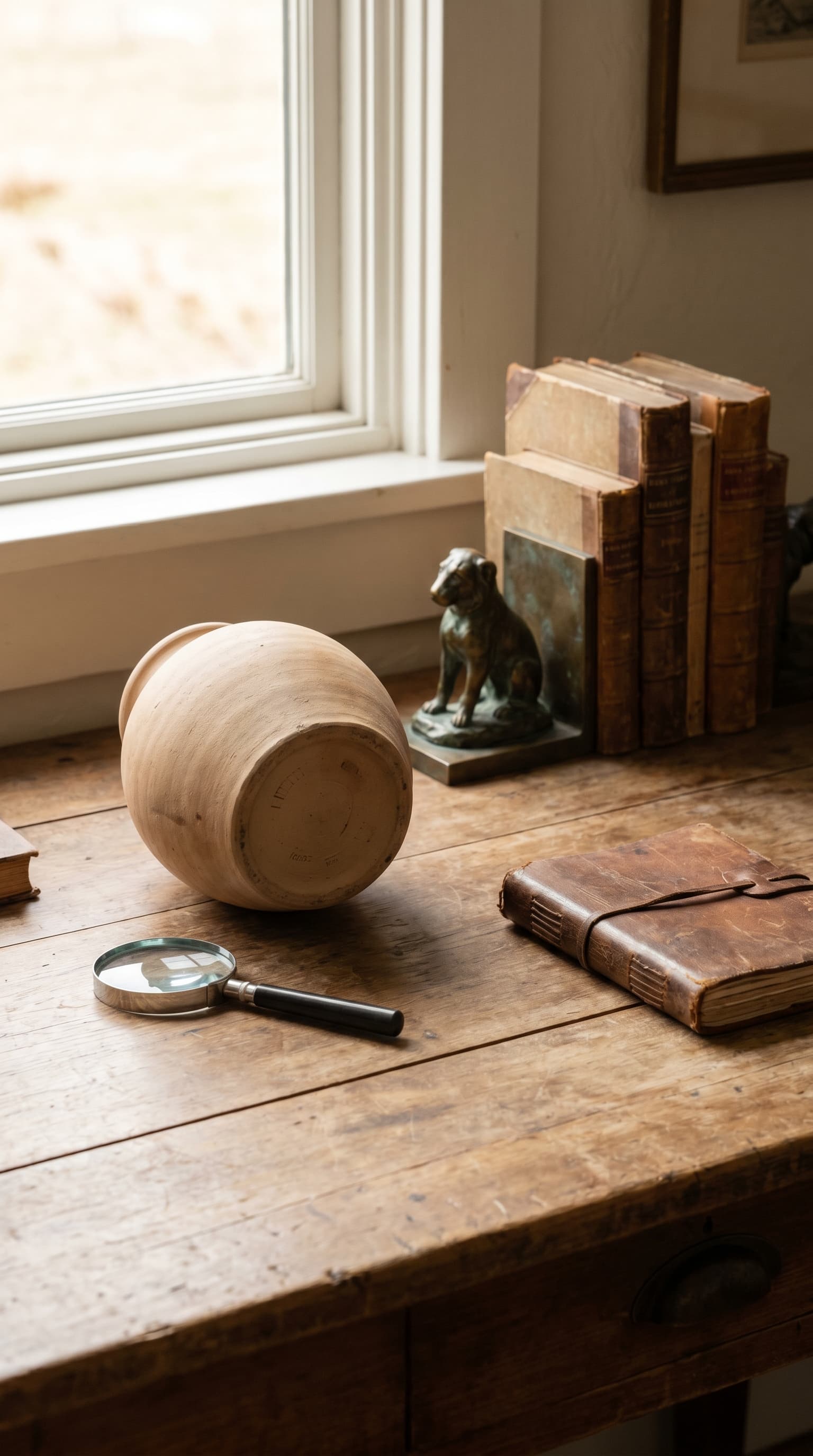
Close-ups of any marks or signatures are critical. Get close enough that marks fill most of the frame and stay in focus. Oblique lighting (holding a flashlight at an angle) can reveal faint impressed marks you'd miss in flat lighting. Check bases, undersides, backs, and hidden areas where marks often hide.
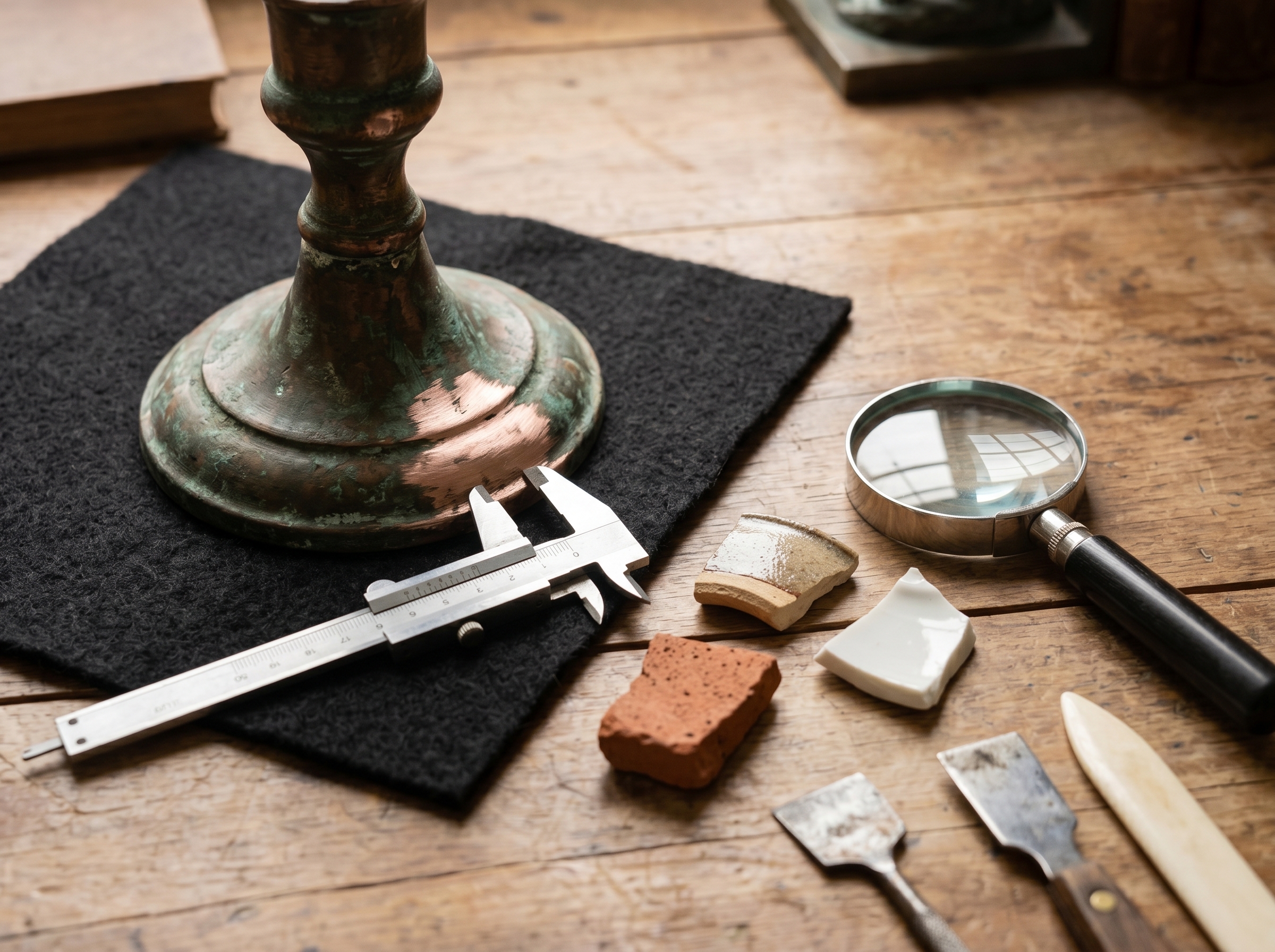
Material and surface details require macro-level shots. Capture glaze characteristics on ceramics, weave patterns in textiles, patina on metals, tool marks on carved items. These micro-details often distinguish handmade from machine-made, original from reproduction.
Areas of wear, damage, or repair tell age stories. Photograph chips, cracks, repairs, and worn spots clearly. These aren't flaws to hide—they're evidence that helps establish authenticity and age.
Scale reference prevents confusion. Include a ruler, coin, or common object in at least one photo. "Small vase" means different things to different people—a photo with a quarter for scale removes ambiguity.
Skip the artistic angles and dramatic shadows. Identification needs clear, well-lit documentation, not Instagram aesthetics.
Common Decorative Object Misidentifications
Certain mistakes show up repeatedly, and they can cost you money or credibility.
Reproduction bronzes mistaken for originals happen constantly. Modern foundries produce excellent copies of classic sculpture. Real age shows in patina development, casting quality, and base construction. Many reproductions carry tiny marks saying "reproduction" or country of origin—check carefully before assuming you've found museum-quality bronze.
Mass-produced ceramics called "antique" because they look old-fashioned. Transfer-printed patterns, molded rather than hand-modeled details, and perfectly uniform glazing usually indicate factory production. Hand-painted items show brush strokes and minor variations piece to piece.
Tourist-grade items mistaken for folk art or ethnographic pieces fool many collectors. Souvenir-quality items made for export differ substantially from pieces made for local use. Materials, construction quality, and design details separate authentic cultural objects from tourist merchandise.
Art glass confused by maker happens because styles overlap. Tiffany, Steuben, Loetz, and other makers produced similar-looking iridescent glass. Without signatures, identification requires understanding subtle differences in color application, form vocabulary, and technical approaches. Similar confusion affects studio pottery, where dozens of makers worked in comparable styles.
Natural materials misidentified create wild value swings. Ivory versus bone, jade versus serpentine, sterling versus silver-plate—these distinctions require close examination. Photos showing grain structure, color depth, and weight cues help, but some materials need testing beyond visual inspection.
How Tocuro Resolves Decorative Object Identification from Photos
Traditional identification paths—posting to forums, consulting price guides, finding specialists—take time and often require expertise you don't have yet.
Tocuro identifies decorative objects from photos by analyzing the visual details that matter: form characteristics, style elements, materials, marks, and manufacturing clues. Upload clear photos showing your item from multiple angles, and you'll get specific identification along with estimated value ranges based on actual market signals, not formal appraisals.
The approach works across decorative categories—ceramics, glass, metalwork, sculpture, collectibles, and items that don't fit neat categories. You get 7 free identifications daily, with the count resetting each day, so you can identify multiple pieces or try different angles if initial photos don't capture enough detail.
Unlike generic image search, Tocuro understands antiques and collectibles context. It recognizes maker's marks, distinguishes between similar styles, and spots reproduction red flags. The estimated value ranges reflect current market activity—what similar items actually sell for, not what sellers hope to get or what outdated price guides claim.
For items you're considering buying, identification before purchase prevents expensive mistakes. For inherited pieces, you'll understand what you actually own and whether it's worth researching further. For estate clearing or downsizing, quick identification helps you separate potential treasures from donation-pile items without calling an appraiser for every piece.
Start Identifying Your Decorative Objects
Most decorative objects carry enough visual clues for identification once you know what details matter. Take clear photos showing overall form, close-ups of marks and surface details, multiple angles, and scale reference. Skip the mystery forum posts and long research sessions.
Identify your decorative objects now—upload photos and get specific identification with market-based value ranges. You'll know what you own and what it's worth in minutes, not days.
Once you've identified your items, you might want to understand what your antiques are worth and how value is determined in today's market.
Photo identification
Identify Your Item
Use Tocuro to identify your item from a photo and get an estimated value range when market data is available.