
Costume Jewelry Identification: How to Identify Maker Marks and Construction
Identifying costume jewelry requires examining maker marks, construction methods, and materials. This guide shows you which clues matter most and what photos reveal maker, era, and value.
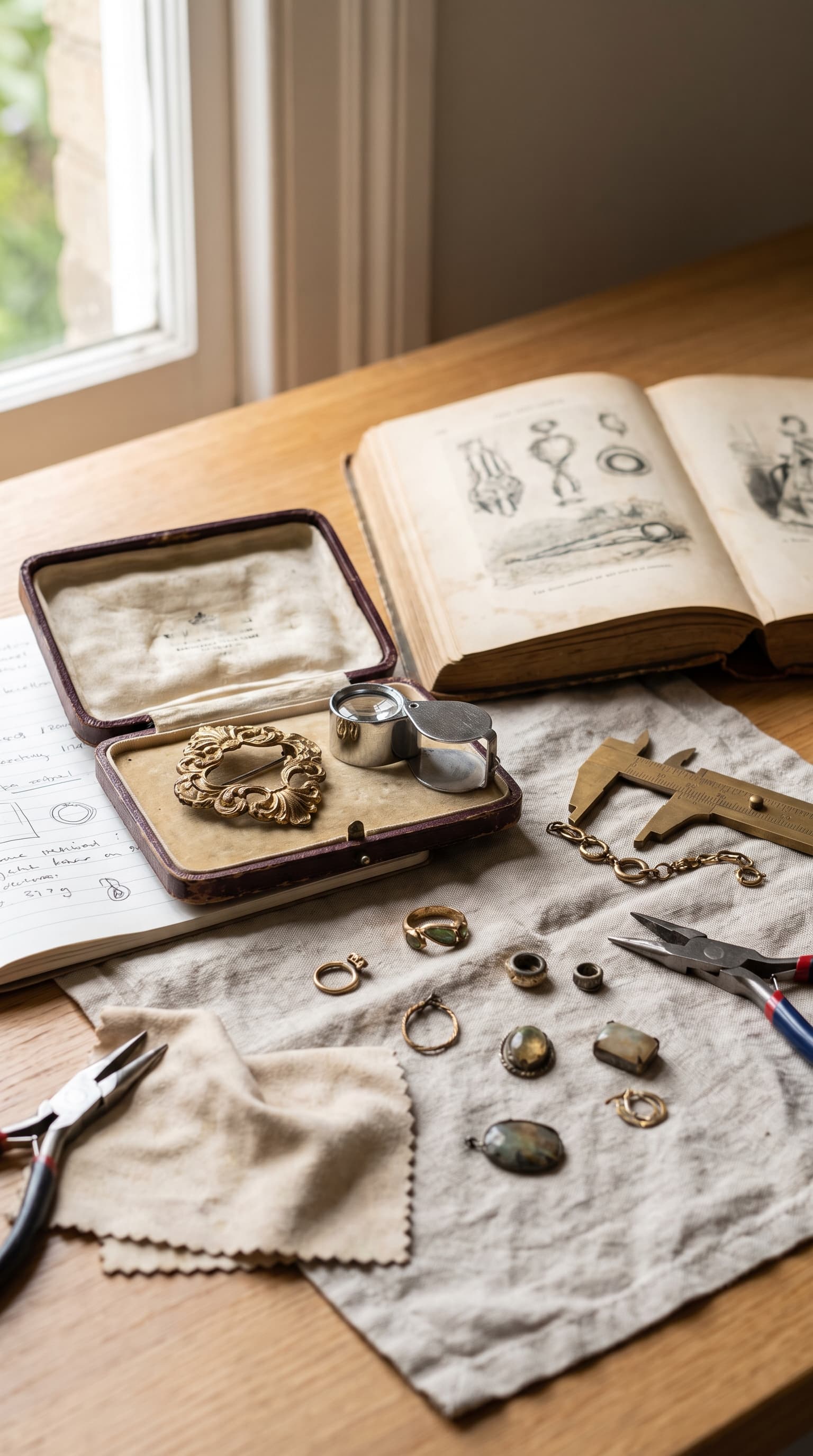
Costume Jewelry Identification: How to Identify Maker Marks and Construction
Costume jewelry identification starts with the details that separate a mass-produced piece from a collectible signed treasure. Unlike fine jewelry identified by precious metal content, costume pieces reveal their identity through maker marks, construction techniques, and the quality of materials used. Whether you've inherited a box of brooches or found a rhinestone necklace at an estate sale, knowing what to look for transforms guesswork into confident identification.
The difference between a $10 flea market find and a $300 signed Trifari piece often comes down to a tiny maker's mark and how the piece was assembled.
What Clues Matter Most for Costume Jewelry Identification
Maker Marks and Signatures
Maker marks are the primary identifier for valuable costume jewelry. Look for stamped, engraved, or molded signatures on the back of brooches, the underside of earring clips, or near clasps on necklaces and bracelets. Desirable makers include Trifari, Weiss, Eisenberg, Haskell, Coro, Schiaparelli, and Vendome.
Marks can be surprisingly small—sometimes just a few millimeters. They may appear as full names, abbreviations, or copyright symbols with years. A copyright symbol (©) followed by a maker name and date helps narrow the production period. Some high-end costume jewelry carries no mark at all, particularly pieces by Miriam Haskell, which relied on construction quality rather than signatures.
Clasp and Fastener Construction
Classps tell age and quality stories. C-clasps and trombone clasps dominated 1920s-1940s pieces. Spring-ring clasps became common in the 1950s. Barrel clasps and lobster claws appeared later. For brooches, examine the pin mechanism—rollover safety clasps appeared in the 1940s and became standard by the 1950s.
Earring backs also date pieces. Screw-backs dominated before pierced ears became mainstream in the 1960s. Clip-backs flourished from the 1930s through 1960s. Modern fish-hook wires and butterfly backs generally indicate post-1970s manufacture unless they're replacements.
Stone Setting and Attachment
How rhinestones and cabochons attach reveals manufacturing quality and era. Prong settings, where metal claws hold each stone individually, indicate higher-quality work. Glued stones suggest mass production or later periods. Open-back settings that let light pass through stones appeared on better pieces, while closed backs might indicate earlier or budget construction.
Look at stone quality too. Early rhinestones often show more depth and sparkle than later acrylic imitations. Foil backing behind stones was common through the 1950s but can deteriorate, creating a cloudy or darkened appearance.
Metal Type and Finish
Costume jewelry used various base metals—brass, pot metal (mixed alloys), sterling silver, and later, base metal alloys. Surface treatments matter: gold plating, gold wash, rhodium plating, antiquing, and enamel work all indicate different eras and quality levels. Heavy, substantial pieces often signal better construction, though some designers intentionally created lightweight modern pieces.
Check for wear patterns on plating. Genuine vintage pieces show consistent wear in high-contact areas. Fresh-looking pieces claiming to be old may be reproductions.
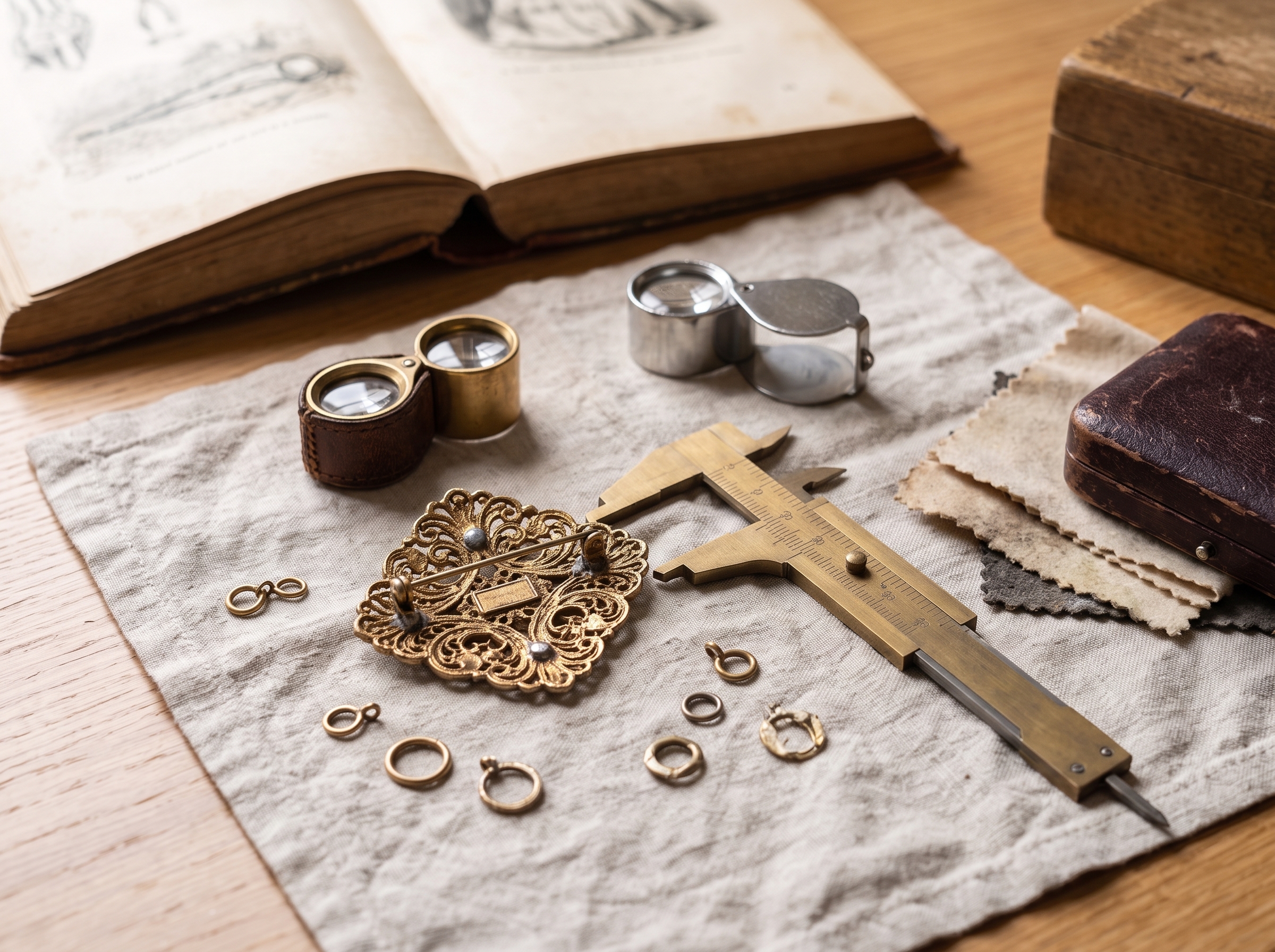
What Photos to Take for Costume Jewelry Identification
Maker Mark Close-Ups
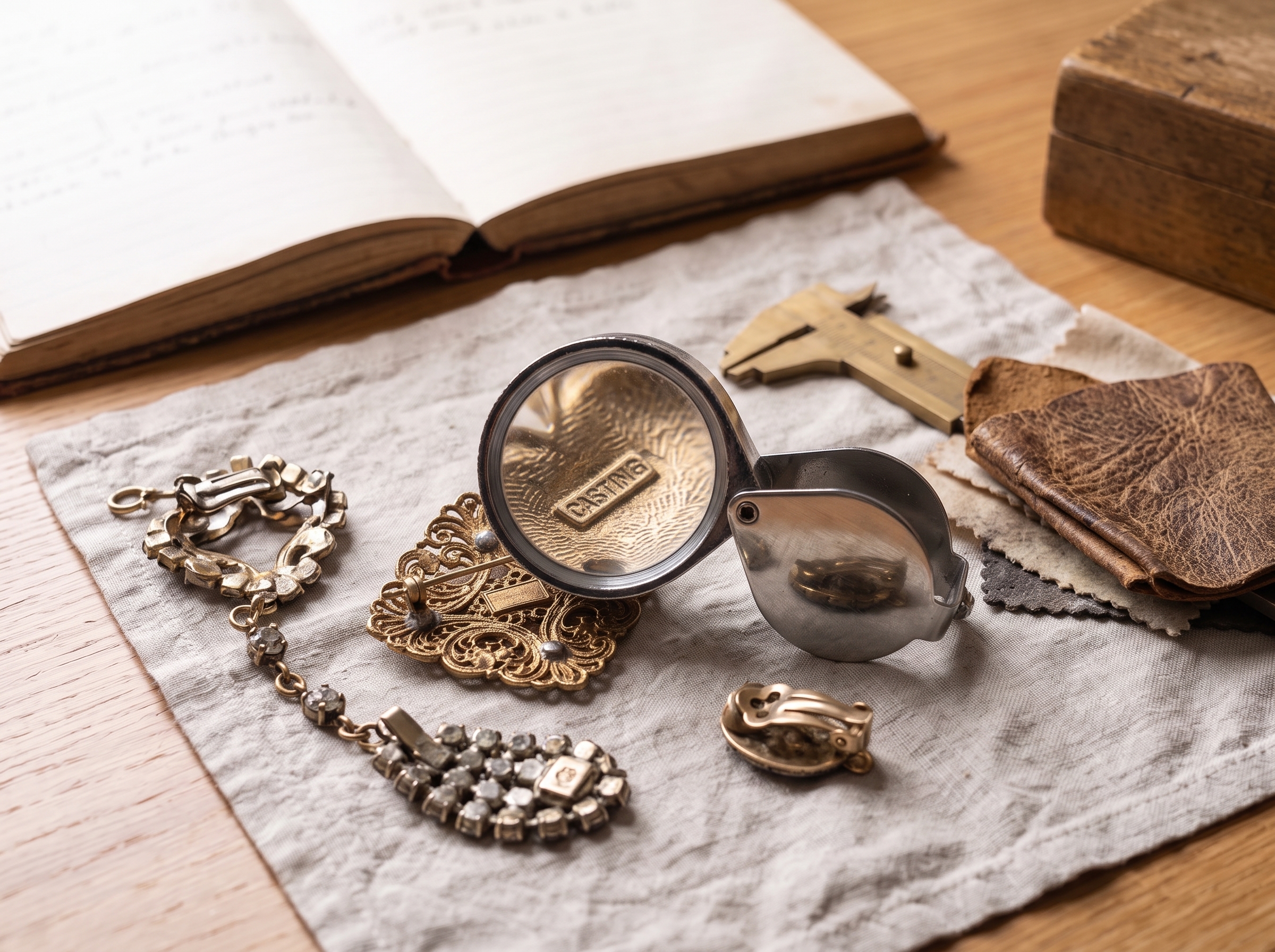
Take extreme close-ups of any marks, stamps, or signatures. Use good lighting—natural daylight or bright white LED works best. If marks are tiny, try gently tilting the piece to catch light at different angles. Multiple photos from different angles often help when a mark is worn or stamped faintly.
Photograph both sides of clasps, the backs of all components, and along edges where hidden marks sometimes appear.
Clasp and Construction Details
Capture clear images of clasps, pin mechanisms, and how pieces connect. For necklaces and bracelets, photograph the clasp area from both sides. For brooches, shoot the entire pin assembly straight-on. For earrings, capture both the front decorative surface and the back attachment mechanism.
These construction photos often matter more than you'd expect—they help date pieces even without maker marks.
Stone Settings and Materials
Photograph rhinestone settings close enough to see prongs, glue, or bezel work. Capture the piece from angles that show whether settings are open-back or closed. If stones appear clouded or darkened, that's important to document—it's a common characteristic of vintage foil-backed rhinestones.
For enamel work, photograph straight-on in good light to show color depth and any crazing (fine cracks).
Overall Design and Size
Take full-piece photos from multiple angles with something for scale—a ruler or coin works well. Costume jewelry designs follow fashion trends, so overall style, size, and proportions help establish era even before examining construction details.
Common Costume Jewelry Identification Mistakes
Confusing Unsigned Quality Pieces with Signed Pieces
Not all unmarked jewelry is worthless, but collectors often assume beautiful construction means a piece must be by a famous maker. Miriam Haskell rarely signed pieces, but many quality unsigned pieces were made by unknown manufacturers. Without provenance or construction characteristics specific to known makers, attribution remains speculative.
Misreading or Assuming Marks
Small marks get misread constantly. "AUSTRIA" might get confused with "AUSTRALIA." Modern marks like "925" or karat stamps mean the piece contains precious metal—that's fine jewelry, not costume. "Germany" or "West Germany" are origin marks, not maker names, though they do help with dating.
Some sellers claim pieces are "Trifari-style" or "Weiss-quality"—marketing language that doesn't mean the piece was made by those companies.
Judging Age by Appearance Alone
Reproductions and revival pieces fool many collectors. A piece might look Victorian or Art Deco but was made in the 1980s or 2000s. Construction details, clasp types, and wear patterns tell more accurate age stories than design style alone.
Patina and tarnish can be faked or accelerated. Focus on construction clues that are harder to replicate.
Overlooking Condition Impact
Costume jewelry value depends heavily on condition. Missing stones, broken clasps, heavy wear on plating, and damaged enamel all reduce value significantly. Many people overestimate condition because a piece still "looks pretty" in hand. Close photos reveal the difference between excellent and fair condition.
What Tocuro Can Help Resolve
Costume jewelry identification challenges that stump even experienced collectors often come down to maker marks that are too small, worn, or obscure to research effectively on your own. Tocuro identifies costume jewelry from photos by analyzing maker marks, construction details, and design characteristics that indicate specific manufacturers and eras.
Upload clear photos showing maker marks, clasp construction, and stone settings. Tocuro's identification can match your piece to known makers, estimate age ranges based on construction methods, and provide estimated value ranges based on current market signals—though these estimates aren't formal appraisals.
For pieces without clear marks, photos of clasp types, pin mechanisms, and setting styles help narrow possibilities. If you're trying to distinguish between a valuable signed piece and a similar-looking reproduction, construction details in your photos make the difference.
You get 7 free identifications per day, and the count resets daily—plenty of room to work through a jewelry box full of mystery pieces.
Getting Confident Identifications
Costume jewelry identification rewards patience with details. That tiny mark on the back of a brooch, the specific style of clasp, or the way stones are set can unlock a piece's full story. The difference between "old jewelry" and "collectible signed Eisenberg" changes everything about value and significance.
When you can't read a mark, don't recognize a construction style, or want to confirm a piece's maker and era, good photos solve the puzzle. Focus on marks first, construction second, and overall design third—that's the sequence that leads to confident identifications.
Ready to identify your costume jewelry? Upload photos to Tocuro and discover what you're holding.
For more guidance on vintage jewelry identification beyond costume pieces, see our guide on how to identify vintage jewelry, or learn about gold jewelry marks if you're working with mixed collections.
Photo identification
Identify Your Jewelry
Use Tocuro to identify your item from a photo and get an estimated value range when market data is available.