
Collecting Antiques Guide: How to Start Building Your Collection
A practical guide for new collectors covering how to shop estate sales and antique shops, what to examine on the spot, which finds justify deeper research, and how photo identification tools fit into your collecting workflow.
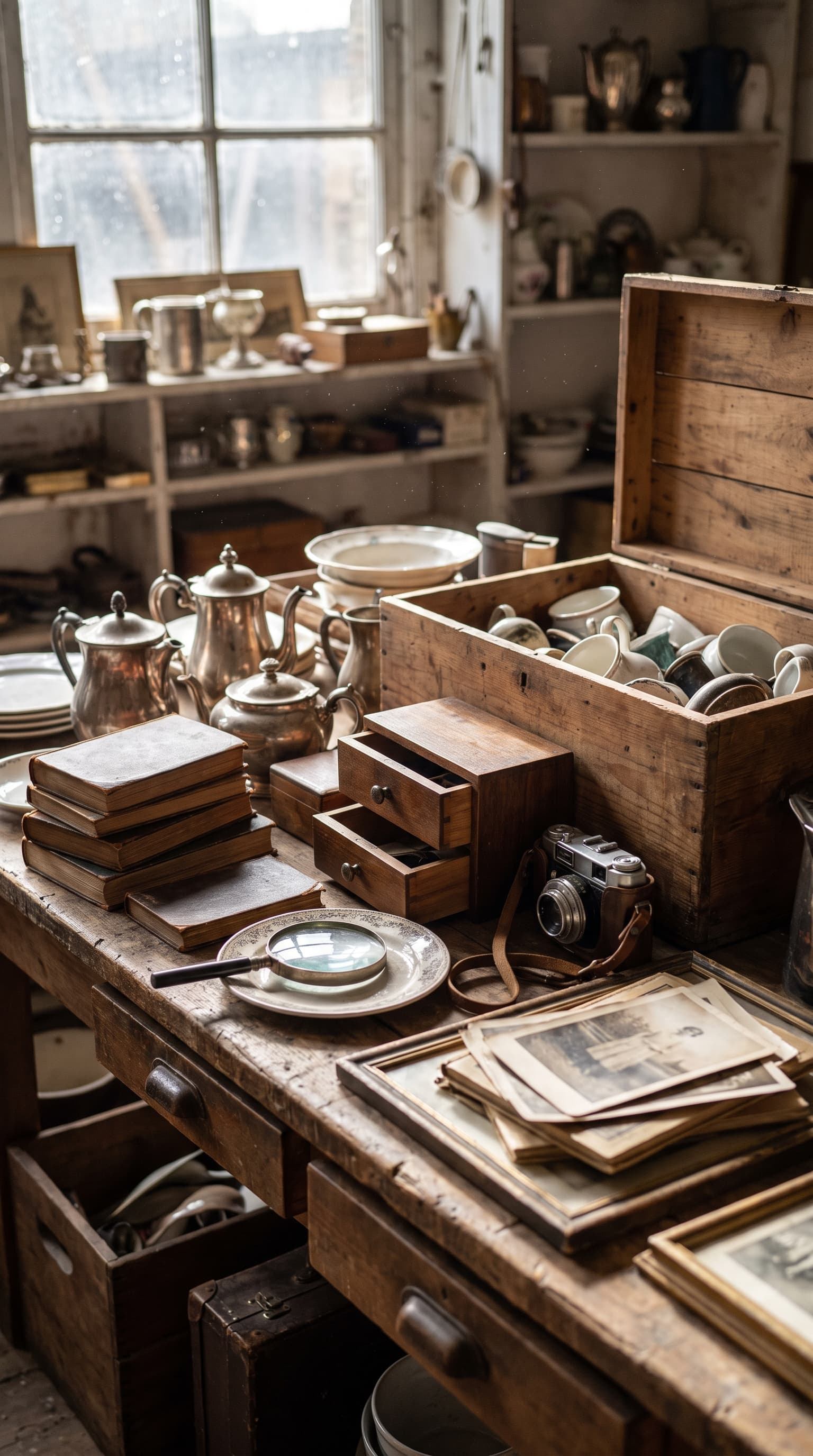
Collecting Antiques Guide: How to Start Building Your Collection
Starting an antique collection feels both exciting and overwhelming. You walk into an estate sale or antique mall, see hundreds of items, and wonder which pieces deserve your attention—and your money. The good news: collecting antiques doesn't require an advanced degree in art history. It requires curiosity, a few quick evaluation habits, and the willingness to learn as you go.
This guide walks you through the practical steps of building a collection, from your first estate sale visit to identifying pieces that warrant deeper research.
Shopping With Purpose: Estate Sales, Shops, and Flea Markets
The best collections start with a loose focus. You don't need to decide "I only collect Eastlake sideboards" on day one, but having a general interest—furniture, pottery, vintage textiles, Mid-Century lighting—helps you tune out the noise and spot patterns.
Estate sales offer the widest variety and often the best prices, especially on the second day when sellers mark things down. Antique malls let you compare dozens of dealers under one roof, which speeds up your education. Flea markets reward early risers and haggling skills. Online marketplaces expand your reach but remove the ability to inspect items in person before committing.
Whatever venue you choose, arrive with a tape measure, a phone flashlight, and a healthy dose of skepticism. Sellers can be knowledgeable or wildly off-base. Your job is to verify, not to trust the tag.
What to Check Fast: On-the-Spot Evaluation
You can't research every piece on your phone while standing in a crowded sale. Train yourself to spot a few key signals that separate keepers from pass-overs.
Construction and materials
- •Furniture: Look underneath and inside. Dovetail joints, hand-cut or irregular, suggest older work. Machine-cut dovetails (uniform, evenly spaced) point to post-1860s production. Solid wood backs and drawer bottoms often mean better quality than plywood or cardboard.
- •Pottery and porcelain: Check for maker's marks on the bottom. Crazing (fine cracks in the glaze) is common and not always a dealbreaker, but chips and hairline cracks can affect value. Hold the piece up to light to spot hidden damage.
- •Textiles: Smell for mildew, check seams for hand-stitching versus machine work, and note any staining or fabric loss. Natural dyes fade differently than synthetic ones.
Condition red flags
Damage that's expensive or impossible to repair—deep gouges in wood, missing hardware with no replacements available, active rust that's eating through metal—should give you pause unless the piece is rare enough to justify restoration costs. Surface wear, patina, and minor scratches often add character without tanking value.
Gut-check questions
Do you actually like it? Will it fit in your space? Can you afford it if it turns out to be less valuable than the tag suggests? Collecting antiques works best when you buy things you'd be happy to live with even if they never appreciate.
What's Worth Researching Further
Some finds justify pulling out your phone and digging deeper before you hand over cash.
Maker's marks and signatures
Stamped names, labels, or signatures can point to known manufacturers, pottery studios, or furniture makers. A clear mark makes research faster. Antique desk identification and clock identification often hinge on these details. Snap a photo of any marks you see—even if you don't recognize them in the moment, you can research them later.
Unusual construction or style details
Pieces that don't fit the usual mold—odd proportions, unfamiliar joinery, decorative elements you haven't seen before—may be regional, handmade, or from a short-lived design movement. Bed frame identification, for example, often reveals surprises in headboard construction or rail attachment methods that narrow down age and origin.
Items in your collecting focus
If you're building a collection around a specific style, era, or type of object, any piece that fits your theme deserves a closer look. Cross-reference similar sold listings, consult reference books, or use photo-based tools to confirm what you're seeing.
Low-risk bargains
Sometimes the price is low enough that even a gamble makes sense. A $15 pottery vase with an interesting mark or a $40 side table with solid bones can become learning opportunities. Just keep your expectations realistic and your budget in check.
How Collecting Antiques Fits Into Your Workflow
Once you've brought a piece home, the real detective work begins. You'll want to confirm what you bought, understand its context, and get a sense of its value range—not for resale necessarily, but to appreciate what you own.
Photo-based identification tools like Tocuro streamline this process. Take clear, well-lit photos of the whole piece, any marks, and construction details, then upload them. Tocuro identifies items from photos and provides estimated value ranges based on current market signals. This isn't a formal appraisal, but it gives you a grounded starting point.
If you're actively collecting antiques, you'll probably snap photos of dozens of items each month—things you own, things you're considering, and things you're just curious about. Tocuro offers 7 free identifications per day, and the count resets daily, so casual collectors can research pieces without a subscription. Higher-volume use requires payment, but the workflow stays simple: photo, identify, decide.
Understanding what you have also helps you spot patterns in your own taste. Maybe you thought you liked all Victorian furniture, but your photos reveal you only buy Eastlake pieces. Or you realize your "eclectic" pottery collection is actually all Mid-Century studio work. Those insights shape smarter buying decisions down the road.
Start Collecting Antiques With Confidence
The best antique collections grow organically. You'll make mistakes—overpaying for a reproduction, buying something that doesn't fit your space, falling for a piece that turns out to be less interesting than you hoped. That's part of the process. Each purchase teaches you something, and over time, your eye gets sharper.
Stay curious, handle as many pieces as you can, and don't be afraid to ask questions—of dealers, of other collectors, and of the objects themselves. The knowledge you build will serve you for decades.
Ready to identify and track the pieces you're considering? Start collecting with Tocuro and turn your photos into insights that help you buy smarter and appreciate what you find.
Collector workflow
Start Collecting
Save your finds, track what you own, and turn one-off discoveries into a collection.