
Coin Mint Mark Identification: How to Read Mint Marks and Dates
Mint marks are tiny letters on coins that tell you where a coin was made—and can dramatically affect value. This guide shows you where to find mint marks and dates, what they can and cannot tell you, common mistakes collectors make, and how clear photos help identify your coins accurately.

Coin Mint Mark Identification: How to Read Mint Marks and Dates
Mint marks are small letters stamped on coins that identify which U.S. Mint facility produced them. A common Lincoln cent might be worth face value, but the same coin with a "D" or "S" mint mark from a particular year can be worth hundreds of dollars. Understanding coin mint mark identification helps you spot the difference between an ordinary coin and a collectible piece worth preserving.
Mint marks appear in different locations depending on the coin series and era. They're often tiny—sometimes less than 2mm tall—and easy to miss if you don't know where to look. Dates are usually more prominent, but worn coins can make even these hard to read. Both pieces of information work together to tell you about a coin's origin, production numbers, and potential rarity.
Where to Find Mint Marks on Coins
Mint mark location varies by coin type and year, but a few common spots appear repeatedly across U.S. coinage.
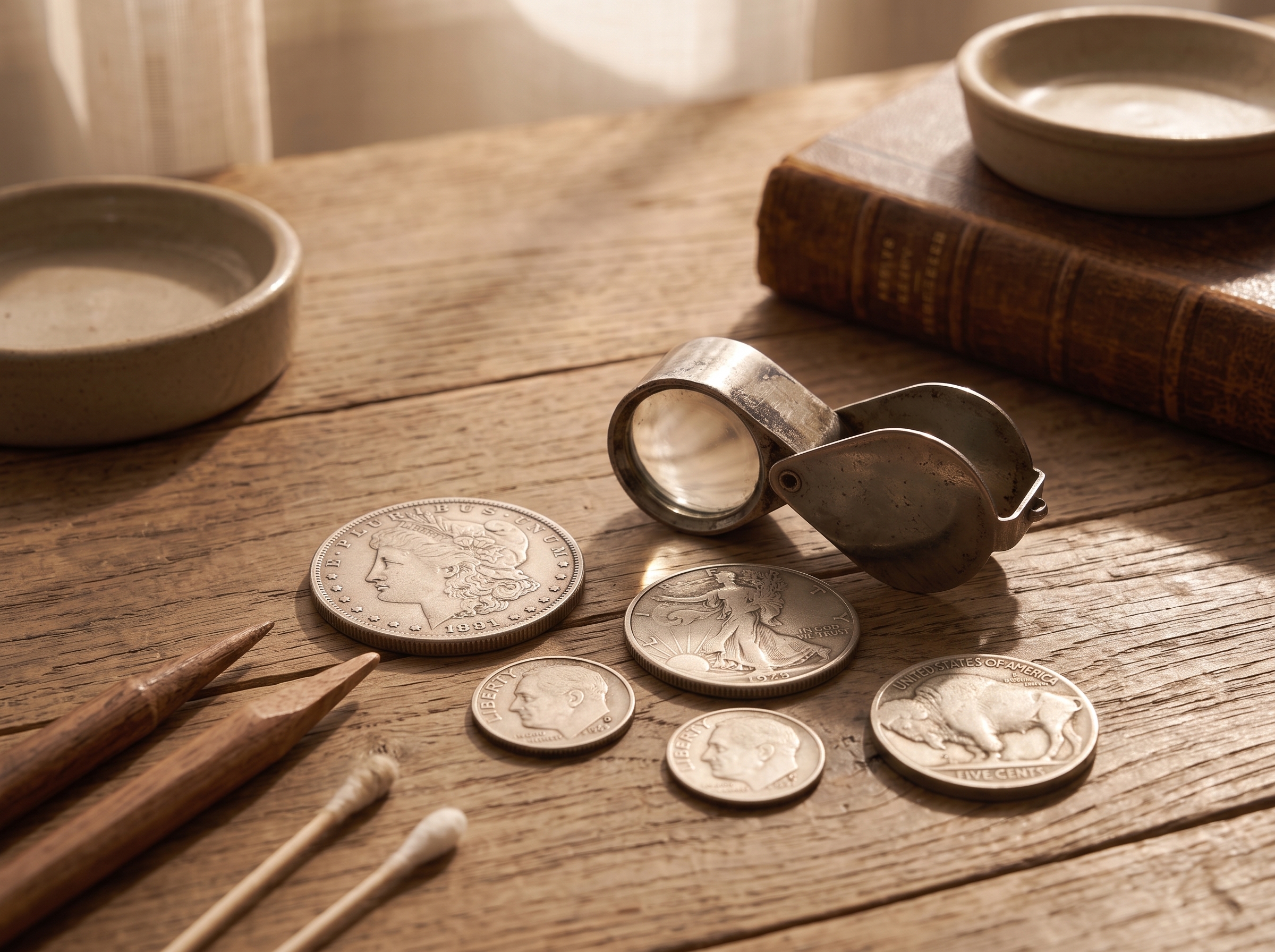
Lincoln cents (1909-present) show mint marks on the obverse (front) below the date from 1909-1958, then moved to the reverse (back) below the memorial from 1959-2017, and returned to the obverse in 2017. Jefferson nickels place mint marks on the reverse to the right of Monticello, except from 1968-2019 when they appear on the obverse near the date. Roosevelt dimes and Washington quarters carry mint marks on the reverse from 1946-1964, then moved to the obverse near the date from 1968 forward.
Kennedy half dollars follow a similar pattern: reverse from 1964, obverse from 1968 onward. Morgan and Peace dollars place mint marks on the reverse, typically below the eagle or wreath. Modern Presidential dollars and Sacagawea dollars show mint marks on the edge along with the date.
Pre-1965 coins may lack a mint mark entirely—this indicates Philadelphia production, which didn't use a "P" mint mark consistently until the 1980s. Buffalo nickels hide their mint marks under the buffalo on the reverse, often in areas that wear quickly.
Dates almost always appear on the obverse, typically at the bottom. On older or circulated coins, the date may be partially worn away, making positive identification difficult without additional context clues.
What Coin Mint Marks Can and Cannot Tell You
Mint marks reveal specific details about a coin's production, but they're just one factor in identification and value.
What Mint Marks Tell You
Mint marks identify the production facility: D (Denver), S (San Francisco), P (Philadelphia), CC (Carson City, 1870-1893), O (New Orleans, 1838-1909), and several other historic locations. Production location matters because different mints made different quantities. A low-mintage coin from San Francisco may be significantly rarer than the same year and type from Philadelphia.
Combined with the date, mint marks help determine mintage figures—how many of that specific coin were produced. Lower mintages often (but not always) translate to higher collector demand and value. Certain mint mark and date combinations are key dates or rarities that collectors actively seek, like the 1909-S VDB Lincoln cent or the 1916-D Mercury dime.
Mint marks also provide clues about strike quality and die varieties. Some mints had reputations for sharper strikes or used different die preparation methods, creating subtle differences collectors prize.
What Mint Marks Cannot Tell You
Mint marks don't guarantee value. A common-date coin from any mint in worn condition typically remains worth close to face value or metal content. Condition matters enormously—a badly worn rare-date coin may be worth less than a pristine common-date example.
Mint marks don't authenticate coins on their own. Counterfeiters have added false mint marks to common coins to create "rarities," especially on valuable dates. Authentication requires examining die characteristics, weight, metal composition, and other factors beyond just the mark itself.
A mint mark won't tell you if a coin has been cleaned, damaged, or altered—all factors that reduce collector value significantly. It also won't reveal grade without examining the coin's overall preservation, luster, and surface quality.
Common Coin Mint Mark Misreads
Tiny marks on worn metal lead to predictable identification errors.
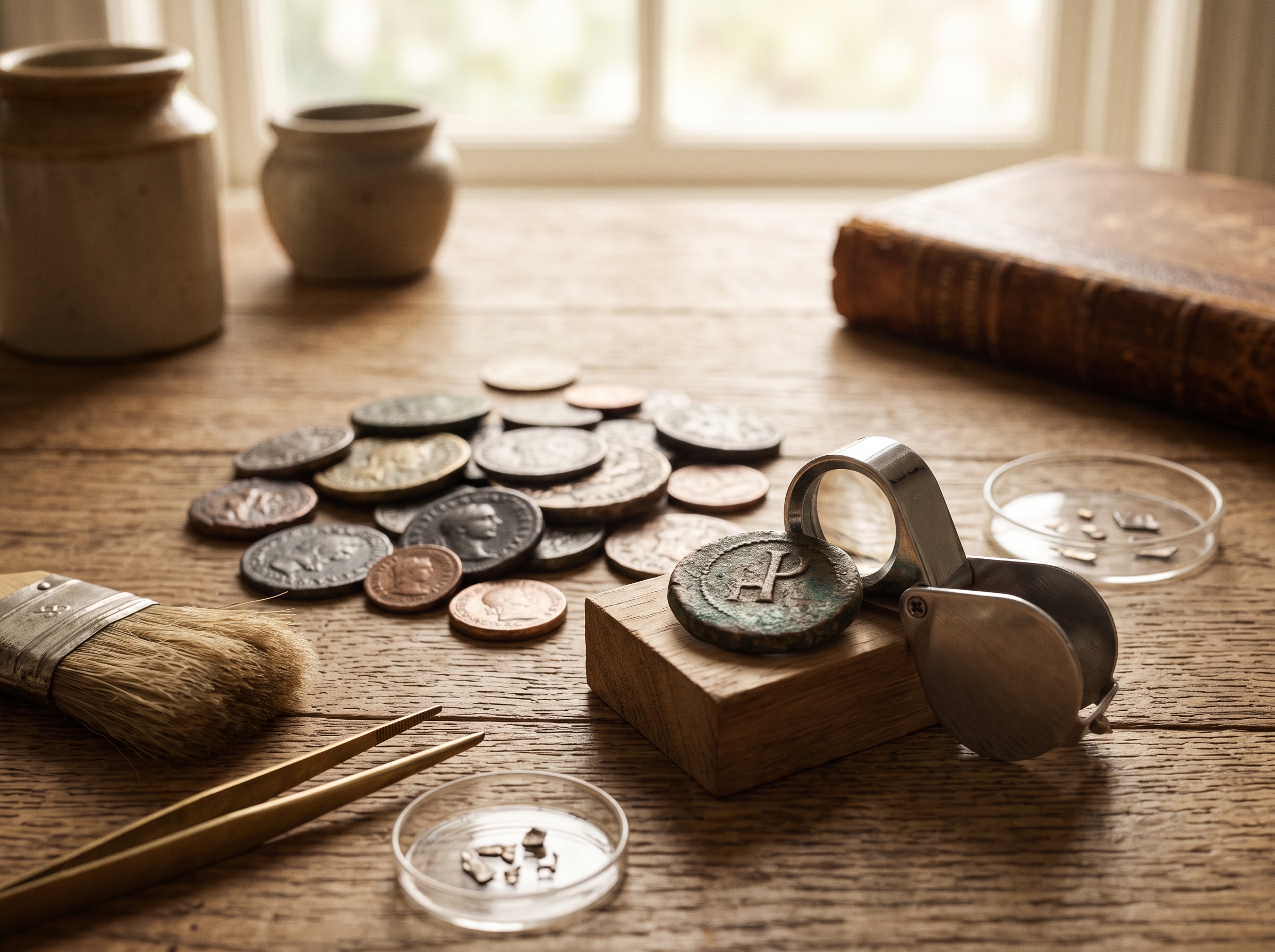
Mistaking damage for mint marks happens frequently. A small ding, scratch, or corrosion pit can look like a letter, especially when you want to see a rare mint mark. Genuine mint marks appear incused (stamped into the metal) with consistent depth and sharp edges. Damage creates raised edges, irregular shapes, or rough surfaces.
Missing mint marks entirely on pre-1980 Philadelphia coins confuses newer collectors. The absence of a mint mark is itself an identifier—it means Philadelphia production. Don't assume a worn spot once held a mark unless you can verify it with reference materials.
Confusing worn dates with different numbers causes misidentification. An "8" worn flat on top can look like a "3." A "5" can resemble a "6" or "8" depending on wear pattern. Context helps here: knowing which dates were actually minted in a series prevents impossible combinations.
Overlooking tiny mint marks on buffalo nickels and older coins is common because wear concentrates exactly where marks appear. Angled lighting and magnification reveal marks that seem invisible in direct light.
Assuming legibility equals authenticity is risky. Counterfeit coins sometimes have perfectly clear mint marks precisely because forgers know collectors look for them. Suspicious sharpness on an otherwise worn coin deserves scrutiny.
Some collectors misread mint mark size or style and assume they've found a valuable variety. Mint mark punches did vary, but many supposed "large D" or "small S" varieties turn out to be normal variation or photographic distortion.
How Photos of Coin Mint Marks Improve Identification Results
Clear photographs of mint marks and dates dramatically improve identification accuracy compared to verbal descriptions alone.
Sharp focus on the mint mark area matters most. A photo showing the entire coin helps with overall authentication, but a well-lit close-up of the mint mark reveals details impossible to describe accurately in text. Use a jeweler's loupe or macro lens to capture the mark at readable size.
Angled lighting brings out shallow details on worn coins. A single overhead light source flattens everything—try positioning a lamp at 45 degrees to create shadows that reveal subtle stamping. Photos taken under multiple lighting angles show different details.
Include the date clearly in your photos. Mint mark and date together create the complete identifier. A photo showing both in focus provides maximum information. If the coin is large enough, capture both in a single frame.
Photograph both sides of the coin. Mint marks moved between obverse and reverse across different eras. Someone trying to identify your coin needs to see where marks do and don't appear.
Show scale when possible. Including a ruler or photographing next to a known object helps verify the coin's size, which aids identification when the type is uncertain. Counterfeit coins sometimes have incorrect dimensions.
Avoid heavy editing that might hide details or create artifacts that look like mint marks or damage. Natural color and lighting preserve information that helps authentication.
For collectors with multiple coins or inherited collections, systematic photos of each piece create records that capture details memory doesn't retain. Six months later, you won't remember which quarter had which mint mark—but photos preserve that information permanently.
Get Your Coins Identified from Photos
Tocuro helps you identify coins and estimate value ranges from clear photos of mint marks and dates. Upload images of your coins at https://tocuro.app/identify and get results based on market signals—not a formal appraisal, but a practical starting point for understanding what you have. The service identifies more than just coins, making it useful for sorting through mixed collections or estate finds.
Focus your photos on mint marks, dates, and overall condition. The clearer your images, the more accurate the identification. Whether you're organizing an inherited collection, considering a purchase, or simply curious about coins you've set aside, photo-based identification gives you information without requiring an in-person visit to a dealer or appraiser.
Photo identification
Identify a Coin Mint Mark
Use Tocuro to identify your item from a photo and get an estimated value range when market data is available.