
Chippendale Furniture Identification: How to Recognize the Style
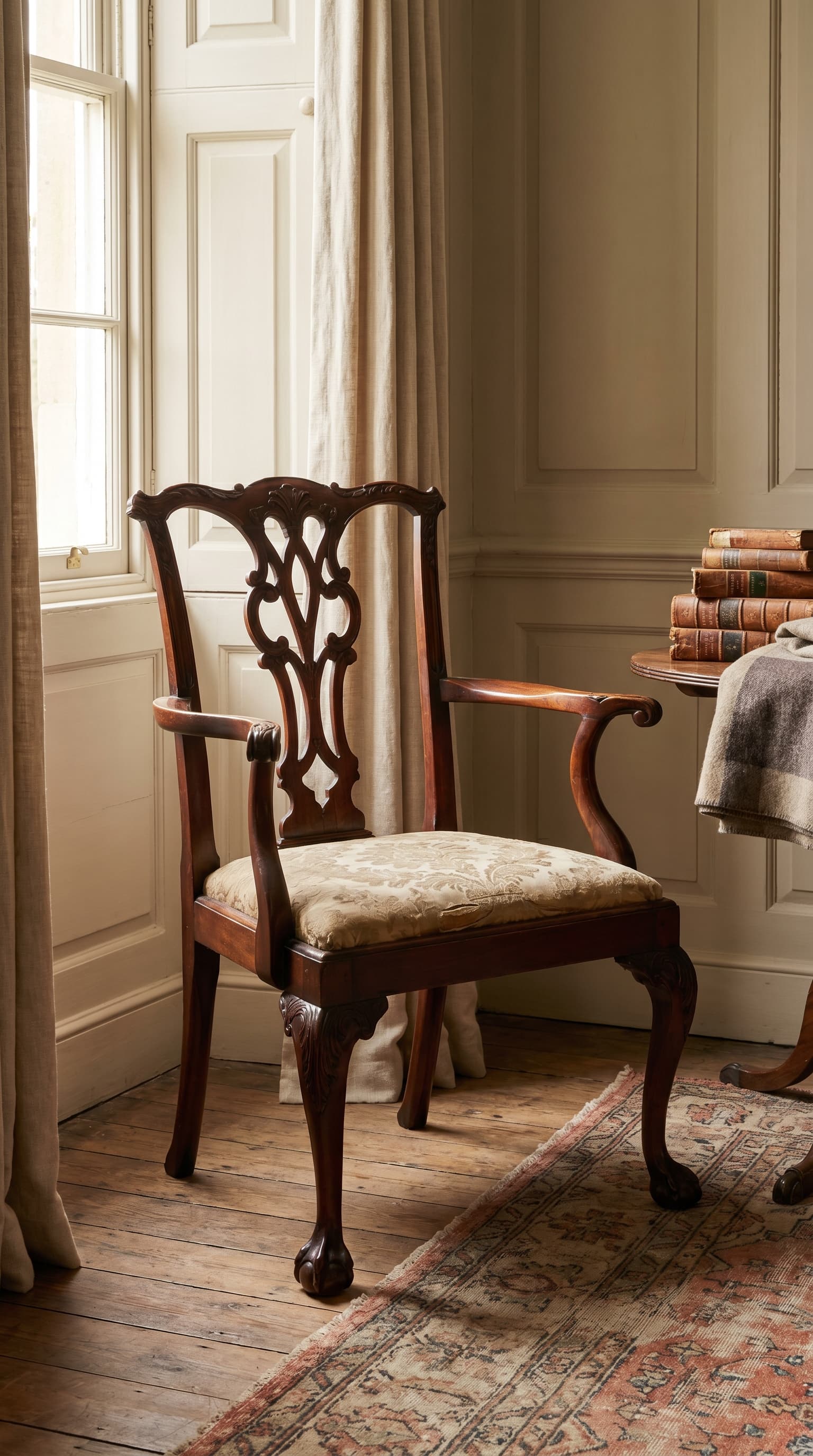
Chippendale furniture is recognized by its distinctive ball-and-claw feet, graceful cabriole legs, and intricate carved back splats. This guide shows you how to spot authentic Chippendale pieces using visual markers that photograph well.
What You're Looking At When You See Chippendale
Chippendale furniture identification starts with recognizing a style that dominated refined American and British homes from roughly 1750 to 1780. Named after London cabinetmaker Thomas Chippendale, whose pattern book influenced generations of craftsmen, this style blends ornate carving with sophisticated proportions. When people say "Chippendale," they're usually describing furniture with ball-and-claw feet, cabriole legs that curve outward then inward, and elaborate back splats featuring ribbons, Gothic arches, or Chinese-inspired fretwork.
The style was so influential that reproductions appeared throughout the 19th and 20th centuries—some quite good, others less so. Learning to spot authentic period pieces versus later revivals matters when you're evaluating what's sitting in your dining room or at an estate sale.
Visual Checklist for Chippendale Furniture Identification
Ball-and-Claw Feet
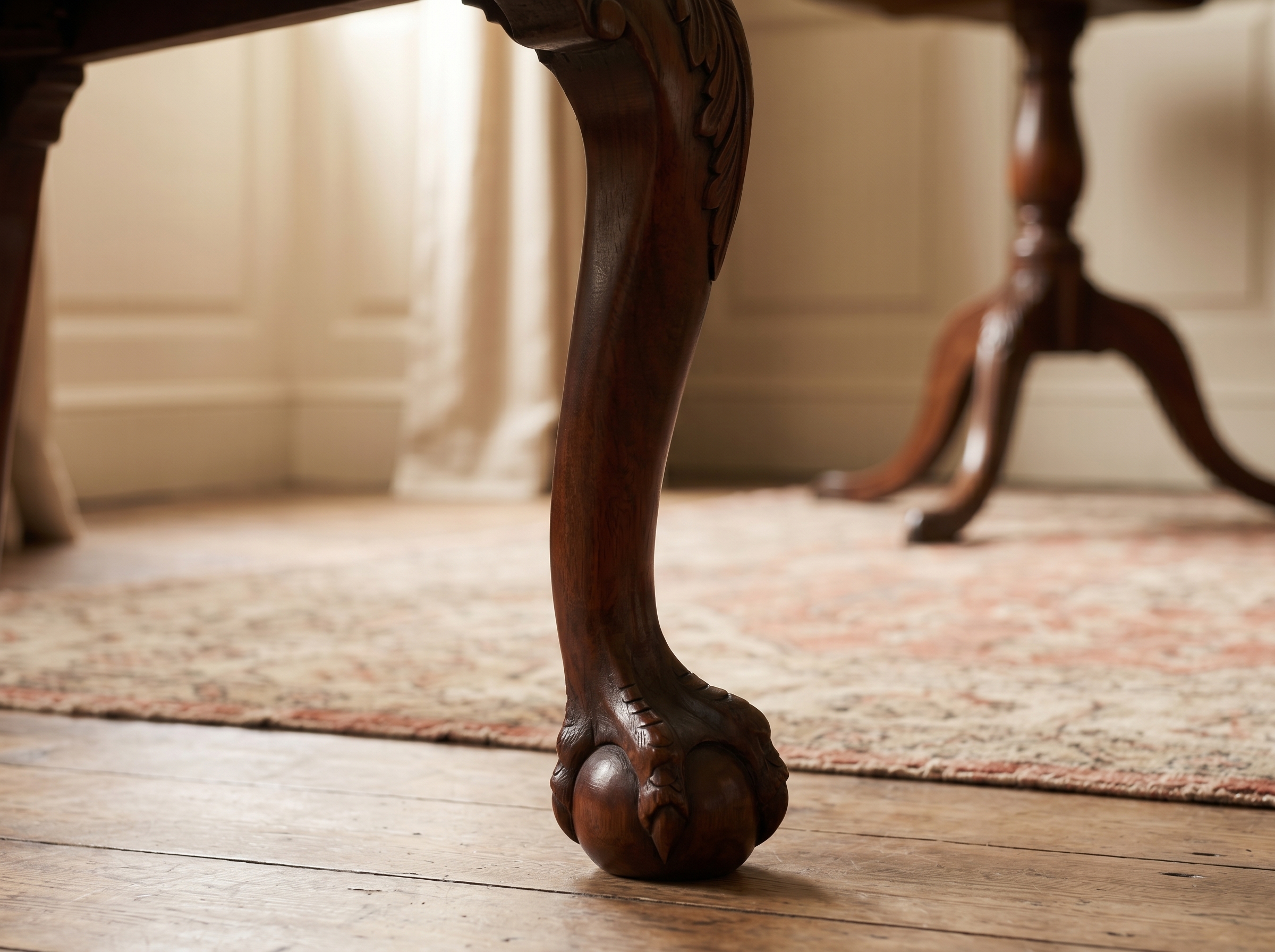
The most famous Chippendale marker. Look for carved feet shaped like a bird's claw grasping a ball. American versions often show sharper, more defined talons than English examples. Philadelphia craftsmen created particularly crisp versions with articulated knuckles. Not every Chippendale piece has these feet—simpler examples use pad feet or straight bracket feet—but when present, they're a strong indicator.
Cabriole Legs
These S-curved legs flow outward at the knee, then taper inward toward the ankle before ending in those ball-and-claw feet. The knee often features carved shells, acanthus leaves, or flowers. On chairs, all four legs might be cabriole; on case pieces like highboys, usually just the front legs. The curve should look graceful, not exaggerated.
Carved Back Splats
Chippendale chairs are famous for their back splats—the vertical board between the crest rail and seat. These come in distinct patterns:
- •Ribbon-back: Intertwined carved ribbons that look almost like fabric
- •Ladder-back: Horizontal slats, often pierced with geometric patterns
- •Gothic: Pointed arches and church-window motifs
- •Chinese: Geometric fretwork inspired by Asian design
The carving should be crisp and detailed, not soft or blurry from wear or poor execution.
Mahogany Construction
Period Chippendale pieces typically used mahogany, particularly on high-style furniture. The wood develops a rich, deep patina over centuries. Later reproductions might use stained cherry or walnut to mimic mahogany's color. Check unfinished areas—drawer bottoms, backboards—for secondary woods like pine, poplar, or oak, which indicate period construction methods.
Proportions and Scale
Chippendale furniture tends toward substantial but not heavy proportions. Chairs have wider seats than earlier Queen Anne examples. Case pieces like secretaries and highboys stand tall with well-balanced upper and lower sections. Everything feels anchored and deliberate.
Common Chippendale Style Confusions
Chippendale vs. Queen Anne
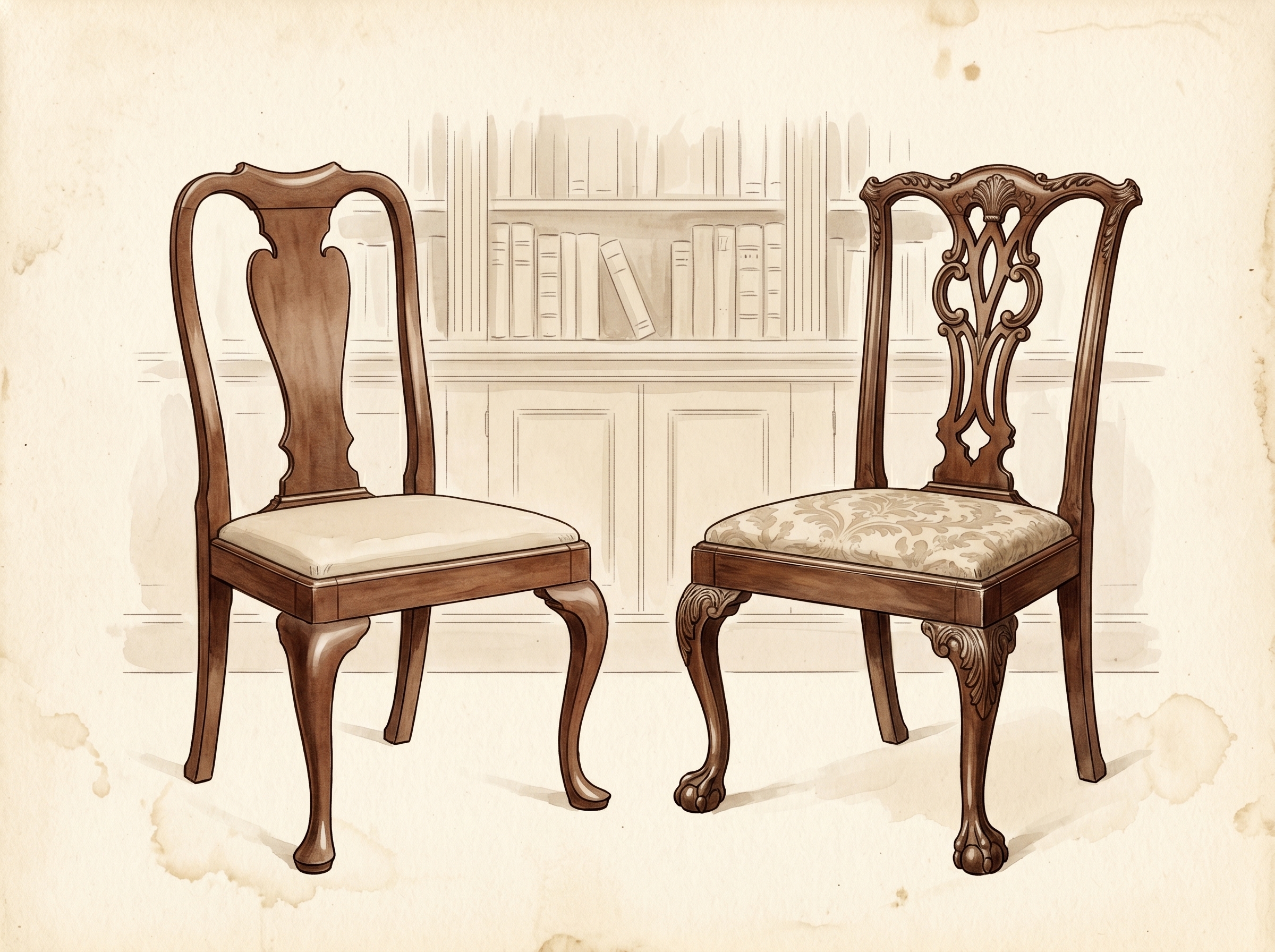
This trips up many collectors. Both styles use cabriole legs, but Queen Anne (1720-1750) came first and feels lighter, more delicate. Queen Anne feet are usually pad or drake (three-toed), not ball-and-claw. Queen Anne back splats tend to be solid, simple vase shapes, while Chippendale splats show elaborate carving and piercing. If it's ornate and muscular, think Chippendale. If it's refined and restrained, likely Queen Anne.
Chippendale vs. Federal
Federal style (1780-1820) followed Chippendale and moved away from curves toward straight, tapered legs with inlay decoration. Federal pieces feature shield-back or square-back chairs, not the carved splats of Chippendale. If you see straight legs and lots of inlay, you're probably looking at Federal, not Chippendale.
Revival Pieces
Chippendale revivals appeared throughout the Victorian era and again in the early 20th century. These can be high quality but aren't period pieces. Revival furniture often shows machine-cut elements, overly uniform carving, or proportions that feel slightly "off"—legs too thin, ornamentation too busy. Construction methods matter: period pieces use hand-cut dovetails with slight variations between joints, while revivals may show perfectly uniform machine-cut dovetails or visible circular saw marks.
How to Use Photos for Chippendale Furniture Identification
Good photos make identification significantly easier, whether you're researching online or using an app like Tocuro.
Capture the Feet and Legs
Get close-up shots of any ball-and-claw feet from multiple angles. The carving quality and style details often reveal origin and period. Photograph cabriole legs from the side to show the curve's profile, and from the front to capture knee carving.
Document the Back Splat
For chairs, photograph the splat straight-on and from an angle that shows depth and carving detail. Natural light works best—flash can wash out carved details. If the splat is pierced (carved through), capture how light passes through the openings.
Show Construction Details
Flip chairs over and photograph the underside. Pull out drawers and photograph dovetail joints, drawer bottoms, and how pieces fit together. These construction details help separate period pieces from reproductions more reliably than surface appearance.
Include Overall Proportions
Take full shots that show the entire piece in context. Stand back far enough that the camera captures top to bottom without distortion. These help experienced eyes assess proportions and overall design coherence.
Don't Forget Wear Patterns
Photograph areas of natural wear: chair rungs that show foot traffic, table edges where hands have rested, drawer fronts around pulls. Authentic period pieces show wear in logical places accumulated over centuries, not artificially distressed or evenly worn surfaces.
Get Help Identifying Your Chippendale Furniture
Even with a good eye, dating furniture and distinguishing period pieces from quality reproductions takes experience. Tocuro helps you identify furniture from photos, using market signals to provide context about what you own. Upload clear images following the guidelines above, and you'll get information about your piece's likely origin and style. The app gives you 7 free identifications per day, with your count resetting daily.
Whether you're evaluating an inheritance, shopping estate sales, or simply curious about that dining set you've had for years, understanding Chippendale furniture identification helps you make informed decisions. And if you're interested in placing your pieces within broader furniture history, check out our Furniture Era Guide: How to Place Your Pieces in Time for additional context on how Chippendale fits into the timeline of American and English furniture styles.
Photo identification
Identify Your Furniture
Use Tocuro to identify your item from a photo and get an estimated value range when market data is available.