
China Pattern Identification: How to Identify China Patterns by Photo
Identifying china patterns requires photographing specific details like motifs, borders, colors, and backstamps. This guide walks you through the visual clues that matter most, which photos get results, common pattern mix-ups, and how Tocuro's photo identification can match your pattern quickly.
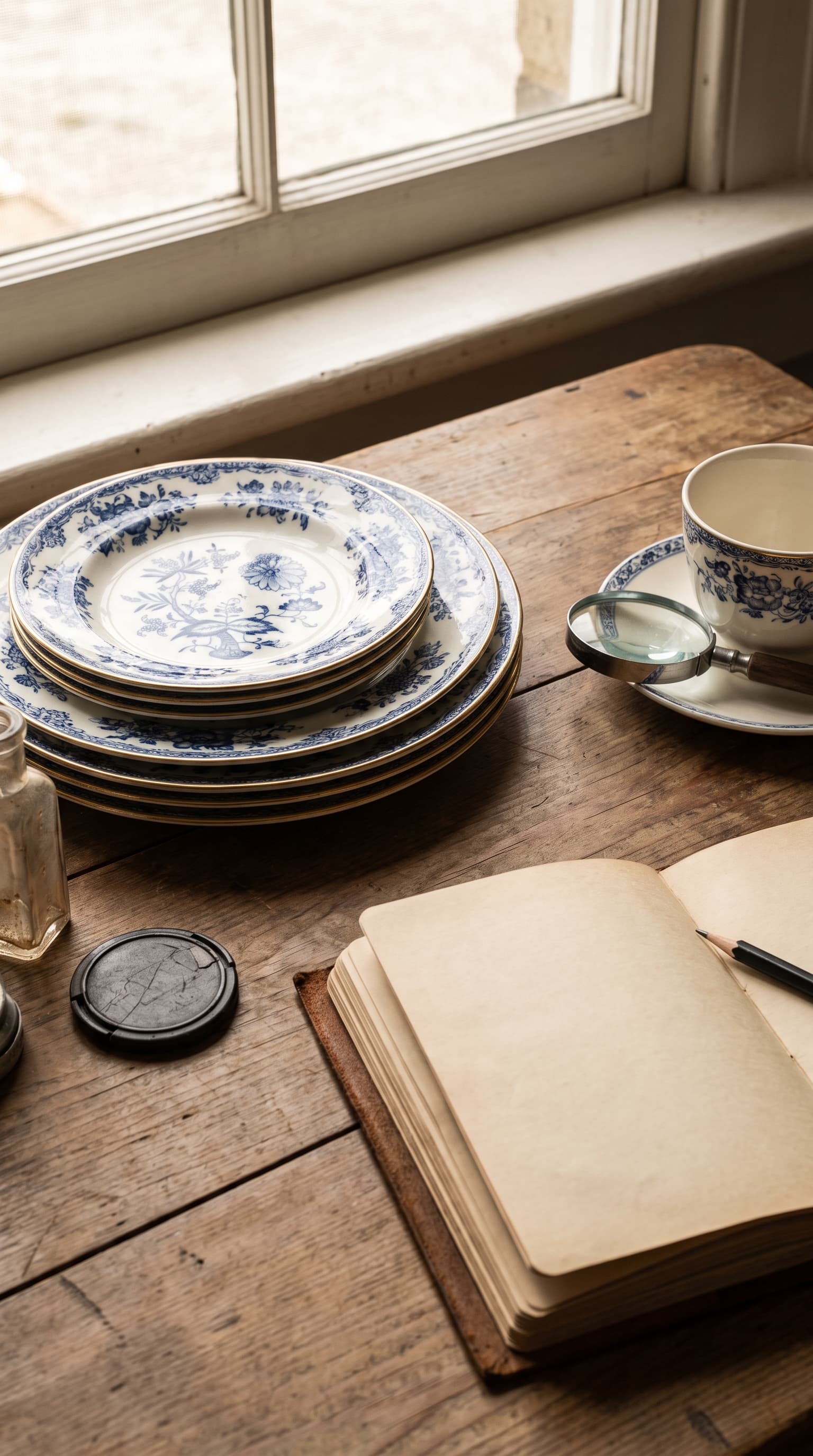
What Clues Matter for China Pattern Identification
When you need to identify a china pattern—whether you're replacing a broken plate, researching an inherited set, or evaluating a thrift store find—specific visual details carry the most weight.
Pattern motifs are your primary identifier. Is the design floral, geometric, scenic, or abstract? Note the central motif (roses, willows, scrollwork) and how elements are arranged. Patterns might feature a single focal image, an all-over design, or distinct borders with a plain center.
Border treatments often define a pattern. Look for scalloped edges, embossed rims, gold banding, colored lines, or decorative borders that frame the piece. Many patterns are instantly recognizable by their border alone—think of the distinctive blue rim on certain Wedgwood lines or the gold filigree on Noritake patterns.
Color palette matters enormously. A pink rose pattern on ivory differs from the same rose in cobalt blue. Note whether colors are hand-painted, transfer-printed, or decal-applied. Pastels suggest different eras and makers than bold primaries.
Glaze quality and body type provide context. Is the piece true porcelain (translucent when held to light), bone china (warm, slightly creamy), or earthenware? The body type can narrow down maker possibilities and production periods.
Backstamps and marks confirm what the pattern suggests. While the pattern itself is the star, marks anchor your identification with manufacturer, country of origin, and often a date range. Look for impressed, printed, or painted marks on the underside.
Shape and form can distinguish between similar patterns. Plate shapes (round, scalloped, square), handle styles on cups, and finial shapes on lids all contribute to pattern identity, especially when manufacturers produced multiple patterns with similar decorative themes.
What Photos to Take for China Pattern Identification
Good photos make the difference between a quick match and endless searching through pattern books.
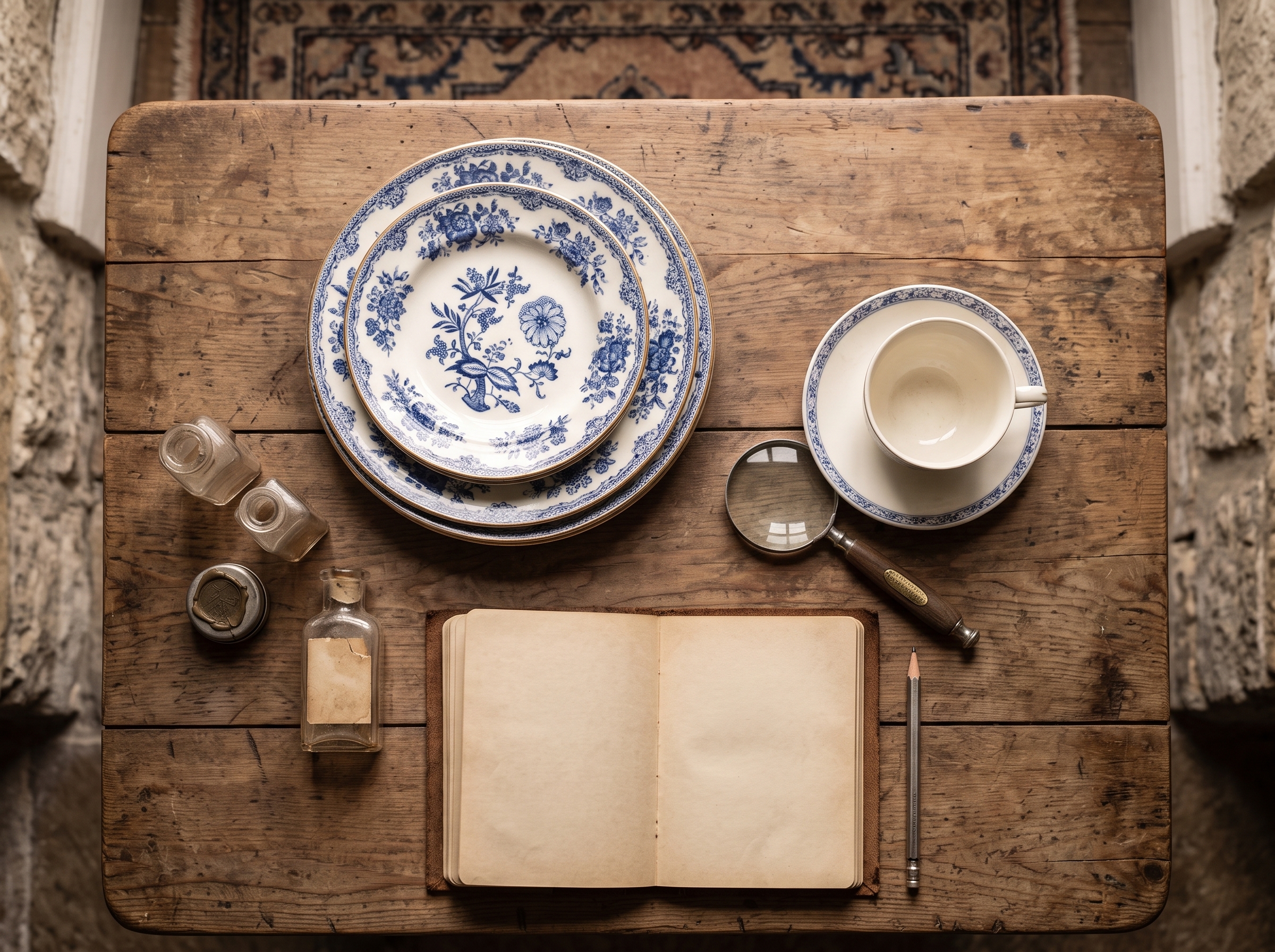
Full overhead shot of the largest piece establishes the complete pattern. Use a dinner plate or serving platter when possible. Shoot straight down in natural light against a neutral background. This is your hero image—the one that shows the entire design in context.
Close-up of the central motif captures fine detail. Move in tight on the primary decorative element. This shows painting technique, color transitions, and small details that distinguish one rose pattern from hundreds of others.
Border detail at high resolution reveals the treatment that often clinches identification. Capture any gold trim, decorative bands, embossing, or edge treatments. If the border varies (some manufacturers used different rim patterns on different pieces within one line), photograph each variation.
Backstamp in sharp focus provides manufacturer confirmation. Clean the surface gently, ensure good lighting without glare, and photograph straight-on. Capture the entire mark, including any registry numbers, pattern names, or date codes surrounding the main logo.
Side view showing depth and glaze helps determine body type. This angle reveals rim thickness, glaze pooling in crevices, and whether the piece shows translucency—all clues to whether you're looking at porcelain, bone china, or earthenware.
Multiple pieces together shows pattern consistency and variation. If you have several items, photograph them together to display how the pattern adapts across different forms—crucial for patterns that modify significantly between plates, cups, and serving pieces.
Avoid harsh shadows, busy backgrounds, and extreme angles that distort the pattern. Clean pieces show better than dusty ones, but don't risk damage to get the perfect shot.
Common China Pattern Misidentifications
Certain patterns trip up even experienced collectors, leading to wrong matches and wasted replacement purchases.
Generic floral sprigs get lumped together constantly. Hundreds of manufacturers produced small scattered flower patterns on white china. Without a clear backstamp, distinguishing between Johann Haviland's Moss Rose and similar patterns from other makers becomes nearly impossible from pattern alone. The number of buds, leaf placement, and stem curvature matter more than most people realize.
Blue willow variations confuse because the pattern exists in dozens of versions. While all depict a willow tree, pagoda, bridge, and figures, manufacturers altered details. The number of fence bars, bird positions, and border styles differ. Blue willow from Burleigh looks different from Churchill, which differs from Buffalo. People often assume all blue willow is identical when patterns vary significantly.
Noritake patterns from different eras get mixed up because the company produced thousands of patterns over more than a century. Two patterns with gold trim and roses might be separated by forty years and significant value differences. Backstamp dating becomes essential, but pattern details like border width and flower style also evolved with design trends.
Transfer-printed vs. hand-painted patterns sometimes appear identical in photos but differ fundamentally. Transfer prints show perfectly consistent repeat patterns and can have tiny registration dots. Hand-painted pieces show subtle variation between items. This distinction affects both identification and value.
Replacement china reproductions fool buyers regularly. Modern companies reproduce popular discontinued patterns. These newer versions may copy the design closely while using different materials, colors that don't quite match, or simplified details. Side-by-side comparison reveals differences invisible in isolation.
Pattern names vs. manufacturer names create confusion when people search. A "rose pattern" might be called "American Beauty" by one maker and "Rosalie" by another. The same visual motif appears under different official names, making text searches tricky without the manufacturer already identified.
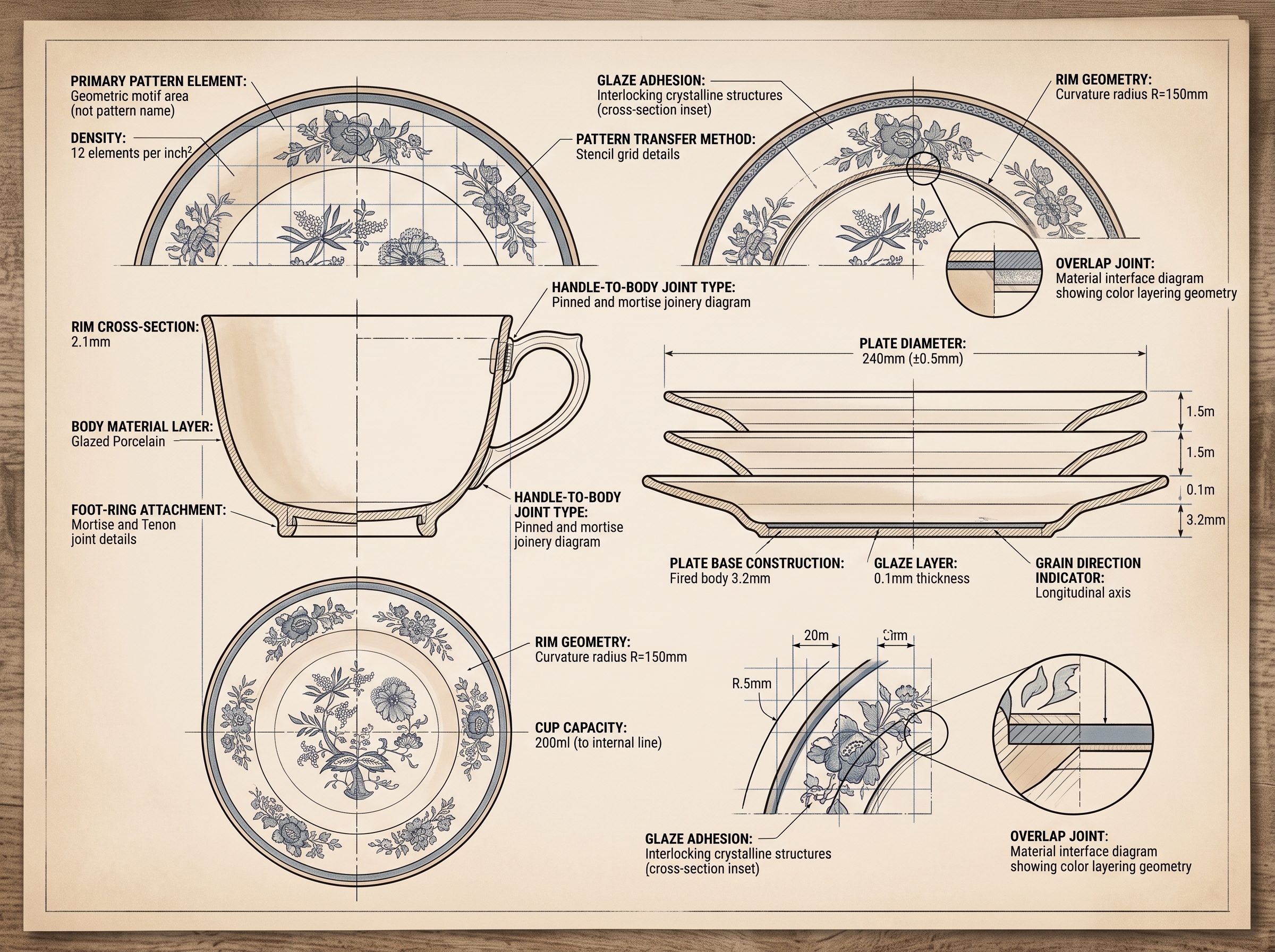
What Tocuro Helps Resolve in China Pattern Identification
Some pattern identification challenges need more than reference books or endless internet searches.
Unmarked or worn pieces present the biggest challenge. When the backstamp has worn off or was never applied, pattern matching becomes your only path forward. Tocuro's photo identification can compare your pattern details against a broad database of known patterns, finding matches based on visual characteristics rather than requiring a readable mark. For antique china identification when marks aren't available, pattern-first searching proves essential.
Partial sets needing completion benefit from quick, accurate identification. When you inherit six place settings and want to find the remaining pieces, knowing the exact pattern name and manufacturer speeds your search. Tocuro identifies from photos and provides that crucial information, so you can search replacement sources confidently.
Pattern variations within a line get clarified. Some manufacturers produced the same pattern in multiple colorways or with border variations. Photo identification can distinguish between these versions, preventing mismatched replacements that look almost right but don't quite work.
Foreign or obscure manufacturers challenge traditional pattern books. If your china came from a lesser-known European or Asian maker, finding it in standard references can take hours. Photo-based identification casts a wider net, potentially recognizing patterns outside mainstream collecting channels.
Production era verification helps when you need to know if a piece is vintage or modern reproduction. Visual analysis of pattern crispness, color depth, and manufacturing technique can suggest production period, especially when combined with backstamp details. For porcelain identification across different eras, these visual cues become critical.
Tocuro offers 7 free identifications per day, with your count resetting daily. This gives you room to photograph multiple pieces or angles without commitment, helping you find that elusive pattern name and start the process of completing your set or understanding what you own.
Get Your China Pattern Identified
Whether you're tracking down replacement pieces for a cherished set or identifying inherited china, the right photos and pattern analysis get you answers quickly. Upload clear images of your pattern, borders, and any visible marks to Tocuro and move from mystery china to identified pattern in minutes. Start with your best overhead shot and work from there.
Photo identification
Identify Your China
Use Tocuro to identify your item from a photo and get an estimated value range when market data is available.