
China Identification App: Identify Dinnerware Sets from Photos
Identifying china dinnerware sets by pattern, maker, and era can be challenging without expert knowledge. Tocuro's china identification app lets you photograph your plates, cups, and serving pieces to get instant pattern identification and value estimates, helping you catalog inherited sets or make informed selling decisions.
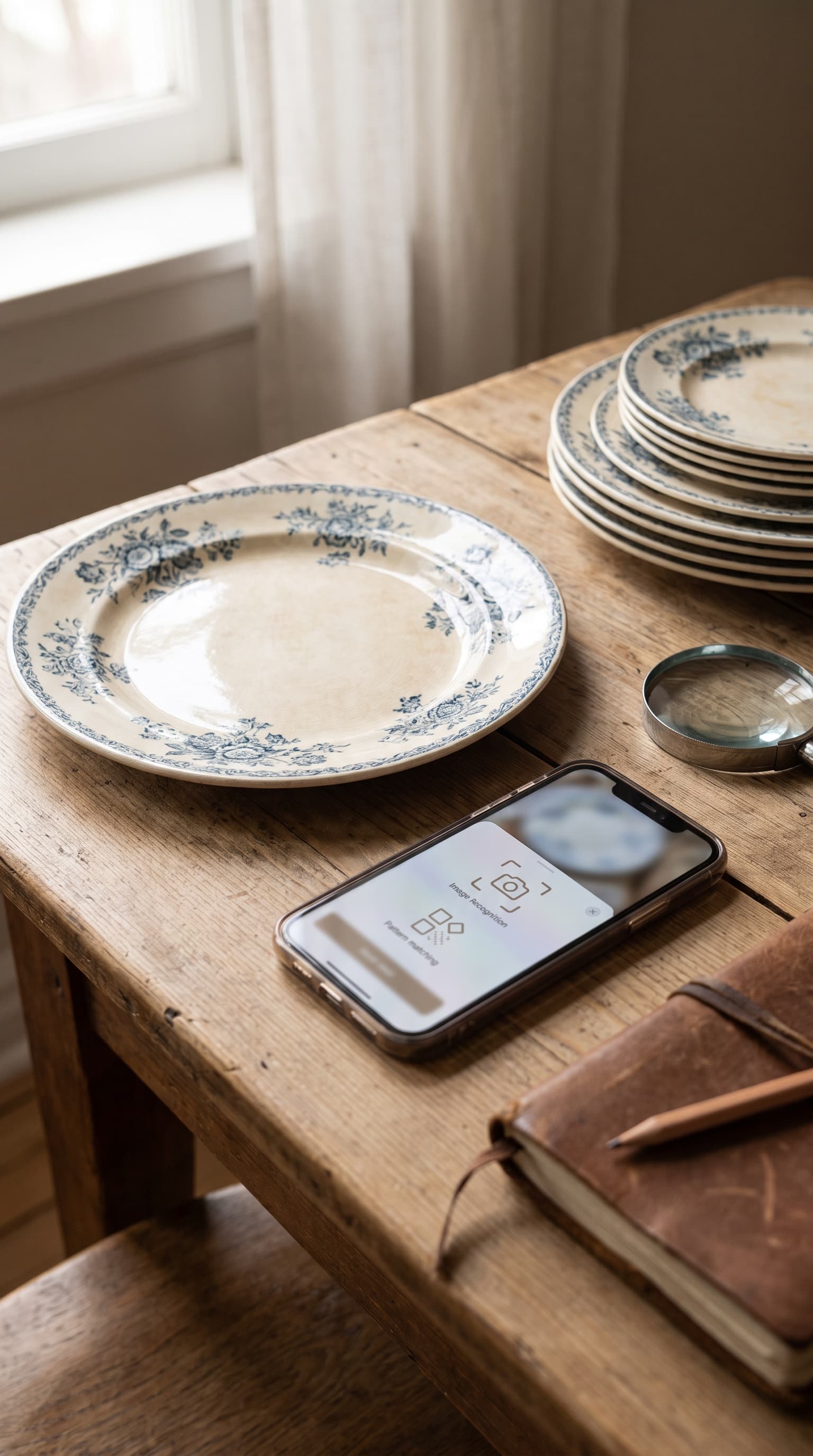
The Challenge of Identifying China Dinnerware Sets
You've inherited your grandmother's china service for twelve, or you've found a beautiful set at an estate sale—but what pattern is it? Who made it? Is it worth keeping, insuring, or selling? Traditional china patterns number in the thousands, and manufacturers from Wedgwood to Noritake to Homer Laughlin produced countless variations over decades. Without the original box or paperwork, identification often means hours of searching pattern books or scrolling through auction listings.
A china identification app gives you a faster path. Instead of manually comparing your plates to thousands of pattern images, you can photograph your pieces and get pattern identification, maker details, and market value ranges based on recent sales data.
How Tocuro's China Identification App Works
Tocuro uses visual recognition trained on dinnerware patterns, backstamps, and decorative details to identify your china from photos. The process is straightforward:
- •Photograph your plate, cup, or serving piece—both the front pattern and the backstamp
- •Upload the photos through the app
- •Get identification results including pattern name, manufacturer, approximate production period, and estimated value range
The app recognizes visual patterns in both the decorative design and the maker's mark. For dinnerware sets, pattern recognition is particularly important since many manufacturers produced similar floral or geometric motifs. The combination of pattern style and backstamp details helps narrow identification to specific lines and production years.
Value estimates reflect current market conditions from completed sales, not retail replacement costs. For common patterns still in production, values may be modest. For discontinued patterns in high demand or pieces from prestigious makers, values can be substantial.
What You Get Free with China Photo Identification
Tocuro provides 7 free identifications per day, and the count resets every 24 hours. This gives you enough capacity to identify a service set piece by piece—dinner plates, salad plates, cups, saucers, and serving pieces—without paying upfront.
Each identification typically includes:
- •Pattern name and series (when identifiable)
- •Manufacturer and country of origin
- •Approximate production dates or era
- •Estimated value range based on market signals, not formal appraisals
- •Related patterns or variations that may help with replacement piece searches
For large inherited sets or estate collections, you can prioritize the most distinctive pieces first—the serving platters, unusual shapes, or pieces with the clearest backstamps—then work through the standard place settings.
Photo Quality Tips for China Identification App Success
Good photos dramatically improve identification accuracy. Here's what works best:
Front Pattern Details
- •Photograph the plate or piece flat from directly above in bright, even light
- •Capture the full design including border patterns and any center medallions
- •Avoid harsh shadows or glare that obscure decorative details
- •Include color-true images—many patterns differ only in glaze color or trim details
Backstamp and Marks
- •Flip the piece over and photograph the entire backstamp clearly
- •Use close-up focus so text and symbols are sharp
- •Natural daylight works better than flash for reading faded marks
- •If the mark includes multiple elements (logo, pattern number, country name), capture all in frame
Shape and Form
- •For unusual serving pieces, photograph the profile to show shape
- •Include handles, spouts, or decorative elements that may be pattern-specific
- •Photograph both sides of hollow-ware pieces like teapots or covered dishes
What to Avoid
- •Photographing stacks of plates—identify one piece clearly first
- •Extreme close-ups that crop out context
- •Low-light or yellow-tinted indoor lighting
- •Blurry shots of text or fine decorative lines
For sets where pattern and backstamp have faded, try photographing under bright indirect light or near a window. Even partial pattern identification can help you find replacement pieces or comparable market values.
Limitations and When to Seek Expert Help for China Identification
Photo-based identification works well for documented patterns from major manufacturers, but some situations benefit from specialist knowledge:
Very rare or early pieces: Hand-painted china from small 19th-century potteries may lack documented patterns or clear attribution. An appraiser specializing in ceramics can examine construction, glaze chemistry, and stylistic details beyond what photos reveal.
Unmarked or partially marked pieces: Many quality china pieces lost their marks through wear or were never marked consistently. Experts can sometimes attribute pieces by glaze texture, weight, or decorative techniques that aren't visible in photos.
Custom or private commissions: Hotel china, railroad dining car services, and custom-order patterns often don't appear in standard references. Specialists in institutional china or specific manufacturers may recognize rare marks or patterns.
High-value insurance documentation: For formal appraisals required by insurance companies, you'll need a certified appraiser who can physically examine the pieces and provide written documentation. The estimated value range from a china identification app is not a substitute for insurance appraisals.
Condition concerns: Hairline cracks, restoration, or glaze damage significantly affect value but can be hard to photograph accurately. In-person examination gives clearer condition assessment.
For general identification, estate planning, or deciding whether to sell, the app provides reliable starting information. For pieces potentially worth thousands, or for formal legal or insurance purposes, professional appraisal is worth the investment.
Tocuro works alongside the Porcelain Identification App for fine decorative porcelain and the Pottery Identification App for earthenware and stoneware. For help reading complex backstamps, the Porcelain Marks Guide offers detailed photography tips.
Start Identifying Your China Dinnerware Today
Whether you've inherited a family set, found promising pieces at estate sales, or simply want to know what's in your own cupboards, a china identification app gives you fast, practical answers. You can identify pattern names, learn about makers, and see realistic market values without committing to paid services upfront.
Try 7 Free IDs Today and turn those mystery dishes into documented, valued pieces of your collection.
Frequently Asked Questions
Can a china identification app tell me exact replacement piece prices?
The app provides value ranges based on market signals from completed sales. For exact replacement pricing, check pattern-matching services or replacements specialty retailers once you have the pattern name and manufacturer.
What if my china has no visible backstamp?
Pattern recognition can still work from the front design. Many popular patterns are identifiable by their border treatments, floral motifs, or characteristic color schemes even without marks. Results may be less precise without backstamp confirmation.
Does the app identify individual pieces or complete sets?
Both. You can photograph one representative piece to identify the pattern and manufacturer, then apply that information to the full set. For sets with mixed patterns or serving pieces from different lines, identify each distinct pattern separately.
How accurate are value estimates for china dinnerware?
Estimates reflect typical market ranges, but actual selling prices depend heavily on condition, completeness of the set, and regional demand. Common patterns in excellent condition with full service for 8-12 provide the most reliable comps. Odd pieces or incomplete sets often sell for less than per-piece calculations suggest.
Can I identify both antique and modern china?
Yes. The app recognizes patterns from 19th-century makers through contemporary production. Modern patterns often have more consistent documentation, while antique pieces benefit from pattern style analysis combined with backstamp dating.
Photo identification
Identify Your China
Use Tocuro to identify your item from a photo and get an estimated value range when market data is available.