
Ceramic Vase Styles: A Visual Guide to Identifying Vase Forms and Designs
Ceramic vases come in dozens of distinct styles, each with recognizable shapes, decoration techniques, and historical contexts. This guide helps you identify what you're looking at—whether it's an Art Nouveau bulbous form, a sleek Mid-Century cylinder, or a traditional Chinese temple jar—using visual clues from photos.
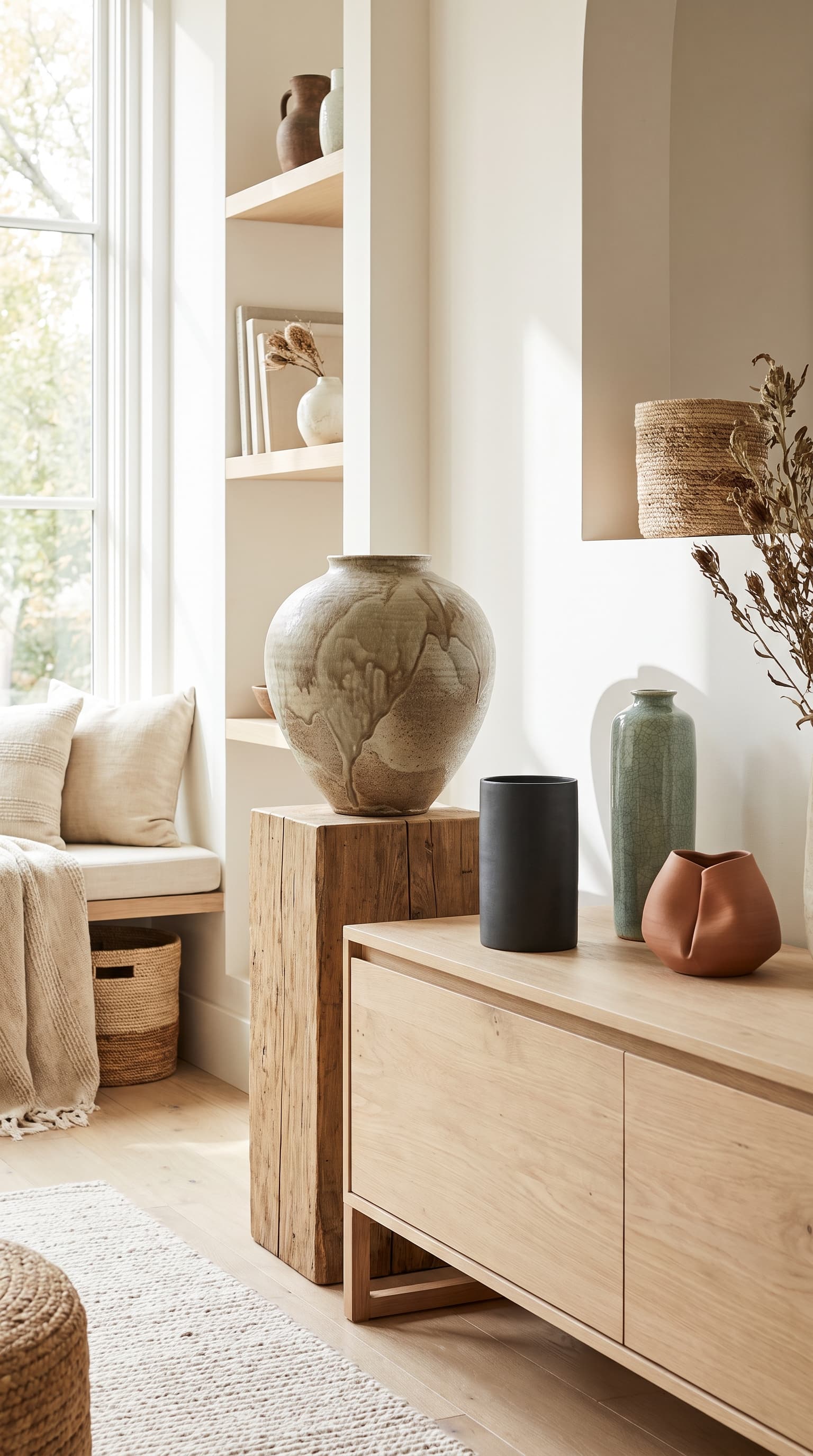
Ceramic Vase Styles: A Visual Guide to Identifying Vase Forms and Designs
When you're staring at a ceramic vase trying to figure out what you've got, the style matters more than almost anything else. Ceramic vase styles span centuries and continents, from delicate Chinese porcelain to chunky Arts & Crafts stoneware to space-age Mid-Century abstracts. Each style carries visual DNA—specific shapes, decoration techniques, color palettes, and proportions—that tells you where and when it likely originated.
This guide walks you through the most common ceramic vase styles you'll encounter, what makes each one recognizable, and how to use photos to nail down which category your piece falls into.
What You're Actually Trying to Name
When collectors talk about ceramic vase styles, they're usually referring to one of three things:
Form and shape: The silhouette—baluster, cylinder, gourd, amphora, trumpet neck. These names describe the body and neck proportions.
Decorative style or movement: Art Nouveau, Art Deco, Arts & Crafts, Mid-Century Modern, Victorian, Neoclassical. These tie to design eras and aesthetic philosophies.
Cultural or regional tradition: Chinese export porcelain, Japanese Satsuma, English transferware, American studio pottery, French faience. Geography and technique both play a role.
Most vases answer to more than one label. A tall cylinder with matte brown glaze and incised geometric lines? That's a Mid-Century Modern form with Arts & Crafts-influenced decoration. A blue-and-white baluster vase with landscape scenes? Chinese export porcelain in a traditional Qing Dynasty form.
The trick is learning which details matter most for classification.
Visual Classification Checklist for Ceramic Vase Styles
Here's what to look for when you're trying to place a vase into a style category:
Overall shape and proportions: Is it squat and round, tall and narrow, asymmetrical, or perfectly symmetrical? Certain eras favor certain silhouettes. Art Nouveau loves organic, flowing curves. Mid-Century Modern prefers clean cylinders and geometric forms. Victorian pieces often feature elaborate, multi-part shapes with flared necks and pedestal bases.
Neck and mouth: Does the vase have a narrow neck, wide mouth, flared rim, or pinched opening? Chinese temple jars have short, narrow necks. Art Deco vases often feature stepped or geometric neck treatments. Amphora-style vases have tall, elegant necks with handles.
Decoration technique: Look at how the design was applied. Hand-painted? Transfer-printed? Molded in relief? Incised or carved? Glazed in a single color? Transferware identification and majolica identification techniques can help narrow down certain decorative styles.
Color palette and glaze: Matte earth tones suggest Arts & Crafts or Mid-Century studio pottery. Bright, glossy colors with tin glaze point to majolica. Crackle glaze and celadon greens are classic Chinese styles. Art Deco loves bold contrasts—black and gold, cream and cobalt.
Handles, feet, and applied elements: Does the vase have handles? Where are they placed, and what shape are they? Are there applied flowers, scrolls, or figural elements? Rococo Revival and Victorian pieces pile on the decoration. Modernist vases strip it all away.
Bottom and base treatment: Is the base footed, flat, or recessed? A pedestal base suggests Victorian or Neoclassical influence. A simple flat bottom is common in Mid-Century and contemporary studio work.
Common Ceramic Vase Style Confusions
Even experienced collectors mix up similar styles. Here are the ones that cause the most head-scratching:
Art Nouveau vs. Arts & Crafts
- •Art Nouveau (1890–1910): Flowing, organic lines. Asymmetry. Sinuous plant forms, maidens, and fantasy motifs. Glossy glazes in jewel tones or iridescent finishes.
- •Arts & Crafts (1880–1920): Simple, honest forms. Matte glazes in earth tones. Hand-thrown or hand-built appearance. Minimal decoration, often geometric or stylized natural motifs.
Chinese Export Porcelain vs. Chinese Revival
- •Chinese Export (18th–19th century): True porcelain body, thin and translucent. Hand-painted scenes, often blue-and-white or famille rose. Smooth, glassy glaze. Authentic period marks (or none).
- •Chinese Revival (late 19th–20th century): Often heavier earthenware or semi-porcelain. Transfer-printed or less refined hand-painting. Made in Europe or America. Faux Chinese marks or English registry marks on the base.
Mid-Century Studio vs. Commercial Production
- •Studio pottery: Hand-thrown, one-of-a-kind or small batch. Artist signatures or studio marks. Experimental glazes, visible throwing marks, intentional irregularities.
- •Commercial Mid-Century: Mold-made, consistent shapes. Factory marks from companies like McCoy, Haeger, or Red Wing. Uniform glazes, mass-produced decoration.
Art Deco vs. Modernist
- •Art Deco (1920s–1930s): Geometric, but ornamental. Stepped forms, zigzags, stylized florals. Luxury materials, rich colors, gilding.
- •Modernist/Mid-Century (1940s–1970s): Functional, minimal. Organic or geometric, but unadorned. Focus on form and glaze, not applied decoration.
How to Use Photo Identification to Narrow Down Ceramic Vase Styles
Photos are your best tool for style classification, but you need the right angles:
Full profile shot: Capture the entire silhouette against a plain background. This reveals the overall form—baluster, cylinder, amphora—and proportions that define the style.
Close-up of decoration: Zoom in on painted or molded details. Hand-painting shows brushstroke variation. Transfer printing has tiny dot patterns under magnification. Molded relief has uniform depth.
Base and maker's mark: Flip it over. Factory marks, artist signatures, country-of-origin stamps, and mold numbers all help date and place the piece. Even an unmarked base tells you something—studio potters often left pieces unsigned, while major manufacturers almost always marked their wares.
Neck and rim detail: The way a neck flares, pinches, or steps can signal a specific tradition. Chinese vases often have narrow necks with pronounced lips. Art Deco pieces feature geometric neck treatments.
Glaze texture and color: Photograph the glaze in natural light. Matte vs. glossy, crackle, drips, pooling—these are style markers. Celadon, flambe, and crystalline glazes each tie to specific traditions.
Once you've got clear photos, Tocuro can help you identify the style, period, and likely origin. Upload your images and get detailed insights into what you're looking at, including estimated value ranges based on current market signals.
Style Classification Tied to Real-World Identification
Knowing ceramic vase styles isn't just academic—it's practical. The style determines the market, the buyers, and the value range. A Rookwood Art Nouveau vase with an artist signature can command serious money. A similar-looking but unmarked American art pottery piece from the same era? Much less. A true 18th-century Chinese export vase? Museum-level. A 1920s European imitation? Decorative, but not collectible in the same way.
When you can classify a vase by style, you narrow the field. You know which reference books to check, which maker marks to look for, and which online communities to consult. You can also spot misattributions, reproductions, and frankly incorrect listings.
For more on narrowing down pottery by visual clues, see our guide on how to identify pottery by photo.
Ready to Identify Your Ceramic Vase?
If you've got a ceramic vase and you're ready to figure out what style it represents, Tocuro makes it straightforward. Upload clear photos—profile, base, decoration, and any marks—and get detailed insights into the style, likely period, and estimated value range based on current market data. It's not a formal appraisal, but it gives you the context and language you need to research further, price accurately, or simply appreciate what you've found.
Identify your ceramic vase now and see what you're really holding.
Photo identification
Identify Your Pottery
Use Tocuro to identify your item from a photo and get an estimated value range when market data is available.