
Brooch Identification: How to Identify Vintage Brooches from Photos
Identifying vintage and antique brooches requires examining pin mechanisms, back stamps, metal quality, and construction details. This guide shows which clues matter most and what photos reveal era, maker, and value.
Brooch Identification: How to Identify Vintage Brooches from Photos
Brooch identification hinges on details most people overlook: the type of pin mechanism on the back, tiny maker stamps, and how stones or decorative elements attach to the base. A cameo brooch from the 1920s uses different hardware than one from the 1880s, and those differences tell the story. Whether you inherited a brooch, found one at an estate sale, or are curious about a piece in your jewelry box, knowing what to examine makes all the difference.
What Clues Matter Most for Brooch Identification
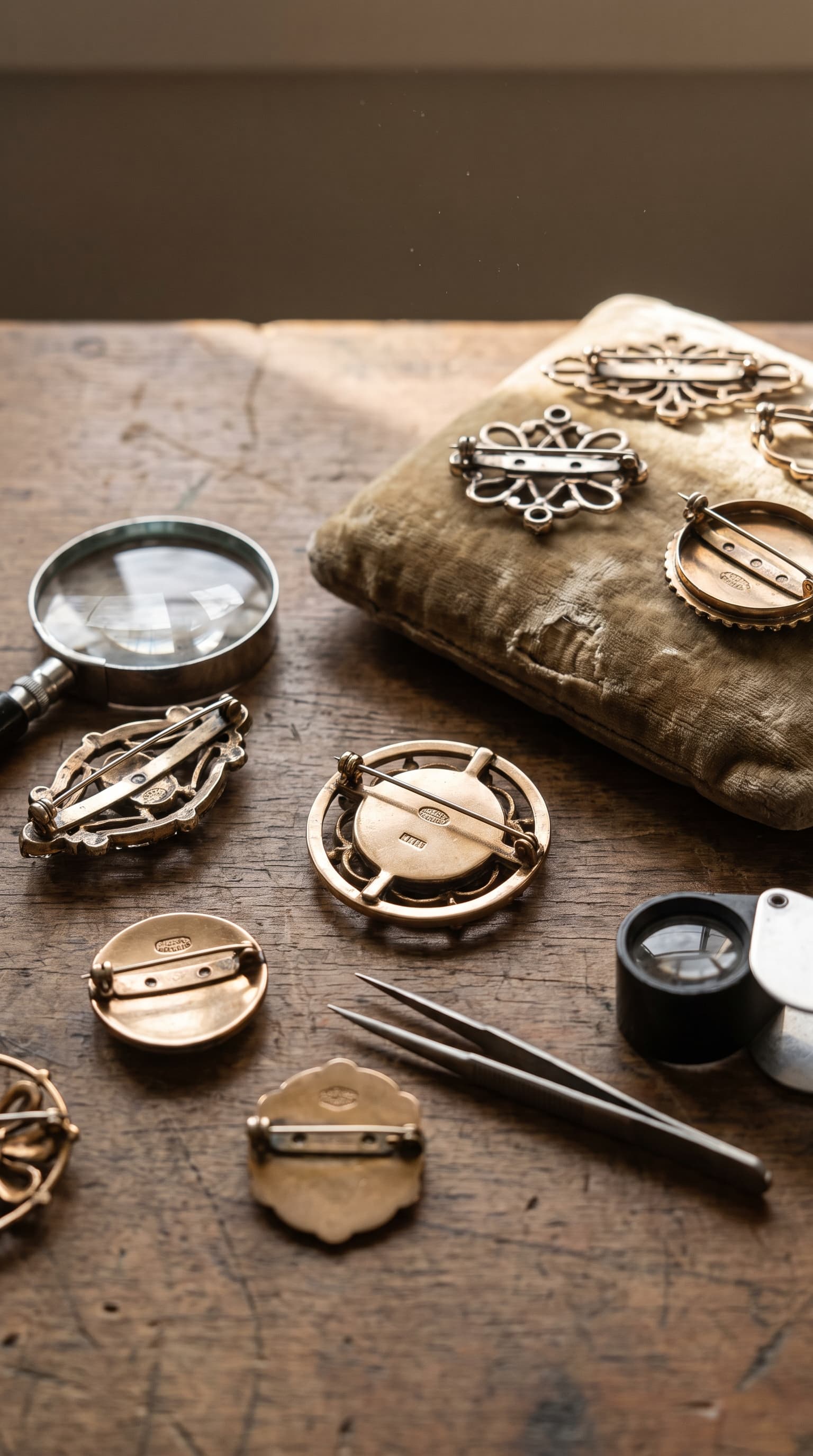
The back of a brooch often reveals more than the front. Start there.
Pin mechanism type is your first timeline clue. C-clasps (a simple open hook) appeared before the 1890s. Trombone clasps (a tube that slides over the pin) became standard from the 1910s through the 1950s. Safety catches (a small hinged clasp that locks the pin) gained popularity from the 1900s onward and remain common today. Roll-over safety catches came into use around the 1930s. If you see a modern barrel-style clasp or a plastic safety, the piece is likely post-1950s or later.
Back stamps and maker's marks identify manufacturers and often narrow dating. Look for initials, symbols, or full company names stamped into the metal. Some marks are tiny—barely a millimeter tall—so use magnification. Sterling silver brooches often carry "Sterling" or "925" stamps. Costume jewelry makers like Trifari, Coro, or Weiss signed their work prominently from the 1930s onward. Unsigned pieces aren't necessarily worthless, but attribution becomes harder.
Metal quality and patina offer context. Real gold shows karat marks (10K, 14K, 18K). Silver tarnishes in a specific way: dark gray or black, not green. Brass oxidizes to green or brown. Pot metal (a zinc alloy used in costume jewelry) feels light and can corrode with white powdery spots. Gold-filled and gold-plated pieces may show wear where the base metal peeks through at edges or high points.
Stone setting style helps with era identification. Victorian brooches often feature closed-back settings (stones set into enclosed metal cups). Edwardian and Art Deco pieces lean toward open-back settings and milgrain (tiny beaded edges). Pronged settings became standard in mid-20th century costume jewelry. Glued-in rhinestones or plastic "stones" point to mass-produced pieces from the 1950s onward.
Construction quality separates handmade from machine-made, fine from costume. Hand-fabricated pieces show slight irregularities, file marks, or solder seams. Machine-stamped brooches have uniform thickness and sharp, identical details. Hand-set stones sit slightly unevenly; machine-set stones align perfectly. Neither is "better," but knowing the difference clarifies what you own.
What Photos to Take for Accurate Brooch Identification
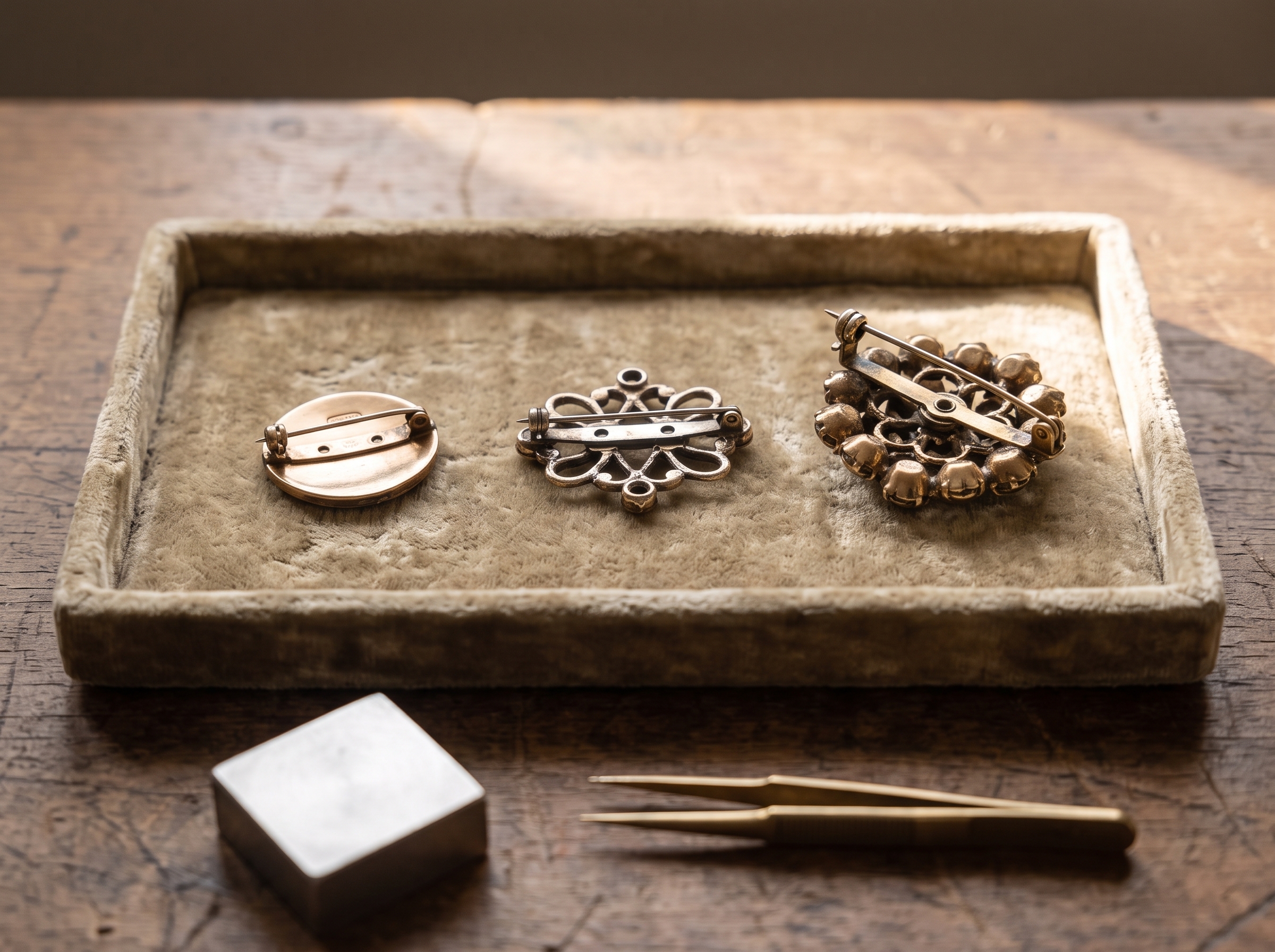
Good photos answer questions before you ask them. Take these shots:
Full front view in natural light, brooch laid flat. This captures overall design, size, and condition at a glance. Avoid harsh shadows or glare that obscure details.
Back view showing the full pin mechanism and any stampings. This is critical. Lay the brooch face-down on a neutral background. Make sure the clasp, hinge, and entire back surface are visible and in focus. Most identification happens here.
Close-up of maker's marks or stamps if present. Use a macro setting or magnifying lens. Fill the frame with the mark. Even a blurry full photo plus a sharp close-up of a tiny stamp helps more than either alone.
Side profile to show depth and setting construction. This reveals whether stones are set in open or closed backs, how much relief a design has, and whether elements are layered or flat.
Detail shots of stones, enamel, or decorative elements help identify materials. A close-up of a "pearl" can show whether it's real, glass, or plastic. Enamel work often has tiny cracks or crazing that indicate age.
Clasp and hinge in action if possible. A photo of the pin extended and another with it closed shows whether parts are original, replaced, or damaged.
If you're using Tocuro for brooch identification, these photos give the system the visual data it needs to compare against thousands of known examples and provide an estimated value range based on current market signals.
Common Misidentifications in Brooch Identification
Even experienced collectors mix these up.
Assuming all cameos are antique. Cameo brooches were popular in the Victorian era, but they've been made continuously ever since. Plastic cameos (common from the 1940s onward) look convincing until you check the back: lightweight, uniform color, no natural shell grain. Shell cameos show layers and natural variations. Hardstone cameos feel cold and heavy.
Confusing gold-plated with solid gold. A bright yellow brooch isn't necessarily gold. Check for karat stamps and weight. Gold-plated brass feels lighter and shows wear at edges. Gold jewelry marks explain what to look for.
Mistaking rhinestones for diamonds. Rhinestones (glass with foil backing) sparkle beautifully but lack the fire and hardness of diamonds. Check the back: rhinestones have foil visible through open settings. Diamonds don't need it.
Thinking unsigned means old. Many mid-century costume jewelry makers didn't sign early pieces. Lack of a signature doesn't date a brooch to the 1800s. Check the clasp type and construction instead.
Assuming handmade means valuable. Handmade brooches are lovely, but amateur or hobbyist work from the 1970s–1980s craft movement is common and often has modest value despite being hand-fabricated. Maker reputation and materials matter.
Over-relying on style alone. Revivals happen constantly. Art Nouveau-style brooches were made in the 1900s, the 1960s, and the 2000s. Style suggests era but doesn't confirm it. Hardware and construction details do.
For more on distinguishing genuine vintage jewelry from reproductions, see our guide on identifying vintage jewelry.
What Tocuro Can Help Resolve
Some brooch identification questions need more than a visual once-over. You might have clear photos but no idea which maker used a particular mark. You might see a clasp type you don't recognize. Or you've identified a maker but don't know what current market values look like.
Tocuro uses photo analysis to identify brooches by comparing visual details—pin mechanisms, design motifs, materials, and construction—against thousands of examples. You get an estimated value range based on recent market signals, not a formal appraisal, but enough information to understand what you own and what comparable pieces sell for.
The process is straightforward: upload your photos, and Tocuro returns an identification and value estimate. You get 7 free identifications per day, and the count resets daily. If you're working through an estate or a collection, higher-volume use requires payment, but most users find the free daily limit plenty.
Brooch identification often involves comparing subtle details across decades of production. Tocuro handles that comparison work, so you don't have to cross-reference dozens of hallmark guides or auction records manually.
Start Identifying Your Brooches Today
Whether you're sorting inherited jewelry, building a collection, or just curious about a piece you love, understanding what you own starts with the right photos and knowing where to look. Pin mechanisms, back stamps, and construction details reveal more than any amount of guessing.
Ready to identify your brooch? Upload photos to Tocuro and get an estimated value range based on current market signals. Seven free identifications per day give you room to explore your collection without commitment.
For related jewelry identification topics, check out our guides on costume jewelry identification and gold jewelry marks.
Photo identification
Identify Your Jewelry
Use Tocuro to identify your item from a photo and get an estimated value range when market data is available.