
Bronze Sculpture Identification: How to Read Patina, Foundry Marks, and Construction
Identifying bronze sculptures requires examining patina color and texture, foundry marks, casting seams, base attachment, and weight. The right photos—focused on marks, patina close-ups, and base details—help distinguish genuine antique bronzes from reproductions and spelter imitations.
Bronze Sculpture Identification: How to Read Patina, Foundry Marks, and Construction
Bronze sculpture identification starts with understanding what separates a genuine bronze from a reproduction, spelter casting, or painted pot metal. Whether you've inherited a figurine, found a sculpture at an estate sale, or pulled one from storage, the clues lie in the patina, foundry marks, casting method, and base construction. Knowing what to photograph and where to look makes all the difference.
What Clues Matter in Bronze Sculpture Identification
Patina Color and Texture
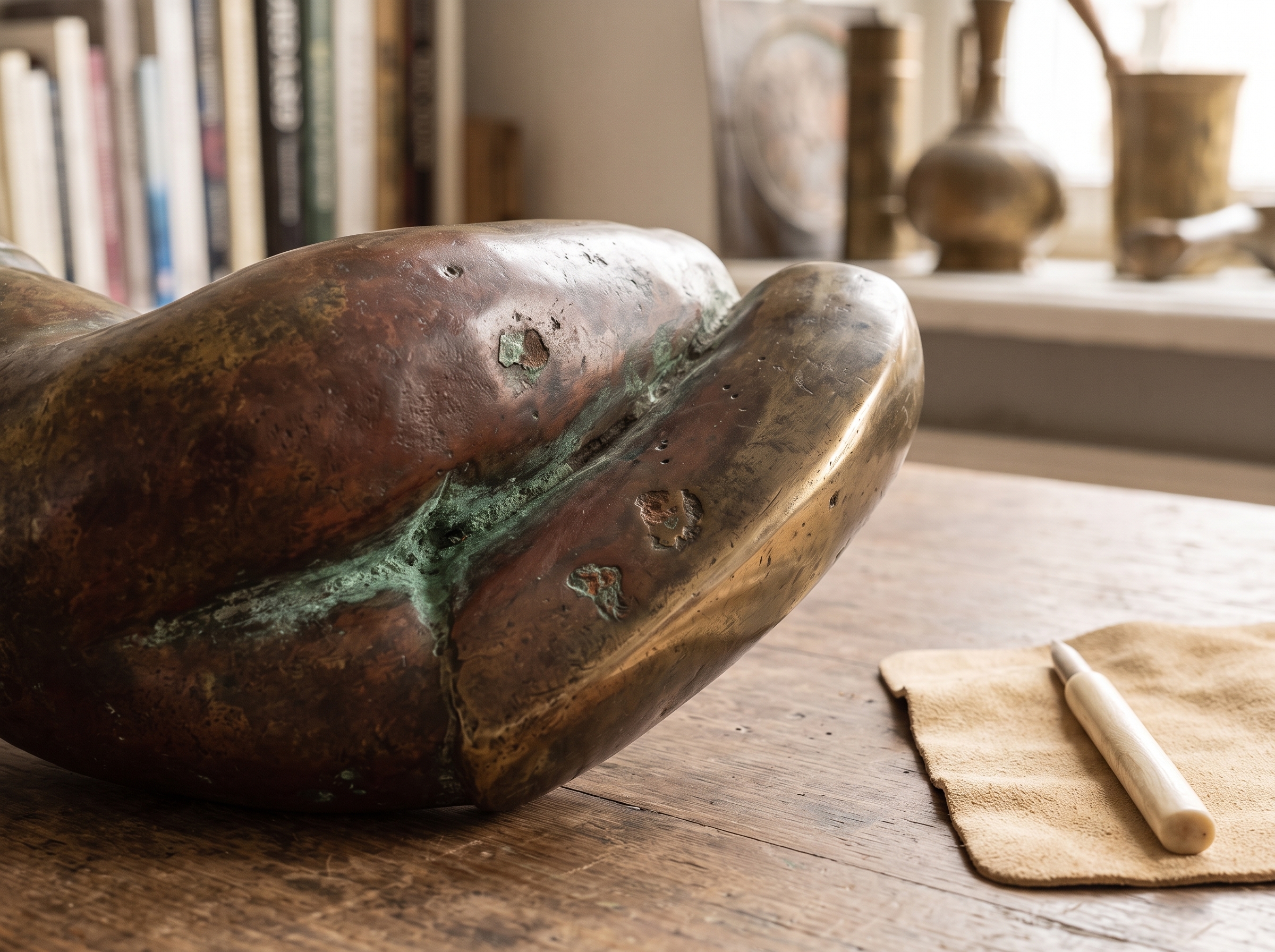
Authentic bronze develops a patina over time—a surface layer formed by oxidation. Traditional patinas range from deep chocolate brown to verdigris green, often with subtle variations across the surface. Modern reproductions sometimes use paint to mimic patina, which can chip or flake. Genuine patina penetrates the metal and shows consistent color depth. Look for wear on high points where handling has polished the bronze back to a warmer tone.
Foundry Marks and Signatures
Foundry marks stamped or cast into the bronze tell you where and often when a piece was made. European foundries like Barbedienne, Susse Frères, and Ferdinand von Miller marked their work prominently. American foundries such as Roman Bronze Works and Gorham also left clear marks. Artist signatures—cast into the bronze rather than scratched on later—add provenance. The location, depth, and style of marks matter. Cast marks sink into the metal; engraved signatures added after casting sit on the surface and can indicate a reproduction.
Casting Method and Seams
Lost-wax casting produces finer detail and thinner walls than sand casting. Check for seam lines where mold sections joined. Hand-finished bronzes show minimal seaming or careful chasing work to remove evidence of the mold. Heavy, thick-walled pieces with rough seams often indicate lower-quality sand casting or reproductions. Hollow bronze feels different than solid pot metal or resin. Tap the piece gently—bronze rings with a clear tone; spelter or resin sounds dull.
Base Construction and Attachment
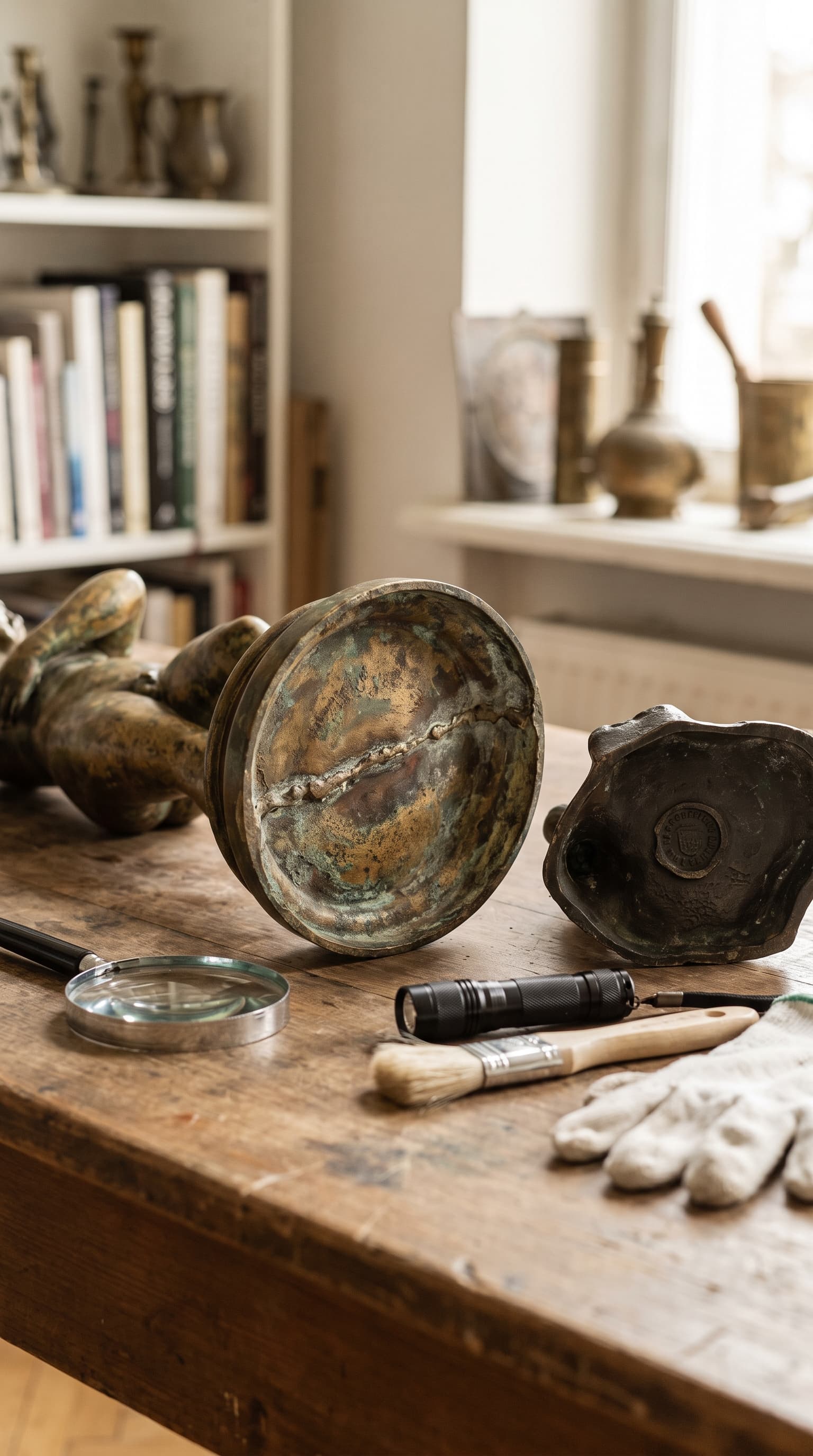
How the sculpture attaches to its base reveals manufacturing clues. Period bronzes often mount to marble, wood, or bronze bases with threaded rods, pins, or poured lead. Modern reproductions may use glue, screws, or visible welding. Check underneath the base for additional marks, felt pads added later, or adhesive residue. The base material itself—quality marble versus composite stone—can signal the sculpture's era and value.
Weight and Material Density
Bronze is heavy. A small 10-inch figurine can weigh several pounds. Spelter (zinc alloy) weighs less and feels different in hand. Pot metal and resin weigh considerably less than bronze. If a sculpture feels surprisingly light for its size, it's likely not bronze. This isn't always conclusive from photos, but understanding the expected heft helps when you have the piece in hand.
What Photos to Take for Bronze Sculpture Identification
Full View in Natural Light
Capture the entire sculpture from multiple angles—front, back, and both sides. Natural indirect light shows patina color accurately without harsh shadows. Avoid flash, which can wash out surface detail and make painted finishes look like genuine patina.
Close-Up of Foundry Marks and Signatures
Photograph any marks, stamps, or signatures. Get close enough to read the letters clearly. If the mark is on the base, flip the sculpture carefully and shoot straight down. Marks on the bronze itself often appear near the bottom edge or on the back. Include a ruler or coin for scale if the mark is tiny.
Patina Detail Shots
Zoom in on areas with varied patina color—green oxidation, brown depth, or polished high points. These photos help experts assess whether the patina is genuine or applied. Capture any areas where the patina has worn through to brighter metal underneath.
Base and Attachment Points
Photograph the bottom of the base, showing how the sculpture mounts. Include close-ups of any threaded rods, pins, or fasteners. If the base is removable, photograph the mounting surface on both the sculpture and the base separately.
Seams and Casting Details
Find the seam lines where mold halves met. Photograph these areas to show whether they were chased smooth or left rough. Include any casting flaws, air bubbles, or repair work. These details help distinguish hand-finished lost-wax bronzes from mass-produced sand castings.
Any Damage or Repairs
Document chips, dents, verdigris damage, or previous repairs. These affect value but also provide clues about age and authenticity. Old repairs can confirm a sculpture's age; fresh damage might reveal what's underneath a painted surface.
Common Misidentifications in Bronze Sculpture Identification
Spelter Sold as Bronze
Spelter (zinc alloy) sculptures were popular from the late 19th through mid-20th century and often mimic bronze. Spelter weighs less, develops a grayish patina, and scratches more easily. A small file test on the underside of the base—where bronze shows a golden color and spelter shows silver-gray—can confirm, but photos of patina color and texture often reveal the difference without invasive testing.
Painted Pot Metal or Resin
Mass-produced figurines made from pot metal, resin, or composition materials often receive a bronze-colored paint finish. The paint sits on the surface rather than developing naturally. Look for chips, uneven color, or a plasticky sheen. These pieces weigh far less than bronze and lack foundry marks.
Reproduction Bronzes with Fake Marks
Some reproductions cast famous artist signatures or foundry marks directly into the mold. The difference lies in detail sharpness and patina consistency. Genuine period bronzes show aged patina over the marks themselves; fresh reproductions often have marks that look too crisp or patina that doesn't extend into the recesses of the lettering.
Confusing Posthumous Casts with Originals
Many bronze sculptures were cast in editions, sometimes decades after the artist's death. A posthumous cast from the original mold can still be genuine bronze, but its value differs from a lifetime cast. Foundry marks and edition numbers help date the casting. Not every "old-looking" bronze is from the artist's lifetime.
Marble or Stone Painted to Look Like Patina
Occasionally, carved stone or composite sculptures receive paint treatments to mimic bronze patina. Weight can be similar, but the surface texture differs. Bronze shows metal grain and casting details; stone shows carving marks or molded texture. Tap testing reveals stone's dull thud versus bronze's ring.
What Tocuro Can Help Resolve
Bronze sculpture identification often requires cross-referencing foundry marks, artist signatures, patina characteristics, and casting style—all from photos. Tocuro helps you identify bronze sculptures by analyzing the images you upload. The platform compares your photos against known examples, foundry catalogs, and market data to estimate value ranges based on market signals. This isn't a formal appraisal, but it gives you a practical starting point for understanding what you own.
You get 7 free identifications per day, and the count resets daily, so you can photograph multiple angles and marks without worrying about running out. When the sculpture has unclear marks, worn patina, or no visible signature, Tocuro's image recognition can often match the style, casting method, and period based on visual clues alone.
Ready to Identify Your Bronze Sculpture?
Gather your photos—foundry marks, patina close-ups, base details, and full views—and let Tocuro help you understand what you have. Whether you're sorting an estate, researching a collection, or deciding whether to sell, starting with clear identification makes everything easier.
Identify Your Item now and get started with 7 free identifications today.
Photo identification
Identify Your Item
Use Tocuro to identify your item from a photo and get an estimated value range when market data is available.