
Bowl Identification: How to Identify Vintage and Antique Bowls from Photos
Identifying vintage and antique bowls requires examining specific details: the foot ring construction, overall form, maker marks, glaze characteristics, and decoration style. This guide explains which clues matter most and how to photograph bowls for accurate identification.
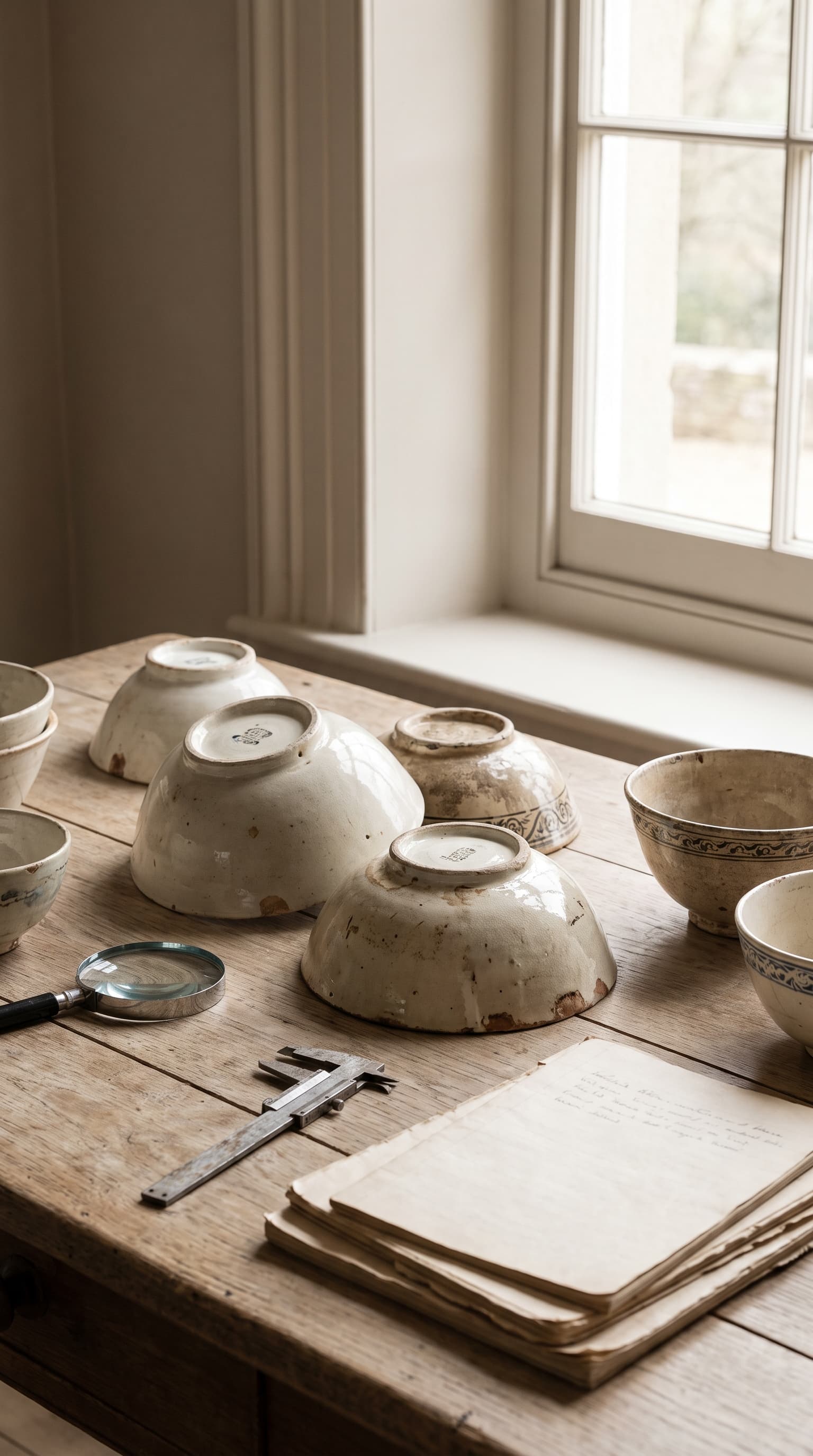
Bowl Identification: How to Identify Vintage and Antique Bowls from Photos
Bowl identification starts with details most people overlook. The shape of the foot ring, the way glaze pools at the base, and subtle differences in rim thickness often tell you more than the decoration on the front. Whether you've inherited a serving bowl, found a mixing bowl at an estate sale, or are sorting through a boxed set, knowing what clues matter makes identification faster and more accurate.
What Clues Matter Most for Bowl Identification
Bowls show their age and origin through construction details, not just surface decoration.
The Foot Ring
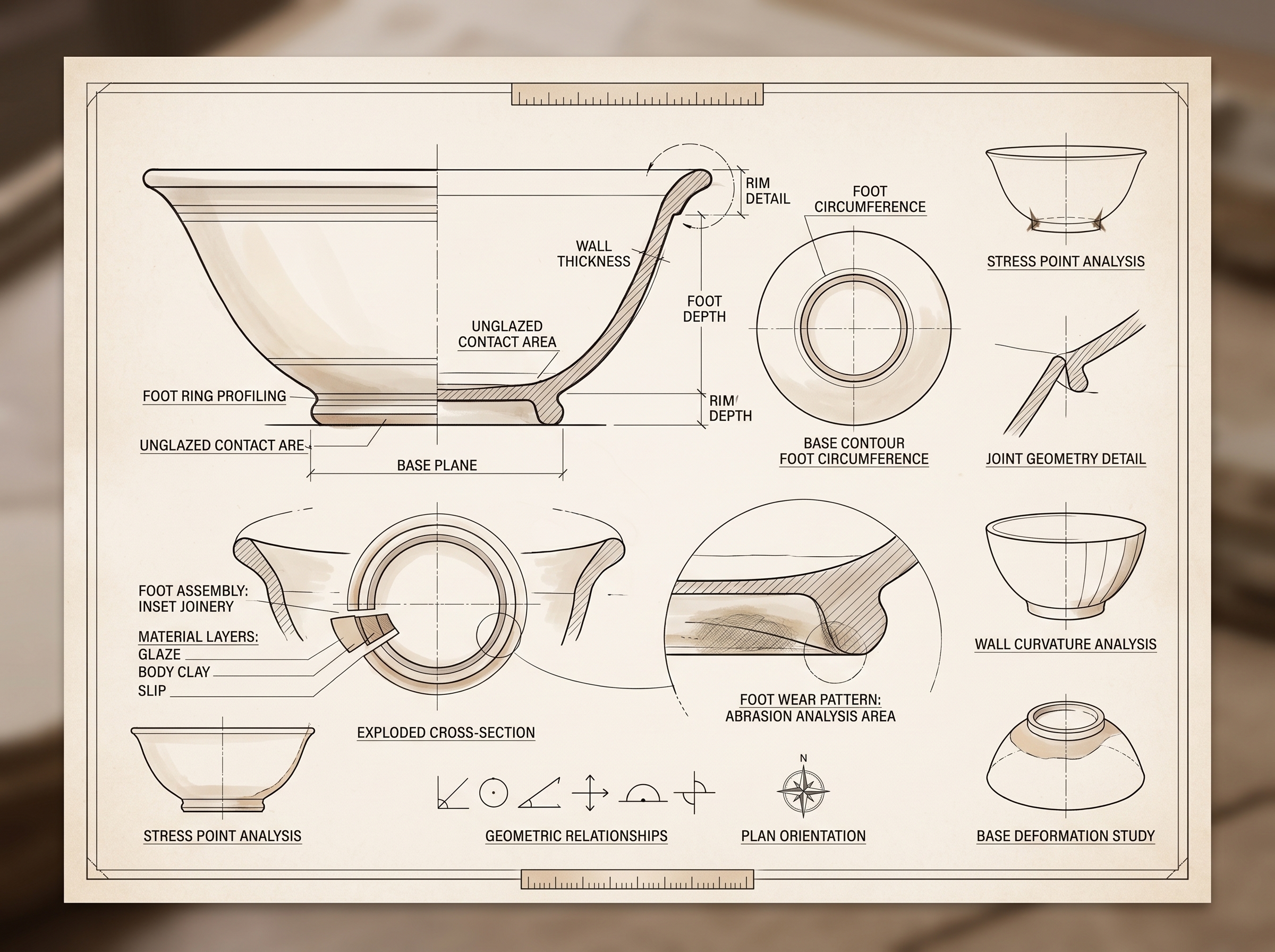
The foot ring—the raised base where the bowl sits—reveals manufacturing method and era. Hand-thrown pottery often shows irregular foot rings with visible tool marks or finger impressions. Factory-made bowls from the 20th century typically have clean, uniform foot rings. The presence of glaze inside the foot ring, partial glazing, or complete absence of glaze tells you about production techniques and can narrow dating significantly.
Look for:
- •Stilt marks (small unglazed dots) indicating kiln spacing methods
- •Unglazed rings showing where the piece rested during firing
- •Wire-cut marks on the base of certain studio pottery
- •Mold seams visible on the foot ring of slip-cast pieces
Form and Profile
The bowl's silhouette matters. Deep mixing bowls with thick walls and heavy bases differ from delicate serving bowls with flared rims. Nesting bowls often follow specific proportional systems that identify particular manufacturers. The rim treatment—rolled, flattened, or tapered—and the transition from wall to base reveal hand-forming versus mechanical production.
Chinese export porcelain bowls often have specific rim profiles and wall thicknesses that correspond to particular export periods. American yellowware mixing bowls follow regional forms that help pinpoint pottery origins.
Material and Weight
Pick up the bowl. Earthenware feels lighter and warmer than stoneware. Porcelain has a cold, glass-like density. Bone china sounds different when tapped—a clear ring versus a dull thud. The thickness of the walls relative to the size tells you about intended use and production quality.
Hold the bowl to strong light. Porcelain and bone china show translucency; stoneware and earthenware remain opaque. This simple test eliminates entire categories immediately.
Glaze Characteristics
Glaze application, color, and surface texture change across periods and makers. Crazing patterns (fine cracks in the glaze) can indicate age but also specific glaze formulas. The way glaze pools in recessed areas or thins on raised decoration shows hand-dipping versus spray application.
Look for:
- •Color variations within a single glaze coat
- •Crawling where glaze pulled away during firing
- •Orange peel texture typical of certain makers
- •Matte versus glossy finishes that correspond to specific decades
Decoration Style and Technique
Transfer-printed bowls, hand-painted bowls, and molded relief bowls each require different identification approaches. Transfer prints can often be matched to specific pattern names and date ranges. Hand-painted decoration varies in quality and style by region and period. Molded decoration reveals mold complexity and detail sharpness that degrades with repeated use.
Check if decoration appears under or over the glaze. Underglaze decoration sits beneath a clear glaze layer; overglaze decoration (enamels, gilding) sits on top and can wear away. This distinction helps date pieces and identify makers who used specific techniques.
What Photos to Take for Bowl Identification
Good photos answer the questions experts ask first.
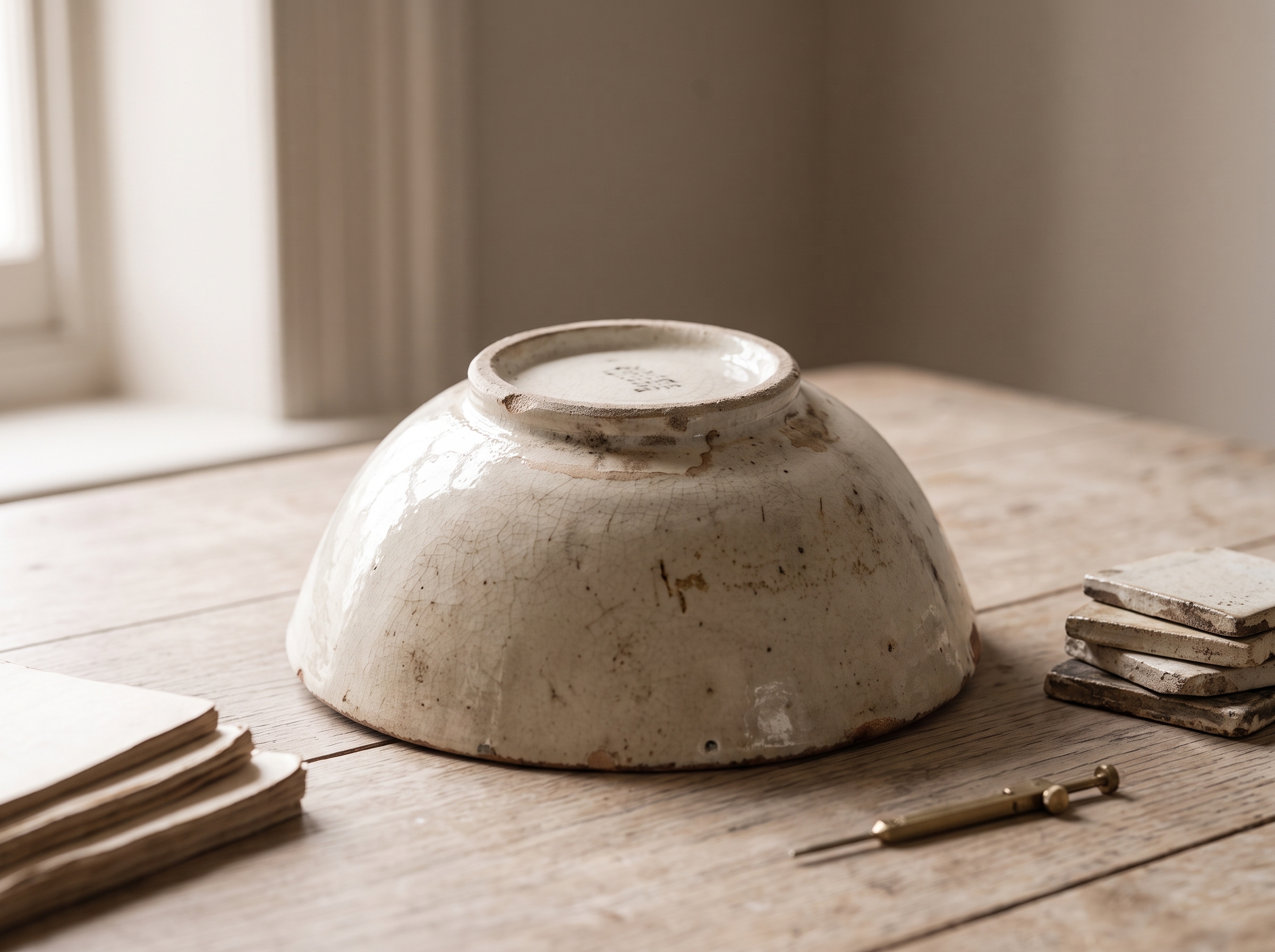
Base and foot ring detail: Photograph straight down onto the upturned bowl. Capture the entire base in focus, showing the foot ring, any marks, and glaze coverage. Use natural light or position a lamp to eliminate harsh shadows inside the foot ring.
Maker marks close-up: If marks exist, photograph them separately with sharp focus. Even partial marks or single letters help. Don't worry if marks seem worn or unclear—photograph them anyway. See how to photograph maker marks for techniques that capture faint impressions.
Profile view: Set the bowl on a neutral surface and photograph from the side at bowl-height. This shows rim shape, wall thickness, and the curve from rim to base. Profile photos distinguish shallow bowls from deep bowls and reveal form details lost in overhead shots.
Interior detail: Photograph the inside, showing glaze condition, decoration if present, and any stacking wear marks. Interior glaze application patterns often identify hand-dipped versus mechanically glazed pieces.
Overall decoration: If the bowl has painted or printed decoration, capture clear photos showing pattern details, color palette, and execution quality.
Any damage or wear: Photograph chips, cracks, or repairs. Damage patterns sometimes reveal bowl age and use history. Old staple repairs, for instance, indicate pre-20th-century value worth preserving.
Common Bowl Misidentifications
Certain assumptions lead collectors astray.
"It's hand-painted, so it must be valuable": Factory-applied hand painting was common and affordable throughout the 20th century. Hand-painted does not automatically mean studio pottery or artist-made. Look for consistent pattern repetition across multiple bowls—a sign of factory decoration.
"Blue and white means Chinese export": Blue and white decoration appears on English, Dutch, German, Japanese, and American pottery across centuries. Without examining paste, glaze, and form, color alone proves nothing. Many 20th-century American bowls copied Chinese motifs.
"Crazing means it's old": Crazing can develop in modern pottery within years if glaze and clay body expand at different rates. Age crazing shows dirt accumulation in cracks and even coloration; new crazing looks clean and bright. Some deliberately crackled glazes mimic age.
"No mark means it's not valuable": Plenty of studio potters, early American potteries, and European makers never marked their work. Unmarked bowls can still be identified through form, glaze, and construction details. Some of the most collectible mid-century studio pottery bears no marks.
"It matches this online photo": Bowls from the same maker often share glazes or forms while differing in size, proportion, or detail. Pattern names help, but confirm through multiple characteristics—not just visual similarity to one reference image.
Confusing reproduction with period piece: High-quality reproductions of Delft, majolica, and flow blue bowls fool many collectors. Weight, glaze texture, and base finishing usually differ. Modern reproductions often feel lighter and show overly uniform glaze application.
What Tocuro Can Help Resolve
When you photograph a bowl using the guidelines above, Tocuro analyzes form, foot ring construction, glaze characteristics, and any visible marks to identify maker, pattern, period, and estimated value range. Upload your photos to identify your bowl and receive detailed results based on market signals and comparable sales.
Tocuro excels at distinguishing between similar-looking bowls from different makers, dating pieces based on construction details, and identifying unmarked bowls through form and glaze analysis. You get 7 free identifications per day, with the count resetting daily, so you can work through a collection or compare similar pieces without commitment.
For bowls with maker marks, Tocuro cross-references tableware maker marks to identify manufacturers, decode date codes, and explain mark variations over time. For unmarked bowls, the service considers material, form, and decoration style to narrow possibilities.
Estimated value ranges reflect actual market activity—not formal appraisals—giving you realistic expectations whether you're selling, insuring, or simply curious. The system recognizes condition issues, pattern rarity, and size variations that affect value.
Bowl identification connects to broader tableware knowledge. If you're also researching plates, see plate identification for related techniques. Studio pottery bowls share identification methods with ceramic figurines from the same makers.
Start Identifying Your Bowls
Gather your bowls, photograph the base and profile, and identify your items now. Understanding what you own starts with knowing which details matter and capturing them clearly. Tocuro handles the research and cross-referencing, delivering identification results that help you make informed decisions about your collection.
Photo identification
Identify Your Item
Use Tocuro to identify your item from a photo and get an estimated value range when market data is available.