
Bottle Marks Identification: How to Read Embossed Marks and Seams
Identifying antique and vintage bottles through marks, seams, and embossing requires knowing where to look and what each feature can tell you. This guide shows you how to locate and interpret bottle marks—and which photos help most.
Bottle Marks Identification: How to Read Embossed Marks and Seams
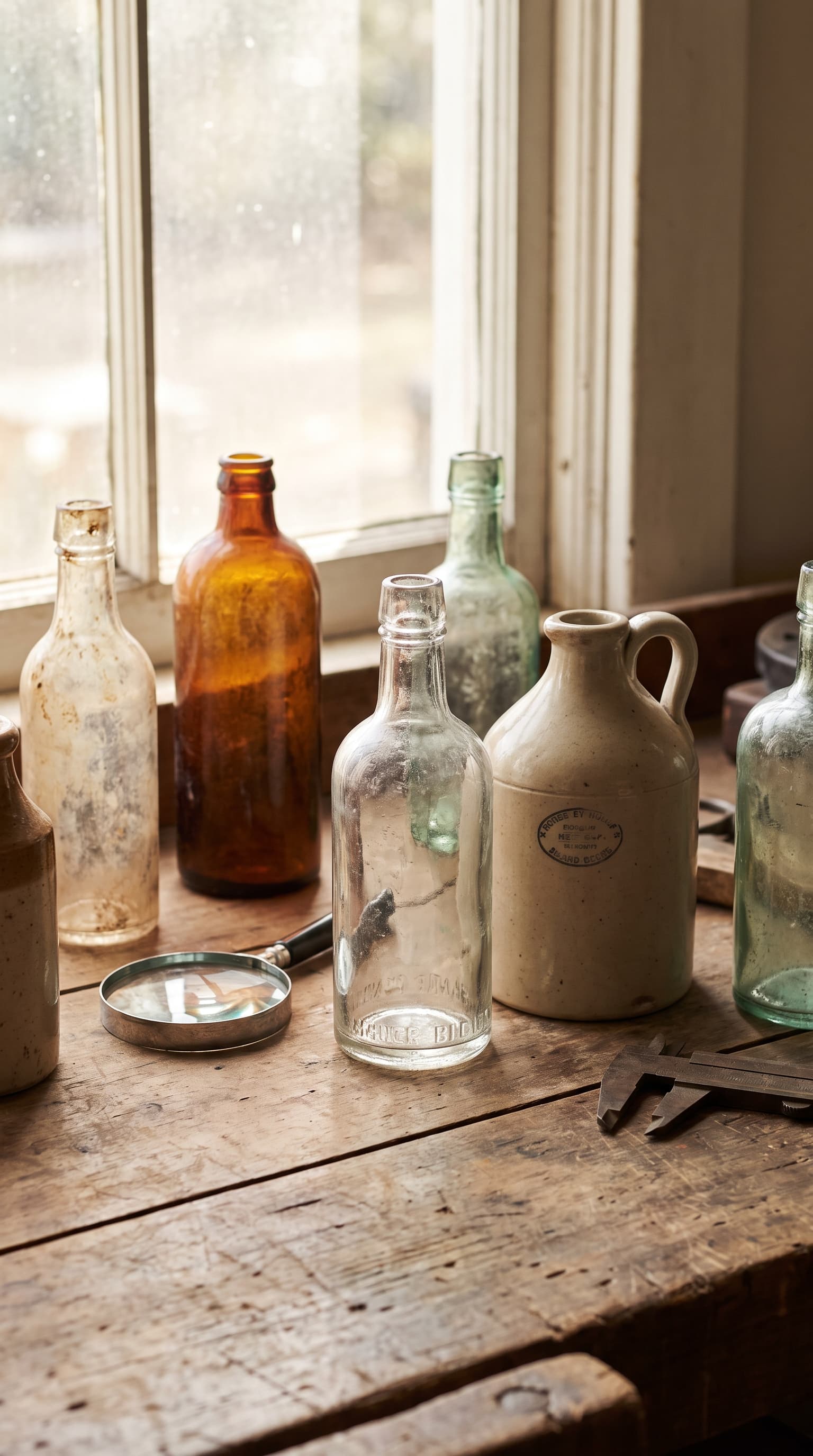
Bottle marks identification starts with understanding that glass bottles carry their history on their surfaces. Unlike pottery marks or porcelain backstamps, bottle marks aren't stamped on after production—they're molded into the glass itself. Embossed bottle marks, mold seams, and base symbols work together to tell you when and where a bottle was made, though reading them correctly takes practice.
Most collectors want to know if they're holding a valuable medicine bottle from the 1880s or a commemorative soda bottle from the 1970s. The good news: bottles broadcast their age through visible features if you know where to look. The challenge: small differences in seam placement or embossing style can mean decades of difference in age and significant changes in value.
Where to Find Marks on Bottles
Bottle marks appear in predictable locations, and checking all of them matters for accurate identification.
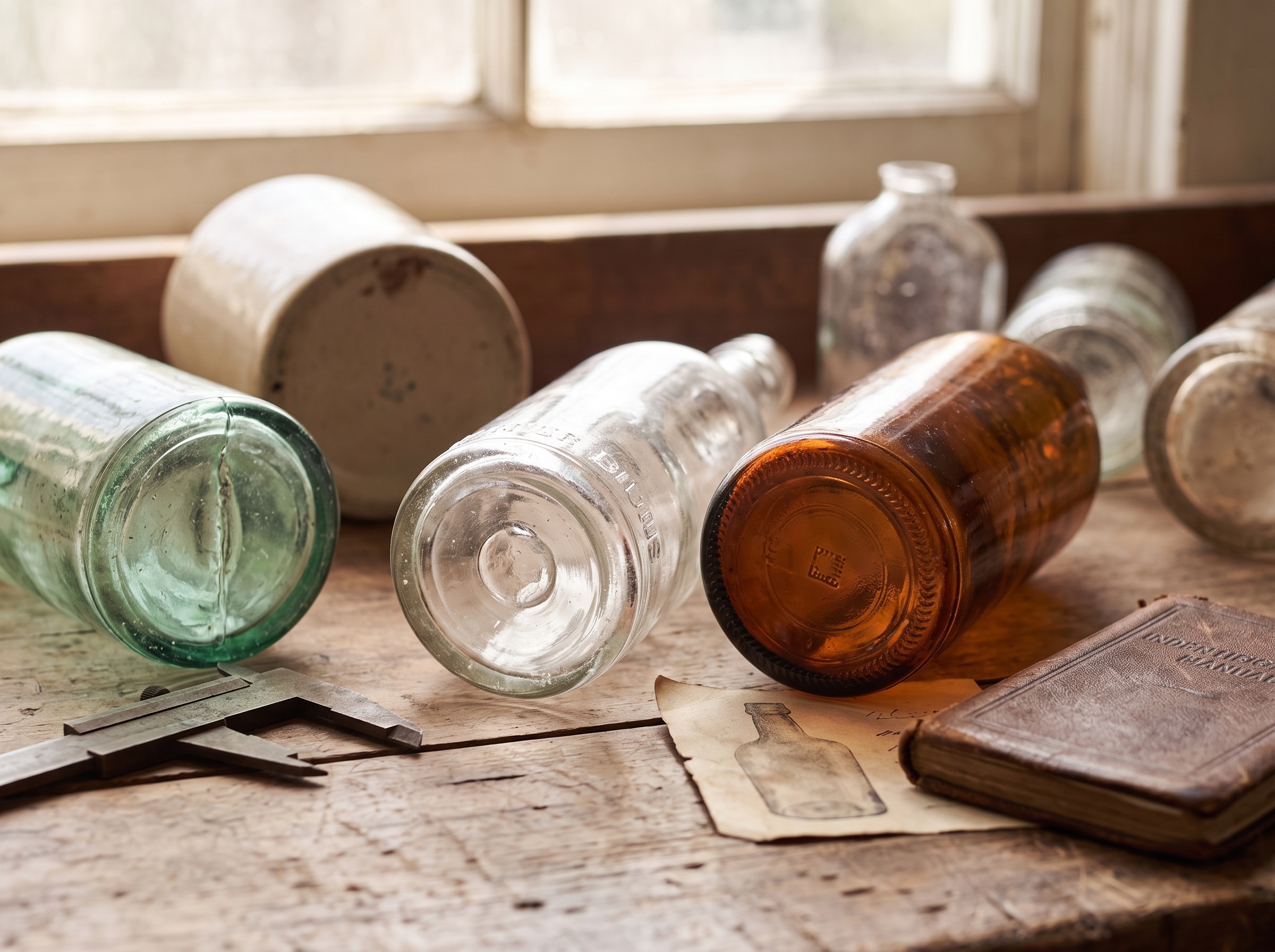
Base marks are the most common starting point. Flip the bottle over and look for embossed letters, numbers, or symbols in the center or around the heel (the bottom edge where the sides meet the base). Manufacturer marks often appear here—codes like "O-I" (Owens-Illinois), numbers indicating glass company branches, or dates. Some bases show mold numbers that identify which production cavity made that specific bottle.
Body embossing carries the most visible information. Product names, company locations, and capacity measurements appear raised on the bottle's sides. Medicine bottles often spell out the product name and city. Soda bottles display brand names and bottler information. The style of lettering (block, script, ornate) provides clues about era.
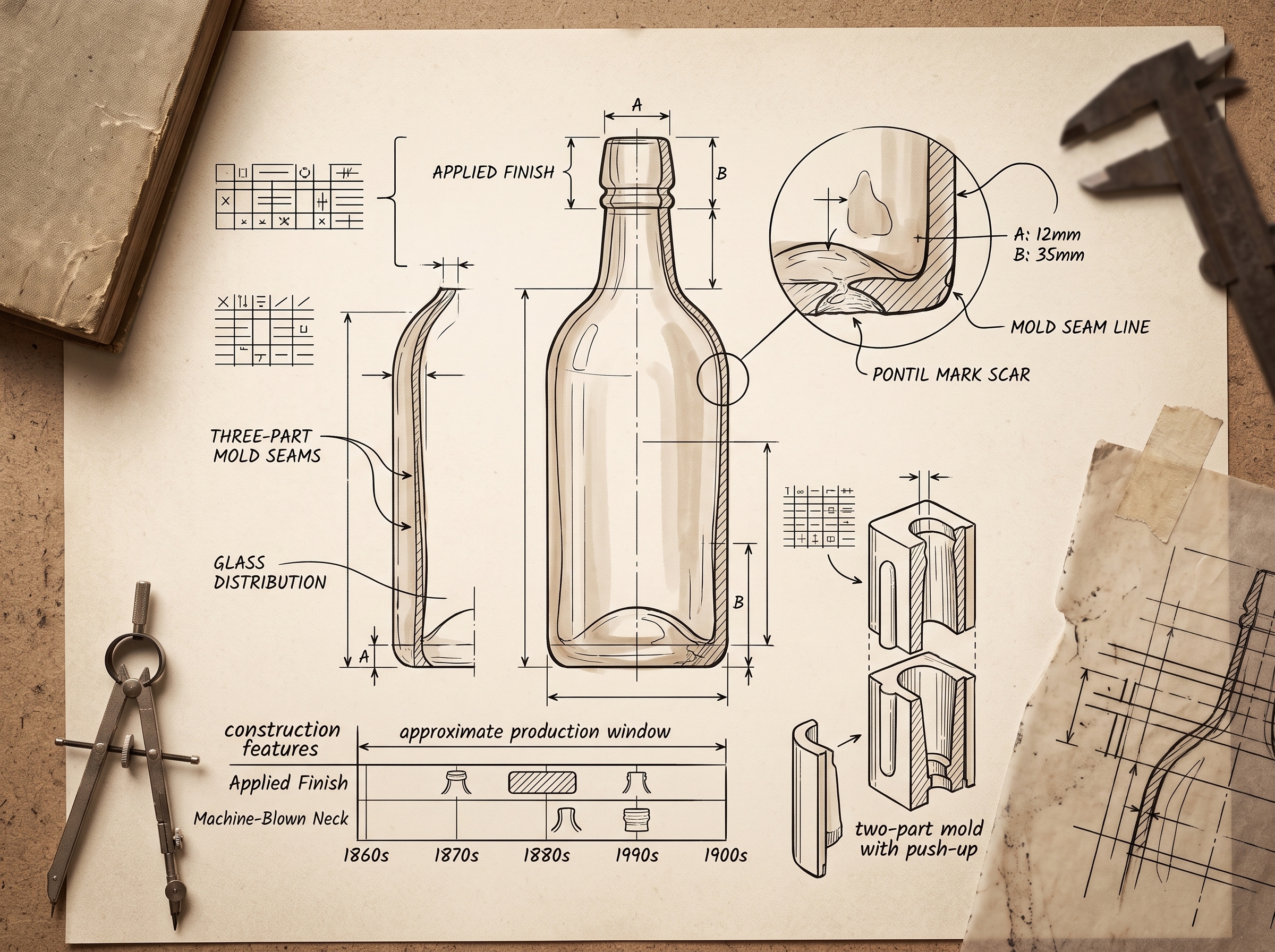
Mold seams run vertically up bottle sides and reveal manufacturing methods. Check how far the seam extends: stopping at the neck suggests earlier hand-finishing, while seams running through the lip indicate fully automated production. Side seams, base seams, and shoulder seams all matter for dating.
Neck and lip areas sometimes carry additional marks—applied color labels (ACL) on mid-century bottles, patent dates embossed under the neck ring, or finish styles that changed across decades. The lip itself (how the top opening was formed) is a dating feature, not a mark, but photograph it alongside other marks.
What Bottle Marks Can and Cannot Tell You
Embossed bottle marks excel at revealing manufacturer identity and approximate production windows, but they won't give you exact dates or current market values.
What marks reveal:
- •Manufacturer identity from base codes and symbols
- •General age range from embossing style and mold technology
- •Production location when city names appear in body embossing
- •Product type from capacity marks and characteristic shapes
- •Mold technology era based on seam patterns
What marks cannot tell you:
- •Exact production year unless a date is explicitly embossed
- •Current value without considering condition, rarity, and color
- •Original contents if product embossing is absent
- •Authenticity of reproductions made from old molds
- •Completeness of paper label information now missing
A bottle with an "O-I" mark and a seam running through the lip tells you it's post-1929 machine-made, probably common, and likely worth modest amounts unless other factors (rare color, scarce variant, excellent condition) add value. A pontil scar on the base instead of a seam indicates pre-1860s hand-blown production, immediately raising potential value—but condition and type still matter more than the mark alone.
Like silver hallmarks, bottle marks work best when combined with other features. The mark gives you the manufacturer, the seams narrow the era, and the embossing style confirms the decade.
Common Misreads and Identification Mistakes
Bottle collectors frequently misinterpret marks, leading to inflated age estimates or missed identifications.
Dating bottles by color alone is unreliable. Many assume purple glass means "very old," but clear glass that turns purple ("sun-colored amethyst") results from manganese used roughly 1880-1920. Reproduction bottles in purple exist. Similarly, aqua glass appears across many decades.
Mistaking mold numbers for dates happens constantly. A "12" on the base usually indicates mold cavity 12, not the year 1912. Genuine date codes follow specific formats: Owens-Illinois used a two-digit year code with a dot-in-square symbol from 1929 onward.
Confusing embossed capacity marks with dates trips up beginners. "16 OZ" means sixteen ounces, not a year. Patent dates like "PAT'D MAY 15 1900" tell you when the closure or design was patented, not when your bottle was made—production often continued decades after patents.
Ignoring pontil scars versus smooth bases leads to off-by-50-years mistakes. A ground pontil scar (rough circle on the base) indicates 1840s-1860s hand-blown production. A smooth base with mold seams means machine production, generally post-1900.
Reading worn embossing incorrectly because dirt fills letters. Clean bottles gently before attempting to read marks—a soft brush and water reveal embossing hidden under grime. Avoid harsh chemicals that might damage historical residues or applied color.
Unlike furniture stamps where maker's marks indicate high-end production, most embossed bottles were mass-produced commercial containers. Rarity and desirability often come from product type, local bottlers, or unusual variants, not prestigious manufacturers.
How Photos of Bottle Marks Improve Identification Results
Good mark photography captures embossing detail, seam placement, and overall context that written descriptions miss.
Base mark close-up
- •Essential details: Manufacturer codes, symbols, mold numbers
- •Photo technique: Shoot straight down with raking light from the side to emphasize embossing depth
Full body embossing
- •Essential details: Product names, company information, capacity marks
- •Photo technique: Rotate bottle to capture all sides if embossing wraps around; use even lighting to avoid glare on curved glass
Mold seam progression
- •Essential details: Where seams begin and end, especially at neck and lip
- •Photo technique: Side view showing seam running from base through shoulder to lip; this single feature often dates bottles within 20-year windows
Neck finish and closure area
- •Essential details: Lip style, thread types, applied rings
- •Photo technique: Close-up angled shot showing lip profile and any embossing under the neck ring
Overall bottle shape and color
- •Essential details: Proportions, glass color, wear patterns
- •Photo technique: Full bottle against neutral background in natural light to show true color
Sharp focus matters more than artistic composition. Blurry photos hide the difference between a "B" and an "8" in base codes, or obscure whether a seam truly reaches the lip edge. Take multiple angles—what looks clear on your phone screen might not show critical details in the final image.
Tocuro analyzes photos of embossed bottle marks, seam patterns, and overall features to identify bottles and provide estimated value ranges based on current market signals. Upload clear images of your bottle's base, embossing, and seams to get specific information about manufacturer, age range, and comparable examples. The estimated value you receive is not a formal appraisal, but it gives you practical market context for next steps.
Reading Bottle Marks Takes Practice
Bottle marks identification combines detective work with pattern recognition. Each bottle carries multiple clues—base symbols that identify the maker, seams that reveal production method, embossing that names the product, and glass characteristics that suggest era. Learning to read these marks together, rather than focusing on isolated features, builds reliable identification skills.
Start with the base and seams for age range, then use embossing to narrow identity and location. Cross-reference marks with overall bottle style—a blob-top soda bottle with a pontil scar makes sense for the 1850s; machine seams reaching the lip confirm post-1903 production. The marks don't lie, but they don't tell the complete story alone. Condition, rarity, regional demand, and color all influence what collectors will pay, regardless of what's embossed in the glass.
When you're holding a bottle with marks you can't quite decipher, or you need to know if that embossed medicine bottle is worth investigating further, clear photos of all the marking areas give you the best chance at accurate identification. The more details you capture, the more precisely you can understand what you've found.
Photo identification
Identify a Bottle Mark
Use Tocuro to identify your item from a photo and get an estimated value range when market data is available.