
Art Deco Furniture Identification: How to Recognize the Style from Photos
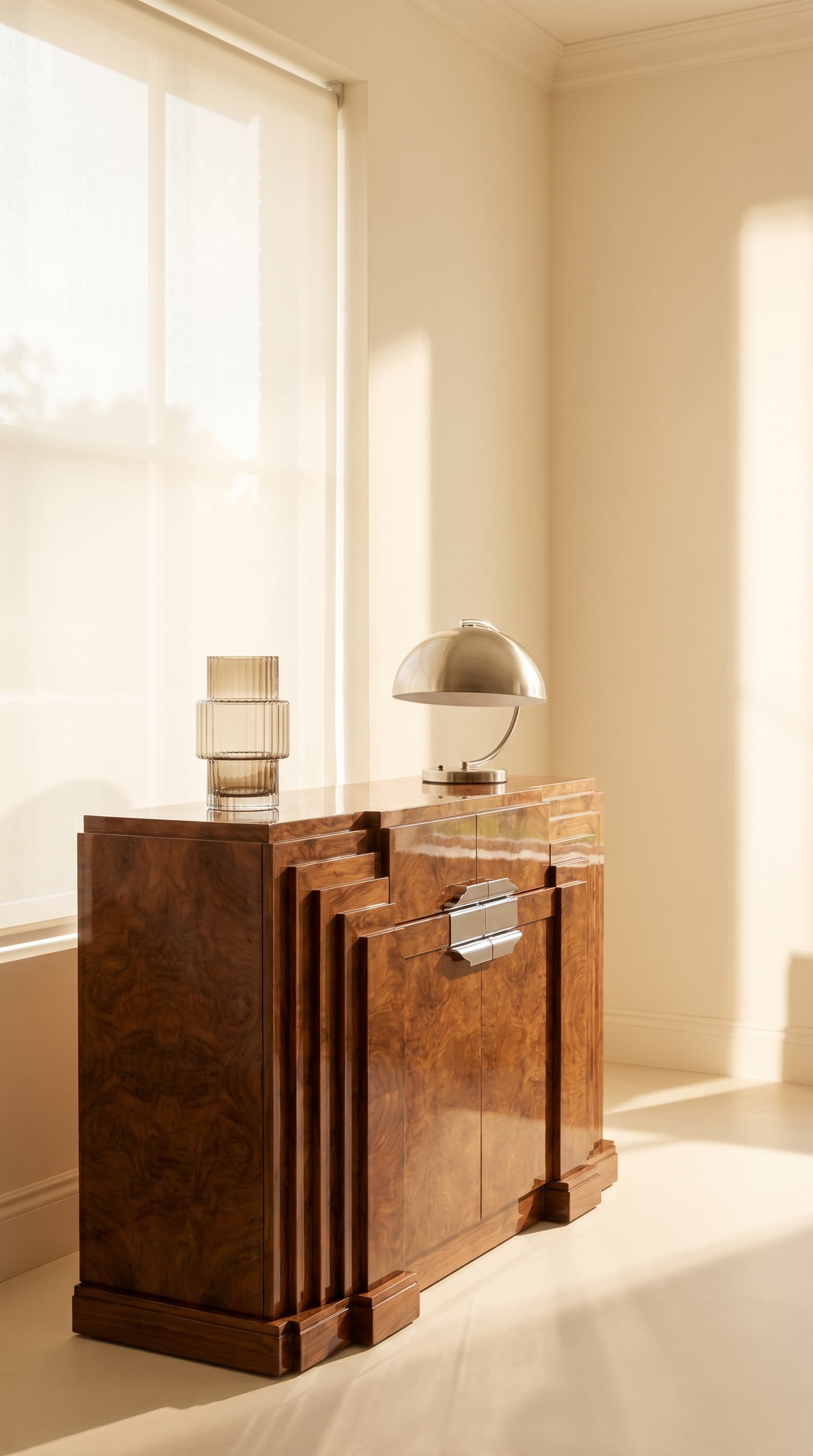
Art Deco furniture (1920s–1930s) stands out through bold geometric patterns, luxurious materials, and glamorous finishes. This guide helps you identify authentic Art Deco pieces by examining key visual markers like stepped forms, exotic wood inlays, chrome hardware, and high-gloss lacquer—plus how to distinguish Art Deco from similar styles.
Art Deco Furniture Identification: How to Recognize the Style from Photos
You've found a piece with dramatic geometric patterns, shiny chrome accents, and a glamorous presence that feels like old Hollywood. But is it actually Art Deco furniture? True Art Deco pieces from the 1920s and 1930s have distinct visual markers that separate them from revivals, Streamline Moderne, and Art Nouveau—and knowing what to look for in photos can help you identify them confidently.
Art Deco furniture identification starts with understanding the style's signature features: bold geometry, luxurious materials, and a machine-age aesthetic wrapped in glamour. This guide walks you through the visual checklist collectors use to recognize authentic Art Deco pieces from photos alone.
What You're Actually Looking At
Art Deco furniture emerged between roughly 1920 and 1939, peaking in the late 1920s and early 1930s. The style celebrated modernity, luxury, and geometric precision during the Jazz Age. Unlike the flowing, organic lines of Art Nouveau that came before it, Art Deco embraced angular forms, stepped silhouettes, and symmetrical patterns inspired by Cubism, ancient Egyptian art, and the machine age.
When you're examining a piece through photos, you're looking at furniture that was designed to make a statement. Art Deco wasn't subtle—it was bold, confident, and unapologetically decorative. High-end pieces used exotic materials like ebony, zebrawood, sharkskin, and ivory, while more accessible furniture achieved the look through veneers, chrome plating, and clever design.
The style encompassed everything from glamorous Hollywood Regency-influenced pieces to sleek French modernist designs, but certain visual elements remain consistent across the board.
Art Deco Furniture Identification Checklist
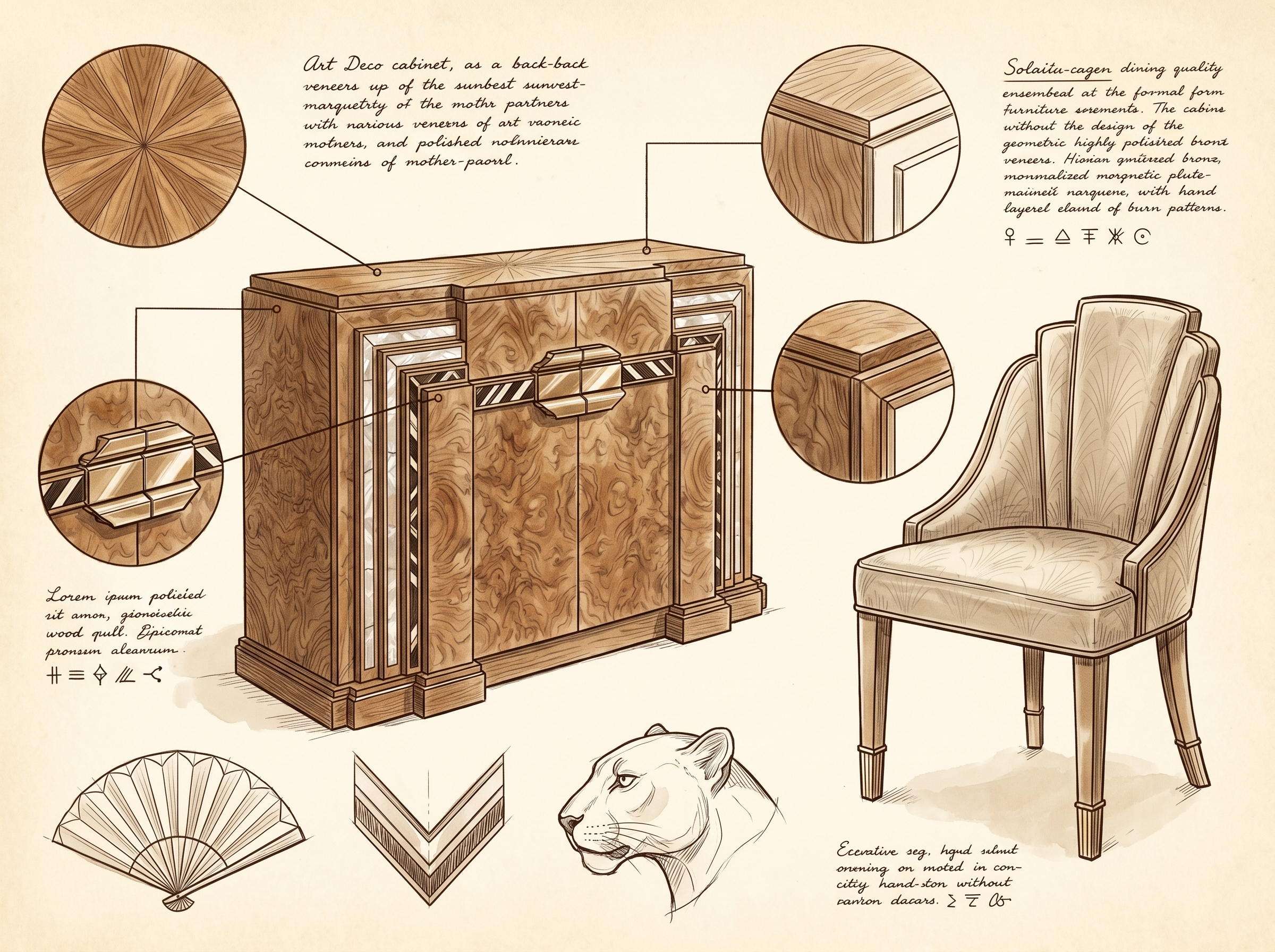
When examining photos of potential Art Deco furniture, focus on these key visual markers:
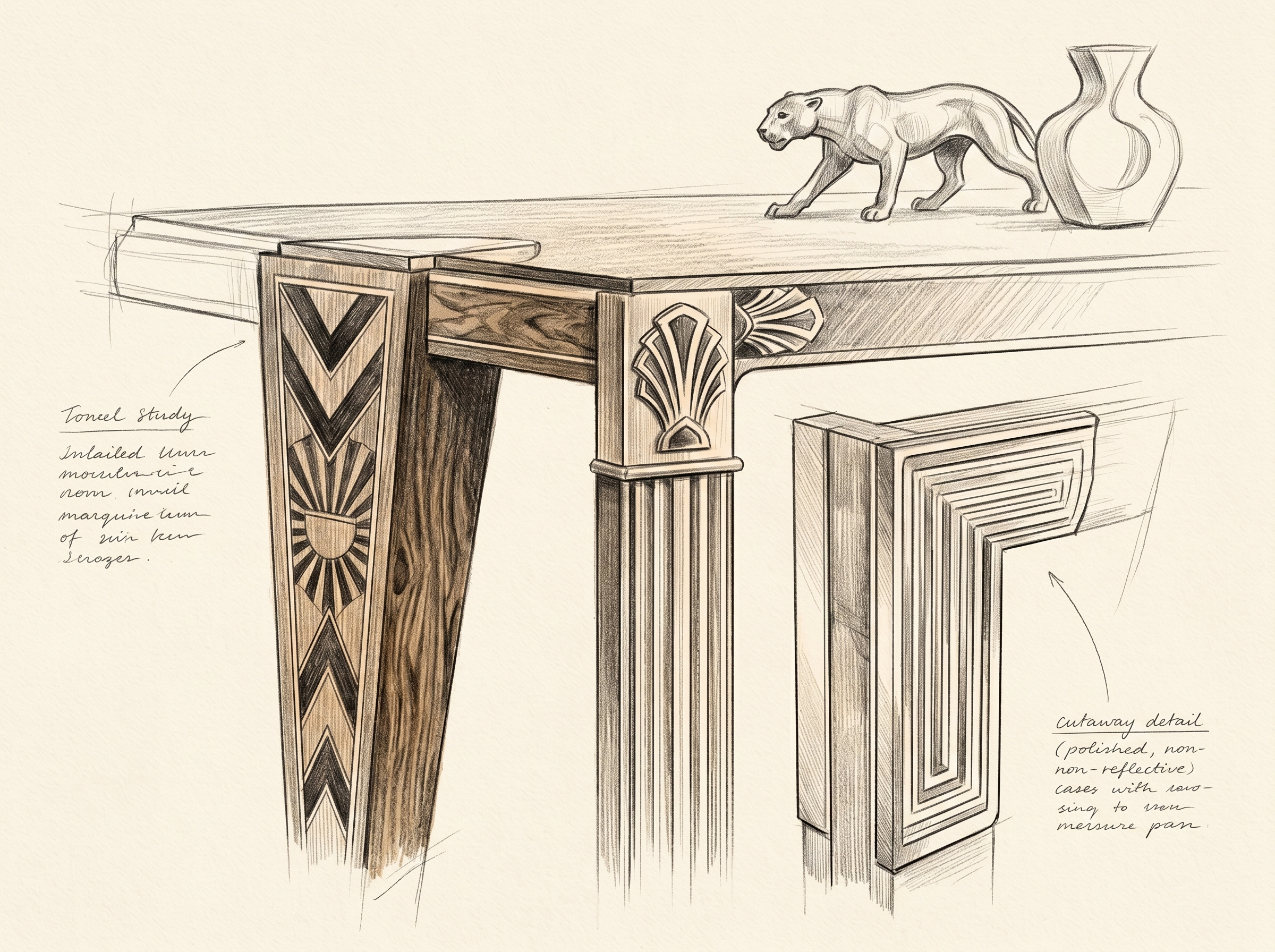
Geometric patterns everywhere. Look for stepped or ziggurat forms, chevrons, sunburst motifs, stylized fountains, and angular fan shapes. Inlays often feature contrasting woods arranged in bold geometric designs—think sharp angles rather than curves.
Symmetry and balance. Art Deco pieces are almost always symmetrical. Cabinet doors match, drawer fronts align perfectly, and decorative elements mirror across a central axis. The overall silhouette tends toward rectangular forms with dramatic vertical or horizontal emphasis.
Exotic wood veneers and contrasting inlays. Macassar ebony, zebrawood, burl walnut, and rosewood were favorites. Look for high-contrast combinations: dark woods with light inlays, or blonde woods with black accents. The grain patterns are often book-matched for visual drama.
Chrome, nickel, and mirror accents. Hardware gleams. Drawer pulls, corner guards, leg caps, and decorative strips in polished chrome or nickel are signature elements. Some pieces incorporate mirrored panels or glass shelves.
High-gloss lacquer finishes. Many Art Deco pieces feature piano-finish lacquer in black, cream, or bold colors like Chinese red. The finish should look smooth and reflective, almost glass-like in photos.
Streamlined but substantial forms. Pieces feel solid and architectural. Cabinets have weight and presence. Even streamlined designs maintain a sense of luxury rather than minimalism.
Waterfall edges and rounded corners. Particularly on American Art Deco pieces from the 1930s, you'll see waterfall fronts where veneer wraps continuously over edges in a smooth cascade.
Stylized decorative motifs. When figural elements appear, they're geometric and stylized: leaping gazelles, angular female forms, stylized flowers reduced to essential shapes. Nothing looks naturalistic or flowing.
Common Art Deco Furniture Identification Mix-Ups
Several styles get confused with Art Deco when examining photos:
Art Nouveau vs. Art Deco. Art Nouveau (1890–1910) features flowing, organic lines, whiplash curves, and nature-inspired motifs. Art Deco is angular, geometric, and symmetrical. If you see sinuous vines or asymmetrical swirls, it's likely Art Nouveau, not Deco.
Streamline Moderne confusion. Streamline Moderne (mid-1930s onward) evolved from Art Deco but emphasized horizontal lines, curved corners, and aerodynamic shapes inspired by trains and ocean liners. It's sleeker and less ornamental than true Art Deco. Streamline pieces often have continuous horizontal banding and lack the geometric inlay work typical of Art Deco.
1980s Art Deco Revival pieces. The 1980s saw massive Art Deco revival production. These pieces mimic the look but typically use different construction methods, synthetic materials, and lack the quality of period pieces. In photos, revival pieces often look too perfect, with overly uniform finishes and modern hardware concealed behind period-style facades.
Mid-Century Modern overlap. Some transitional pieces from the late 1930s bridge Art Deco and Mid-Century Modern. If geometric elements combine with organic curves and tapered legs, you might have a transitional or early modern piece rather than pure Art Deco.
Hollywood Regency blur. Hollywood Regency (1930s–1950s) borrowed heavily from Art Deco but added more ornate, theatrical elements. The line can be fuzzy, especially with glamorous pieces from the 1930s.
Using Photos to Identify Art Deco Furniture
When you're working from photos alone, certain shots reveal more than others:
Overall silhouette and proportions
Capture straight-on front views. This reveals the piece's symmetry, proportions, and architectural form. Look for that characteristic Art Deco balance and geometric composition. Stepped tops, recessed central sections, and vertical emphasis jump out in straight-on shots.
Close-ups of inlay and veneer work
Focus on decorative details. Zoom in on geometric inlays, veneer patterns, and marquetry. Period Art Deco inlay work shows precision and craftsmanship. Look for hand-cut elements and the subtle irregularities of period techniques. Perfectly uniform patterns might indicate later reproduction.
Hardware and metal details
Photograph pulls, hinges, and decorative metal. Chrome and nickel hardware should show appropriate patina for age. Original Art Deco hardware often features geometric forms—circular pulls with stepped details, angular handles, stylized shapes. Check if hardware looks period-appropriate or if it's been replaced.
Finish quality and surface reflection
Capture the finish in good light. High-gloss lacquer shows characteristic crazing or fine checking in period pieces. The depth and quality of lacquer finishes helps distinguish period work from reproductions. Modern polyurethane looks different—smoother but less dimensional.
Joinery and construction details
Get photos of backs, undersides, and drawer construction. Period Art Deco furniture uses quality joinery techniques. Look for dovetails on drawers, how veneers are applied, and how pieces are assembled. This separates period pieces from reproductions and helps with furniture era identification overall.
Maker's marks and labels
Check for signatures or manufacturer labels. Many Art Deco furniture makers marked their work. French pieces might bear cabinetmaker stamps. American manufacturers like Herman Miller, Widdicomb, and Johnson Furniture Company produced Art Deco lines and typically labeled pieces. Even without famous names, period labels or stamps support authentication.
When You Need Expert Eyes on Your Art Deco Furniture
If you're trying to confirm whether a piece is genuine Art Deco, understanding its potential value, or deciding whether it's worth acquiring, photos can only tell you so much. The difference between a period piece and a 1980s reproduction can mean thousands of dollars—and subtle details in finish, construction, and materials often determine authenticity.
Tocuro identifies furniture from photos and provides estimated value ranges based on current market signals. Upload clear photos showing the overall piece, close-ups of inlay work and hardware, construction details, and any marks or labels. The app analyzes these visual markers to help identify Art Deco furniture and narrow down its likely period and value range. You get 7 free identifications per day, and the count resets daily, so you can check multiple pieces whether you're shopping estate sales or evaluating your own collection.
Remember that estimated values aren't formal appraisals—they're based on market signals and comparable pieces. But they give you a practical starting point for understanding what you're looking at and whether a piece merits deeper investigation or conservation.
Art Deco furniture rewards those who learn its visual language. Once you train your eye to spot geometric inlays, lacquer finishes, and chrome hardware in the context of bold, symmetrical design, genuine Art Deco pieces announce themselves—even in a crowded antique mall or estate sale listing with mediocre photos.
Photo identification
Identify Your Furniture
Use Tocuro to identify your item from a photo and get an estimated value range when market data is available.