
Antique Table Identification: How to Identify Tables by Photo
Identifying antique tables requires examining leg profiles, top construction, joinery methods, extension hardware, and maker marks. This guide shows you which details matter most and how to photograph them for accurate identification.
Antique Table Identification: How to Identify Tables by Photo
When you're trying to identify an antique table, the details hiding in plain sight tell the real story. A dining table you inherited might be a valuable Victorian extension table or a 1940s reproduction. A side table from an estate sale could be signed Stickley or unsigned factory work. The difference between these scenarios often comes down to knowing which clues matter and how to capture them in photos.
Antique table identification starts with understanding that tables reveal their age and origins through leg profiles, top construction, joinery methods, and hardware details. Unlike case pieces where drawer construction dominates, tables show their secrets through structural elements designed to support weight and allow movement.
What Clues Matter Most for Table Identification
Leg Style and Turning
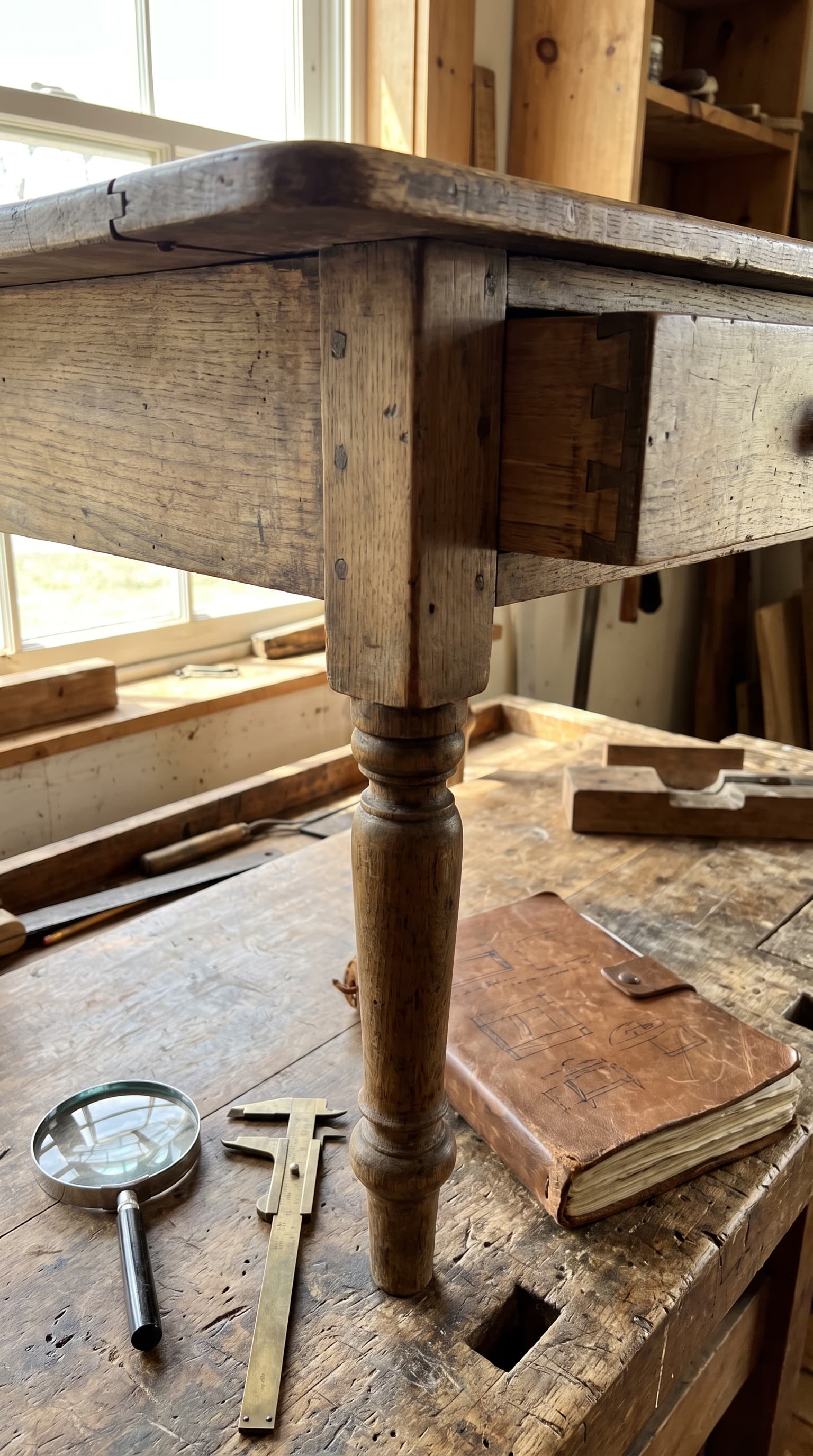
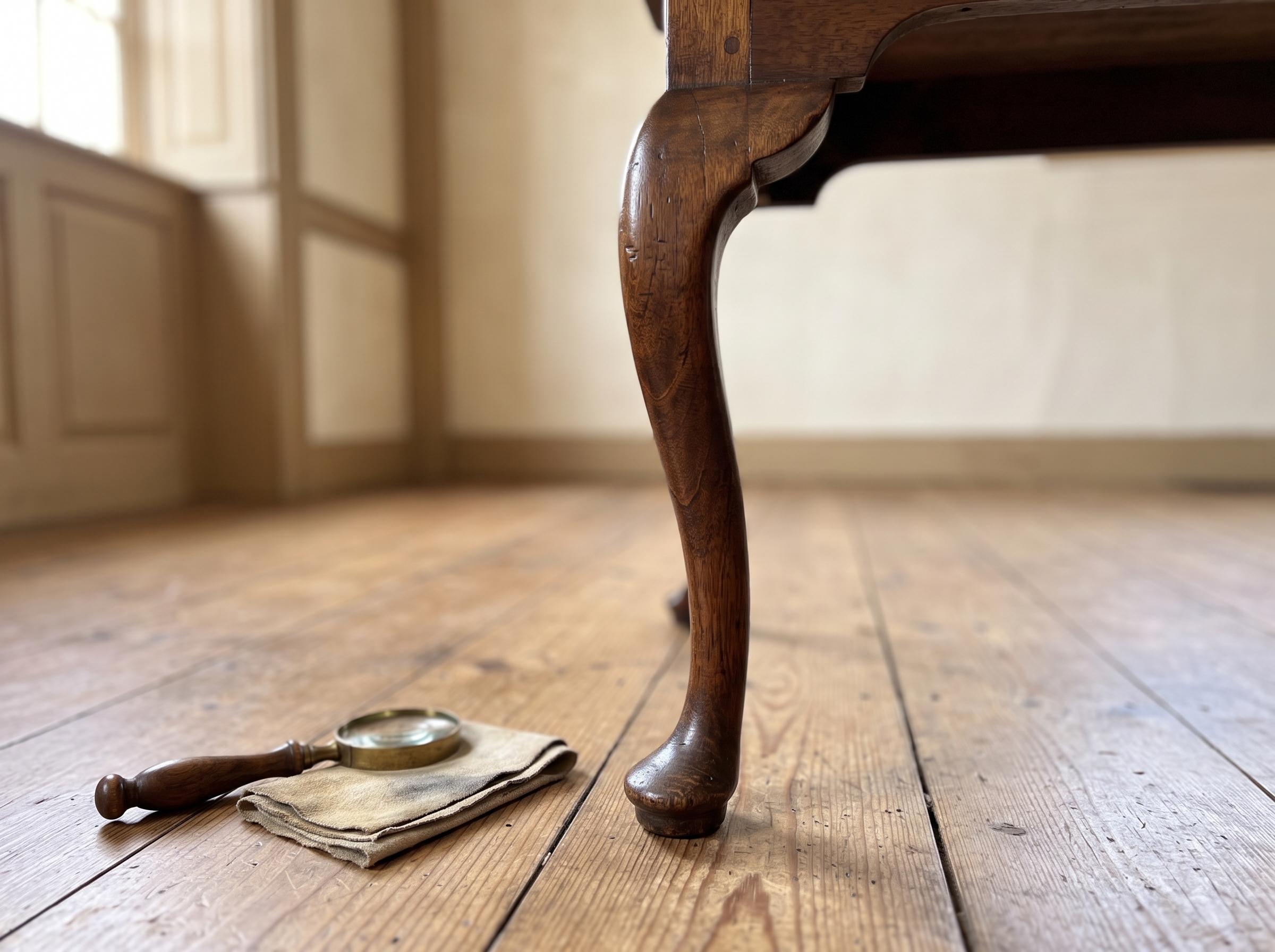
Table legs are chronological fingerprints. Cabriole legs with pad feet signal Queen Anne origins (1720s-1750s), while ball-and-claw feet push the date later into Chippendale territory. Turned legs with stretchers often indicate earlier construction—17th and early 18th century pieces used stretchers for structural support. By the Federal period (1780s-1820s), tapered legs with spade feet became fashionable, and structural stretchers disappeared on higher-end work.
Look closely at turning quality. Machine-turned legs after the 1850s show perfectly uniform profiles. Earlier hand-turned legs have subtle irregularities when you compare opposite legs side by side.
Top Construction and Attachment
How the top attaches to the base tells you about both age and quality. Flip the table over (or photograph the underside) and look at the attachment method. Wooden cleats screwed through slotted holes allow for wood movement and suggest quality 18th or 19th century work. Fixed attachments that don't account for seasonal expansion often indicate later or lower-quality construction.
Examine the top itself for breadboard ends—those cross-grain pieces on the short ends of plank tops. Proper breadboard construction uses pinned tenons that allow the main boards to move. The pins themselves, whether round or square, offer clues about age and craft tradition.
Joinery Methods
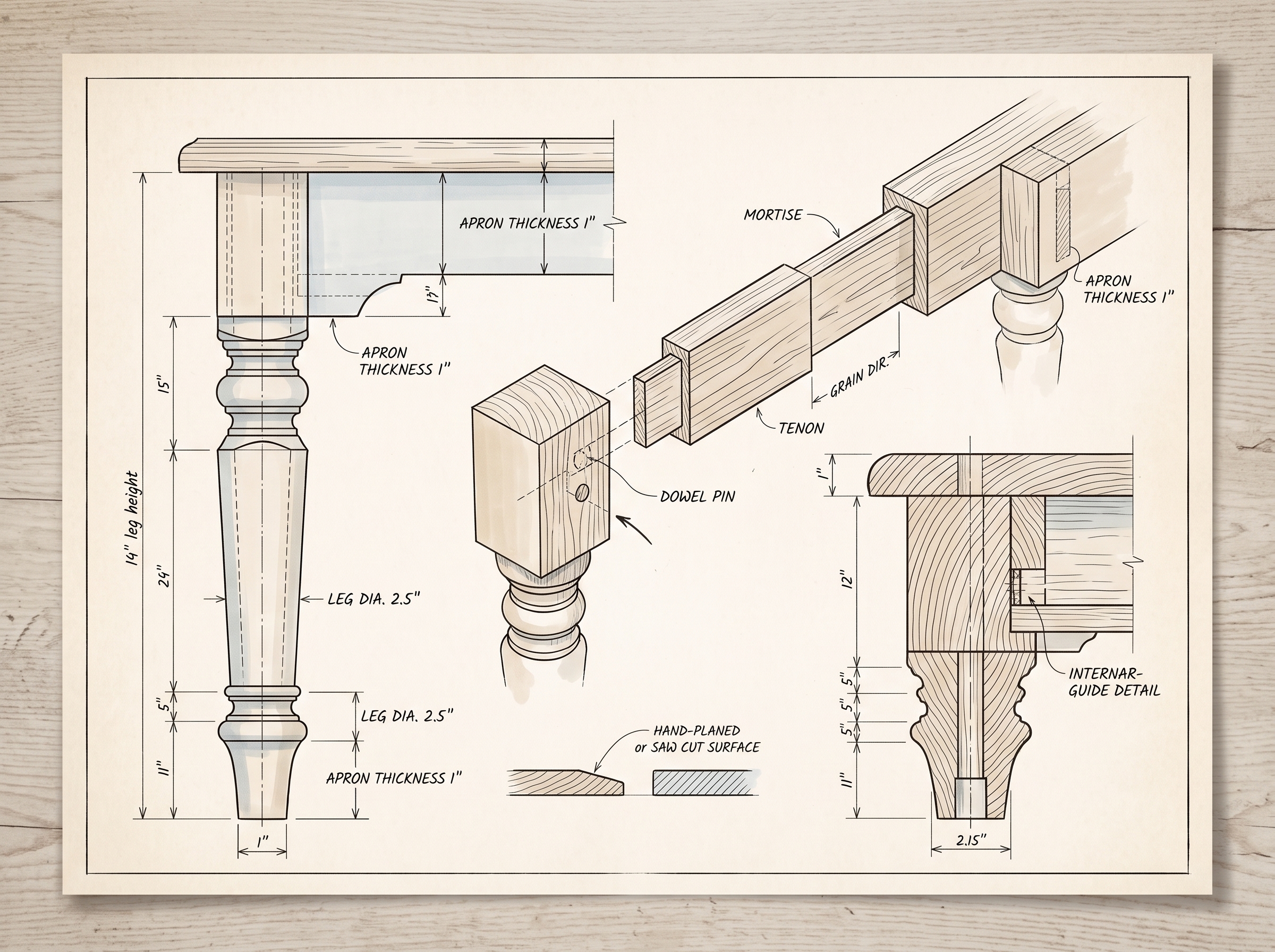
Joinery reveals both period and quality level. Mortise-and-tenon joints secured with wooden pins indicate hand construction, typically pre-1860s. Glue blocks in corner joints can help with dating—triangular glue blocks are common in 18th century work, while later pieces might use different reinforcement methods.
Dovetails matter on tables with drawers. As with antique dresser identification, hand-cut dovetails with irregular spacing and slight asymmetry suggest pre-1890s construction, while perfectly uniform machine-cut dovetails indicate later manufacture.
Extension Hardware and Mechanisms
Extension tables developed sophisticated hardware systems in the Victorian era. Identify your table's extension mechanism and you narrow the date range considerably. Separate leaf systems with simple pull-apart construction predate the patented sliding mechanisms that appeared after the 1840s. Metal track systems, equalizing mechanisms, and specific patent hardware often have maker marks or patent dates stamped directly on the metal parts.
Maker Marks and Labels
Many quality furniture makers marked their work, but table marks hide in unexpected places. Check the underside of tops, the inside edges of aprons, and the tops of legs where they meet the apron. Paper labels, burned stamps, and stenciled marks all appear. Photographing maker marks clearly requires good light and sharp focus, since faded ink and worn stamps can be difficult to read.
What Photos to Take for Table Identification
Comprehensive table identification requires systematic photography that captures structural details most people skip.
Start with overall shots from all four sides at table height. Then photograph the table from above, showing the entire top surface. These contextual shots establish proportion and basic form.
Move to the legs next. Photograph each leg profile clearly, showing the full length from floor to apron. If the legs differ between ends (common on drop-leaf and Pembroke tables), capture both styles. Get close-ups of turnings, carving, or other decorative elements.
Flip the table or get underneath with a light. Photograph the underside of the top, showing how it attaches to the base. Capture any cleats, glue blocks, or reinforcement structures. This angle often reveals construction methods hidden during normal use.
For extension tables, photograph the extension mechanism in detail. Show how the leaves store, how the top separates, and any metal hardware involved. Get close enough to read any patent marks or manufacturer stamps on metal parts.
Document all joinery you can access without disassembly. Photograph mortise-and-tenon joints where legs meet aprons, showing whether you see pins, wedges, or other fastening methods. If there are drawers, photograph the dovetails at front and back corners.
Search thoroughly for marks and photograph anything you find. Even partial marks or faded labels provide identification clues that visible style alone can't confirm.
Common Table Misidentifications
Certain table identification mistakes appear repeatedly, usually from relying too heavily on surface appearance.
Many people call any dark wood table with chunky legs "Jacobean," but true Jacobean pieces (1600s-early 1700s) are rare outside museums. What you're probably seeing is Jacobean Revival from the 1920s-1930s—a completely different animal with completely different value. The revival pieces used period-appropriate forms but machine construction and modern finishing techniques.
Carved ball-and-claw feet don't automatically mean Chippendale period (1750s-1780s). This motif was reproduced enthusiastically during the Colonial Revival movement starting in the 1880s and continuing through the 1930s. Period examples show hand carving with real variation between feet. Revival pieces often have suspiciously uniform carving from pantograph machines.
Drop-leaf tables span three centuries of production, from the 1700s through the 1900s. People often assume any drop-leaf table is "old," but the form remained popular in budget furniture throughout the 20th century. Gate-leg construction, wood species, and joinery methods all matter more than the basic drop-leaf format.
Extension mechanisms cause confusion too. Many assume complex hardware indicates age, but the opposite is often true. Simple pull-apart construction with separate leaves predates the elaborate Victorian mechanisms with metal tracks and equalizing systems.
What Antique Table Identification Resolves
Accurate table identification answers practical questions that affect both value and collecting decisions.
Period versus revival matters enormously. A genuine 18th century tea table and a 1920s Colonial Revival copy might share similar visual profiles, but their market values differ by factors of ten or more. Construction details, wood aging, and hardware styles separate these pieces reliably.
Attributions to known makers transform common forms into significant pieces. An oak library table might be generic Arts and Crafts work worth a few hundred dollars, or it might be signed Stickley worth several thousand. The structural details and marks make that determination.
Restoration history affects value and sometimes reveals hidden problems. Original finish, replaced tops, married bases to different tops—these issues show up in construction details and wear patterns. Understanding what you're seeing helps you make informed decisions about conservation, display, and eventual sale.
Regional characteristics matter for certain table types. Pennsylvania-German, Southern, New England, and other regional schools used distinctive wood combinations, construction techniques, and decorative vocabularies. Identifying these regional markers connects pieces to specific maker communities and collecting specialties.
Get Expert Help Identifying Your Table
Table identification combines visible style cues with hidden construction details that require experience to interpret correctly. Tocuro helps you identify tables from photos by analyzing the details that matter—leg styles, joinery, hardware, and maker marks—using market data from thousands of identified pieces.
Upload clear photos showing your table's legs, top construction, extension mechanism, and any marks. The Furniture Identification App provides identification insights and estimated value ranges based on current market signals, helping you understand what you own and what it's worth in today's market.
Start identifying your table today at Tocuro—your first seven identifications each day are free, giving you room to photograph multiple angles and details as you learn what matters most for accurate identification.
Photo identification
Identify Your Furniture
Use Tocuro to identify your item from a photo and get an estimated value range when market data is available.