
How to Identify Antique Sideboards and Buffets: A Visual Guide to Dating Dining Room Furniture
Dating antique sideboards and buffets requires examining specific construction details visible in photos. This guide shows you which clues matter most—from leg turnings and dovetail patterns to hardware placement and back-panel construction—and which photos reveal the age markers that separate Federal from Victorian, or authentic period pieces from clever reproductions.
How to Identify Antique Sideboards and Buffets: A Visual Guide to Dating Dining Room Furniture
Antique sideboard identification starts with understanding that these dining room workhorses reveal their age through leg style, drawer joinery, and hardware placement. Whether you've inherited a family piece or found something promising at an estate sale, knowing which details to examine helps you date it accurately and understand what you actually own.
Sideboards evolved dramatically from the 1780s through the early 1900s. Federal examples stand on tapered legs with delicate inlay. Victorian pieces grew heavier, with carved panels and applied ornament. By the Arts & Crafts era, sideboards became rectilinear statements with visible joinery. Each period left specific markers you can spot in photos once you know where to look.
What Clues Matter for Antique Sideboard Identification
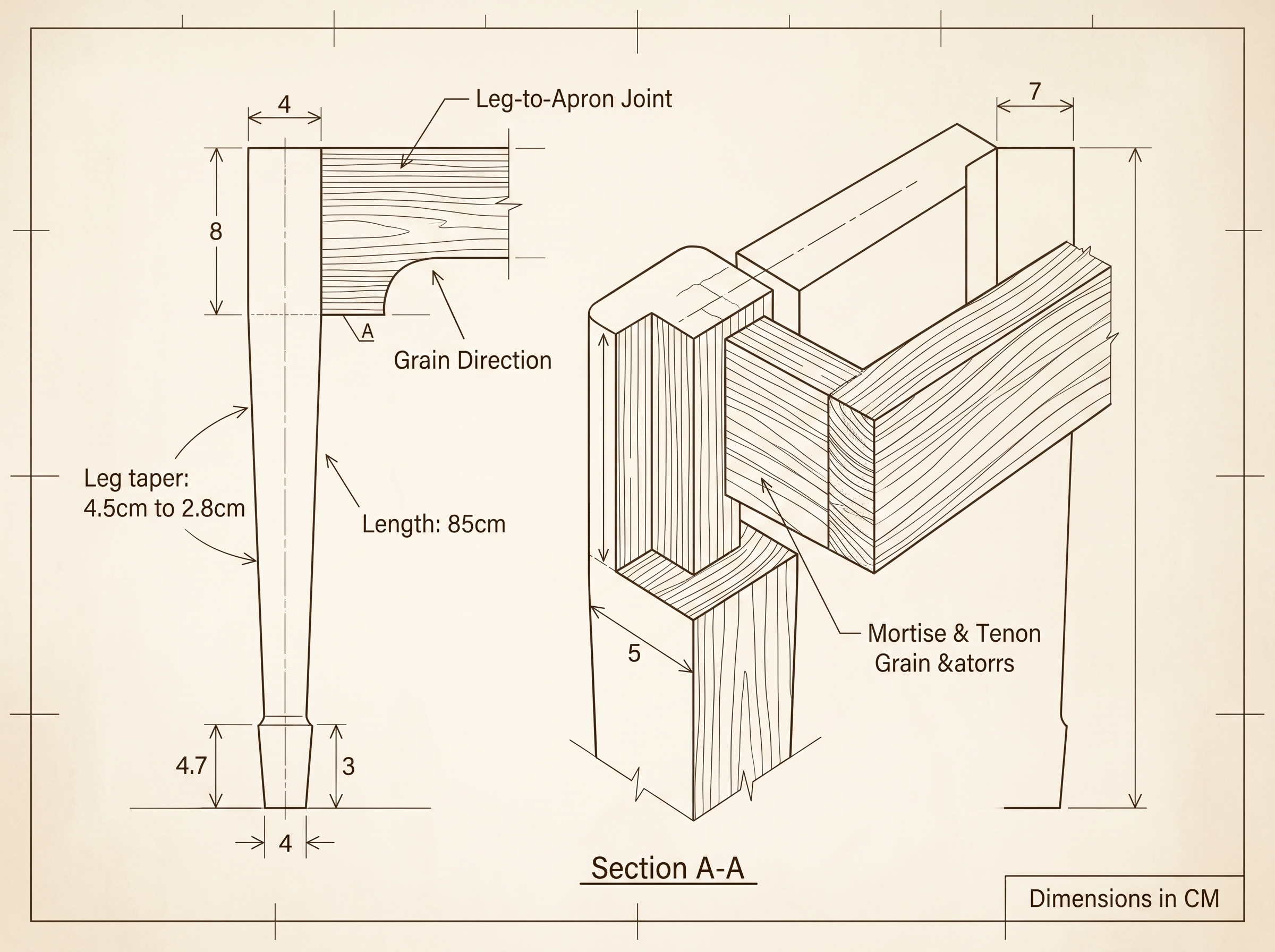
Leg style tells you more than any single feature. Federal sideboards (1780s-1820s) typically have square tapered legs, sometimes with spade feet or decorative inlay running down the taper. Sheraton examples might show turned and reeded legs. By the 1830s-1840s, Empire sideboards introduced heavier turned legs or columns at the front corners, often with paw feet or substantial plinths.
Victorian sideboards from the 1850s-1890s show the most variety: Renaissance Revival pieces have incised carving and burl veneer panels; Eastlake examples feature geometric patterns and gallery rails with spindles; Rococo Revival sideboards display cabriole legs and carved fruit or flowers. These applied decorations and complex turnings distinguish mid-to-late 19th century work.
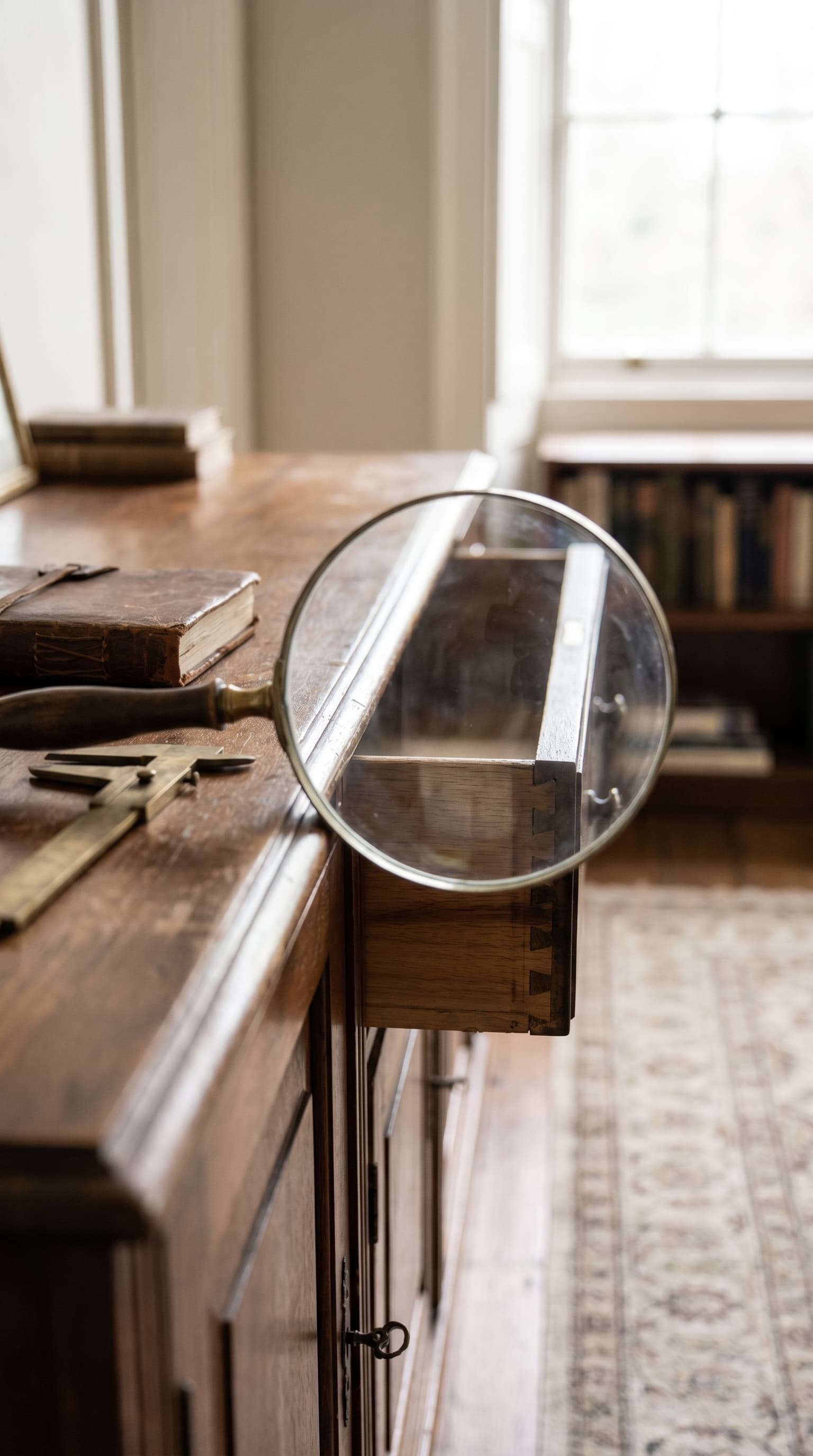
Drawer construction reveals manufacturing era. Hand-cut dovetails with irregular spacing and slightly different angles indicate pre-1860s construction. Machine-cut dovetails appear after the Civil War—evenly spaced, uniform in size, often with more pins than earlier work. The drawer bottom matters too: thin boards running front-to-back with visible shrinkage suggest 18th or early 19th century origin. Thicker plywood bottoms mean 20th century.
Hardware placement and type provide dating markers. Original Federal-era brasses show posts that go through the drawer front with nuts behind, often with bail handles and oval or round backplates. Victorian pieces might have wooden knobs (1840s-1860s) or ornate cast brass pulls. If you see perfectly aligned, evenly spaced holes with no extra holes nearby, question whether the hardware is original.
Back-panel construction tells manufacturing stories. Early sideboards have wide boards attached with cut nails, often showing hand-planing marks. Later 19th century examples use narrower tongue-and-groove boards or simple shiplap. By 1900, you might see early plywood or composition board on budget pieces. Remove a drawer and photograph the back panel—it's less likely to have been refinished or altered.
What Photos to Take for Accurate Identification
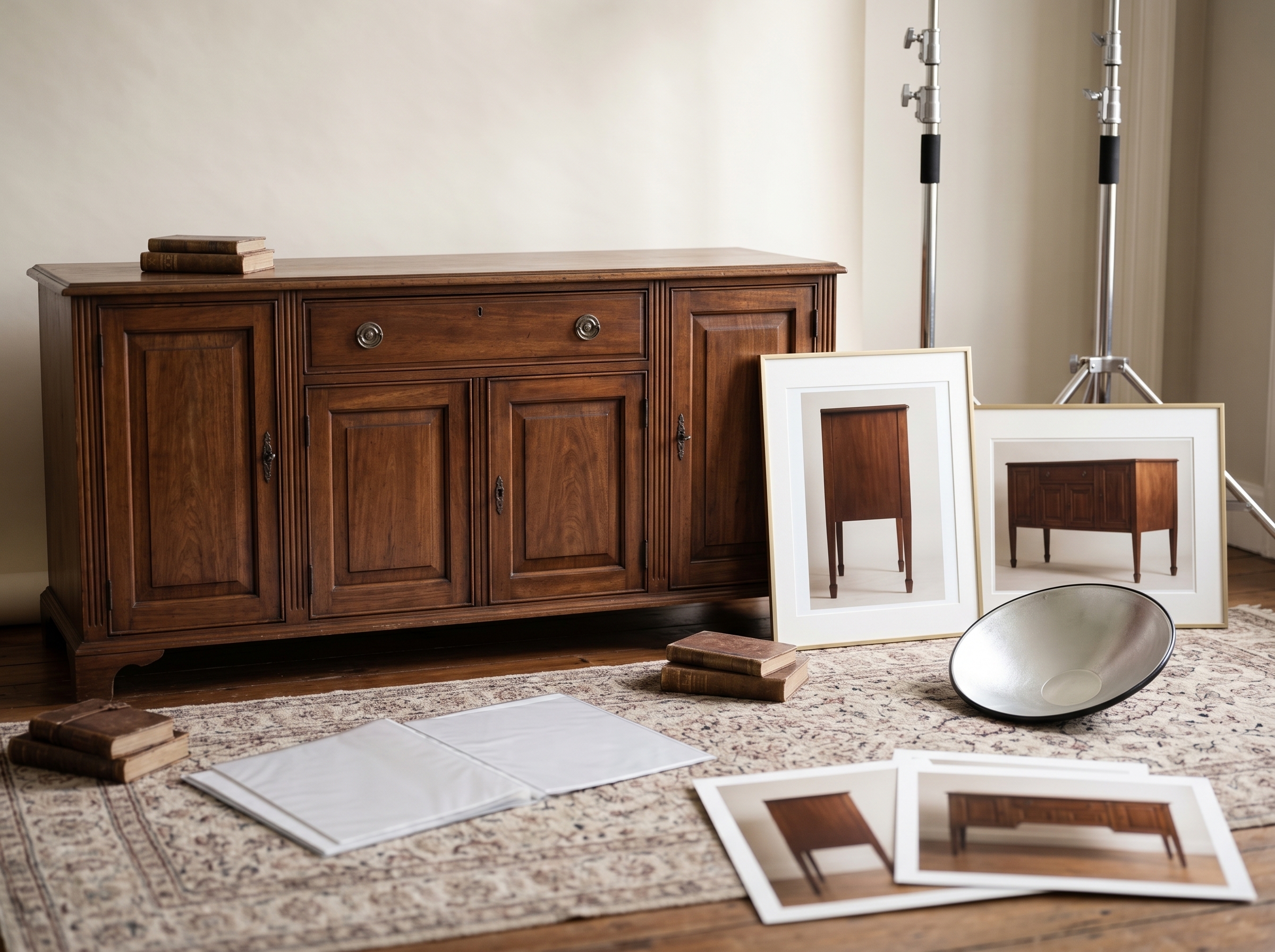
Capture the full piece straight-on from the front, then both sides. These establish overall proportion and leg style. Stand back far enough to avoid distortion—sideboards look different when you're too close with a wide-angle phone lens.
Photograph all four legs in detail, especially where they meet the case. Get close enough to see turning details, carving, or taper angles. If there are feet, shoot those separately. Legs often show period-specific turnings that narrow the dating window to a decade.
Open every drawer and photograph the joinery from multiple angles. Get the dovetails on both sides, the bottom attachment method, and the drawer back construction. Shoot inside the case too—photograph the drawer runners, interior finish, and any maker's marks or labels.
Capture hardware from straight-on and in profile. Photograph the connection points behind pulls—original posts, replacement screws, or filled holes all tell stories. If there's a key escutcheon, shoot that separately. Many reproduction pieces use modern hardware that looks old until you examine the attachment method.
Document the back thoroughly. Remove at least one drawer so you can photograph the back panel from inside the case. Get close-ups of nail types, wood species if visible, and any secondary woods used for interior construction. This unglamorous area often provides the clearest age evidence.
Common Misidentifications with Antique Sideboards
Many people call any low cabinet a sideboard, but servers, buffets, and credenzas have different forms. True sideboards are deeper (20-28 inches typically) and designed to hold serving pieces in drawers and cabinets. Buffets tend to be taller with more storage, while servers are often smaller and sit on shorter legs. The term matters when you're trying to date a piece, because each form has its own timeline.
Colonial Revival sideboards from 1900-1940 trip up many collectors. These pieces deliberately copied Federal and Sheraton styles, using similar leg tapers and brass pulls. The giveaway is usually in the joinery—machine dovetails, plywood drawer bottoms, and perfectly uniform turnings reveal 20th century manufacture. The wood can help too: authentic Federal sideboards often use Cuban or Santo Domingo mahogany with darker, denser grain than the Honduras mahogany common after 1850.
"Jacobean" sideboards sold from 1910-1930 confuse people because of deliberate aging. Furniture manufacturers stained new oak dark, added distress marks, and used Tudor-style hardware to create an old English look. These Arts & Crafts era pieces have value in their own right, but they're not 17th century. Check the joinery and construction methods—modern machine work appears throughout, despite the antique styling.
Veneer condition causes identification problems. Blistered or lifting veneer makes people assume a piece is old, but veneer was used throughout furniture history and continues today. What matters is the substrate (solid wood underneath suggests earlier work) and the veneer thickness (hand-sawn veneer is noticeably thicker than modern machine-cut). How to Tell If Furniture Is Authentic: What Photos Reveal About Reproductions covers these distinctions in detail.
What Tocuro Helps Resolve
Sideboard identification becomes complicated when you're comparing turned leg profiles, trying to distinguish 1820 from 1920, or questioning whether that Empire piece might be French rather than American. Tocuro analyzes your photos against thousands of documented examples, identifying leg-turning patterns, construction methods, and hardware types that indicate specific periods and regional origins.
The app recognizes maker's marks, label fragments, and stamps that help attribute pieces to specific manufacturers or workshops. Many Victorian sideboards carry paper labels or branded marks that are partially illegible—Tocuro's image recognition helps decode what's left and connects it to known makers.
When you're looking at similar-styled pieces from different eras, Tocuro identifies the subtle construction differences that reveal actual age. Those machine dovetails on what looks like a Federal sideboard, the plywood drawer bottom in an "antique" server, or the modern screws behind old-looking pulls—these details often escape casual inspection but show clearly in photos when you know what you're looking at.
Ready to Identify Your Sideboard?
Take clear photos of your sideboard's legs, drawer joinery, hardware, and back panel, then upload them to Tocuro. You'll get specific information about period, style, and construction methods that help you understand what you own. The app provides identification and estimated value ranges based on current market signals—useful for insurance documentation, estate planning, or deciding whether to restore or sell.
For related dining room furniture, see our guides on How to Identify Antique Chairs and broader furniture authentication at Real vs Reproduction Furniture: How to Tell the Difference Before You Buy.
Photo identification
Identify Your Furniture
Use Tocuro to identify your item from a photo and get an estimated value range when market data is available.