
Antique Secretary Desk Identification: How to Date and Identify from Photos
Identifying an antique secretary desk requires close attention to its fall-front mechanism, interior configuration, hardware, and construction methods. This guide explains which clues matter most and which photos help date and authenticate these elegant writing desks.
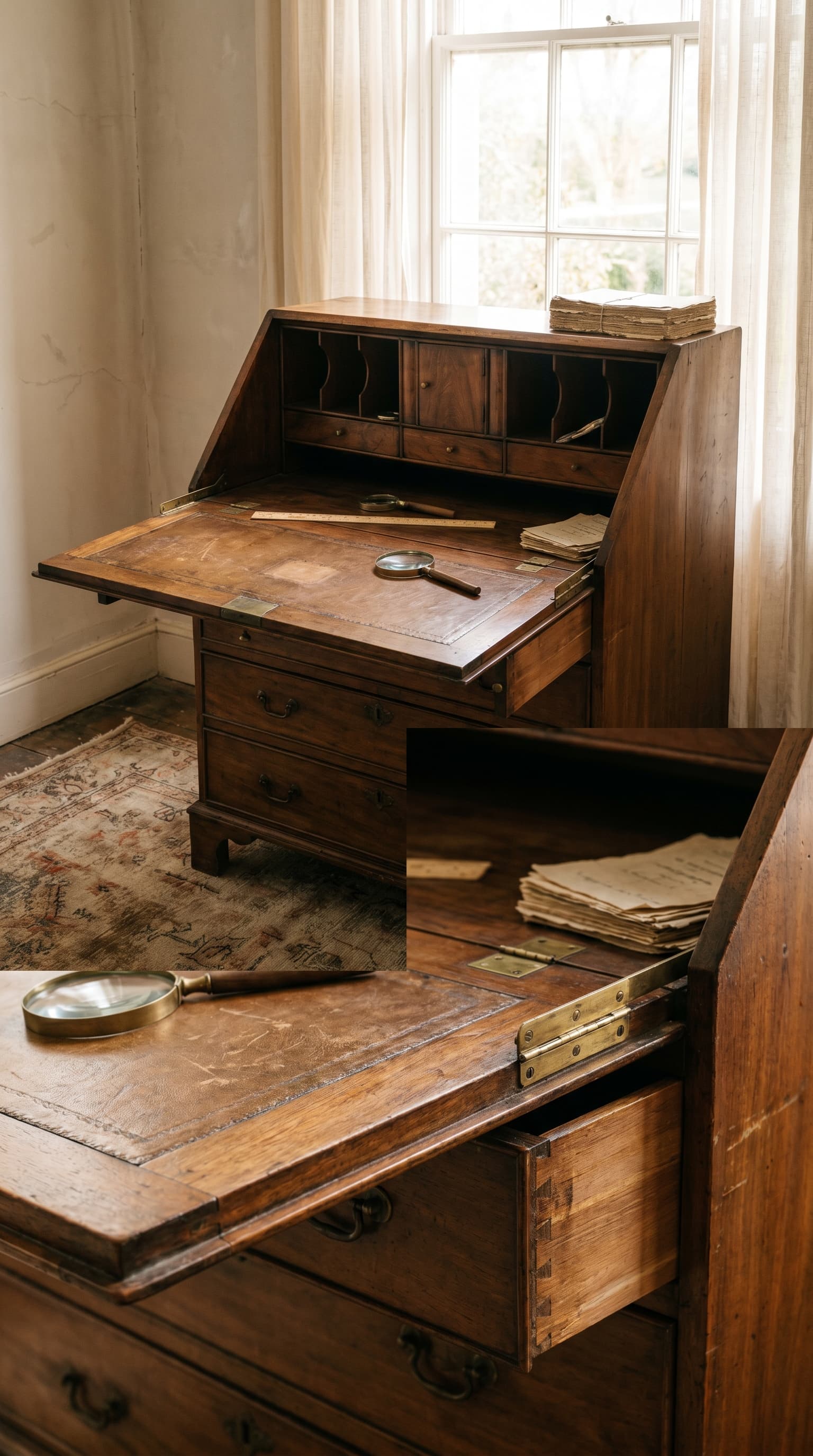
Antique Secretary Desk Identification: How to Date and Identify from Photos
Antique secretary desk identification starts with understanding that these versatile writing desks evolved over 300 years, from Georgian England through American Colonial and Victorian periods. Unlike simpler desk forms, secretaries combine a writing surface with storage—usually a hinged fall-front that opens to reveal compartmented interiors. That complexity gives you more dating clues, but also more chances for misidentification when period elements get mixed with later repairs or reproductions.
The key is knowing where to look and what details actually tell you something useful about age and origin.
What Clues Matter for Antique Secretary Desk Identification
Secretary desks pack a lot of information into their design. Focus on these elements that genuinely help with dating:
The fall-front mechanism is your first priority. Examine how the writing surface attaches and what supports it when open. Pre-1840 examples typically use wooden hinges or hand-forged iron butt hinges. The supporting slides (lopers) that pull out to hold the open desk should show hand-planing marks underneath and move in grooves cut directly into the case sides on earlier pieces. Machine-cut tracks or metal hardware suggest post-1850 construction.
Interior configuration matters enormously. Open that fall-front and study the arrangement of pigeonholes, small drawers, and document slots. Georgian and Federal-period interiors (1730-1830) feature architectural details—miniature columns, carved shells, shaped valances. The small drawer fronts often have delicate inlay or contrasting wood banding. Victorian examples (1840-1900) tend toward simpler, more utilitarian interiors with machine-cut dividers.
Hardware provides concrete dating evidence. Original brasses on secretary desks evolved from cast bail pulls with cotter-pin attachments (pre-1800) to stamped backplates with threaded posts (after 1840). Look for filled holes where earlier hardware was replaced—original pieces rarely have extra holes. Lock escutcheons on the fall-front should match the drawer pulls in style and patina.
Joinery and construction tell the truth about age. Get down low and photograph underneath. Hand-cut dovetails with irregular spacing indicate pre-1860 work. Circular saw marks (curved arcs) point to post-1830. Perfectly uniform machine dovetails mean 1890 or later. Check how the back panel attaches—handmade nails or wooden pegs suggest earlier construction than modern wire nails.
Wood and finish require careful study. Primary wood (what you see) and secondary wood (drawer sides, backs, interior parts) combinations follow regional patterns. American Federal secretaries often pair mahogany fronts with poplar or pine interiors. English pieces might use oak as secondary wood. Original finish shows natural aging—darkening in protected areas, wear on high-touch surfaces like the writing panel edges.
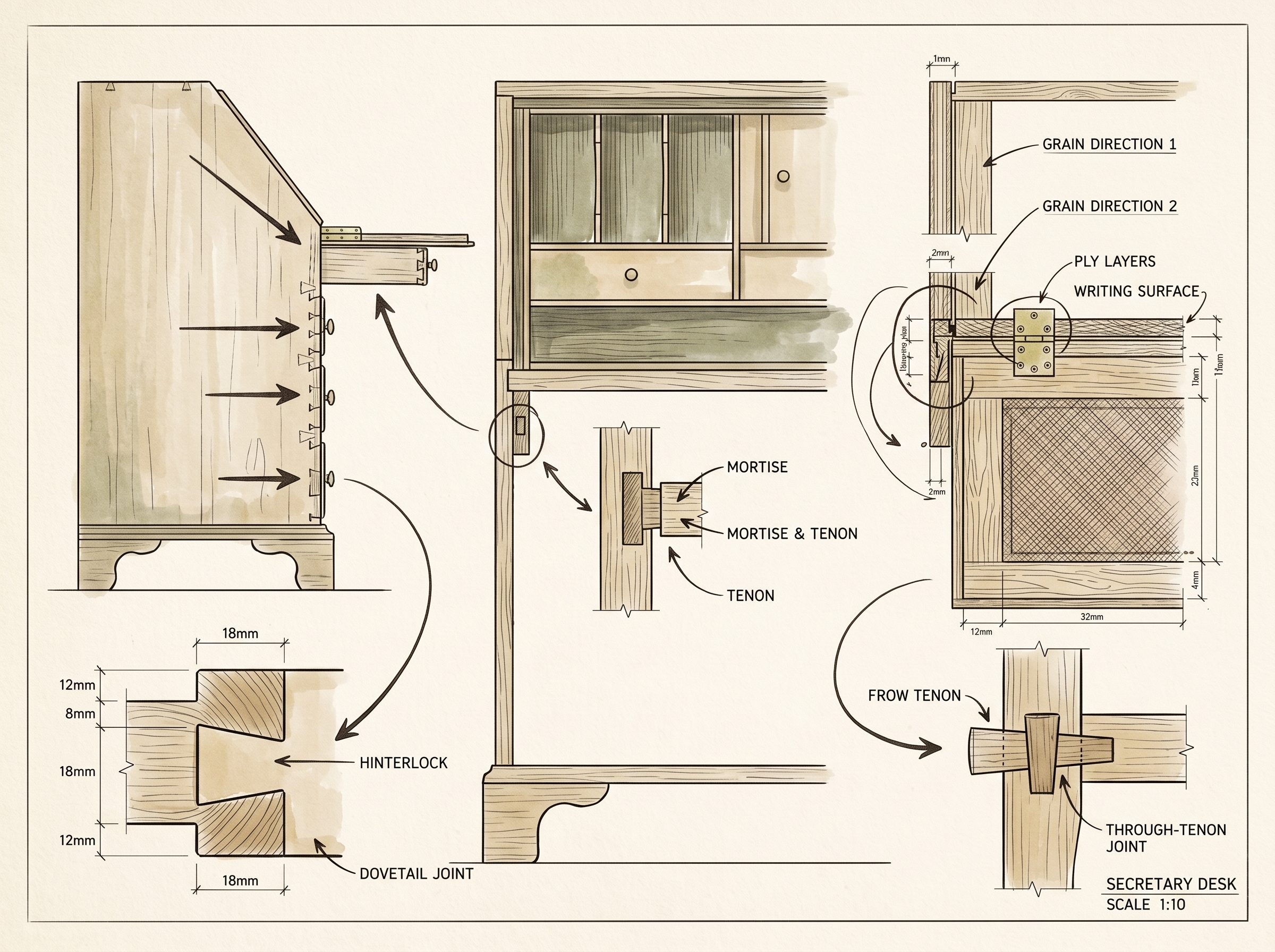
What Photos to Take for Accurate Identification
When documenting a secretary desk for identification, systematic photos beat random snapshots:
The fall-front closed, straight-on from the front, establishes overall form and proportion. Capture the full piece including any bookcase or cabinet section above.
The fall-front open, showing the entire interior layout. This single shot reveals pigeonhole configuration, small drawer arrangement, and decorative details that help narrow the period.
All hardware close-up—drawer pulls, hinges, lock escutcheons, and any keyholes. Photograph both front and back of removed hardware if possible. Original versus replacement hardware dramatically affects dating.
Joinery details underneath and inside. Flip those small interior drawers over and photograph the dovetails. Shoot up into the desk case from below to capture how the bottom attaches. These construction details often provide the most reliable dating clues.
The back panel shows construction methods clearly. Full-back photos reveal whether boards are hand-planed, how they're attached, and what tool marks remain.
Wood grain and patina in natural light. Photograph areas where finish has worn naturally versus protected sections that retain original color. These aging patterns help distinguish genuinely old pieces from artificially distressed reproductions.
Any maker's marks, labels, or stamps inside drawers, on the back, or underneath. Even fragmentary marks can identify makers and date pieces precisely.
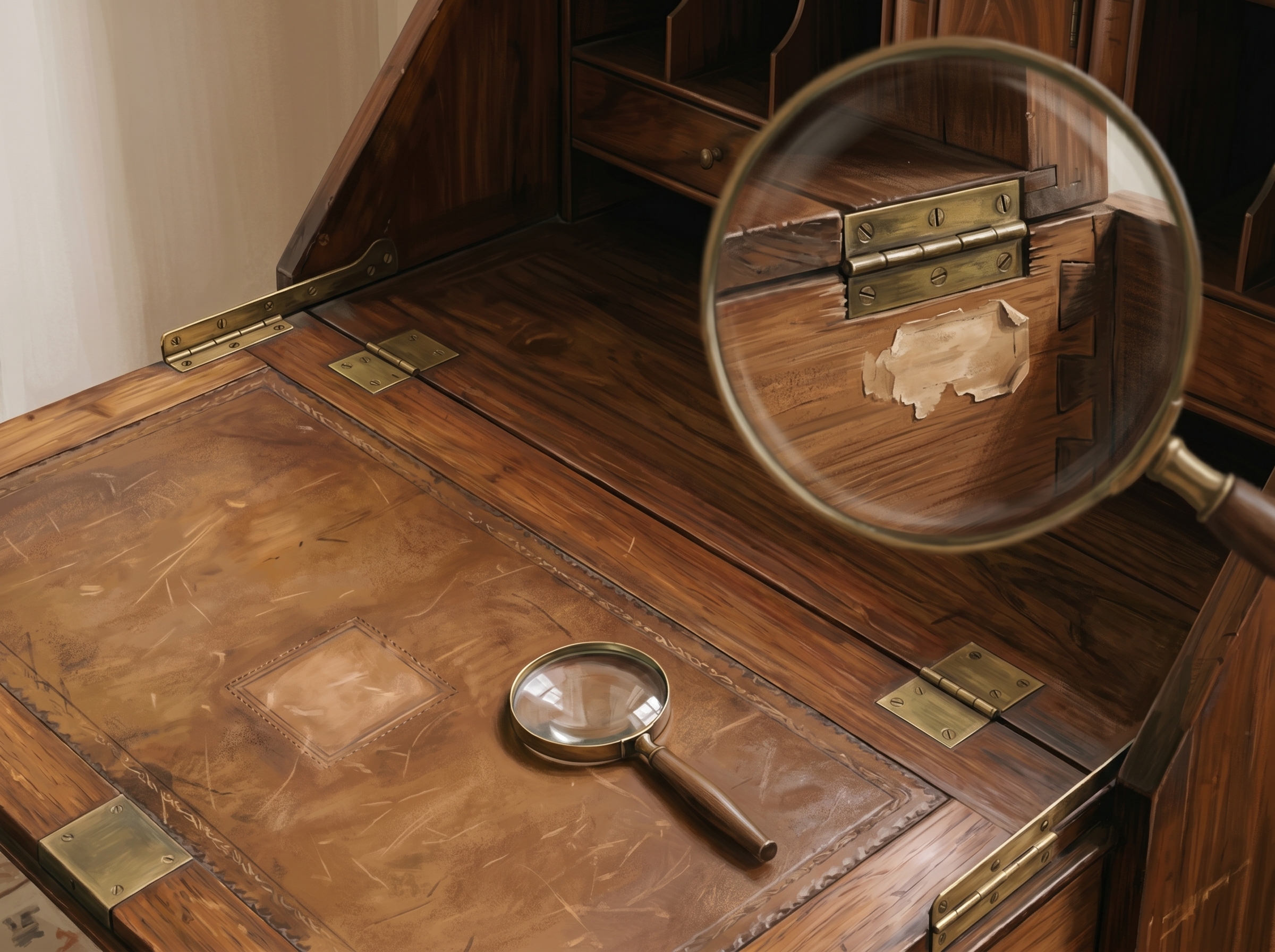
Common Misidentifications with Secretary Desks
Secretary desks get misidentified more often than simpler furniture forms, usually in these ways:
"Colonial" when actually Victorian—the most frequent error. Many 1870-1900 secretaries borrowed Georgian design elements but used machine construction. Check the joinery and hardware rather than just the style. Machine-cut dovetails and stamped brass pulls mean Victorian reproduction of earlier forms, not period pieces.
Calling married pieces original—secretaries often had bookcase tops added later or came from parts of two damaged pieces joined together. Mismatched wood grain, different patina between upper and lower sections, or filled holes where different hardware once mounted all suggest marriages. This doesn't necessarily mean fake, but affects value significantly.
Confusing Larkin or Sears catalog pieces with 18th-century work. Mail-order furniture companies produced thousands of secretary desks 1890-1930 that imitated earlier styles. These have collector value in their own right, but they're not Colonial-period antiques. Look for company labels, completely uniform construction, and quarter-sawn oak (very popular in catalog furniture, rare in 18th-century secretaries).
Dating by wood alone leads to errors. Mahogany, walnut, and oak all were used across multiple periods. A mahogany desk isn't automatically Federal-period, and oak doesn't guarantee earlier age. Construction methods matter far more than wood species for dating.
Mistaking good reproductions for originals—skilled 20th-century cabinetmakers made faithful copies using period techniques. These can be difficult to distinguish without examining multiple authentication factors together: patina, wear patterns, tool marks, hardware, and provenance.
What Tocuro Helps Resolve in Secretary Desk Identification
Pinning down a secretary desk's age and origin often requires sorting through contradictory signals—period hardware on a later case, authentic elements mixed with repairs, or regional variations that don't fit standard patterns.
Tocuro analyzes your photos to identify secretary desk types, estimate manufacturing periods, and provide context about construction details. The app recognizes fall-front mechanisms, interior configurations, and hardware styles across different periods and regions. You'll get an estimated value range based on current market signals—not a formal appraisal, but practical guidance drawn from actual sales data.
Upload photos of the closed desk, the open interior, hardware details, and joinery. The more perspectives you provide, especially of construction details underneath and inside, the more accurate the identification. Tocuro gives you 7 free identifications per day, with the count resetting daily, so you can photograph different details or compare multiple secretary desks without commitment.
For pieces with mixed signals or unusual features, Tocuro's analysis helps you understand which elements contribute to value and which aspects might indicate repairs, replacements, or later manufacture.
Ready to Identify Your Secretary Desk?
Whether you're considering a purchase, inherited a piece, or simply want to know what you own, start by photographing those key details: the fall-front interior, hardware, joinery, and construction. Each element tells part of the story.
Identify your secretary desk with Tocuro and get clear information about period, style, and estimated value range. The app analyzes your photos and provides context that helps you make informed decisions about your antique furniture.
Remember that even "ordinary" Victorian secretaries have value as functional antiques, while truly early examples with original interiors and hardware command serious collector interest. Knowing exactly what you have makes all the difference.
Photo identification
Identify Your Furniture
Use Tocuro to identify your item from a photo and get an estimated value range when market data is available.