
Antique Scanner App: How Photo ID Tools Work for Decor and Collectibles
This guide explains how antique scanner apps work, what you can identify from photos, and how to get the best results using Tocuro's photo-based identification tool.

What People Mean When They Search for an Antique Scanner App
You've picked up a porcelain vase at an estate sale, inherited a secretary desk, or found a bronze figurine at a flea market—and you want instant answers. The phrase "antique scanner app" suggests the same quick-scan experience you'd get with a barcode or QR code reader, but for furniture, decorative objects, and collectibles.
The reality: antiques don't have barcodes. What you actually need is a photo-based identification tool that reads visual details—style cues, maker's marks, construction methods, and decorative motifs—then matches them to known items and market patterns.
That's exactly what Tocuro does. You snap photos with your phone, upload them through the app, and get back identification details and estimated value ranges drawn from current market signals.
How Tocuro Works as Your Antique Scanner App
Tocuro doesn't scan in the literal sense—it analyzes photos. Here's the flow:
- •Take clear photos of your item from multiple angles: overall view, close-ups of marks or signatures, details like joinery or hardware, and the underside or back when accessible.
- •Upload through the app at tocuro.app/identify.
- •Receive identification including likely period, style, maker (if identifiable), materials, and estimated value range based on recent market activity.
This process works for a wide range of decor and collectible objects: furniture, ceramics, glassware, metalwork, lamps, mirrors, clocks, decorative accessories, and more.
The advantage over traditional research: you don't need to know the terminology or even what category your item falls into. The photo does the talking.
What You Get Free
Tocuro gives you 7 free identifications per day. That count resets every 24 hours, so you can use the tool consistently without upfront cost.
Each identification includes:
- •Name and category (e.g., "Art Deco brass table lamp," "transferware platter, Staffordshire")
- •Estimated date or period
- •Materials and construction details
- •Maker or pattern name when marks are visible
- •Value range based on recent comparable sales
This free access makes Tocuro useful whether you're researching a single inherited piece or working your way through a houseful of estate items over several days.
What Photo Quality Works Best for Antique Scanner Apps
Because identification depends entirely on visual analysis, photo quality directly affects accuracy. Here's what helps:
Overall shape and proportions
- •What to capture: Full view of the item, unobstructed, shot straight-on rather than at an extreme angle.
- •Why it matters: Proportions and silhouette are key identifiers for furniture styles and decorative object forms.
Maker's marks, signatures, and labels
- •What to capture: Close-up, in focus, with even lighting. If a mark is faint, try angling the light source.
- •Why it matters: A clear mark can instantly narrow identification to a specific maker, factory, or pattern.
Construction and material details
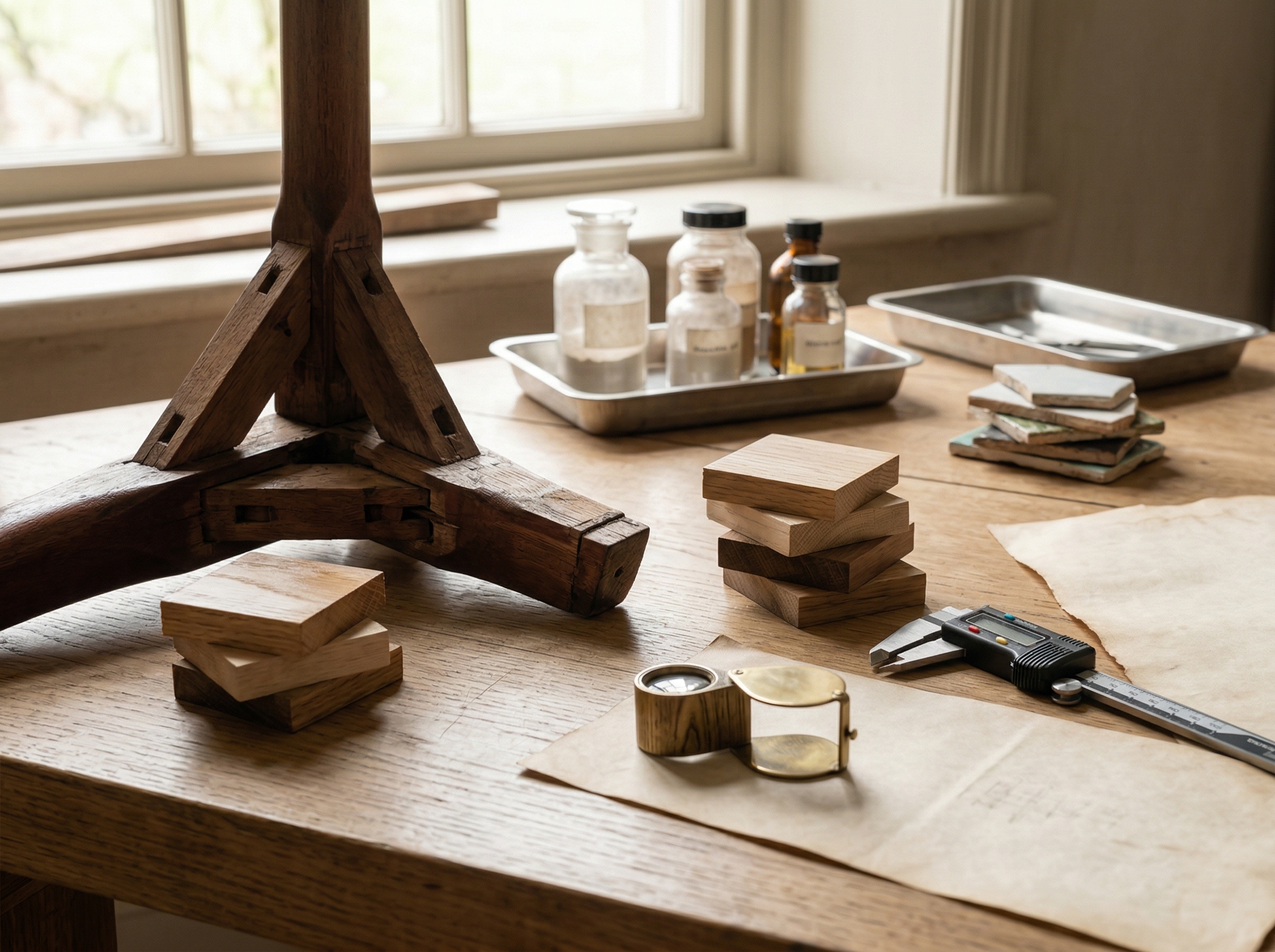
- •What to capture: Joinery on furniture (dovetails, mortise-and-tenon), glaze on ceramics, patina on metal, weave on textiles.
- •Why it matters: Construction methods and material characteristics help date items and distinguish originals from reproductions.
Hardware, feet, handles, and trim
- •What to capture: Close-ups of hinges, drawer pulls, escutcheons, finials, feet.
- •Why it matters: Hardware styles change over time and can confirm or contradict a suspected date.
Avoid:
- •Blurry images or extreme shadows
- •Photos taken from only one angle
- •Cluttered backgrounds that obscure the item's edges
- •Flash that washes out surface detail or creates harsh glare
Natural daylight near a window usually delivers the best results. If you're photographing indoors at night, use multiple light sources to reduce shadows.
Limitations and When to Seek Formal Expert Help
Tocuro is a powerful first step, but it has boundaries:
Photo-based identification works well for:
- •Identifying style, period, and likely maker
- •Estimating value ranges from market comparables
- •Spotting red flags (anachronistic materials, construction inconsistencies)
- •Giving you the vocabulary to research further
Photo-based identification has limits with:
- •Authenticity disputes: If you suspect a high-value piece may be a forgery or later copy, you need in-person inspection by a specialist who can examine materials under magnification, test finishes, and assess wear patterns.
- •Insurance or estate appraisals: Estimated value ranges are not formal appraisals. For legal, tax, or insurance purposes, hire a certified appraiser who will produce a written report with their credentials and methodology.
- •Rare or museum-quality items: If your piece appears to be exceptionally rare or valuable (think four figures and up), get a second opinion from a specialist in that category.
- •Items with no visible marks: Unmarked ceramics, generic furniture forms, and mass-produced decorative objects can be harder to pin down without provenance or additional context.
Tocuro gives you a confident starting point. If the stakes are high or the identification raises more questions, bring in a human expert for the next layer of analysis.
How Antique Scanner Apps Fit Into Your Collecting Workflow
Think of an antique scanner app like Tocuro as your first-response tool:
- •At estate sales and auctions: Snap photos on-site to get quick context before bidding.
- •Sorting inherited items: Identify dozens of pieces quickly to prioritize which need deeper research or formal appraisal.
- •Buying online: Verify seller descriptions by analyzing listing photos before you commit.
- •Curiosity and learning: Build your own visual reference library by identifying pieces you encounter in shops, shows, or friends' homes.
Over time, you'll develop an eye for details that matter—and you'll know when a piece is worth a deeper dive.
For a broader look at how photo-based tools work across categories, see our guide on how to identify antiques from photos. If you're focused specifically on furniture, check out how photo-based tools help you name and date furniture.
Start Scanning Your Antiques Today
You don't need specialized equipment or years of study to get answers about the objects in your home. Tocuro turns your phone into an antique scanner app that identifies items, provides historical context, and estimates value—all from photos you take in seconds.
Try 7 Free IDs Today and see what your finds are really worth.
Photo identification
Identify Your Item
Use Tocuro to identify your item from a photo and get an estimated value range when market data is available.