
How to Identify Antique Mirrors from Photos: A Guide to Dating and Authentication
Antique mirror identification relies on examining the glass surface for foxing patterns, checking backing materials and attachment methods, and evaluating frame construction details. This guide explains what visual clues matter most and which photos help experts date your mirror accurately.
How to Identify Antique Mirrors from Photos: A Guide to Dating and Authentication
Antique mirror identification starts with understanding that the glass itself tells a different story than the frame. While reproduction frames can be convincing, the mirror's surface, backing, and attachment methods reveal age in ways that are harder to fake. Whether you've inherited a gilt-framed piece or found a simple pine-framed mirror at an estate sale, knowing what details matter helps you understand what you actually own.
What Clues Matter in Antique Mirror Identification
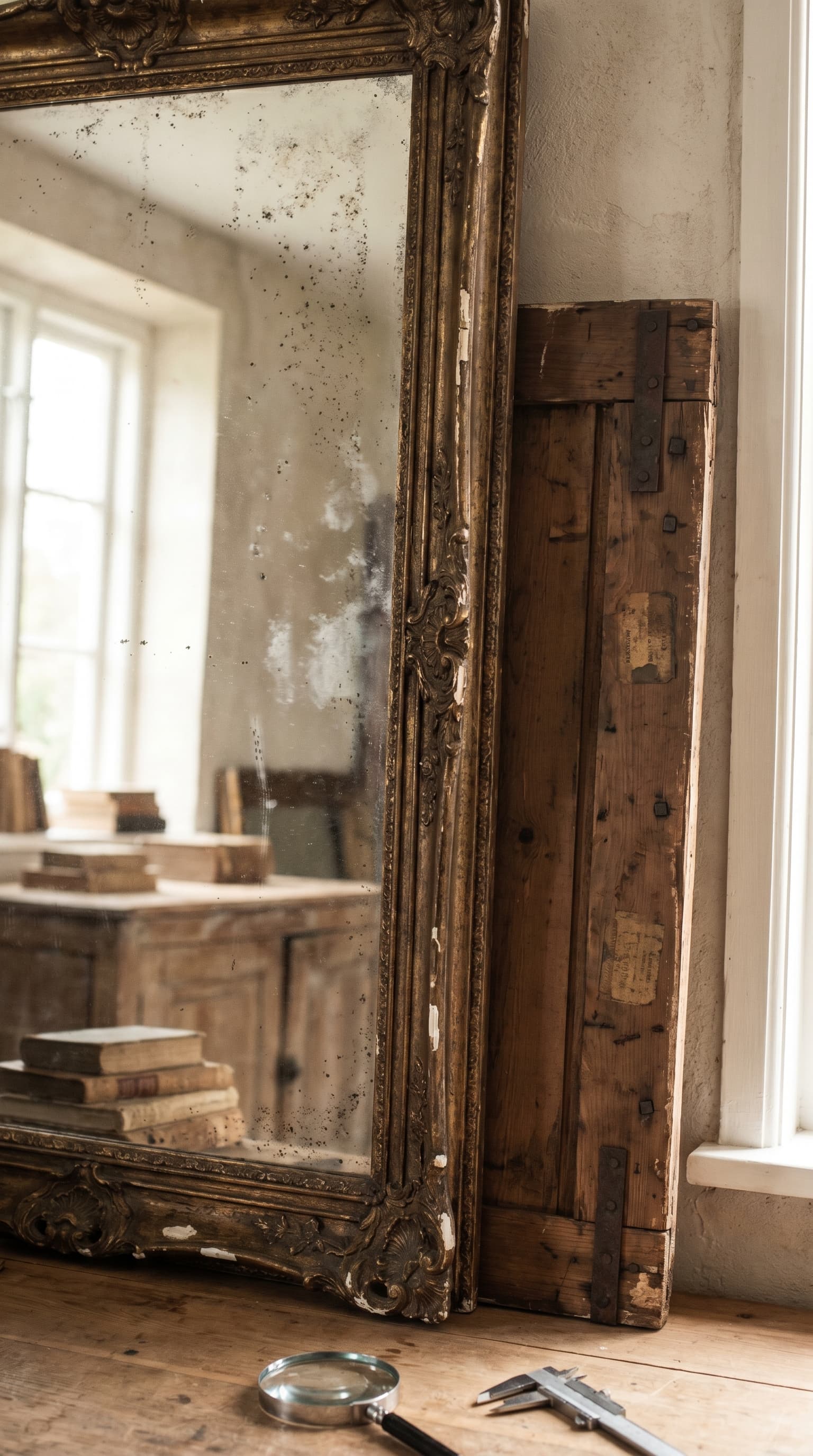
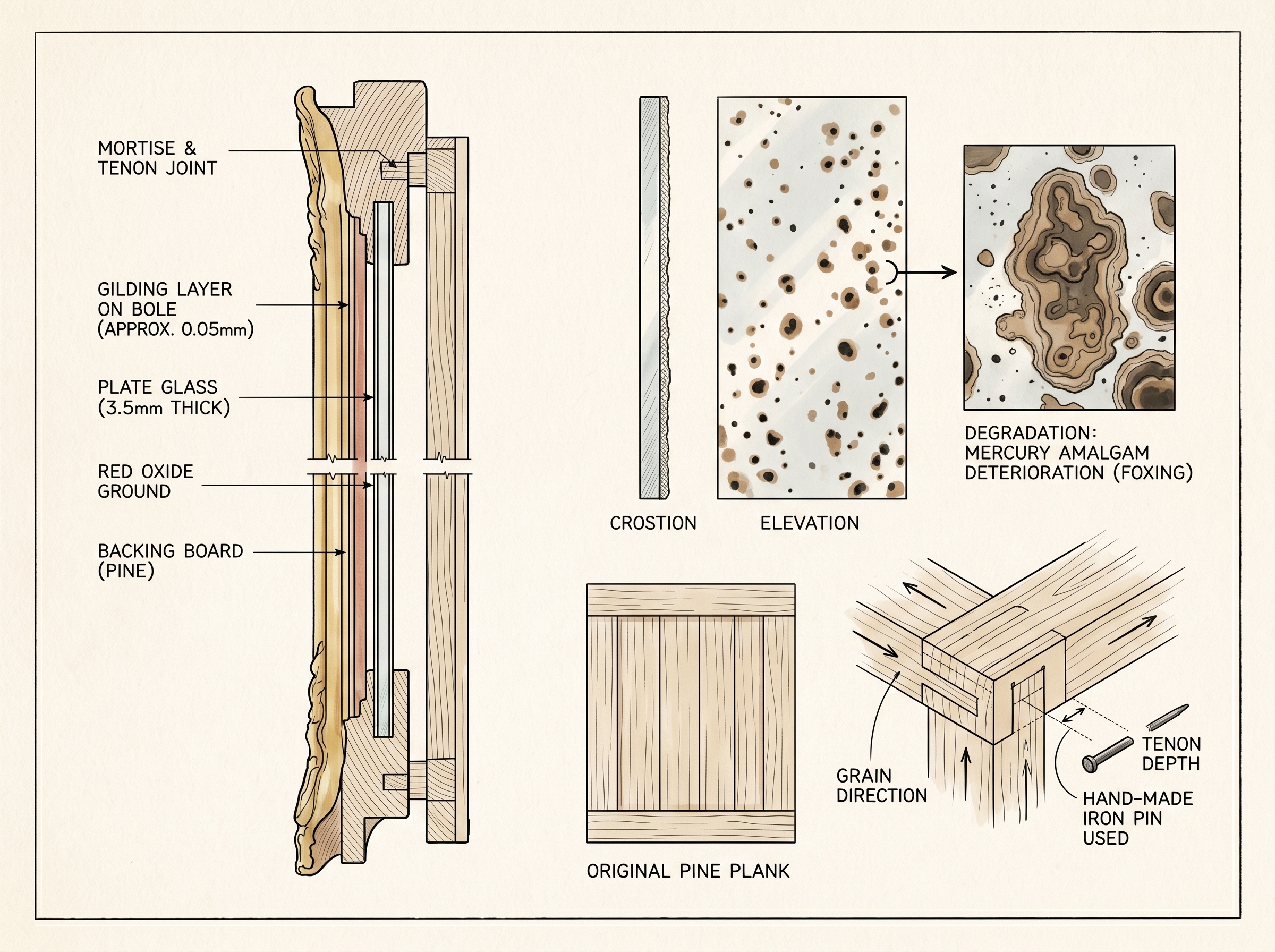
The glass surface provides your strongest dating evidence. Genuine antique mirrors develop foxing—those brown or black spots that appear where the silvering breaks down. This spotting pattern happens naturally over decades and looks organic, with irregular edges and varied sizes. Modern distressed mirrors often have too-uniform spotting or deliberately placed marks that look suspiciously artistic.
Waviness in the glass is another tell. Pre-1850s mirrors were hand-blown, creating subtle distortions you'll notice when light moves across the surface. Machine-rolled glass from the late 1800s shows more uniformity but still has gentle variations that perfectly flat modern glass lacks. Hold your phone's flashlight at an angle to the surface—antique glass creates rippling reflections.
The silvering method changed over time. Before the 1840s, mirrors used mercury amalgam on the back of the glass, creating a warmer, slightly cloudy reflection compared to modern mirrors. Victorian-era mirrors transitioned to silver nitrate backing, which produces clearer reflections but still develops that characteristic foxing. The edge condition of the silvering matters too—if you can see where it meets the frame, antique silvering typically shows ragged, natural deterioration rather than clean, laser-cut edges.
Backing materials reveal construction period. Early mirrors often have nothing but the silvered glass itself, sometimes with paper or fabric glued directly to the back. By the mid-1800s, wooden backing boards became common, attached with small nails or tacks. The type of wood, nail style, and attachment pattern all provide dating clues. Modern mirrors typically use composition board, cardboard, or foil-backed materials that didn't exist before the 20th century.
Frame construction follows the same principles as other antique furniture identification. Hand-carved details, genuine gilding that shows wear patterns, and joinery methods appropriate to the claimed period all matter. A frame with modern screws holding 18th-century-style carving isn't what it appears to be.
What Photos to Take for Antique Mirror Identification
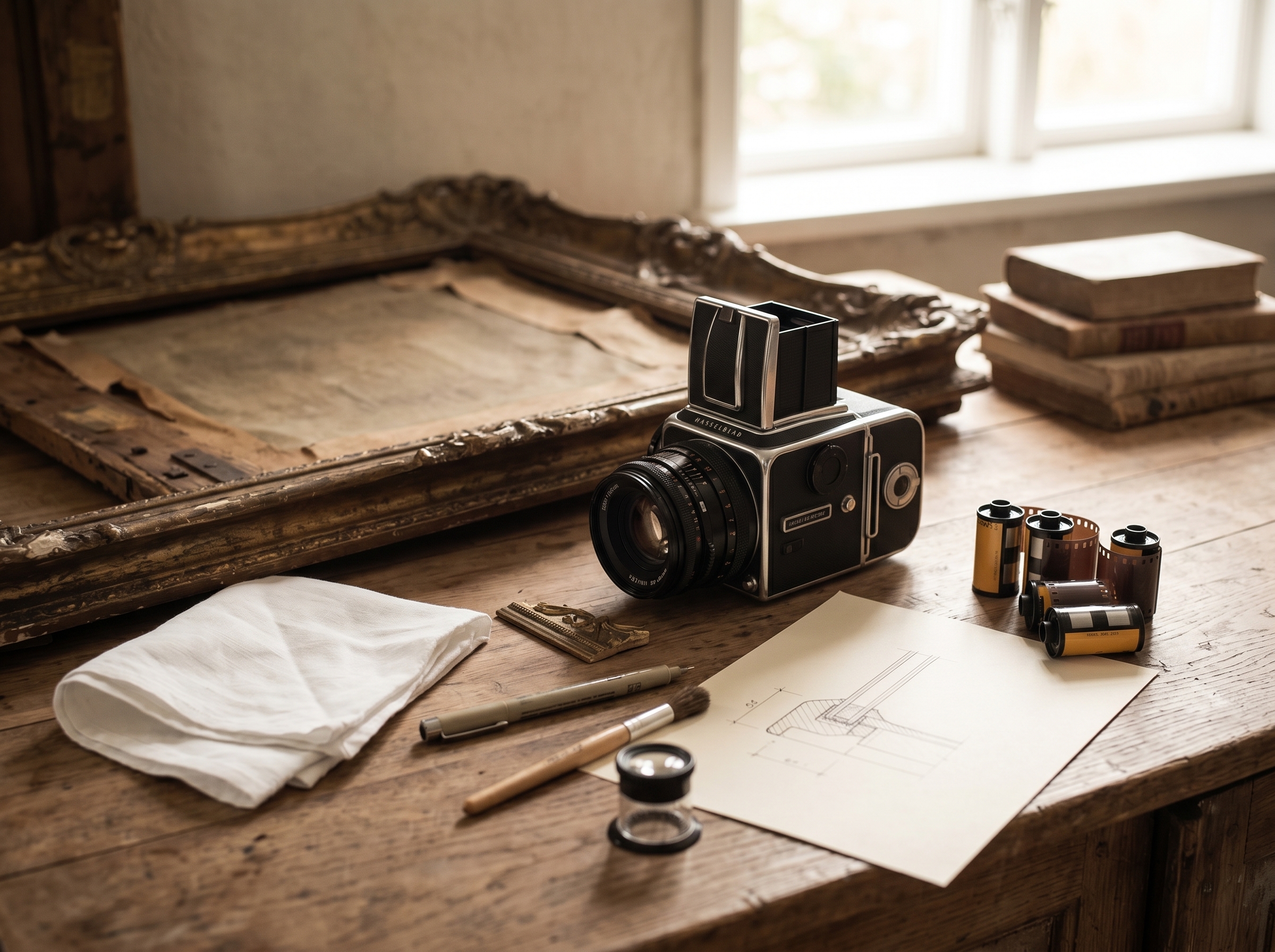
For effective identification, start with a straight-on photo of the entire mirror in good natural light. This establishes proportion, frame style, and overall condition. Then take a close-up of the glass surface at a 45-degree angle where light reveals foxing patterns and waviness. These surface characteristics often tell you more than the frame does.
Photograph the back thoroughly. Capture the backing material, any paper labels or stamps, and how the mirror is attached to the frame. Take close-ups of nail or screw heads—their style and patina provide dating evidence. If there's exposed silvering at the edges, photograph where it meets the glass and any deterioration patterns.
Frame details need dedicated shots. Photograph joinery at corners, showing how pieces connect. Capture carving or decorative elements in raking light that emphasizes depth and tool marks. If there's gilding, photograph areas where it's worn away—genuine gold leaf wears differently than modern gold paint. Show any hardware like hanging hooks or backing clips, which changed considerably over decades.
For mirrors with decorative elements, photograph any maker's marks, labels, or stamps. Check the backing board, the frame itself, and even under hanging hardware. Sometimes chalk marks or penciled dates appear on backing boards where they weren't meant to be seen.
Don't forget condition documentation. Photograph any damage, repairs, or replaced elements. Resilvered glass still has value, but knowing it's been redone matters for accurate identification and pricing.
Common Misidentifications
People frequently assume ornate gilded frames mean "very old," but elaborate gilt mirrors were reproduced constantly throughout the 20th century. A rococo-style frame could be Georgian, Victorian revival, or made last year. The frame style alone rarely provides reliable dating without examining construction details and the glass itself.
Foxing gets misunderstood both ways. Some collectors think any spotting proves great age, but mirrors from the 1920s-1940s can show significant foxing by now. Conversely, people sometimes assume heavily foxed mirrors are damaged reproductions rather than recognizing natural aging. The pattern and location of foxing, combined with other factors, tells the real story.
Mirror plate thickness causes confusion. Thick glass feels substantial and old, but thickness alone doesn't indicate age. Some Victorian mirrors used relatively thin glass, while reproduction pieces sometimes feature thick plate specifically to feel "antique." Weight and heft aren't reliable dating tools.
People often mistake resilvered or replaced mirror glass for original. If the glass looks too perfect—no waviness, no foxing, crystal-clear reflections—it may be new glass in an old frame. This doesn't make the piece worthless, but it's not an intact antique mirror. Check if the silvering edge looks suspiciously clean and modern where it meets the frame rabbet.
Paper labels create false confidence. "Antique" or "Empire" written on old-looking paper doesn't guarantee anything. Labels were added by dealers, previous owners, or inheritance documentation that repeated family stories rather than established facts. Some reproduction companies even added deliberately aged labels to new pieces.
What Tocuro Can Help Resolve in Antique Mirror Identification
Mirror dating requires balancing multiple factors—glass characteristics, backing materials, frame construction, and period-appropriate details. When you're looking at photos trying to determine if your gilt overmantel mirror is 1780s Georgian or 1890s revival, it helps to have expert analysis.
Tocuro's photo-based identification examines all the visible clues together. Upload images of the glass surface, backing, frame construction, and any marks or labels, and you'll get identification that considers how these elements work together to indicate age and origin. The service provides estimated value ranges based on current market signals, though these are not formal appraisals.
This matters particularly when frame style alone proves misleading. A mirror might have Victorian bones with later resilvering, or an Edwardian frame with original glass that makes it more valuable than similar pieces with replacements. Understanding what's original and what's been restored helps you make informed decisions whether you're buying, selling, or just trying to understand what's been hanging in your hallway.
Tocuro can identify mirrors alongside other items in your home, from secretary desks to glass bottles, helping you build a complete picture of what you own.
Get Your Mirror Identified
If you have a mirror you're trying to date and evaluate, photograph the glass surface, backing, frame details, and any marks, then upload them to Tocuro for identification. You'll get analysis of what period and style your mirror represents, what the construction details reveal, and what similar pieces are worth in today's market.
Understanding whether you own a genuinely old mirror or a later reproduction doesn't just satisfy curiosity—it affects value, helps you care for the piece appropriately, and informs decisions about restoration or resale. The details visible in good photos can tell you more than you might expect.
Photo identification
Identify Your Furniture
Use Tocuro to identify your item from a photo and get an estimated value range when market data is available.