
Antique Jewelry Appraisal Online: Fast Estimates vs. Formal Valuations
Most people searching for antique jewelry appraisal online need a realistic market value range, not a formal document. This guide explains what affects jewelry value, when a photo-based estimate works, when you need a certified appraiser, and how to use Tocuro for a fast first step.
What You're Really Looking For When You Want an Antique Jewelry Appraisal Online
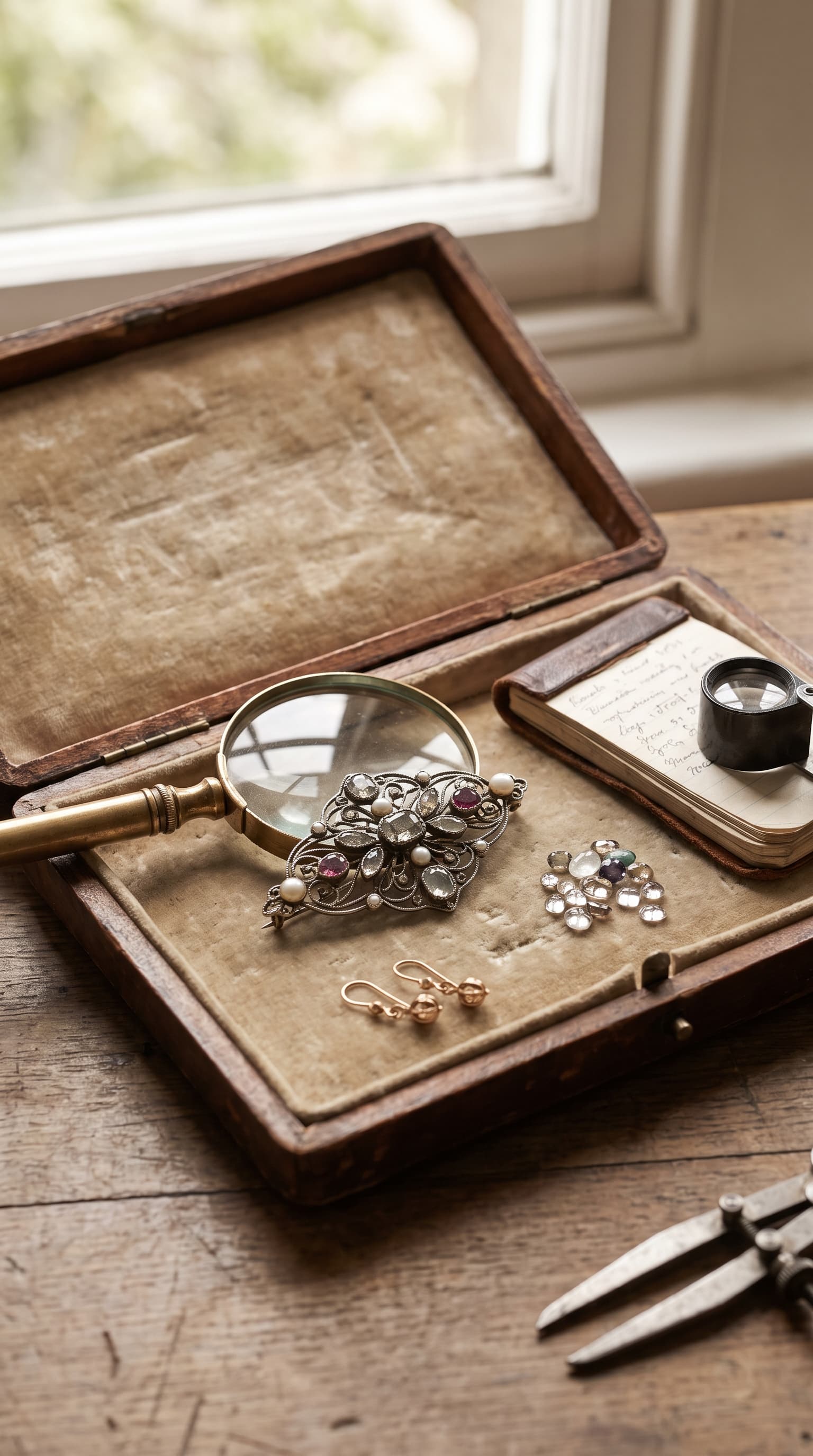
When most people search for an antique jewelry appraisal online, they're not actually looking for the formal insurance document an appraiser creates. They want to know what a piece is worth—what they could sell it for, what it might cost to replace, or whether that inherited ring is actually valuable.
There's a big difference between a quick market value estimate and a formal appraisal, and understanding which you need saves time and money. A formal appraisal costs $75–$300+ and involves an in-person examination by a certified gemologist or appraiser. A value estimate gives you a realistic price range based on current market signals—comparable sales, condition, materials, and maker—often from just a few photos.
For most situations, a fast estimate is the right first step. You can decide later if you need the formal paperwork.
What Affects the Value of Antique and Vintage Jewelry
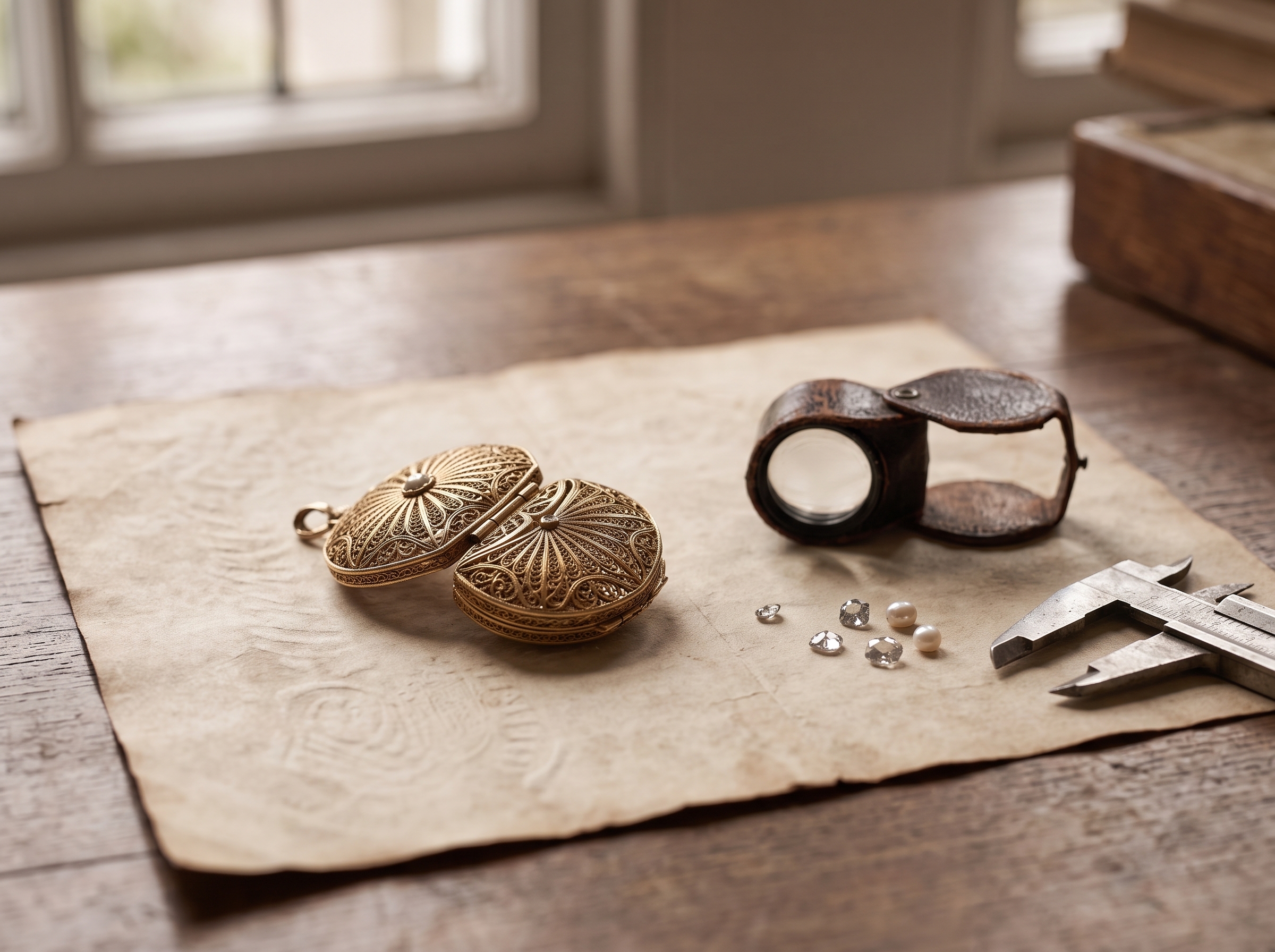
Jewelry prices depend on a mix of intrinsic materials, craftsmanship, maker, age, and condition. Here's what drives value:
Metal and gemstone content form the baseline. Gold weight and karat matter. Platinum costs more than silver. Natural gemstones (especially diamonds, rubies, sapphires, and emeralds) add significant value, while synthetic or simulated stones don't. Learning to read gold jewelry marks helps you confirm metal quality quickly.
Maker and signatures can multiply value dramatically. Signed pieces from Tiffany, Cartier, Van Cleef & Arpels, or Georg Jensen command premiums well beyond their material worth. Even lesser-known makers from specific eras—Arts & Crafts guilds, Art Deco designers—bring collector interest. Our guide on costume jewelry identification covers how to spot maker marks on non-precious pieces, which can still be quite valuable.
Period and style influence desirability. Victorian mourning jewelry, Art Nouveau flowing lines, bold Retro 1940s pieces, and Mid-Century modern designs each have dedicated collectors. Knowing the era helps set realistic expectations.
Condition and originality matter enormously. Missing stones, repairs, alterations, or replaced clasps reduce value. Original boxes, papers, or provenance add to it.
Market trends shift. Certain styles fall in and out of fashion. Estate buyers, auction results, and online sales all signal what people will actually pay today—not what a piece "should" be worth.
Antique Jewelry Appraisal Online: Estimate vs. Formal Appraisal
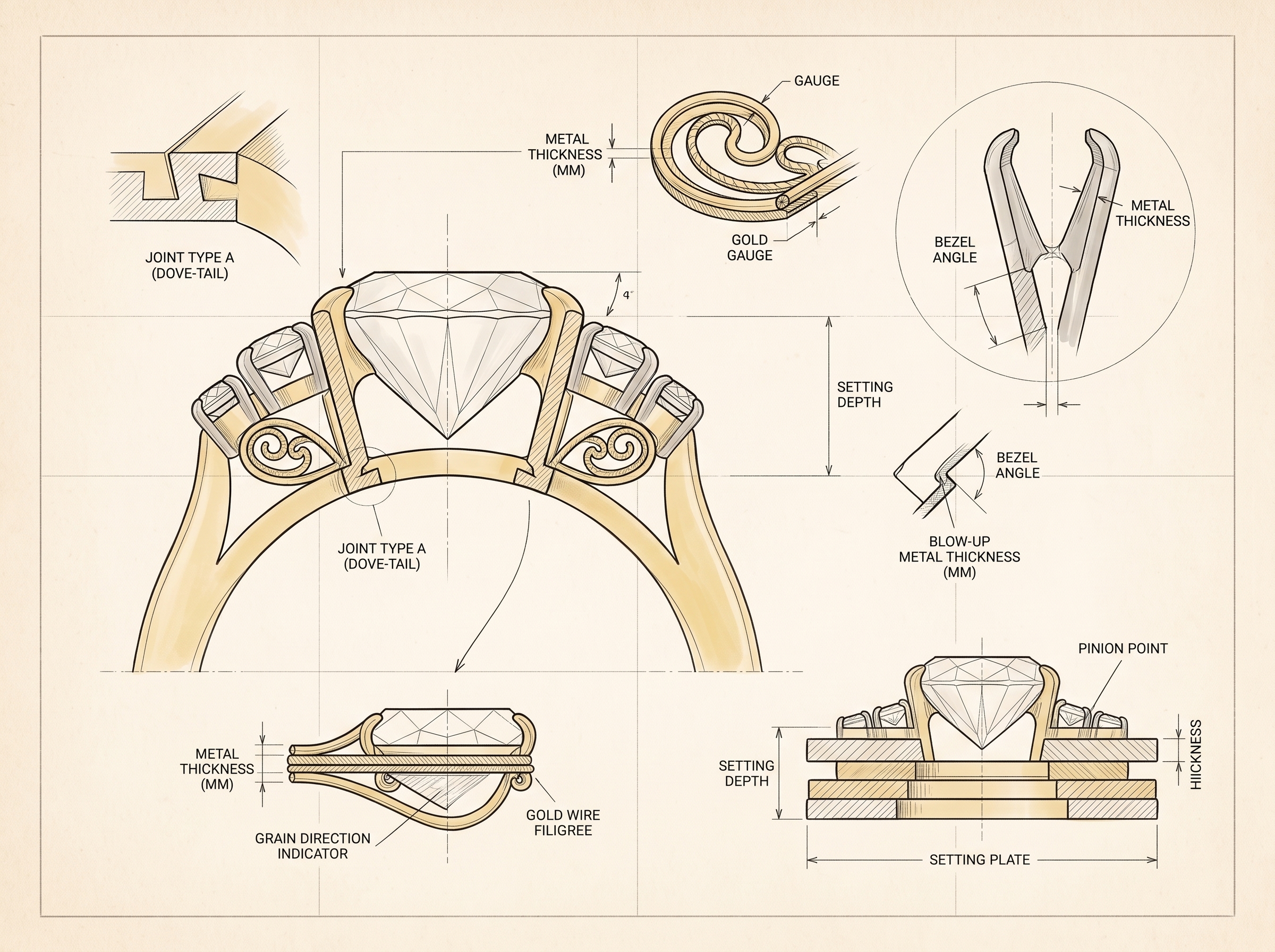
The words get used interchangeably, but estimates and appraisals serve different purposes.
What a Formal Appraisal Provides
- •Purpose: Official documentation for insurance, estate settlement, divorce, or donation tax deductions
- •Cost: Typically $75–$300 per piece, sometimes hourly rates of $150–$400
- •Process: In-person examination by a certified appraiser (GIA, ASA, or similar credentials)
- •Result: Detailed written report with gemstone grading, metal testing, measurements, photographs, and replacement value (often higher than resale value)
What an Online Jewelry Value Estimate Provides
- •Purpose: Understanding market value for selling, buying, or curiosity
- •Cost: Free to $20–$50 depending on service
- •Process: Photo-based analysis using comparable sales, maker databases, and market trends
- •Result: Estimated value range based on what similar pieces actually sell for, not a legally binding document
Most people need the estimate first. It tells you whether a formal appraisal is worth the investment.
When a Photo-Based Estimate Works (And When It Doesn't)
An online antique jewelry appraisal—meaning a photo-based value estimate—works well when:
You're deciding whether to sell. Knowing the realistic market range helps you set expectations and choose the right sales channel.
You inherited pieces and want to sort value from sentiment. Not every inherited ring needs a $200 appraisal. A quick estimate identifies which pieces justify further investment.
You're curious about flea market or estate sale finds. Before you spend money on formal evaluation, confirm there's something worth evaluating.
You need a ballpark for insurance riders. While insurers require formal appraisals for valuable pieces, an estimate helps you decide which items merit coverage.
A photo estimate has limits. It can't:
- •Definitively confirm whether gemstones are natural, lab-created, or simulated (requires gemological testing)
- •Guarantee metal purity without hallmark visibility or testing
- •Detect extremely skilled fakes or reproductions
- •Provide legally binding valuations for insurance claims or legal proceedings
For high-value pieces (generally over $2,000–$5,000), pieces you plan to insure, or items central to estate settlements, get the formal appraisal. For everything else, start with photos.
When You Actually Need a Certified Appraiser
Schedule an in-person appointment with a certified jewelry appraiser when:
You need insurance documentation. Insurers require formal appraisals for scheduled items, usually updated every 2–3 years.
You're handling estate divisions or legal matters. Courts and executors need certified appraisals with professional credentials backing them.
The piece appears extremely valuable. If your estimate suggests a piece is worth over $5,000, or you suspect rare gemstones or significant maker signatures, expert examination protects you from costly mistakes.
You're considering major financial decisions. Don't use an estimate alone to accept or reject an inheritance, make a large purchase, or donate items for tax deductions.
Authentication is critical. Suspected fakes, unsigned pieces attributed to famous makers, or jewelry with murky provenance all benefit from expert scrutiny.
Look for appraisers with credentials from the Gemological Institute of America (GIA), American Society of Appraisers (ASA), or International Society of Appraisers (ISA). Avoid appraisers who offer to buy the jewelry they're evaluating—that's a conflict of interest.
How to Use Tocuro for Your Antique Jewelry Appraisal Online
Tocuro gives you a practical first step: photo-based identification and market value estimates that help you make informed decisions without upfront cost.
Here's how it works:
Take clear photos. Capture the entire piece, close-ups of any marks or signatures, clasps, stone settings, and construction details. Good lighting against a plain background helps. For tips on what to photograph, see our guide on how to identify vintage jewelry.
Upload to Tocuro. You get 7 free identifications per day, and the count resets daily. The tool analyzes your photos against market signals, comparable sales, and maker databases.
Review your estimated value range. Tocuro provides ranges based on actual market activity—not replacement value or retail pricing. The estimate is not a formal appraisal, but it reflects what similar pieces sell for in current conditions.
Decide your next step. If the estimate suggests significant value, you can pursue a formal appraisal. If it's modest, you might sell directly or simply enjoy knowing what you have.
Tocuro handles more than just fine jewelry. Brooches, costume jewelry, and pieces with unclear origins all benefit from quick identification.
The process takes minutes, not days. You avoid appointment scheduling, shipping fragile items, or paying upfront fees before knowing whether a piece warrants professional attention.
Start with a Photo, End with Clarity
You don't need a formal appraisal for every piece of jewelry you inherit, find, or consider selling. Most situations call for a realistic market value estimate—a clear sense of what collectors and buyers actually pay.
An antique jewelry appraisal online, done right, gives you that clarity. It separates valuable pieces from sentimental ones, helps you price fairly, and guides decisions about insurance, sales, or further evaluation.
When you're ready to find out what your jewelry is worth, Tocuro offers a fast, practical starting point. No appointments, no fees for your first seven pieces each day, just honest value ranges based on real market data.
Upload a Photo for a Fast Estimate and see what you're working with. You can always pursue a formal appraisal later—but most of the time, you won't need to.
Photo-based estimate
Estimate Your Jewelry Value
Use Tocuro to identify your item from a photo and get an estimated value range when market data is available.