
Antique Glass Bottle Types: A Visual Guide to Identifying Bottle Styles
A practical guide to recognizing and naming antique glass bottle types, from medicine and bitters bottles to flasks and soda bottles, with visual classification tips and common style confusions.
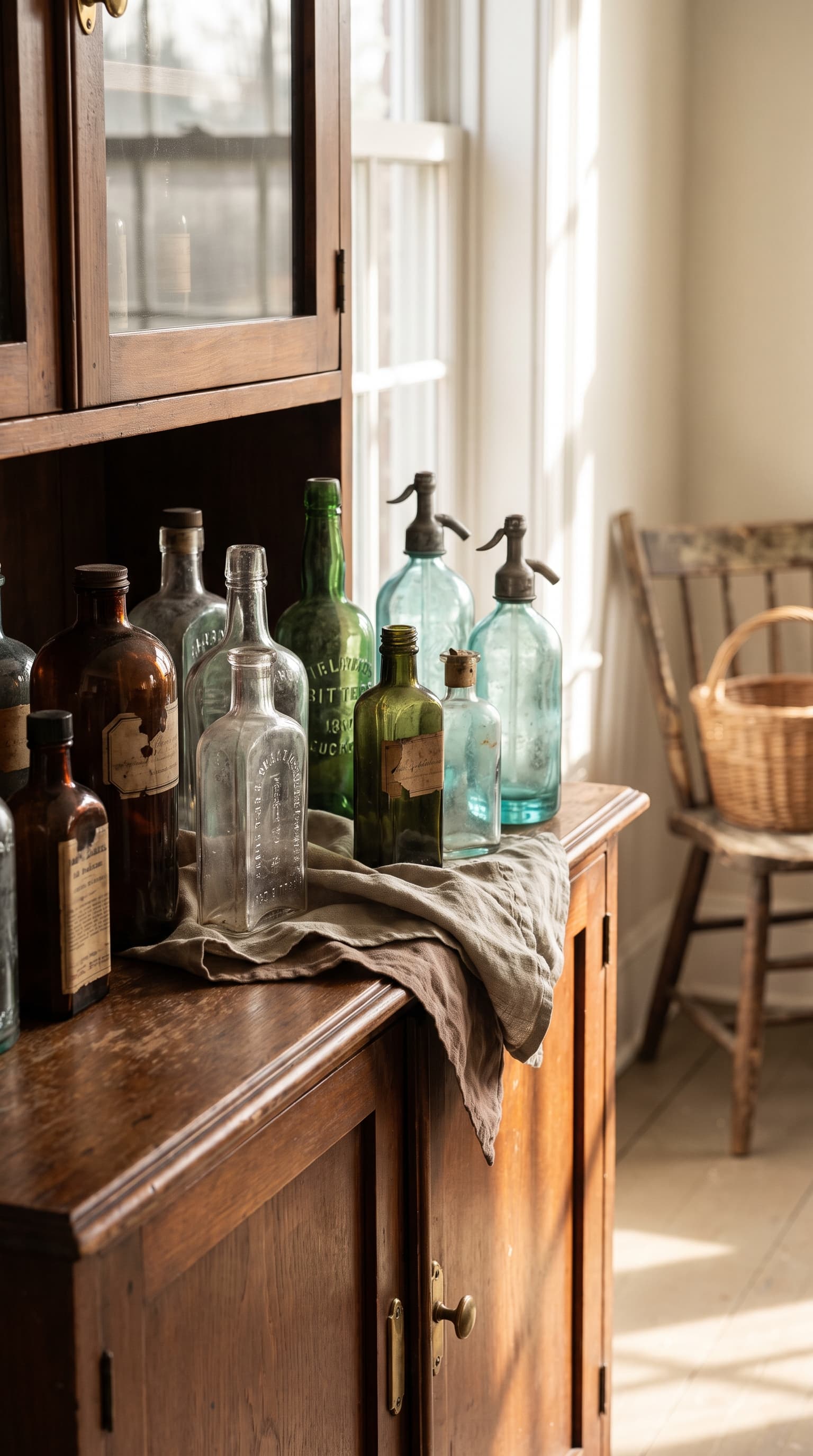
Antique Glass Bottle Types: A Visual Guide to Identifying Bottle Styles
When you're staring at an old bottle wondering whether it's a medicine bottle, a bitters, or something else entirely, you're trying to identify its antique glass bottle type. Collectors, diggers, and estate sale hunters all face the same challenge: bottles look similar until you know what separates one category from another. Understanding antique glass bottle types helps you name what you've found, research its history, and gauge its collectibility.
This guide walks you through the major bottle categories, what makes each type recognizable, and how to avoid the most common mix-ups.
What You're Actually Trying to Name
Bottles get categorized by their original function, not just their shape. A tall cylinder might be a medicine bottle, a condiment bottle, or a household chemical container depending on subtle details. The goal is to match your bottle to its historical use—medicine, spirits, food, household, cosmetic, or beverage—so you can research manufacturers, date ranges, and value.
Here are the most common antique glass bottle types:
- •Medicine bottles: rectangular or cylindrical, often amber or aqua, embossed with patent medicine names or pharmacy details
- •Bitters bottles: distinctive shapes (cabin, barrel, figural), amber or olive glass, marketed as medicinal tonics with alcohol content
- •Flasks: flat, pocketable, often with decorative embossing or historical portraits
- •Soda and mineral water bottles: heavy glass, blob tops or Hutchinson stoppers, embossed with bottler names
- •Fruit jars: wide mouth, threaded or ground lip, clear or aqua glass
- •Ink bottles: small, often cylindrical or conical, with narrow necks
- •Whiskey and spirits bottles: cylindrical or square, applied tops, clear or amber
- •Milk bottles: wide mouth, embossed dairy names, usually clear
- •Poison bottles: cobalt blue, bright green, or amber with embossed skulls or ridges to warn by touch
Each type has telltale features that separate it from similar bottles.
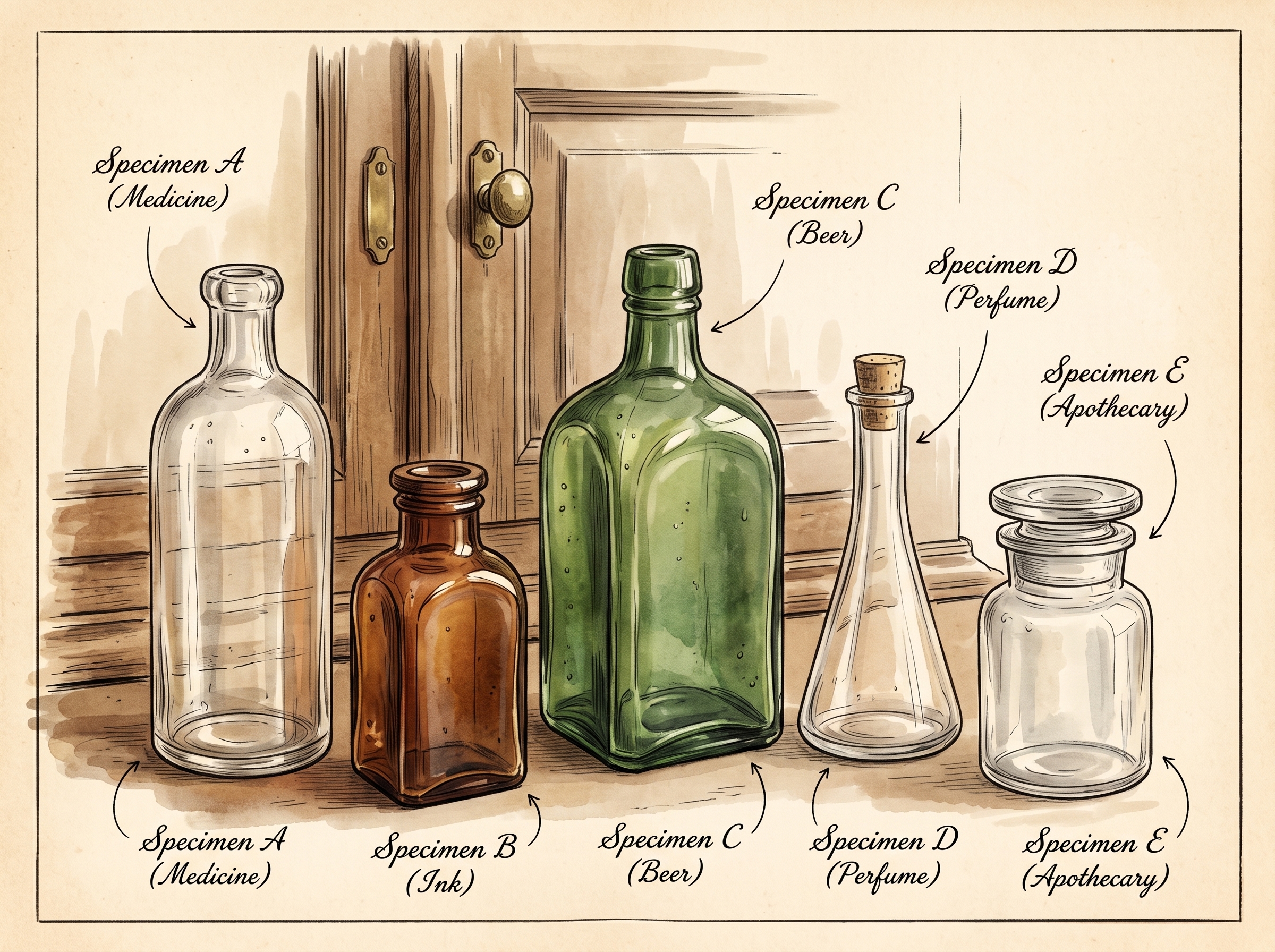
Visual Classification Checklist for Antique Glass Bottle Types
When examining a bottle, work through these visual cues to narrow down the type:
Mouth and closure style: Patent medicine bottles often have tooled or applied lips. Soda bottles feature blob tops, crown caps (post-1892), or internal screw threads. Fruit jars have ground rims or glass lids with wire bails. Milk bottles have wide, rounded mouths.
Body shape and proportions: Bitters bottles stand out with their unusual silhouettes—log cabins, barrels, lady's legs. Flasks are flat and curved to fit a pocket. Ink bottles are squat and small. Medicine bottles are typically tall and narrow, while poison bottles often have triangular or coffin-shaped cross-sections.
Embossing and labeling: Most 19th- and early 20th-century bottles were embossed with product names, locations, or patent dates. Medicine bottles name the remedy or pharmacist. Soda bottles list the bottler and town. Bitters bottles advertise the brand. The embossing location (front panel, shoulder, base) and style (script, block letters, ornate frames) can all help identify the type.
Color and glass quality: Amber, cobalt, and olive green glass often indicate medicine, bitters, or poison bottles—colors that protected contents from light. Aqua or "ball blue" glass is common in soda bottles, fruit jars, and patent medicines. Clear glass became standard after 1900. Bubbles, uneven thickness, and pontil marks suggest pre-1870 production.
Base markings: Embossed maker's marks, mold numbers, or symbols on the base can pinpoint manufacturers and date ranges. Numbers alone often indicate mold cavity or batch codes. Some bottle types (like milk bottles) frequently show dairy names on the base.
Size and capacity: Miniature bottles (under 3 inches) are often sample medicines, bitters, or spirits. Large bottles (over 12 inches) may be carboys, demijohns, or bar bottles. Standard sizes—pint, quart, half-gallon—appear across multiple types, so size alone doesn't confirm category.
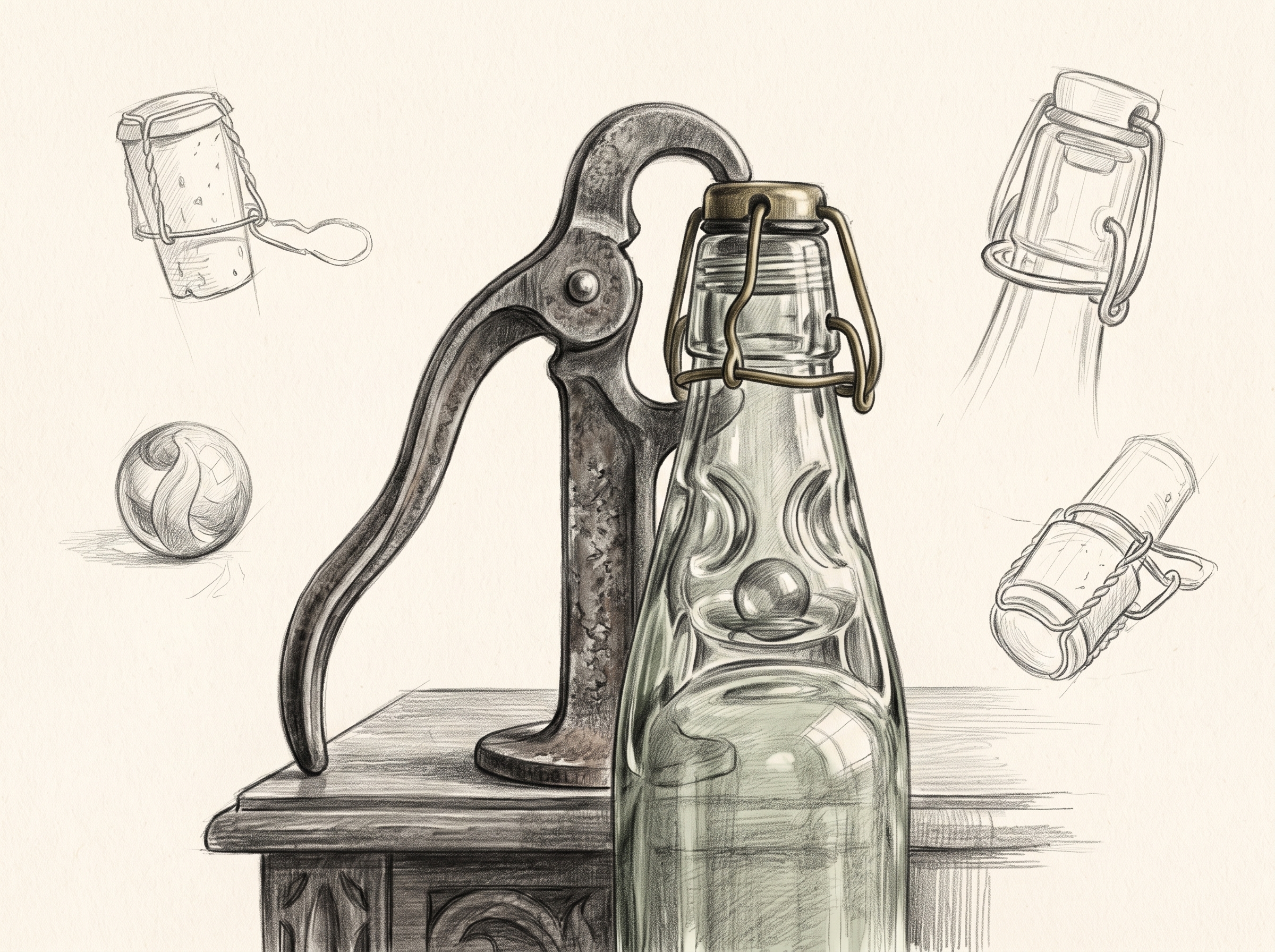
Common Antique Glass Bottle Type Confusions
Medicine vs. extract bottles: Both are often tall, cylindrical, and amber. Look for product embossing. Extract bottles (vanilla, lemon) usually say "extract" or "flavoring." Patent medicines claim curative properties and may list ingredients or doses.
Bitters vs. whiskey: Bitters bottles were legally sold as medicine despite high alcohol content. They tend to have fancier shapes and medical claims embossed on the glass. Whiskey bottles are straightforward cylinders or flasks without health claims.
Soda vs. beer: Both use heavy glass and crown caps, but beer bottles are typically taller, narrower, and amber or brown. Soda bottles are often aqua, have embossed town names, and may feature blob tops or Hutchinson stoppers in earlier examples.
Poison vs. medicine: Poison bottles were designed to prevent accidental ingestion. They use warning colors (cobalt, emerald green) and tactile cues (raised ribs, hobnails, skull embossing). Medicine bottles in similar colors lack these safety features.
Fruit jars vs. storage jars: Fruit jars have closure systems for home canning (wire bails, zinc lids, glass inserts). Storage jars have simple cork or screw caps and lack the embossed patent dates or brand names (Ball, Mason, Atlas) that identify canning jars.
Flasks vs. pocket bottles: True flasks are curved, flat, and portable. "Pocket bottles" might include small medicine or cologne bottles that fit in a pocket but aren't designed with the same flattened profile.
How to Use Photo Identification to Narrow Down Antique Glass Bottle Types
Photos reveal the details you need to classify a bottle, but only if you capture the right angles.
Front and side profiles
- •What to capture: Full-body shots showing height, width, and overall silhouette
- •Why it matters: Bottle type often hinges on proportions and distinctive shapes—bitters bottles look nothing like medicine bottles in profile
Embossing and labeling
- •What to capture: Close-ups of all embossed text, especially product names, locations, and patent dates
- •Why it matters: Embossing identifies specific manufacturers, brands, and date ranges, confirming whether a bottle is medicine, soda, or something else
Mouth and closure
- •What to capture: Straight-on and angled shots of the lip, threads, and any closure hardware
- •Why it matters: Closure style is a primary classification marker—blob tops mean soda, screw threads mean fruit jars, applied lips suggest pre-1900 medicines
Base markings
- •What to capture: Clear shot of the base showing maker's marks, mold numbers, or symbols
- •Why it matters: Base marks often reveal the glass manufacturer and production era, which narrows down the bottle type and age
Color and glass texture
- •What to capture: Photos in natural light showing true color, bubbles, and surface texture
- •Why it matters: Color and glass quality indicate age and function—cobalt poison bottles, amber bitters, aqua sodas all follow patterns
When you photograph these details and want expert input on your bottle's type, try Tocuro's photo identification tool. Upload clear images of your bottle and get classification help based on the features above.
Putting Antique Glass Bottle Types to Work
Once you've identified your bottle type, you can research specific manufacturers, regional bottlers, and production timelines. Medicine bottles open doors to patent medicine history. Bitters bottles lead to colorful advertising claims and now-defunct brands. Soda bottles connect to local bottling companies and regional distribution. Each type has its own collector community, reference books, and valuation trends.
If you're still uncertain after checking the visual cues—or if your bottle has unusual features that don't fit standard types—photo identification can save hours of research. Tocuro helps you identify glass bottles from photos, giving you a clearer starting point for research and valuation. The app provides estimated value ranges based on market signals, though these estimates aren't formal appraisals. You get 7 free identifications per day, and the count resets daily, so you can work through a collection or estate find without upfront costs.
For more detailed guidance on dating and authenticating bottles once you know the type, see our companion guide on antique bottle identification.
Understanding antique glass bottle types transforms a pile of old glass into a collection with names, stories, and context. Whether you're digging, buying, or inheriting bottles, knowing the difference between a bitters and a medicine bottle—or a soda and a beer—makes all the difference.
Photo identification
Identify Your Bottle
Use Tocuro to identify your item from a photo and get an estimated value range when market data is available.