
Antique Furniture Value Estimate: Photo-Based Ranges vs. Formal Appraisals
Understanding the value of antique furniture starts with knowing what 'value' actually means for your situation—whether you're selling, insuring, or simply curious. This guide explains what affects furniture prices, how photo-based estimates differ from formal appraisals, and when each approach makes sense.
What You Actually Mean by Antique Furniture Value Estimate
When you ask "What's my antique furniture worth?" you're usually asking one of three different questions. If you're thinking about selling a dresser or sideboard, you want to know what someone will actually pay—the market value. If you inherited a dining set and need insurance, you're looking for replacement value, which tends to run higher. And if you're just curious about that Victorian chair in the corner, you want a ballpark figure without hiring an appraiser.
Most people start with curiosity or a potential sale in mind. You don't need a $300 appraisal report to list something online or decide whether to keep it. You need a reliable range based on what similar pieces have sold for recently. That's where an antique furniture value estimate comes in—a practical starting point that tells you whether you're looking at $50, $500, or $5,000.
The difference matters because furniture is one of the hardest categories to price from memory or guesswork. A mahogany table from 1920 and one from 1880 can look nearly identical but sell for vastly different amounts. Condition, maker, and even regional demand shift the number significantly.
What Affects Antique Furniture Value
Furniture prices depend on a mix of factors that you can often assess from good photos:
Age and period matter, but not always in the direction you'd expect. A 1780 Chippendale chair can command thousands, but a 1920s oak dining table often sells for less than a 1960s midcentury credenza. Style trends and scarcity drive the market more than age alone.
Maker and provenance add significant value when you can document them. A signed Stickley piece, a labeled Heywood-Wakefield chair, or furniture with a traceable ownership history fetches multiples of unsigned equivalents. Original labels, stamps, and maker's marks are worth hunting for on the backs, undersides, and inside drawers.
Condition and originality separate the valuable from the projects. Original finish, intact hardware, and structural soundness matter enormously. Refinished pieces often lose 30–50% of their value compared to examples with original patina. Missing veneer, replaced legs, or amateur repairs can cut value even further. On the flip side, honest wear and age-appropriate patina usually don't hurt value—they confirm authenticity.
Style and form influence demand. Certain forms—secretaries, highboys, Welsh dressers—appeal to collectors willing to pay premiums. Plain oak tables and generic Victorian side chairs flood the market and sell slowly. Regional styles also play a role: Pennsylvania Dutch furniture commands more in the Mid-Atlantic, while California midcentury modern thrives on the West Coast.
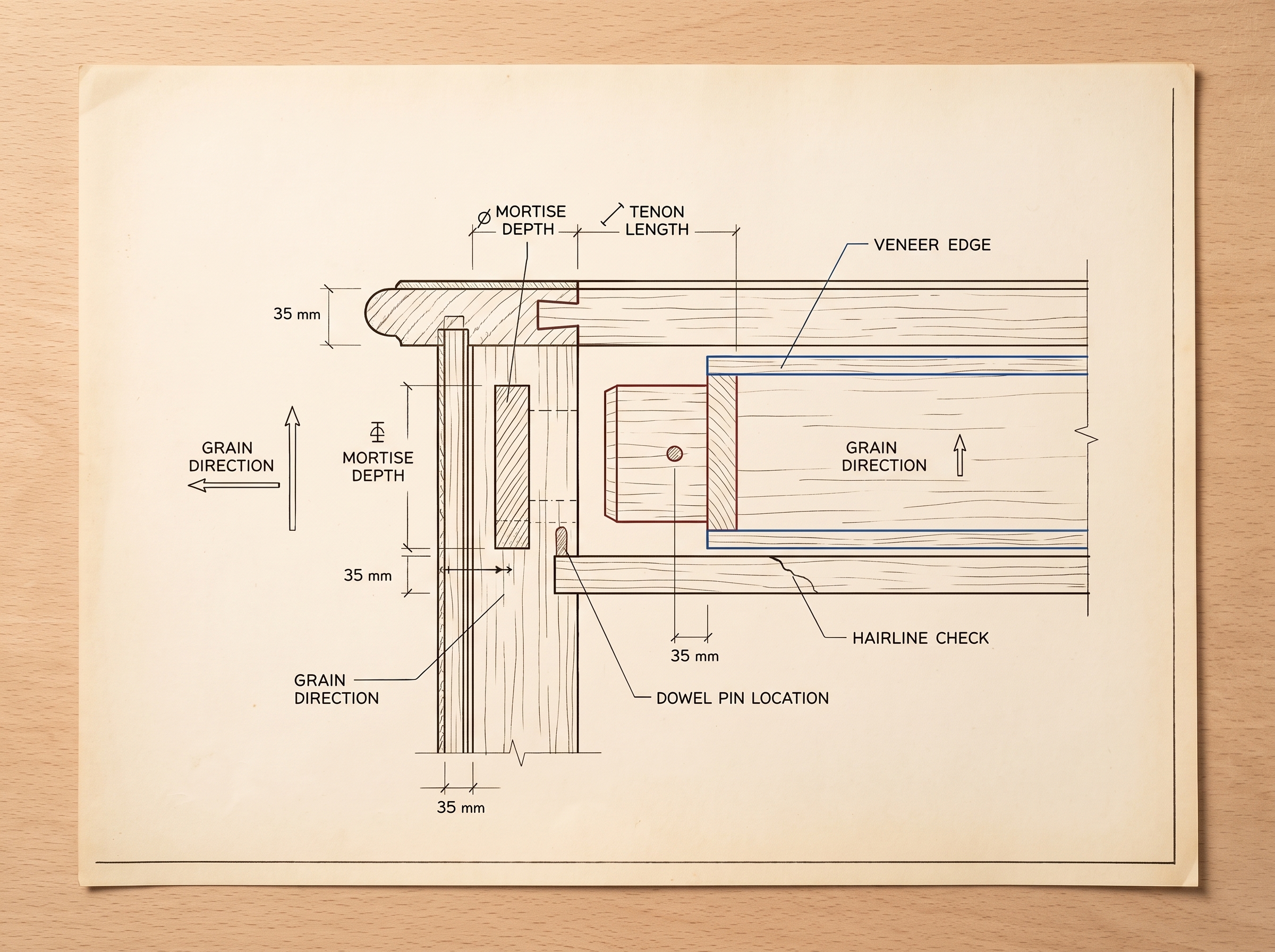
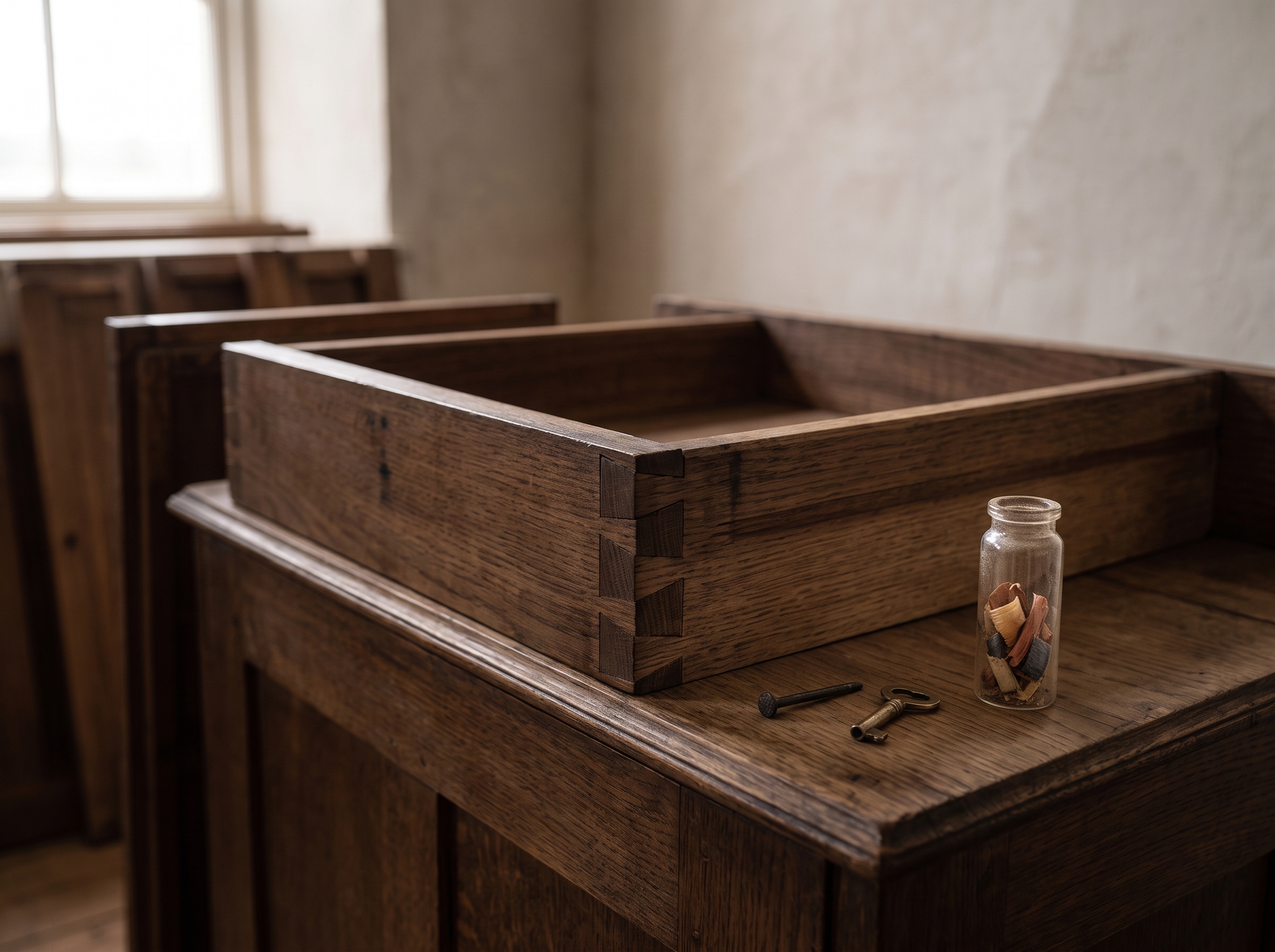
Wood type and construction give clues to both age and value. Solid mahogany, walnut, and cherry typically bring higher prices than oak or pine, though Arts and Crafts oak and painted country pine can be exceptions. Hand-cut dovetails, mortise-and-tenon joinery, and hand-planed surfaces signal earlier, often more valuable work. For more on reading construction details, see Antique Bed Frame Identification and Antique Desk Identification.
Current market trends shift constantly. Brown furniture—traditional mahogany and walnut case pieces—has softened significantly over the past decade, while midcentury modern continues strong. What sold briskly in 2010 might sit unsold in 2025, and vice versa.
Antique Furniture Value Estimate vs. Formal Appraisal
A photo-based estimate and a formal appraisal serve different purposes, and understanding the distinction saves time and money.
Purpose and Use
- •Estimate: Quick market range for selling, curiosity, or initial decision-making
- •Appraisal: Legal documentation for insurance, estate settlement, tax deduction, or litigation
An estimate tells you what the market will likely bear right now. An appraisal provides a defensible, detailed valuation with the appraiser's credentials behind it. Insurance companies and the IRS require appraisals, not estimates.
Cost and Speed
- •Estimate: Often free or low-cost, delivered in minutes to hours
- •Appraisal: Typically $100–$500+ per piece, takes days to weeks
For most situations—selling online, deciding whether to move a piece, or satisfying curiosity—paying for an appraisal doesn't make sense. You need speed and a reasonable range, not a notarized document.
Level of Detail
- •Estimate: Focuses on comparable sales, general attribution, and market signals
- •Appraisal: Includes detailed condition report, provenance research, measurements, and methodology explanation
Appraisers examine pieces in person, measure them, inspect joinery under magnification, and often consult auction records and reference libraries. Estimates rely on photos and descriptions, which means they work best when you provide clear images of maker's marks, construction details, and any damage.
Accuracy and Liability
- •Estimate: A good-faith range based on available information; not a guarantee
- •Appraisal: A professional opinion the appraiser stands behind, with errors and omissions insurance backing it
No one can give you an exact number from photos alone. Wood grain, weight, drawer construction, and other tells require handling the piece. But a solid estimate narrows the range enough to make informed decisions.
When a Photo-Based Estimate Is Enough vs. When You Need an Expert
A photo-based antique furniture value estimate works well when:
- •You're listing furniture for sale online or at auction and need a realistic asking price
- •You inherited pieces and want to know what's worth keeping, selling, or donating
- •You're considering a purchase and want to check if the price is fair
- •You're curious about value but have no immediate plans requiring documentation
- •The piece appears to be worth under $2,000 based on initial research
You should invest in a formal, in-person appraisal when:
- •You need insurance coverage for valuable furniture in your home
- •You're settling an estate and executors or beneficiaries require documented values
- •You're donating furniture worth more than $5,000 and need a tax deduction
- •The piece may be a significant or rare example worth $5,000 or more
- •You're involved in a legal matter—divorce, probate dispute, or insurance claim—where value is contested
- •You're considering selling at a major auction house, which may require professional pre-sale evaluation
For midrange pieces—say, a $500 to $2,000 sideboard—a photo estimate usually gives you what you need. If it turns out to be more valuable than expected, you can always get an appraisal later. Starting with an estimate avoids spending appraisal fees on furniture that turns out to be worth less than the appraisal itself.
Similar approaches work across categories: Antique Jewelry Appraisal Online and Coin Value Estimate follow the same estimate-first, appraise-if-needed logic.
How to Use Tocuro for Your First Furniture Value Check
Before you pay for an appraisal or spend hours searching sold listings, start with a quick photo-based check. Tocuro identifies antique and vintage furniture from photos and provides estimated value ranges based on current market signals—not formal appraisals, but reliable enough to make decisions.
Here's how to get the most useful results:
Take clear, well-lit photos of the whole piece from multiple angles. Shoot straight-on rather than at odd angles. Capture any maker's marks, labels, stamps, or signatures on the back, underside, or inside drawers. Photograph joinery details—dovetails, mortise-and-tenon joints, wood grain—and any damage, repairs, or alterations. The more information visible in your photos, the more accurate the estimate.
Upload your photos to Tocuro, which will identify the style, period, and likely maker when possible, then generate a value range based on comparable sales, market trends, and condition factors. The process takes seconds, and you get seven free identifications per day, with the count resetting daily. No expertise required, no waiting for a response.
Use the estimate to guide your next steps. If the range suggests your dresser is worth $200–$400, you can list it confidently without further research. If the range comes back $3,000–$5,000, that's your signal to consider a formal appraisal before selling or to update your insurance. If you're thinking about buying, the estimate helps you spot overpriced listings and negotiate fairly.
Tocuro handles more than furniture, so you can check watches, jewelry, and other collectibles the same way—one tool for the whole estate cleanout or collection review.
Upload a Photo and Get a Value Range in Seconds
You don't need to guess what your antique furniture is worth or pay for an appraisal before you know if it's even necessary. Upload a photo to Tocuro, get a reliable market estimate based on real sales data, and decide your next move with confidence. Whether you're selling, insuring, or just satisfying curiosity, start with the information that actually helps.
Photo-based estimate
Estimate Your Furniture Value
Use Tocuro to identify your item from a photo and get an estimated value range when market data is available.