
Antique Furniture Condition Grading: How Condition Affects Value
Condition grading is the single most important factor in antique furniture pricing. This guide explains how dealers and appraisers grade condition, what each grade means for value, and when you need a professional assessment versus a quick estimate.
Antique Furniture Condition Grading: How Condition Affects Value
When you're trying to figure out what your antique furniture is worth, the piece's condition matters more than almost anything else. Two identical Victorian chairs from the same maker can have wildly different values—one might sell for $800, the other for $150—based purely on condition. Understanding antique furniture condition grading helps you set realistic expectations whether you're buying, selling, or just curious about what's in your house.
What "Value" Really Means for Antique Furniture
Most people asking about value actually want to know one of three things: what they could sell a piece for quickly, what a dealer might pay them, or what they'd need to insure it for. These numbers are rarely the same.
Retail value—what you'd pay in an antique shop—is usually the highest number. Wholesale or trade value is what dealers pay each other, typically 40-60% of retail. Quick-sale value, like at auction or online marketplace, often falls somewhere in between but depends heavily on timing and buyer interest.
Condition affects all these numbers, but especially retail value. Collectors and decorators will pay premium prices for pristine pieces, but they'll walk away from damaged ones even at deep discounts.
What Affects Antique Furniture Condition Grading and Price
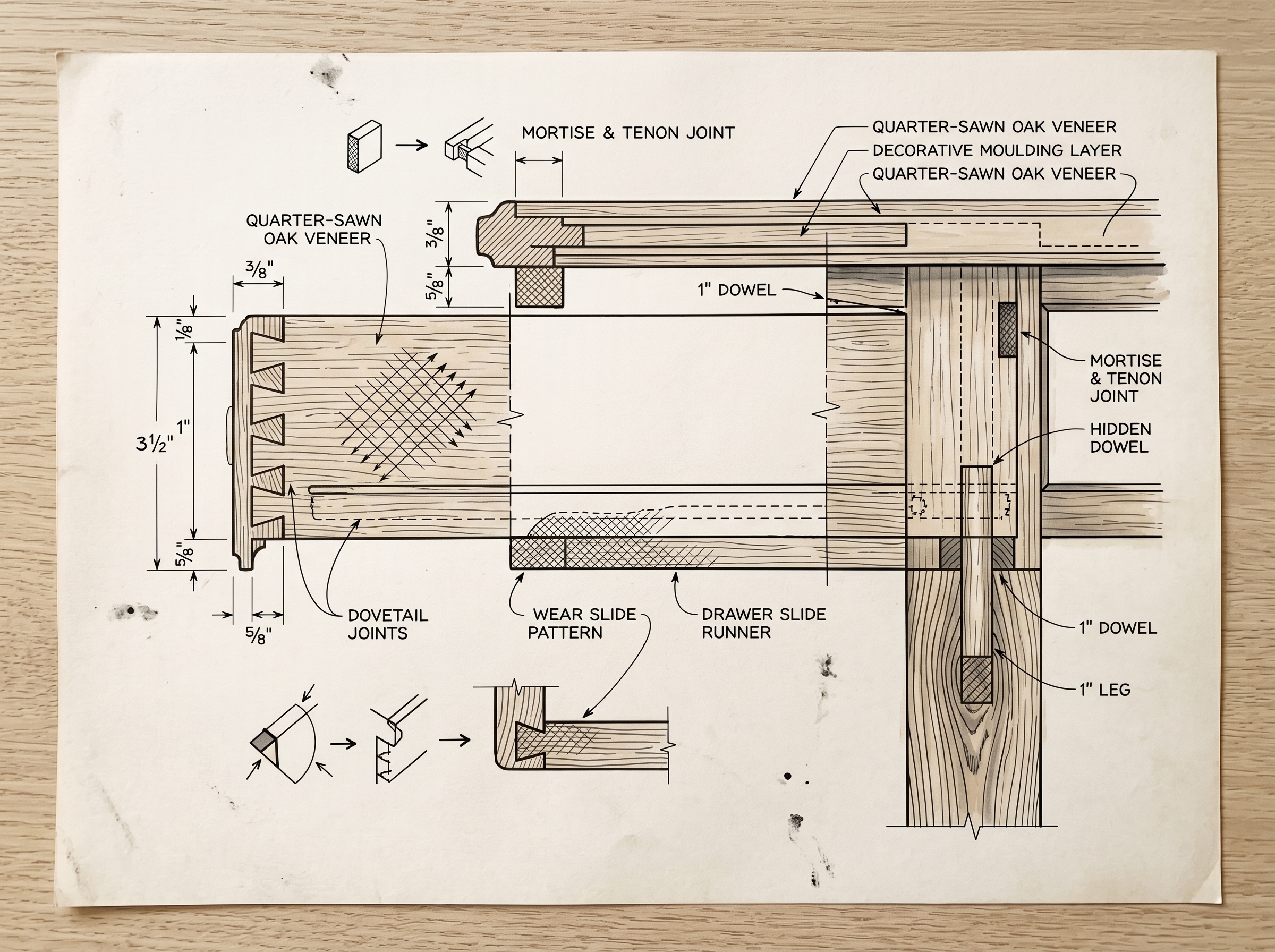
Condition grading looks at both structural integrity and cosmetic appearance. Here's what matters most:
Structural soundness comes first. Loose joints, broken stretchers, cracked frames, or missing support pieces all lower the grade significantly. A wobbly chair isn't just worth less—it might be essentially unsellable until repaired.
Original finish carries enormous weight with serious collectors. A piece with its original varnish, patina, or paint can be worth 2-3 times more than an identical piece that's been stripped and refinished, even if the refinish looks "better." This surprises many sellers.
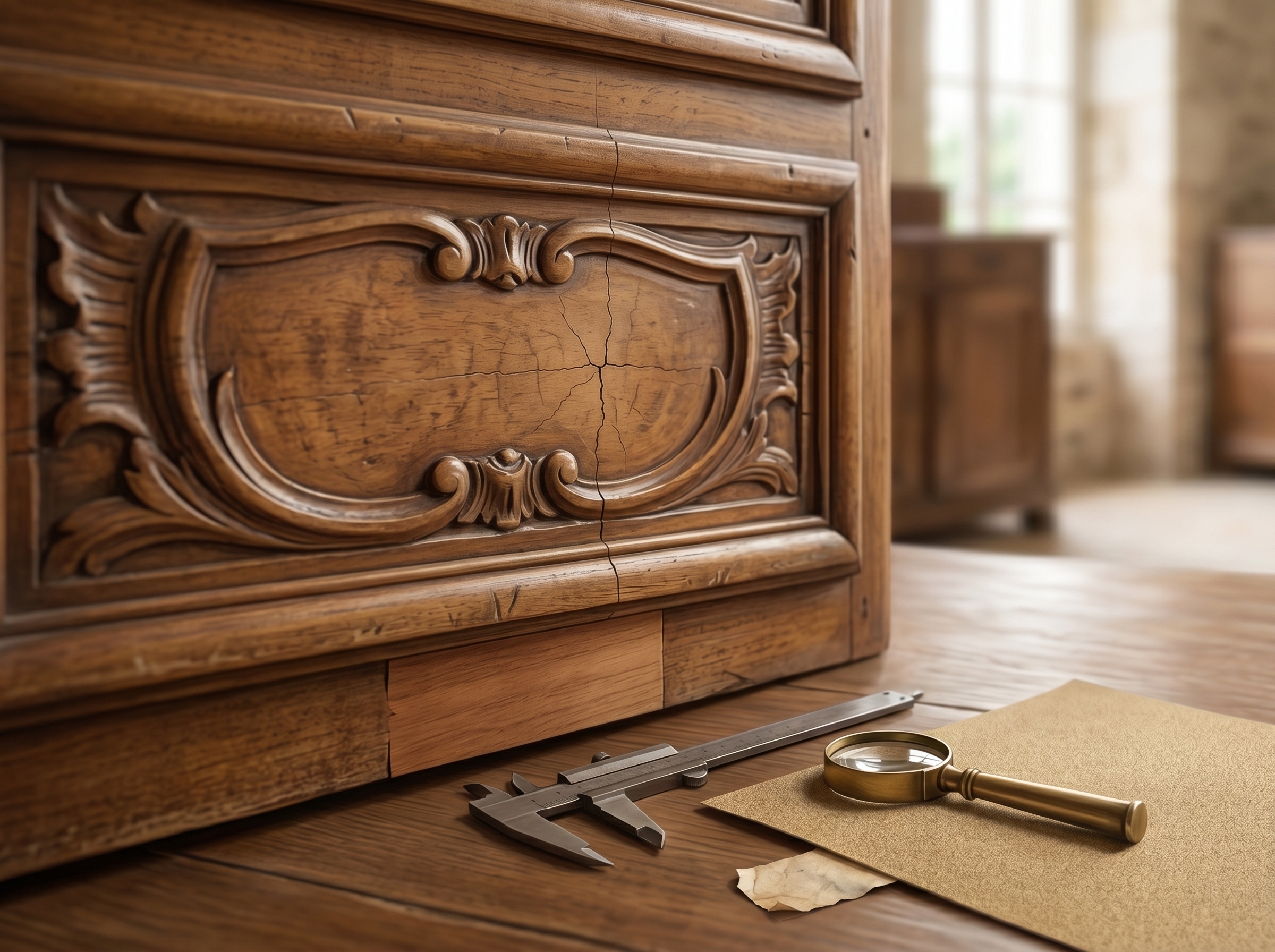
Wood condition includes checking (fine cracks), warping, water damage, and insect damage. Surface checking is often acceptable on very old pieces, but active infestation or severe water staining dramatically reduces value.
Hardware originality matters more than most people expect. Original pulls, hinges, locks, and escutcheons add value. Replaced hardware, even if period-appropriate, lowers the grade unless the replacements are exceptional quality.
Veneer condition on veneered pieces can make or break value. Missing veneer, lifting edges, or amateur repairs are serious condition issues. Professional veneer restoration is expensive, which buyers factor into their offers.
Upholstery on chairs and sofas presents special challenges. Original fabric from the 1800s is almost never present, so reupholstery isn't automatically a negative. But poorly executed work using wrong materials definitely hurts value.
Common Antique Furniture Condition Grading Systems
Dealers and auction houses use various grading systems, but most follow similar patterns:
Mint or Museum Quality
- •Description: Essentially untouched, original condition with minimal wear
- •Reality check: Extremely rare for furniture actually used in homes. Usually means the piece was stored or displayed without use.
Excellent
- •Description: Original finish and components with only minor, age-appropriate wear
- •Reality check: This is the grade serious collectors want. Small scratches, light patina, and gentle wear are expected and even desirable.
Very Good
- •Description: All original or period parts, some wear visible, possibly minor professional restoration
- •Reality check: Most quality antiques in this grade sell well. The piece looks great in a home but shows it's been used.
Good
- •Description: Noticeable wear, possibly some non-original components, may need minor repairs
- •Reality check: Still perfectly usable and displayable. Value is noticeably lower than excellent grade, often 30-50% less.
Fair
- •Description: Significant wear, repairs needed, some damage present, possibly refinished
- •Reality check: Decorator pieces or project candidates. Value is substantially reduced, sometimes to 20-30% of excellent-grade examples.
Poor
- •Description: Major damage, extensive repairs needed, parts missing, or badly refinished
- •Reality check: Often valued primarily for parts or as restoration projects. Some rare pieces are still worth restoring; common ones usually aren't.
The same antique chair graded excellent versus fair might differ in value by 70% or more.
Estimated Value Versus Formal Appraisal
An estimated value range based on condition and market comparables is not the same as a formal appraisal. Here's the distinction:
Estimated values come from market signals—what similar pieces in similar condition have actually sold for recently. These estimates are useful for deciding whether to sell, what to list something for, or whether restoration makes financial sense. They're based on observable comparables and real transaction data.
Formal appraisals are written documents prepared by credentialed appraisers (usually ISA or ASA members) for legal purposes: insurance, estate settlement, divorce proceedings, or charitable donations. Appraisers inspect pieces in person, research provenance, and provide defensible valuations with detailed condition reports. They cost $200-500+ per item or $100-150 per hour.
For most buying and selling decisions, you need an estimate that accounts for condition, not a formal appraisal. Understanding where your piece falls on the condition grading scale gives you the context to interpret any estimate you receive.
When You Need an App Versus When You Need an Expert
For quick condition-aware estimates on antique sideboards, mirrors, bookcases, or other furniture, a photo-based identification app works well as a first step. You get an estimated value range based on what the market shows for similar pieces in similar condition, usually within minutes.
This approach works when:
- •You're deciding whether to sell or keep a piece
- •You're considering buying something and want to know if the price is reasonable
- •You're trying to figure out if professional restoration would make financial sense
- •You need a rough insurance estimate for household contents
- •You're clearing an estate and need to triage dozens of items quickly
You should consult a professional furniture appraiser or conservator when:
- •You suspect the piece is exceptionally valuable or rare
- •You need documentation for insurance over $5,000-10,000
- •You're dealing with estate settlement or legal proceedings
- •The piece has potential museum significance
- •You're considering expensive restoration and need expert condition assessment
- •You need to verify authenticity of a supposedly important maker or provenance
How to Use Tocuro for Condition-Based Estimates
Tocuro helps you get past the first question—"What is this and what's it worth?"—by analyzing photos you upload. Since condition drives value, the photos you provide matter:
Take clear photos of the overall piece, then close-ups of any damage, wear, repairs, or condition issues. Photograph joints, hardware, maker's marks, and the underside or back where construction details show. For upholstered pieces like sofas, include photos of the frame if accessible and any visible wear to fabric or springs.
Tocuro identifies your piece and provides an estimated value range based on market signals, taking into account the condition visible in your photos. This estimated value is not a formal appraisal, but it gives you realistic context for the condition grade and corresponding value.
You get free daily scans, with the count resetting daily, so you can photograph multiple pieces or different angles of the same piece to get the clearest read on condition-affected value.
Start with a Clear Photo
Understanding condition grading helps you set realistic price expectations and make smarter decisions about buying, selling, or restoring antique furniture. Start by documenting what you have—condition and all—with clear photos.
Upload a photo to Tocuro to identify your piece and see an estimated value range that reflects real market conditions for furniture in similar condition. You'll know within minutes whether you're dealing with a museum-quality treasure or a decorator-grade project piece, and what that actually means for value.
If the estimate suggests significant value or you need formal documentation, you can then consult a professional appraiser with much better context for the conversation.
Photo-based estimate
Estimate Your Furniture Value
Use Tocuro to identify your item from a photo and get an estimated value range when market data is available.