
Antique Dresser Identification: Hardware, Dovetails, and Maker Marks
Identifying an antique dresser requires knowing where to look and what details matter. This guide shows you which construction features, hardware styles, and maker marks help determine a dresser's age and maker—and which photos capture those clues clearly.
Antique Dresser Identification: Hardware, Dovetails, and Maker Marks
Identifying an antique dresser from photos means knowing exactly where the revealing details hide. Unlike smaller items where you can flip them over easily, dressers require strategic photography focused on joinery, hardware, and hidden maker information. The right photos capture construction details that tell you whether you're looking at a hand-crafted 1840s piece, a factory-made Victorian dresser, or a 1920s reproduction.
What Clues Matter for Antique Dresser Identification
The most valuable identification clues hide in places casual observers rarely check. Start with the drawers—they hold the majority of dating and maker evidence.
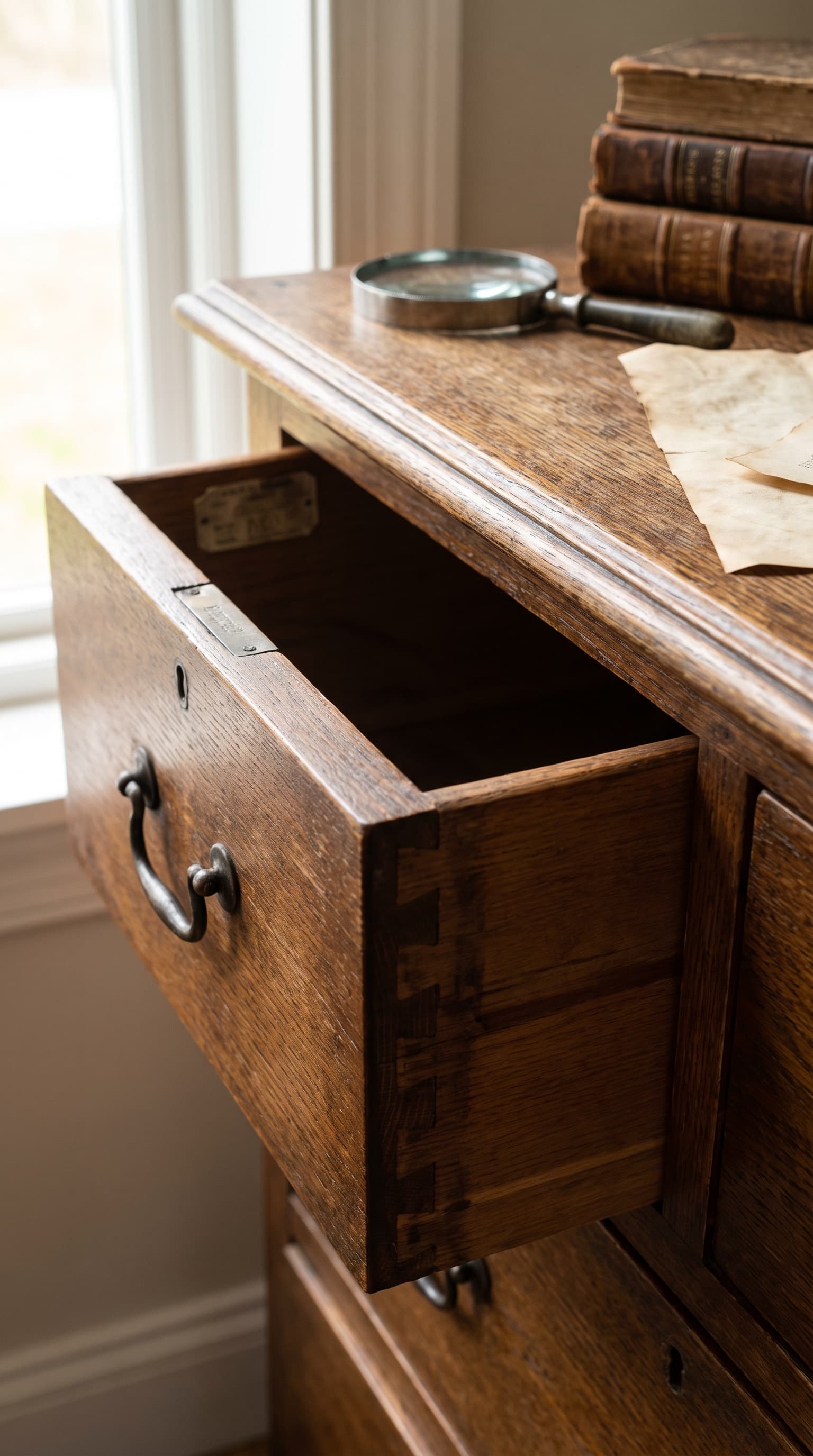
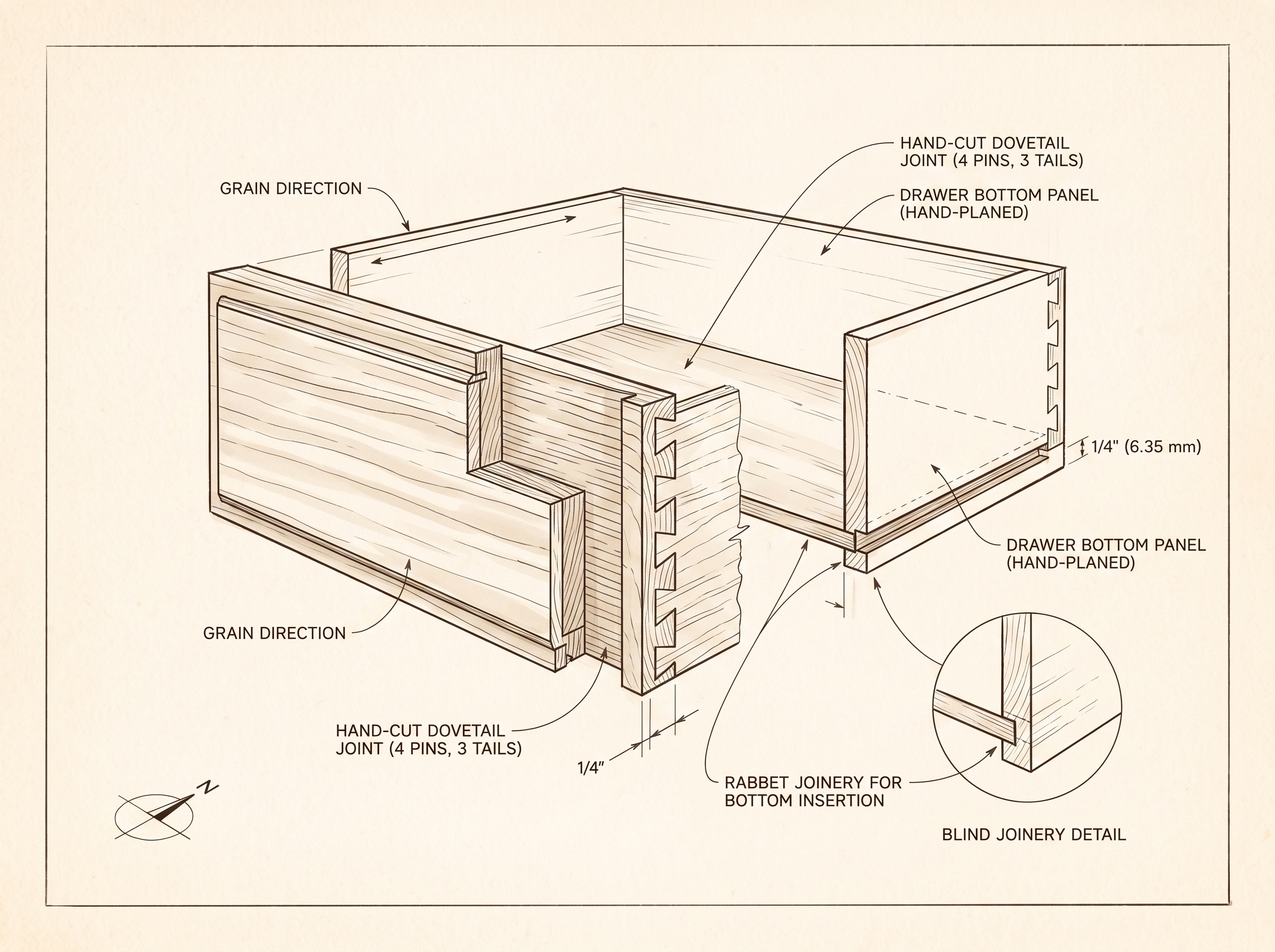
Dovetail joints reveal construction era and quality. Pull a drawer completely out and examine the corner joints where front, back, and sides meet. Hand-cut dovetails from before roughly 1860 show irregular spacing, slightly different sizes, and occasional gaps. They're beautiful in their imperfection. Early machine-cut dovetails (1860s-1890s) appear more uniform but still show some variation. Later factory dovetails become perfectly spaced and precisely cut. The number of tails matters too—earlier craftsmen often used fewer, larger dovetails, while later production favored many small, tight joints.
Drawer construction details extend beyond dovetails. Check the drawer bottom: how is it attached? Early drawers have bottoms that slide into grooves and aren't nailed. The wood grain typically runs front-to-back rather than side-to-side. Examine the thickness—hand-planed bottoms show subtle variations, while machine-planed surfaces after the 1870s look perfectly uniform. Look for saw marks on the underside of drawer bottoms. Circular saw marks indicate post-1830s construction, while straight saw marks suggest earlier hand-sawing or up-and-down saw mills.
Hardware serves as a timeline marker. Original pulls, knobs, and backplates follow distinct style periods. Brass pulls with bail handles dominated 1750-1820. Pressed glass knobs peaked 1825-1850. Wooden knobs saw widespread use 1840-1890. Ornate cast brass returned 1870-1910. But here's the catch: hardware gets replaced constantly. What matters is whether the current hardware matches the mounting holes. Multiple sets of filled holes suggest replacements. Examine the wood around hardware—original mounts show clean edges and aged patina, while replacements often show fresh wood or mismatched wear.
Wood species and surface treatment provide regional and era clues. American furniture makers favored local woods: walnut in the Mid-Atlantic states before 1900, cherry in New England, oak during the Golden Oak period (1890-1920), mahogany for high-style pieces. Secondary woods matter too—check drawer sides and backs. Pine, poplar, or oak secondaries appear in American pieces, while European makers often used different combinations. Examine the finish: shellac was standard before 1920, while lacquer and varnish became common after. Original finish shows accumulated wear in logical places—drawer fronts, top edges, around pulls.
Maker marks and labels transform speculation into certainty, but they hide in specific locations. Check inside drawers, on drawer bottoms, on the back panel, and under the top (you'll need to tip the dresser or use a mirror). Marks include stamps, branded names, paper labels, stencils, and penciled signatures. Many quality makers stamped their names into drawer backs or sides. Factory labels often adhered to drawer bottoms or dresser backs. Even penciled numbers or letters help—they indicate factory assembly systems or cabinetmaker's marks.
What Photos to Take for Antique Dresser Identification
Comprehensive dresser identification requires systematic photography. Random snapshots miss critical details.
Start with overall views: front, sides, and back. The back often reveals construction shortcuts that help distinguish handmade from factory pieces. Include the top surface and any applied decorations or carved elements.
Focus on drawer construction: Remove at least one drawer completely. Photograph both ends showing dovetail joints—shoot close enough that joint details are sharp. Photograph the drawer bottom from underneath, capturing grain direction and any saw marks. If you spot maker marks, take a dedicated photo with good lighting and focus, following the same principles used for photographing maker marks on other items.
Capture hardware details: Photograph each pull or knob straight-on and in profile. Include shots of the mounting area from inside the drawer, showing how hardware attaches and whether multiple hole sets exist. If backplates are present, photograph those separately.
Document any labels, stamps, or marks: Use indirect natural light or a diffused flash to avoid glare on paper labels. For stamped or branded marks in wood, adjust lighting angle until shadows make the impressed letters readable. Penciled inscriptions photograph best with raking light.
Show construction specifics: Photograph where the top attaches to the case, how the back panel fits, and any visible joinery on the case itself. Include detail shots of legs or feet showing attachment methods and wear patterns.
Common Antique Dresser Misidentifications
Certain assumptions lead collectors astray repeatedly.
Assuming "dovetails equal old" tops the list. Modern craftsmen and high-end reproduction makers still use hand-cut dovetails. The presence of dovetails confirms quality construction but doesn't guarantee age. You need to assess them alongside wood selection, hardware, finish, and overall wear patterns.
Confusing Victorian golden oak with earlier walnut pieces happens frequently. Both feature dark finishes, but the wood grain differs completely. Oak shows prominent ray fleck figure, especially on quarter-sawn boards. Walnut displays rich brown tones with occasional dark streaks but lacks oak's distinctive rays. The golden oak period (1890-1920) produced massive quantities of dressers that can appear older than they are.
Mistaking early Colonial Revival for genuine Colonial furniture catches many people. The Colonial Revival movement (roughly 1880-1940) deliberately copied 18th-century styles. Revival pieces often show excellent craftsmanship and appropriate construction methods for their copied period. Close examination of wood surfaces, tool marks, and wear patterns usually reveals the later date, but it takes experience.
Overlooking marriage and modification creates confusion. Dressers with mismatched drawers, replaced tops, added mirrors, or converted bases started as something else or incorporate parts from multiple pieces. Look for consistent wood aging, matching construction methods across all components, and logical wear patterns. Uneven drawer spacing or slight size differences between drawers suggest later modifications.
Misreading replaced hardware as original happens constantly. Just because brass pulls look appropriately Victorian doesn't mean they're original to an 1880s dresser. Check for extra holes, filled holes, mismatched patina between hardware and surrounding wood, and mounting methods that don't match the dresser's construction era.
What Tocuro Can Help Resolve
Even with the right photos, interpreting construction details, dating hardware styles, and identifying regional characteristics takes years of experience. Tocuro's furniture identification app analyzes your dresser photos to identify style period, likely construction date ranges, and maker when visible marks appear.
The platform looks at the same details experienced dealers examine: dovetail style and execution, hardware types and mounting evidence, wood species and secondary wood combinations, construction methods, and finish characteristics. It cross-references these elements with known maker patterns, regional furniture traditions, and period-specific construction practices.
Tocuro provides estimated value ranges based on current market signals rather than formal appraisals, helping you understand what similar pieces actually sell for. That context matters whether you're evaluating an estate find, deciding about a purchase, or planning to sell.
You get 7 free identifications per day, with the count resetting daily—plenty for most collectors to work through a houseful of furniture or evaluate pieces at estate sales.
Start Identifying Your Dresser
Photograph your dresser's dovetails, hardware, maker marks, and construction details, then let Tocuro analyze what those clues reveal about age, origin, and value. Identify your dresser and get detailed results based on the construction evidence your photos capture.
Photo identification
Identify Your Furniture
Use Tocuro to identify your item from a photo and get an estimated value range when market data is available.