
Antique Clock Identification: How to Identify Clocks from Dial, Movement, and Case Photos
Identifying antique clocks requires examining the dial, movement, and case construction. This guide shows which clues matter most, what photos help experts and tools identify your clock accurately, and how to avoid common misidentifications.
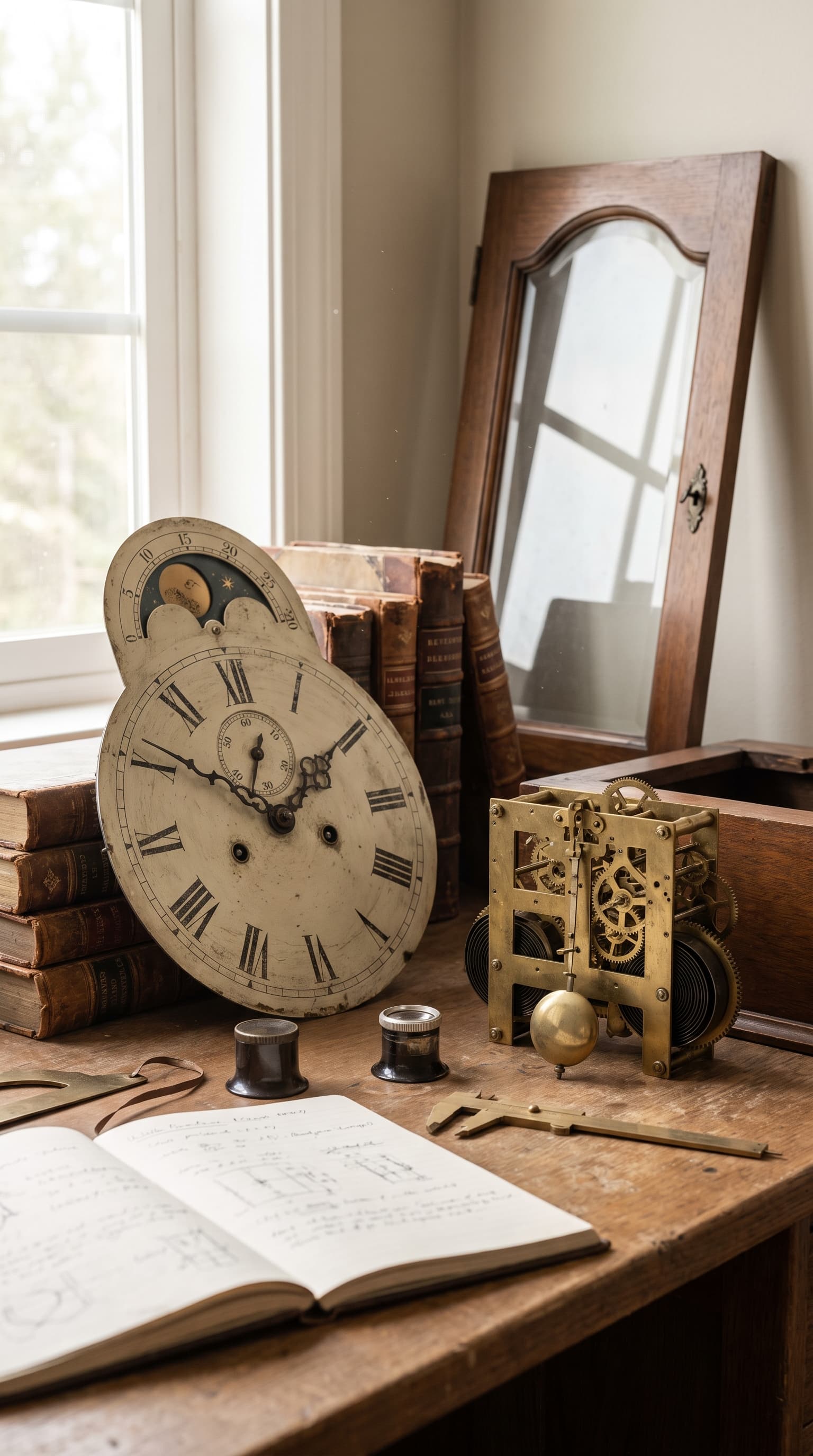
Antique Clock Identification: How to Identify Clocks from Dial, Movement, and Case Photos
Identifying an antique clock starts with three key areas: the dial, the movement, and the case. Each tells part of the story—when it was made, who built it, and what style or type it represents. Whether you've inherited a mantel clock, found a tall case clock at an estate sale, or unearthed a wall regulator in the attic, knowing which details to photograph and document makes antique clock identification faster and more accurate.
What Clues Matter Most for Antique Clock Identification
Dial Markings and Material
The clock face is often the first place to look. Painted dials, brass dials, and silvered dials each point to different eras and origins. Look for maker names, place names, or retailer marks printed or engraved on the dial. Even partial names or city references help narrow the search.
Roman numerals, Arabic numerals, or ornamental chapter rings also signal period and style. Hand-painted decoration, floral motifs, or moon phase dials often indicate specific regional traditions or premium production.
Movement Construction and Markings
The movement—the mechanical heart of the clock—carries some of the most reliable identification clues. Stamped maker names, patent dates, serial numbers, and model codes appear on the backplate, front plate, or inside the movement itself.
Construction style matters too. Wooden movements suggest early American production, often pre-1840. Brass movements with fusee chains point to English or high-grade Continental work. Weight-driven versus spring-driven mechanisms tell you about the clock's function and era. Pendulum bob shape, escapement type, and gear layout all contribute to dating and attribution.
Case Style and Construction
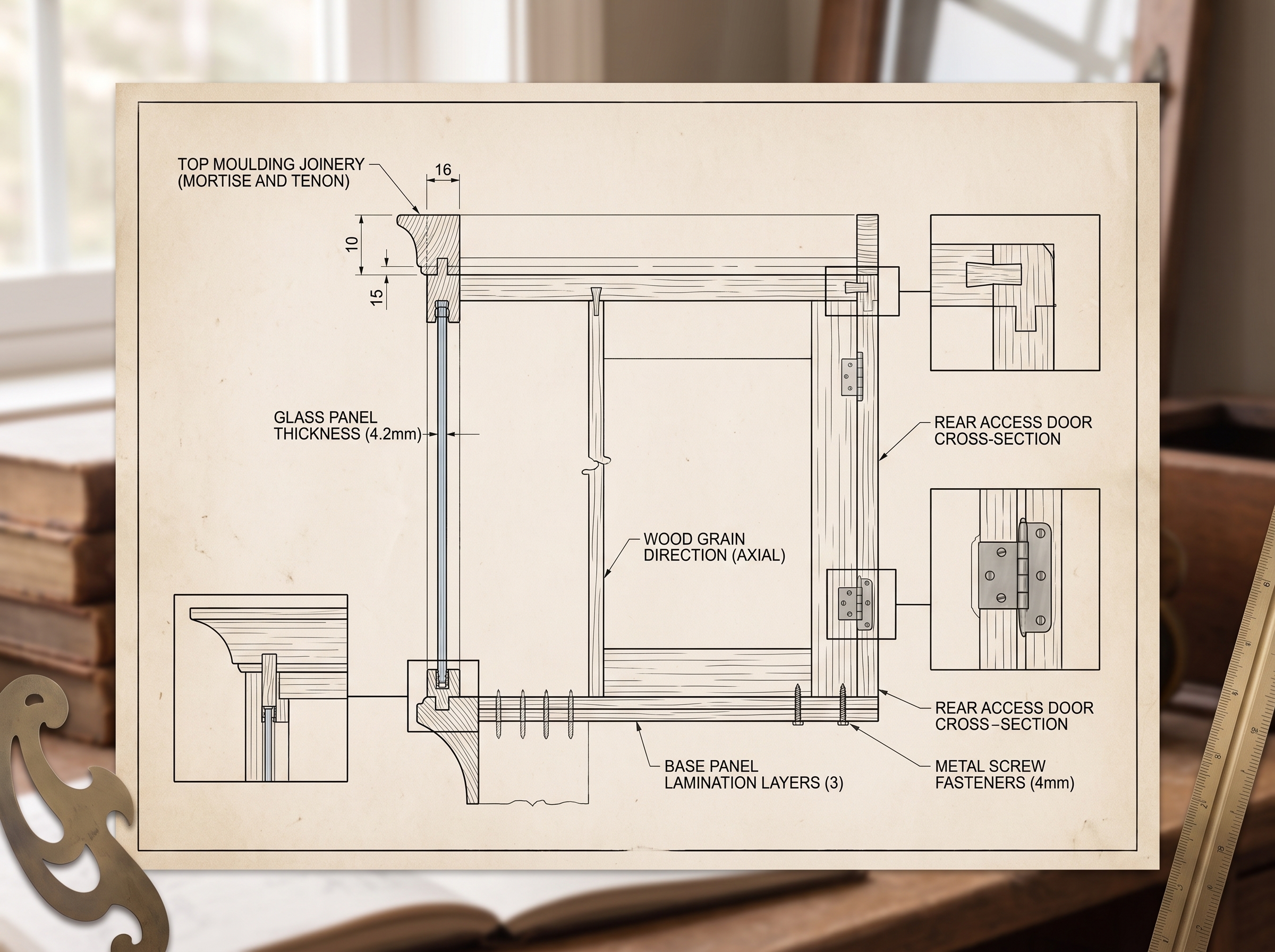
The case provides context for style and period. Dovetail joints, wood species, veneers, and finish techniques help date the piece. Glass types—wavy crown glass, reverse-painted tablets, or etched panels—change with technology and fashion.
Case silhouette matters: tall case (grandfather), mantel, shelf, wall regulator, banjo, or bracket clocks each evolved in specific eras and regions. Carved details, inlays, and applied ornaments reflect prevailing furniture styles—Federal, Empire, Victorian, Arts & Crafts, Art Deco.
Hardware like bezel latches, door hinges, and pendulum access doors also vary by maker and period.
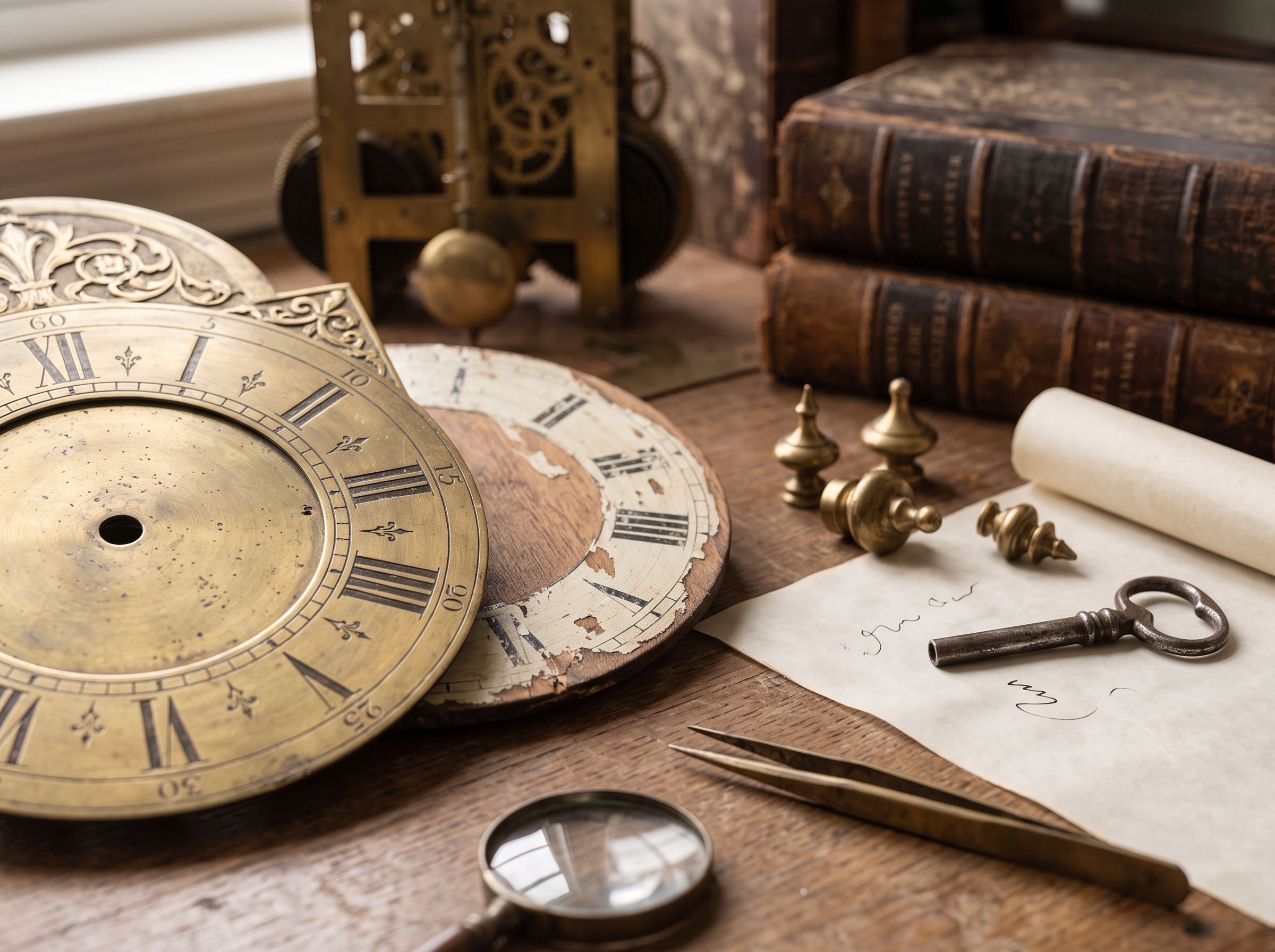
What Photos to Take for Accurate Antique Clock Identification
Full Front View with Dial Visible
Capture the entire clock face straight-on, with even lighting. Include the full dial, hands, and any decorative elements or moon phase indicators. Make sure maker names or dial inscriptions are legible.
Close-Up of Dial Inscriptions and Hands
Zoom in on any text, numbers, or decorative painting. Photograph the center arbor where hands attach, since hand styles and attachment methods help with dating. If the seconds dial or subsidiary dials are present, capture those clearly.
Movement Photos from Multiple Angles
Open the back or side access door and photograph the movement. Capture the backplate, front plate, and any visible stampings or engravings. Include serial numbers, patent dates, and maker marks. Photograph the escapement, pendulum suspension, and winding arbors if accessible.
If the movement is removable and you're comfortable doing so, photograph it outside the case from front, back, and side angles. This helps experts identify maker, model, and originality.
Case Construction and Hardware Details
Photograph the case from all sides. Capture dovetails at drawer or door corners, wood grain and veneers, and any applied carvings or inlays. Document hinges, latches, label remnants, or paper labels inside doors or on the back.
If there's a glass tablet with reverse painting or etching, photograph it separately in good light.
Label or Paper Ephemera
Many American clocks have paper labels inside the case describing the maker, location, and sometimes model. These labels are fragile and fade, so photograph them clearly even if partially deteriorated. Labels are among the most definitive identification clues.
Common Misidentifications in Antique Clock Identification
Confusing Retailer Names with Maker Names
Many clock dials bear the name of a retailer, jeweler, or regional distributor rather than the actual manufacturer. A dial reading "J. Smith, Boston" might house a movement made by Seth Thomas, Ansonia, or a German import. The retailer sold and sometimes customized the clock, but didn't build the movement. Always check movement markings separately.
Assuming All Wooden Movements Are Valuable
Wooden-movement shelf clocks were mass-produced in Connecticut from the 1820s through the 1840s. While historically significant, many survive in quantity and condition heavily influences value. A wooden movement alone doesn't guarantee rarity or high desirability.
Mistaking Reproduction Cases for Originals
Tall case clocks have been reproduced and married—original movements placed in newer cases or vice versa—for over a century. Examine wood aging, tool marks, hardware patina, and proportions carefully. Colonial Revival cases from the early 1900s can look convincingly old but differ in construction details and materials.
Overestimating Age Based on Style Alone
Revival styles complicate dating. A Gothic-style steeple clock could date from the 1840s or the 1920s. An ornate gilded case might be original French Empire or an American Victorian interpretation. Cross-reference case style with movement construction, materials, and any dateable markings.
Ignoring Condition and Completeness
Missing parts, replaced dials, repainted faces, or amateur repairs affect both identification confidence and value. A clock with a mismatched movement and case tells a different story than an all-original example. Document what's there and note any obvious alterations.
What Tocuro Can Help Resolve
Antique clock identification depends on synthesizing dozens of small clues—dial style, movement markings, case joinery, hardware, and labels. Photographing all these details and cross-referencing them against maker catalogs, patent databases, and auction records takes time and expertise.
Tocuro uses photos to identify clocks by analyzing dial markings, movement characteristics, case construction, and known maker patterns. Upload clear images of the dial, movement, and case, and Tocuro provides identification based on visual analysis and market data. You'll get context on maker, likely period, style, and related examples.
Tocuro also provides estimated value ranges based on current market signals, giving you a practical sense of what similar clocks sell for. This is not a formal appraisal, but it helps you understand whether you're looking at a common shelf clock or a rare signed example worth further research.
You get 7 free identifications per day, and the count resets daily, so you can photograph multiple clocks or different angles without commitment.
For clocks with complex movements or uncertain origins, Tocuro's photo-based approach simplifies the first step: figuring out what you have and where to go next.
Ready to Identify Your Antique Clock?
Whether you've found a tall case clock, a mantel timepiece, or a wall regulator, the right photos unlock the identification process. Capture the dial, movement, case, and any labels or markings clearly, and let Tocuro help you identify the maker, style, and period.
Identify your antique clock now and get started with your first free identifications today.
If you're working with pocket watches or vintage wristwatches, check out our guides on pocket watch identification and vintage wristwatch identification for timepiece-specific details.
Photo identification
Identify Your Watch
Use Tocuro to identify your item from a photo and get an estimated value range when market data is available.