
Antique China Identification: How to Identify China Sets from Photos
Identifying antique china requires examining backstamps, pattern details, body color, weight, and decoration techniques. This guide shows you which clues matter most and what photos to take for accurate identification.
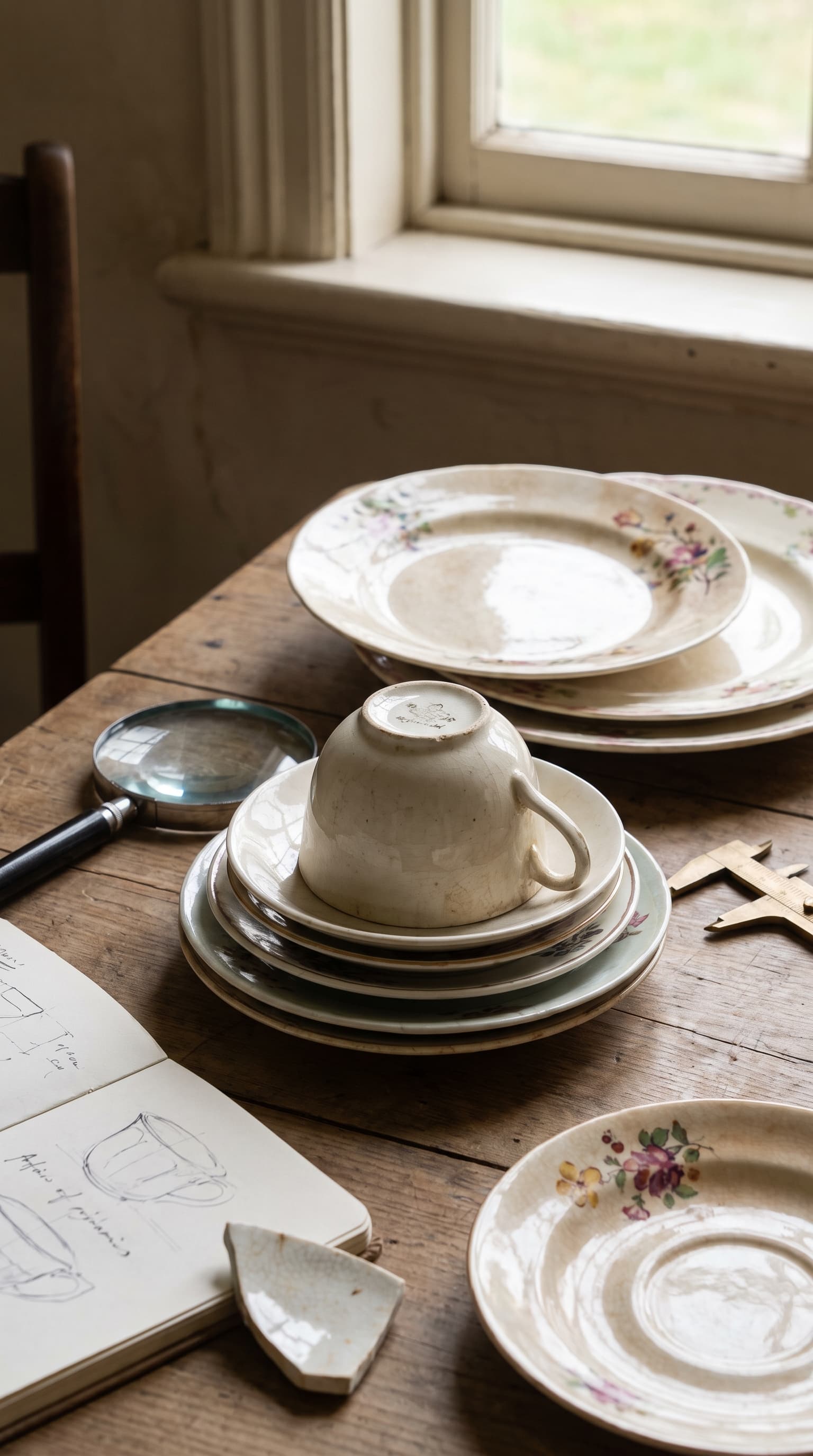
Antique China Identification: How to Identify China Sets from Photos
Identifying antique china can feel overwhelming when you're staring at unmarked pieces or cryptic symbols on the back. The good news: most antique china leaves clear identification clues if you know where to look. Whether you've inherited a set from your grandmother or discovered promising pieces at an estate sale, antique china identification comes down to reading a handful of specific details.
What Clues Matter Most for Antique China Identification
Successful china identification relies on four key areas that tell you maker, pattern, and approximate age.
Backstamps and maker's marks
The mark on the bottom is your starting point. Look for manufacturer names, country of origin, pattern names, and registry numbers. English makers often include "England" or "Bone China." German marks may show "Bavaria" or specific town names. Japanese pieces made for export after 1891 will say "Nippon" (pre-1921) or "Japan."
Pay attention to mark color and application method. Stamped marks in black or red are common on transfer-printed china. Impressed marks (stamped into wet clay) typically indicate earlier production. Hand-painted marks in green or blue often suggest quality pieces.
Many manufacturers changed their marks over time, which helps narrow dating. Royal Doulton, Wedgwood, and Haviland all used distinct marks for different decades.
Pattern and decoration style
The visual design tells you plenty even when marks are worn or missing. Flow blue patterns (blurred blue designs) were popular from the 1840s-1900s. Hand-painted florals with gold trim suggest late Victorian or Edwardian production. Art Deco geometric patterns point to the 1920s-1930s.
Look at how the decoration was applied. Transfer printing (designs with tiny dots when magnified) became common after 1750. Hand-painted decoration shows brush strokes and slight variations between pieces. Decals, common after 1890, have sharp edges and uniform color.
Body color and translucency
Hold a piece up to strong light. True porcelain and bone china will show some translucency. The body color matters too. Bone china (developed in England around 1800) has a warm, slightly ivory tone. Hard-paste porcelain tends toward pure white or grayish-white. Soft-paste porcelain often looks creamier.
Antique pieces may show crazing (fine cracks in the glaze) or discoloration, which can help with dating but doesn't always indicate a flaw—some crazing is expected in pieces over 100 years old.
Weight and feel
Bone china feels lighter than hard-paste porcelain. Ironstone and semi-porcelain pieces are noticeably heavier. The rim thickness and foot ring design also vary by maker and era. Better-quality pieces often have smoother glazes and more refined foot rings with careful finishing.
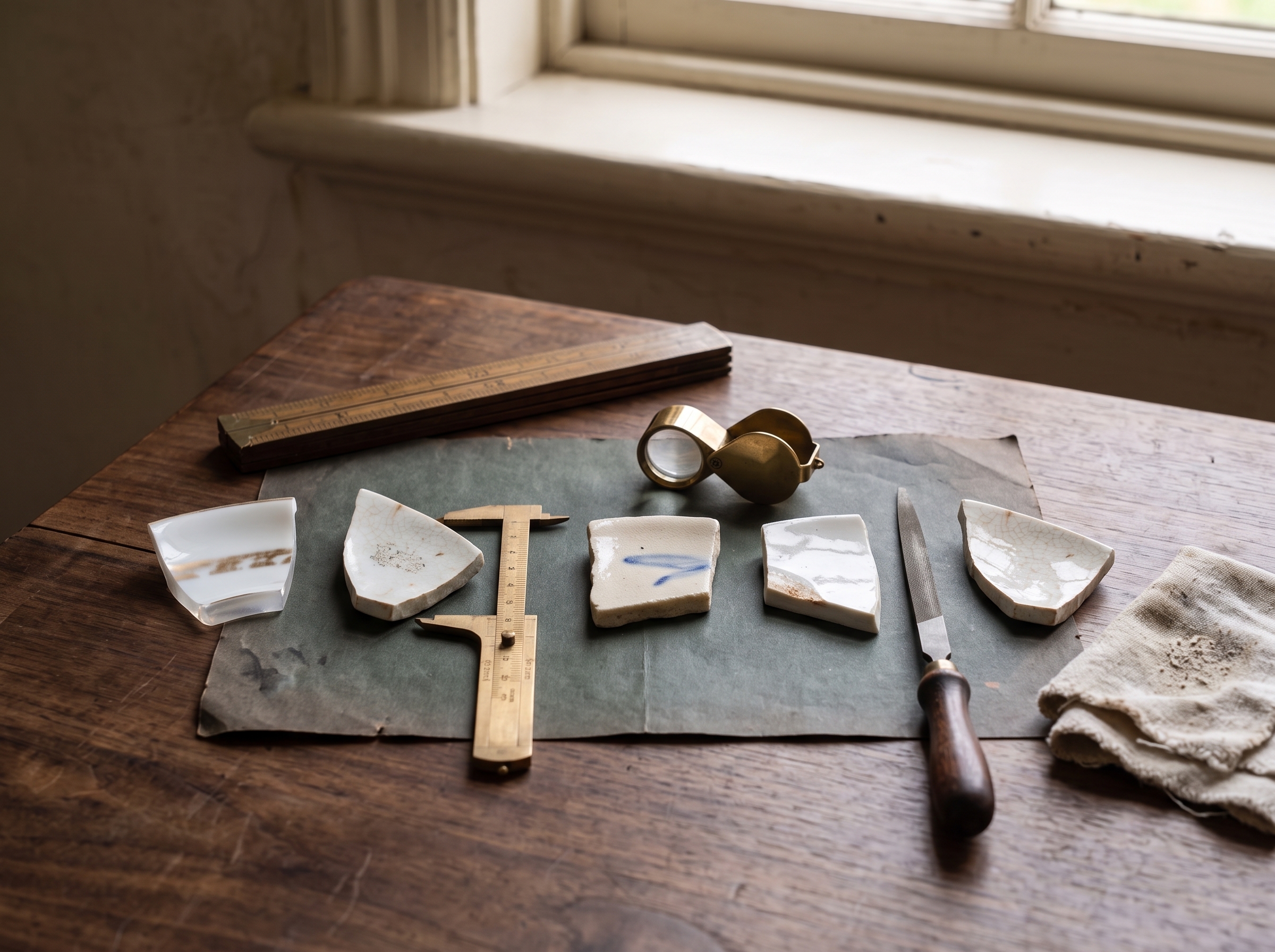
What Photos to Take for Antique China Identification
Good photos make identification dramatically easier, especially when you're working with apps or online communities.
Backstamp close-up: Photograph the bottom of the piece in bright, indirect light. Get close enough that all text and symbols are clearly legible. If the mark is worn, try different angles to catch faint impressions.
Full pattern view: Capture the entire decorative design on a plate face or cup exterior. Include enough context to show pattern repeats and border details. Natural daylight works best for accurate color.
Profile and detail shots: Side views show shape and proportion. Close-ups of painted details, gilding, or unusual features help distinguish hand-painted work from transfers.
Set context: If you have multiple pieces, photograph them together to show pattern consistency and which serving pieces you have. This helps identify incomplete sets and approximate value.
Edge and rim details: The rim treatment—scalloped, gilt, plain—often helps narrow down maker and era. Capture any damage or repairs while you're at it.
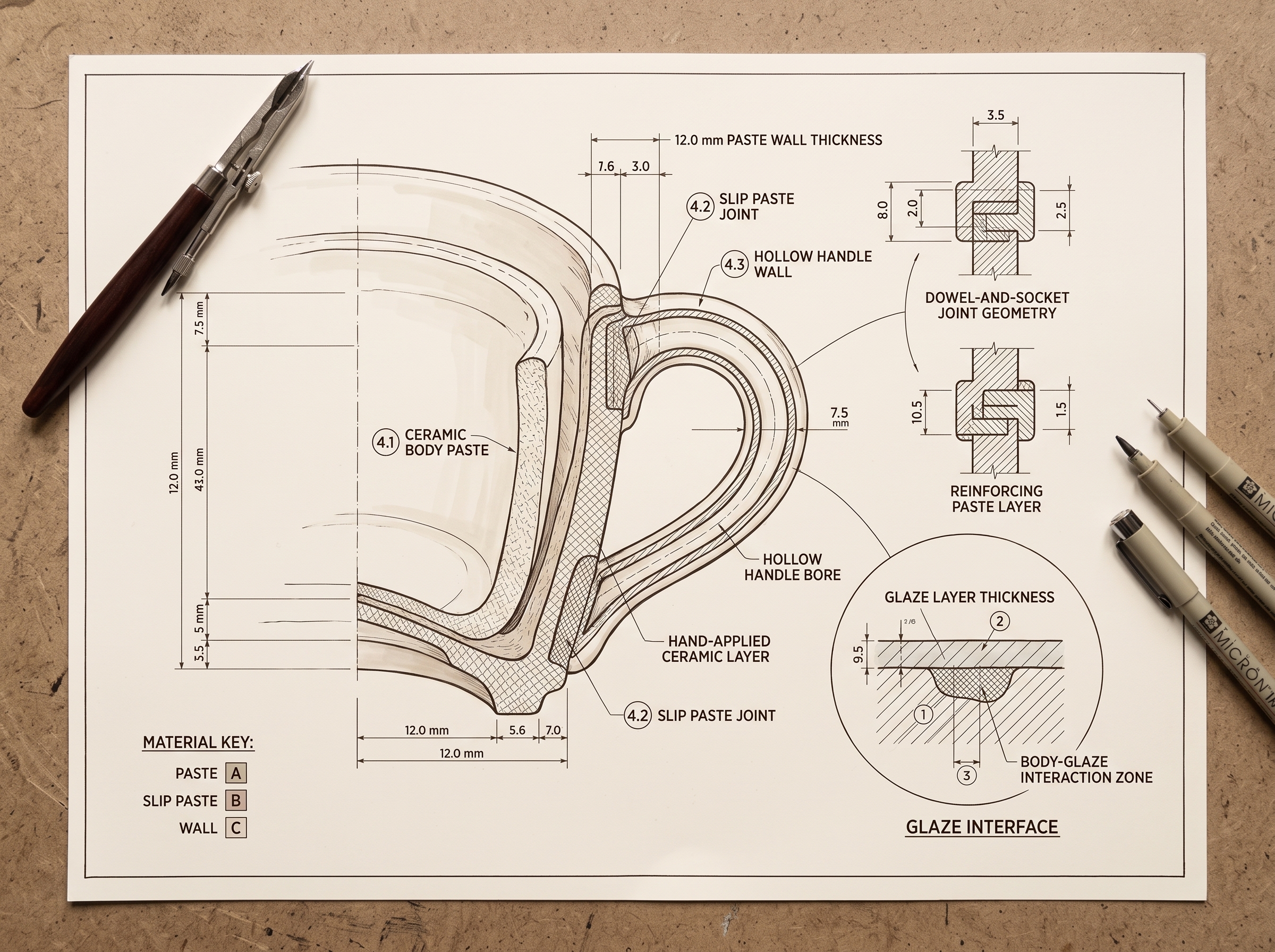
Common Misidentifications in Antique China
Certain assumptions lead collectors astray more often than others.
"Made in Occupied Japan" means wartime production: These marks appear on pieces made during the Allied occupation (1945-1952), not during WWII itself. They're collectible but generally not rare.
All hand-painted china is valuable: Hand-painting varies enormously in quality. Amateur decoration on blank china bodies was a popular hobby in the early 1900s. Factory hand-painting by skilled artisans is a different matter entirely.
Crazing means worthless: While heavy crazing can reduce value, fine crazing is normal on many antique pieces and doesn't automatically disqualify them from being collectible.
Porcelain and china are completely different: The terms overlap significantly. "China" originally meant Chinese porcelain, but now loosely describes fine tableware. Bone china is technically porcelain. Porcelain identification dives deeper into these distinctions.
Gold trim means it's expensive: Gold decoration appears on everything from museum-quality Limoges to inexpensive Japanese tea sets. The quality of the porcelain body and the complexity of the overall decoration matter more than gilding alone.
Unmarked pieces can't be identified: Many high-quality pieces lost their paper labels over time. Pattern, shape, and decoration style can still point to specific makers, even without a mark.
What Tocuro Can Help Resolve
Photo-based identification has changed how collectors approach unknown china. Instead of spending hours searching through mark databases or posting on forums, you can get instant feedback from your phone.
Tocuro identifies china makers, patterns, and approximate ages from the photos you take. Upload clear images of your backstamp, pattern, and any distinguishing features. The app compares your piece against market data and known patterns to narrow down possibilities.
This works especially well for:
- •Identifying maker from worn or partial marks
- •Matching pattern names when only decorative elements are visible
- •Dating pieces based on mark style and decoration technique
- •Distinguishing between similar patterns from different manufacturers
- •Estimating value ranges based on current market signals (not formal appraisals)
You get 7 free identifications per day, with the count resetting daily. That's usually enough to work through a set piece by piece or investigate several inherited items.
The tool works best when you combine it with your own observation. Notice those tiny details—backstamp color, pattern brushwork, rim shape—because they help the app (and you) arrive at accurate identifications faster. For broader guidance on identifying porcelain-type pieces, see our porcelain identification guide.
Ready to Identify Your China?
Antique china identification gets easier once you know which details matter. Start with the backstamp, examine the pattern and decoration technique, note the body color and weight, and photograph everything clearly. Most pieces will reveal their origins once you look in the right places.
Whether you're trying to complete a set, evaluate an inheritance, or simply satisfy your curiosity about those dishes in the cabinet, photo identification gives you a practical starting point. Identify your china today and discover what you're really holding.
Photo identification
Identify Your China
Use Tocuro to identify your item from a photo and get an estimated value range when market data is available.