
Antique Cabinet Identification: How to Identify Cabinets by Photo
Identifying antique cabinets requires understanding construction clues, hardware styles, and joinery techniques. This guide shows you which details matter most and how to photograph them effectively for accurate identification.
Antique Cabinet Identification: How to Identify Cabinets by Photo
Identifying an antique cabinet by photo starts with understanding what separates a genuine period piece from a reproduction. The difference often lies in construction details invisible at first glance—joinery techniques, hardware mounting, wood selection, and finishing methods that evolved over centuries. Whether you've inherited a corner cupboard, bought a painted cabinet at auction, or spotted something promising at an estate sale, knowing which clues matter helps you move from guessing to understanding.
What Clues Matter in Antique Cabinet Identification
Cabinets reveal their age and origin through specific construction signatures that changed as tooling and styles evolved.
Joinery Techniques
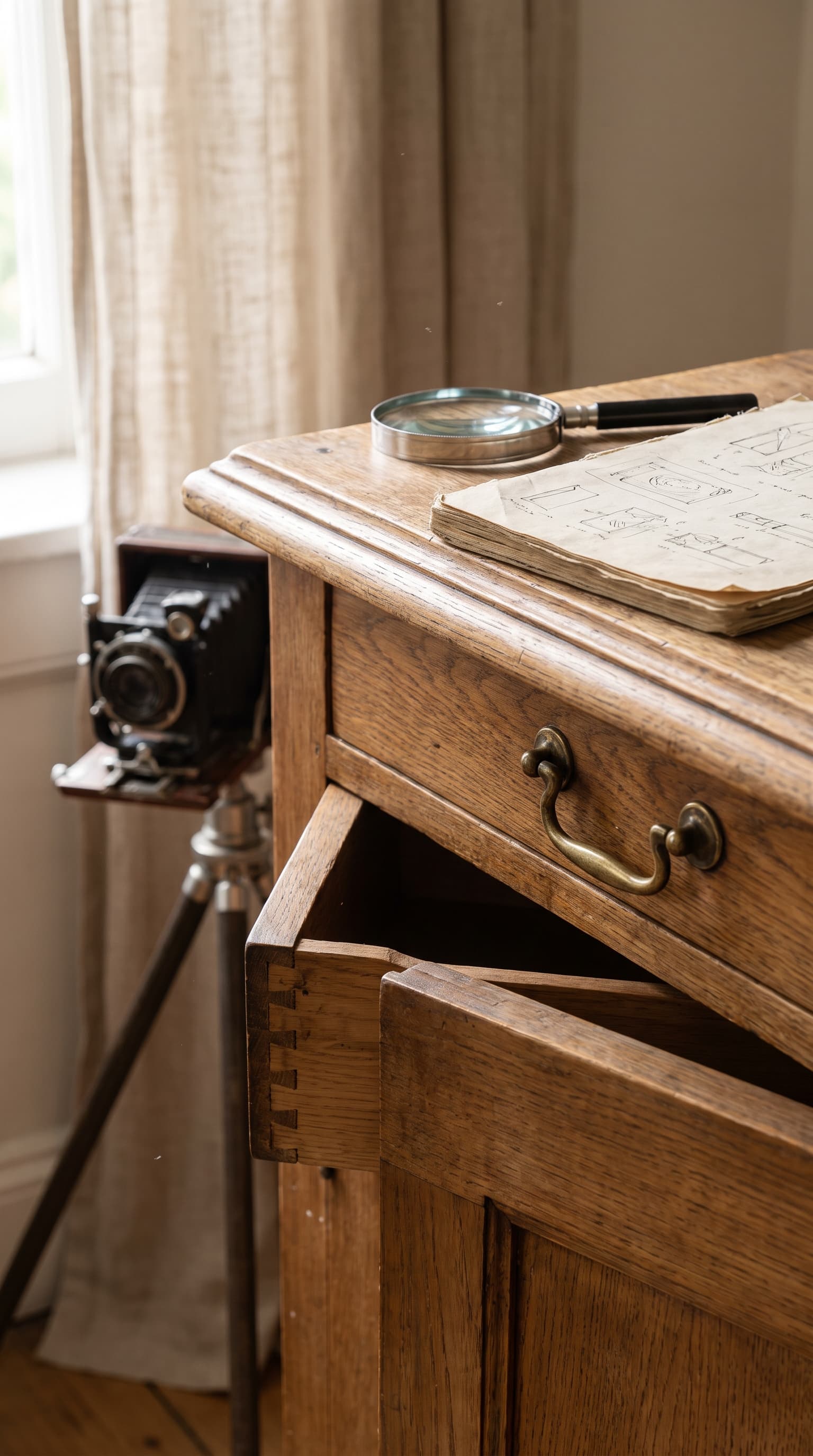
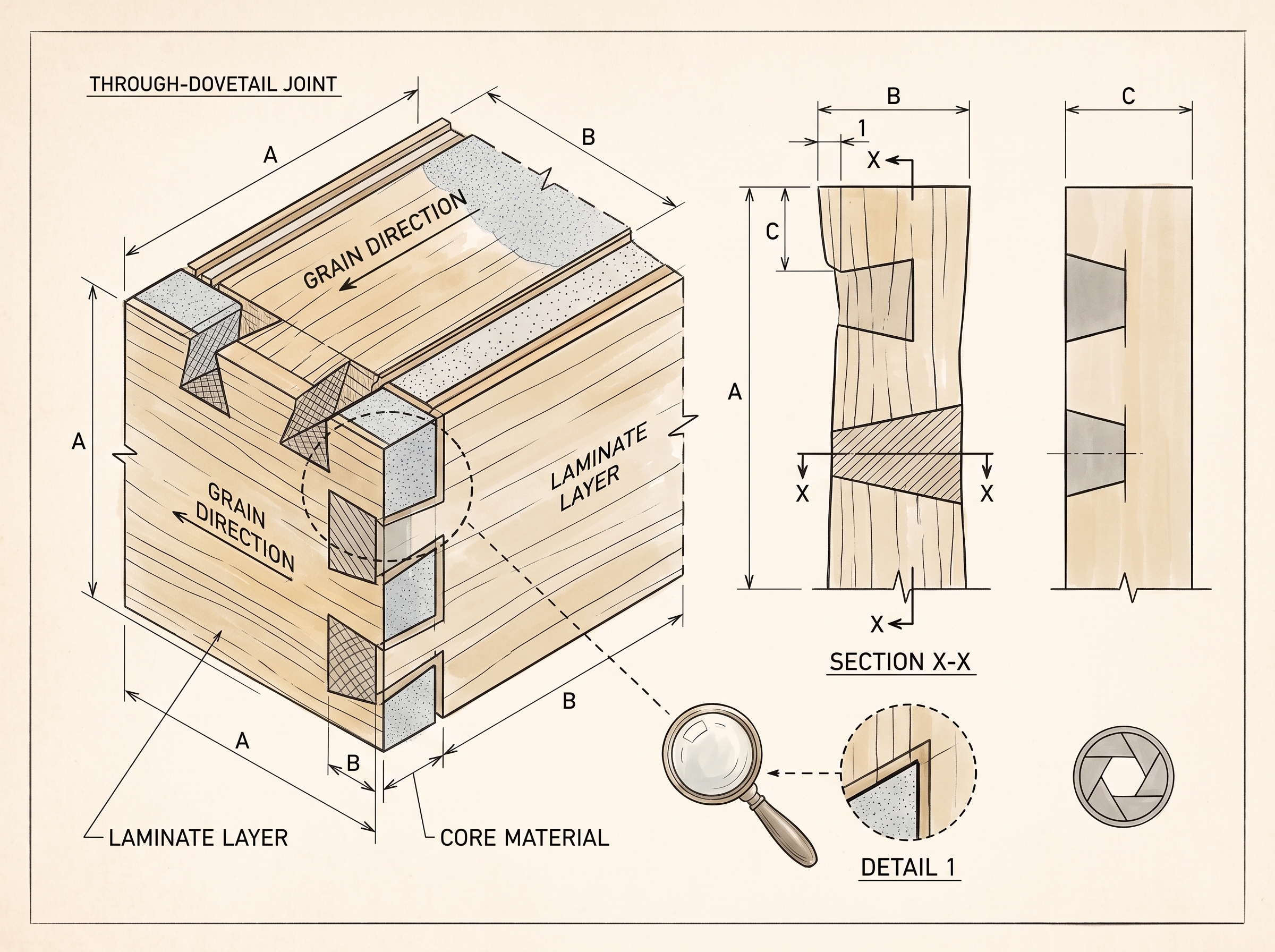
How the cabinet's parts connect tells you volumes about when it was made. Hand-cut dovetails—irregular, spaced unevenly, with slightly different angles—indicate pre-1860s construction. Early dovetails are wider and fewer in number. Machine-cut dovetails, perfectly uniform and evenly spaced, became standard after the 1870s. Look at drawer corners, case sides, and anywhere two boards meet at right angles.
Mortise-and-tenon joints were the backbone of early cabinet frames. Hand-planed tenons show chisel marks and slight irregularities. Pegged construction, where wooden pins secure joints, signals 18th or early 19th-century work. Later cabinets used glue blocks, dowels, or screws.
Hardware and Fasteners
Original hardware is one of the fastest ways to date a cabinet. Early hinges—H-hinges, HL-hinges, and butterfly hinges—were hand-forged with visible hammer marks and irregular surfaces. Cast brass hinges with uniform thickness appeared in the late 1700s. Butt hinges became standard in the Victorian era.
Look at screws closely. Hand-filed screws (pre-1850) have off-center slots, irregular threads, and blunt tips. Machine-made screws show uniformity but vary by era—gimlet-point screws date to 1850-1890, while modern pointed screws came later. Nails matter too: square-cut nails indicate 1790-1890, while round wire nails suggest post-1890 construction or repairs.
Pulls and knobs changed with fashion. Bail pulls with cotter-pin fasteners mark early work, while threaded posts indicate later manufacture. Original hardware often leaves distinctive marks—filled holes, oxidation shadows, or mismatched drilling from replacements.
Wood and Milling Marks
The wood itself speaks. Primary woods (oak, walnut, mahogany, cherry) on visible surfaces paired with secondary woods (pine, poplar, chestnut) inside signal period construction. Early cabinets used local hardwoods; imported mahogany became fashionable in the 1700s.
Examine saw marks on unfinished surfaces—backs, drawer bottoms, interior panels. Circular saw marks indicate post-1840s work. Straight, irregular marks from pit saws or up-and-down saws suggest earlier construction. Hand-plane marks on boards, visible as slight ridges, confirm hand-milling.
Panel construction reveals age too. Flat panels floating in grooved frames allowed wood movement in humidity—standard practice through the 1800s. Glued-up panels and plywood backs signal 20th-century construction.
Glass, Finish, and Patina
Original glass in cabinet doors shows distinctive characteristics. Wavy, uneven surfaces with bubbles or imperfections indicate hand-blown glass (pre-1900). Perfectly flat glass suggests replacement or later manufacture.
Finish and patina develop over decades. Original shellac or varnish darkens in crevices, builds up on edges, and shows crazing (fine cracks). The underside and interior should show different aging than exposed surfaces—darker oxidation on the back, lighter inside. Be wary of uniform aging everywhere, which often signals refinishing.
What Photos to Take for Cabinet Identification
Effective cabinet identification depends on capturing specific construction details that reveal age and maker.
Overall Views
Start with well-lit photos of the entire cabinet from multiple angles—front, sides, and back. Natural, indirect light works best. These establish form, proportions, and style, but won't identify the piece alone.
Construction Details
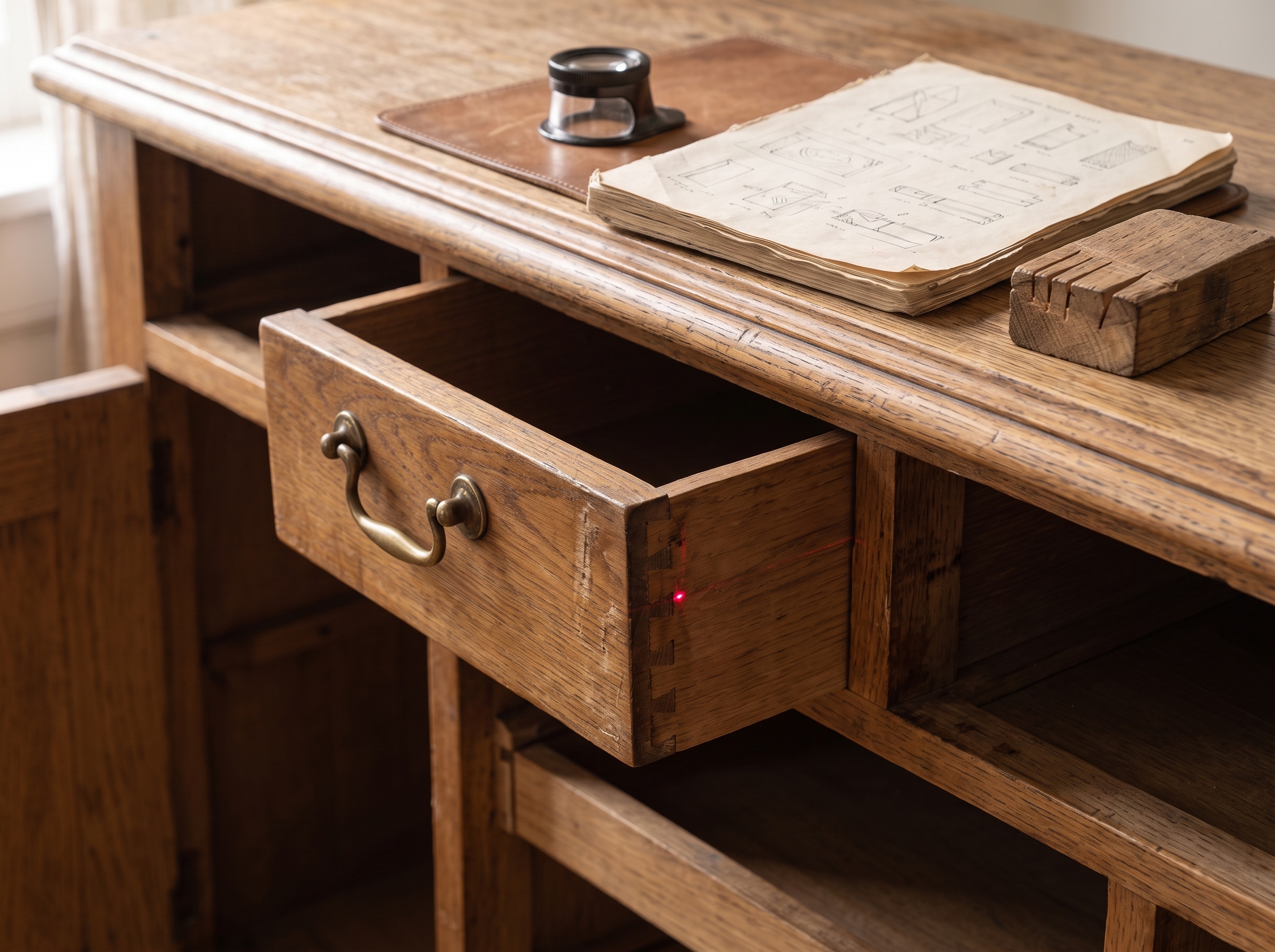
Photograph drawer dovetails up close, showing where sides meet fronts and backs. Get both the interior and exterior corners if possible. Shoot the back panel to show how it's attached and any saw marks on unfinished wood.
Capture door hinges clearly, showing both the hinge itself and how it mounts. If there are multiple holes or patches, photograph those—they tell repair history. Get close enough that screw heads are in focus, showing slots and metal texture.
Hardware and Marks
Photograph all hardware—pulls, knobs, hinges, locks, and latches. Shoot straight-on to show shape and mounting style. If hardware appears original, photograph the back side showing fastener types.
Maker marks, labels, or signatures deserve careful attention. Paper labels inside drawers or on backs fade and tear easily—photograph these with even lighting and good focus. Stamped or burned marks need enough contrast to read. Check drawer sides, backs, case bottoms, and interior surfaces. How to photograph maker marks provides detailed guidance for capturing these details clearly.
Interior Details
Open doors and drawers to photograph interior construction. Shoot drawer bottoms showing grain direction and how they're attached. Photograph shelves and their supports—are they pegged, nailed, or adjustable? Interior corners often reveal construction methods hidden by finished surfaces.
Common Misidentifications in Cabinet Identification
Certain cabinet types and construction features routinely fool even experienced collectors.
Colonial Revival vs. Period Colonial
Colonial Revival cabinets from 1880-1940 deliberately copied 18th-century styles. They used appropriate woods and sometimes hand-cut details, but closer inspection reveals machine-cut uniformity, modern screws, or period-inappropriate hardware. Check fasteners and milling marks—reproductions often mix hand-worked fronts with machine-made interiors.
Painted Finishes and Age
Paint hides construction details and can make newer pieces look older. Original painted cabinets show paint wear in logical places—edges, around hardware, where hands gripped. Artificially distressed finishes wear uniformly or in unnatural patterns. Look for paint in screw slots and hardware crevices—original paint accumulates there naturally, while added paint often pools or drips.
Married Pieces and Alterations
Cabinets built from period parts or altered over time present identification challenges. Tops, doors, or hardware from different pieces or eras get combined. Check for consistent wood aging, matching joinery throughout, and hardware holes that align properly. Mismatched patina, plugged holes filled with different wood, or construction techniques that vary between components signal alterations.
Hoosier Cabinets and Kitchen Cupboards
Early 20th-century Hoosier cabinets and kitchen cupboards often get mistaken for older pieces. While they can be 100+ years old, they're factory-made, not hand-crafted antiques. Look for manufacturer labels (Hoosier Manufacturing Co., Sellers, McDougall), uniform construction, flour bins, and pull-out work surfaces. These have collectible value but different market positioning than 18th or 19th-century cabinets.
What Tocuro Can Help Resolve
Some cabinet identification questions require expertise beyond construction clues—pattern matching against thousands of known forms, recognizing regional styles, or connecting subtle details to specific makers or periods.
Tocuro identifies cabinets from photos by analyzing construction details, hardware styles, wood selection, and form against market data. Upload clear photos showing overall form, joinery details, hardware, and any marks, and Tocuro provides identification with estimated value ranges based on current market signals.
The value estimates reflect what similar cabinets have sold for recently, accounting for condition, originality, and market demand. This isn't a formal appraisal, but it gives you practical context for insurance, sale, or collecting decisions. You get 7 free identifications per day, and your count resets daily, so you can photograph multiple details or family pieces without hesitation.
Furniture identification extends beyond cabinets to tables, dressers, and other case pieces using the same photo-based approach.
Ready to Identify Your Cabinet?
You've learned which construction clues separate period cabinets from reproductions and how to photograph the details that matter. Now put that knowledge to work.
Identify your cabinet by uploading photos showing joinery, hardware, and construction details. Get identification and estimated value ranges in minutes, with 7 free identifications daily to explore that inherited corner cupboard, estate sale find, or mystery piece you've been curious about.
Photo identification
Identify Your Furniture
Use Tocuro to identify your item from a photo and get an estimated value range when market data is available.