
Antique Bottle Identification App: Identify Glass Bottles from Photos
Tocuro's antique bottle identification app helps you identify glass bottles from photos, decode embossed marks, date pieces, and get market-based value estimates—no digging through reference books required.
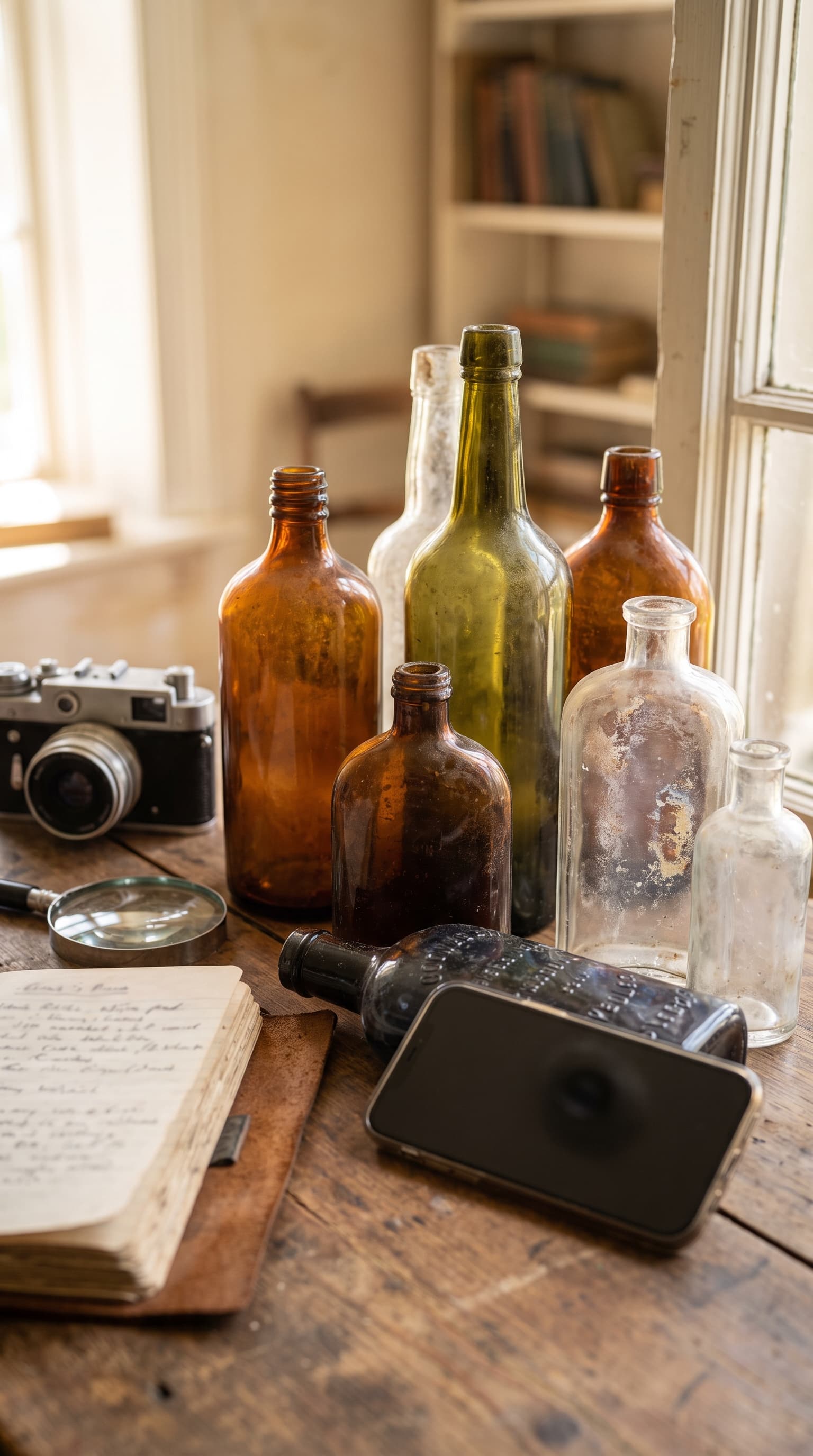
You Found a Bottle. Now What?
You're holding a glass bottle with embossed lettering you can't quite make out, or maybe a cobalt poison bottle with a skull, or a hand-blown piece with a pontil scar you've never seen before. You want to know what it is, when it was made, and whether it's worth keeping or selling. Thumbing through collectors' guides takes hours, and online forums can leave you waiting days for a response.
An antique bottle identification app solves this by letting you upload photos and get identification results in seconds—complete with estimated age, maker information, and market value ranges based on real sales data.
What Tocuro Does for Bottle Collectors
Tocuro is a photo-based identification tool built for collectors who want fast, reliable answers. Snap a few clear pictures of your bottle—the base, embossed marks, seams, lip finish, and overall shape—and Tocuro analyzes the visual details to identify the type, likely maker, manufacturing era, and estimated value range.
The app pulls from market signals rather than guesswork, so you see what similar bottles have actually sold for, not what someone thinks they're worth. You'll get information on manufacturing techniques (like pontil scars, mold seams, and applied lips), historical context, and whether your bottle fits a known pattern or maker.
It's especially helpful when you're at an estate sale, flea market, or digging site and need to make quick decisions.
What You Get Free
Tocuro gives you 7 free identifications per day, and the count resets every 24 hours. That's enough to work through a small collection, evaluate finds from a weekend dig, or check a few pieces before you commit to buying.
Each identification includes:
- •Bottle type and function (medicine, soda, bitters, ink, poison, etc.)
- •Estimated manufacturing date range based on seam placement, lip style, and base marks
- •Likely maker or distributor when embossing or pontil marks are visible
- •Estimated market value range drawn from recent comparable sales
- •Notes on rarity, desirable features, and condition factors that affect value
If you're working with more bottles—like inventorying an inherited collection or running a resale business—paid plans offer higher daily limits.
Antique Bottle Identification App: Photo Tips That Work
Bottles have small, critical details that determine age and value. Here's how to capture them clearly:
Base and Pontil Marks
Flip the bottle over and photograph the base straight-on under bright, indirect light. Look for embossed maker marks, mold numbers, or pontil scars (rough circles where the glassblowing rod attached). A pontil scar usually indicates pre-1870 manufacture. Clean off dirt with a damp cloth—don't scrub with anything abrasive.
Embossed Lettering and Graphics
Hold the bottle at a slight angle so side lighting makes the embossing pop. Shadows reveal shallow lettering that's hard to see head-on. Capture the full text and any decorative elements like eagles, shields, or product claims.
Seams and Mold Lines
Photograph the side of the bottle to show how far the seam runs. If it stops below the lip, the bottle was likely made before 1903. If it runs all the way over the lip, it's machine-made (post-1903). Seam placement is one of the fastest ways to narrow down age.
Lip and Finish
Zoom in on the top opening. Applied lips (where a separate ring of glass was added) indicate hand finishing, common before automation. Tooled lips, blob tops, crown finishes, and cork grooves all signal different eras and uses.
Color and Clarity
Take one photo in natural daylight to show true color. Amethyst glass that turned purple from sun exposure (manganese content) dates to 1880–1915. Cobalt, amber, and aqua tones can help identify function and origin.
For a deeper dive into reading embossed text and seam clues, check out our guide on Bottle Marks Identification: How to Read Embossed Marks and Seams.
When Tocuro Isn't Enough
Tocuro works well for most collector bottles—especially common medicines, sodas, bitters, and utilitarian pieces with visible maker marks or diagnostic features. But some situations call for specialist input:
- •Rare or high-value historical flasks (like early American figured flasks or fire grenades) may need authentication from a bottle club appraiser or auction house specialist
- •Unembossed, crudely made bottles with no pontil or seam clues can be hard to date without chemical analysis or provenance records
- •Extremely valuable pieces (worth thousands) should be formally appraised and graded before sale, especially if you're consigning to auction
- •Heavily damaged or altered bottles (ground lips, drilled holes, acid-etched fakes) need expert evaluation to determine whether restoration or damage affects authenticity
Tocuro's estimated value ranges are based on market signals, not formal appraisals. Use them to guide decisions, but when insurance, estate settlement, or high-stakes sales are involved, get a written appraisal from a credentialed expert.
Start Identifying Your Bottles Today
You don't need a reference library or a degree in glass manufacturing to identify antique bottles anymore. Tocuro's antique bottle identification app gives you fast, photo-based results with real market context—whether you're a weekend digger, estate sale hunter, or serious collector building a historical bottle collection.
If you're working with other glass or ceramics, Tocuro also handles vases, pottery, porcelain, and china—same process, same speed.
Try 7 Free IDs Today and see what your bottles are worth.
Photo identification
Identify Your Bottle
Use Tocuro to identify your item from a photo and get an estimated value range when market data is available.