
How to Identify Antique Bookcases: A Guide to Dating Cabinets from Photos
Antique bookcase identification relies on specific architectural details that evolved over time. This guide explains how to date bookcases and cabinets by examining glazing bar patterns, cornice moldings, construction methods, and wood choices—with tips on which photos reveal the most.
What Makes Antique Bookcase Identification Different
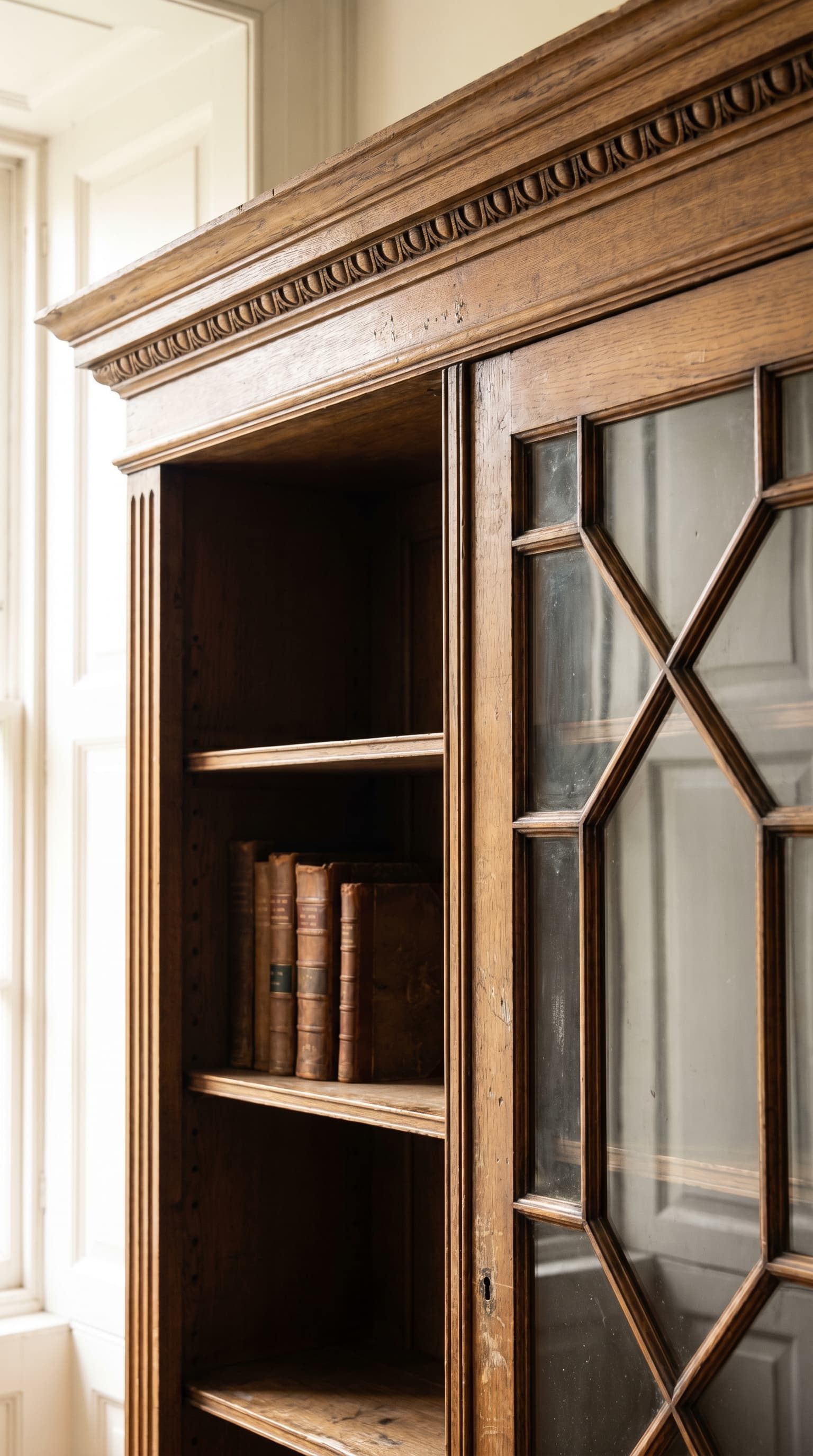
Antique bookcase identification starts with architectural details that changed predictably over centuries. Unlike upholstered furniture where fabric can mislead, bookcases and cabinets reveal their age through glazing bars, cornice profiles, joinery methods, and the relationship between glass and wood. A single photo of the glazing pattern can narrow down a bookcase's era by decades.
The best identification clues sit at the intersections: where glass meets frame, where shelves attach to sides, where the cornice crowns the top. These transition points show how cabinetmakers solved structural problems in ways specific to their time and training.
Clues That Matter for Antique Bookcase Identification
Glazing Bar Patterns and Muntins
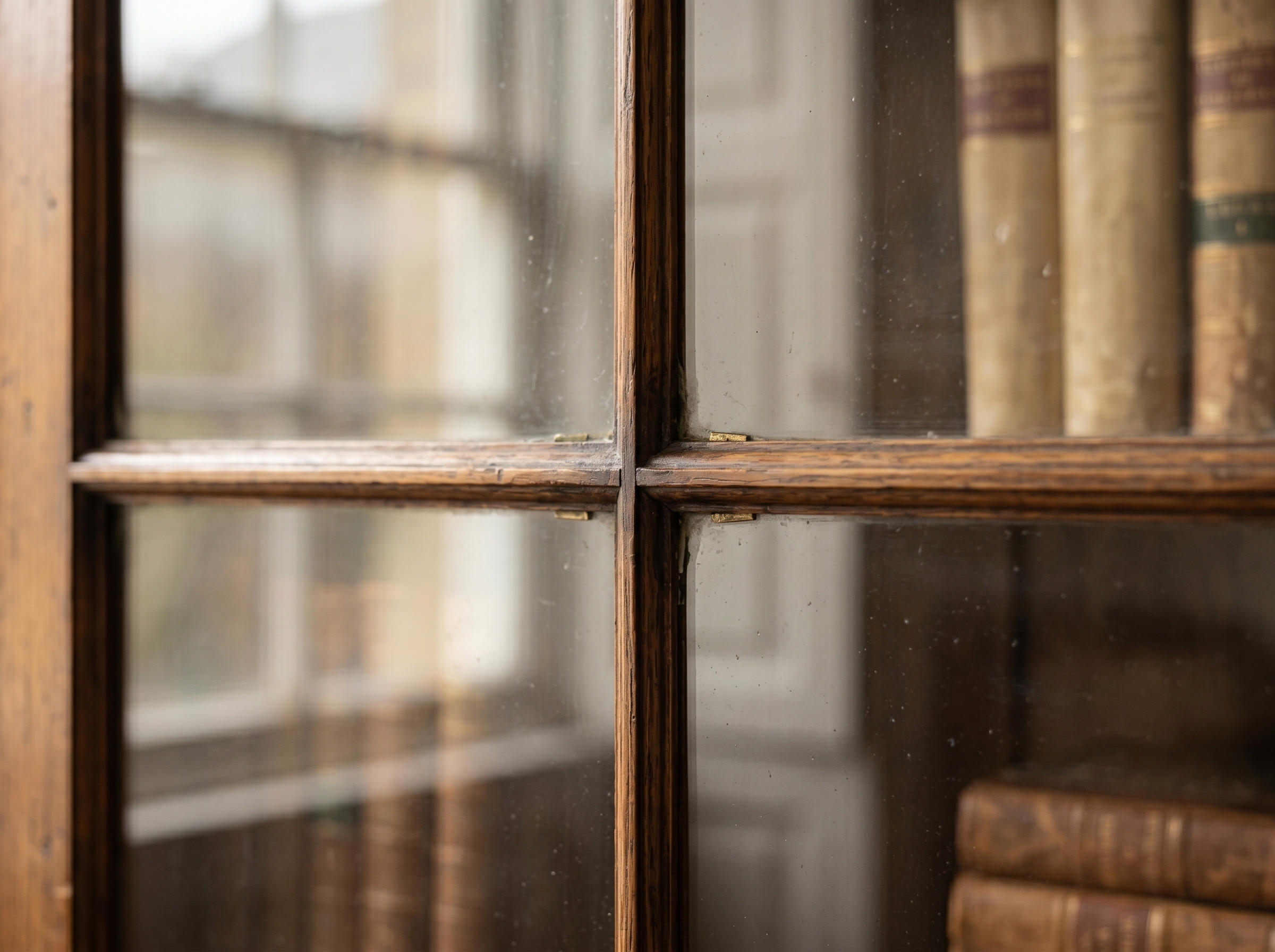
Glazing bars—the wood strips that divide glass panes—evolved from necessity to decoration. Before large glass sheets became affordable in the 1840s, cabinetmakers used multiple small panes held by thick muntins. Georgian bookcases (1714-1837) typically feature 12 to 15 panes per door in a regular grid pattern, with substantial glazing bars often 1/2 inch thick.
By the Victorian era (1837-1901), thinner bars became fashionable even when large glass was available, creating delicate patterns including Gothic arches and diamond shapes. Edwardian bookcases (1901-1910) often returned to simpler designs but with very thin muntins, sometimes just 1/4 inch.
A single large glass pane without muntins generally indicates post-1850 manufacture, though Arts and Crafts makers occasionally used oversized single panes intentionally after 1880.
Cornice Profiles and Crown Moldings
The cornice—the decorative top molding—changed shape following broader furniture fashion. Early Georgian examples often feature architectural dentil molding (small rectangular blocks) borrowed from classical buildings. Mid-Georgian pieces might have simpler curved swan-neck pediments.
Victorian cornices grew more elaborate, with layered moldings and applied decorative elements. A cornice with multiple distinct layers of different profiles usually dates after 1850. Simple, flat-topped bookcases without cornices often indicate Edwardian or Arts and Crafts origin (1890-1920), when plain designs became a deliberate rejection of Victorian excess.
Barrister bookcases—those stackable lawyer's bookcases with lift-up glass doors—almost always date between 1890 and 1940, with peak production around 1900-1920. Their modular design was a specific response to office needs.
Construction Methods and Joinery
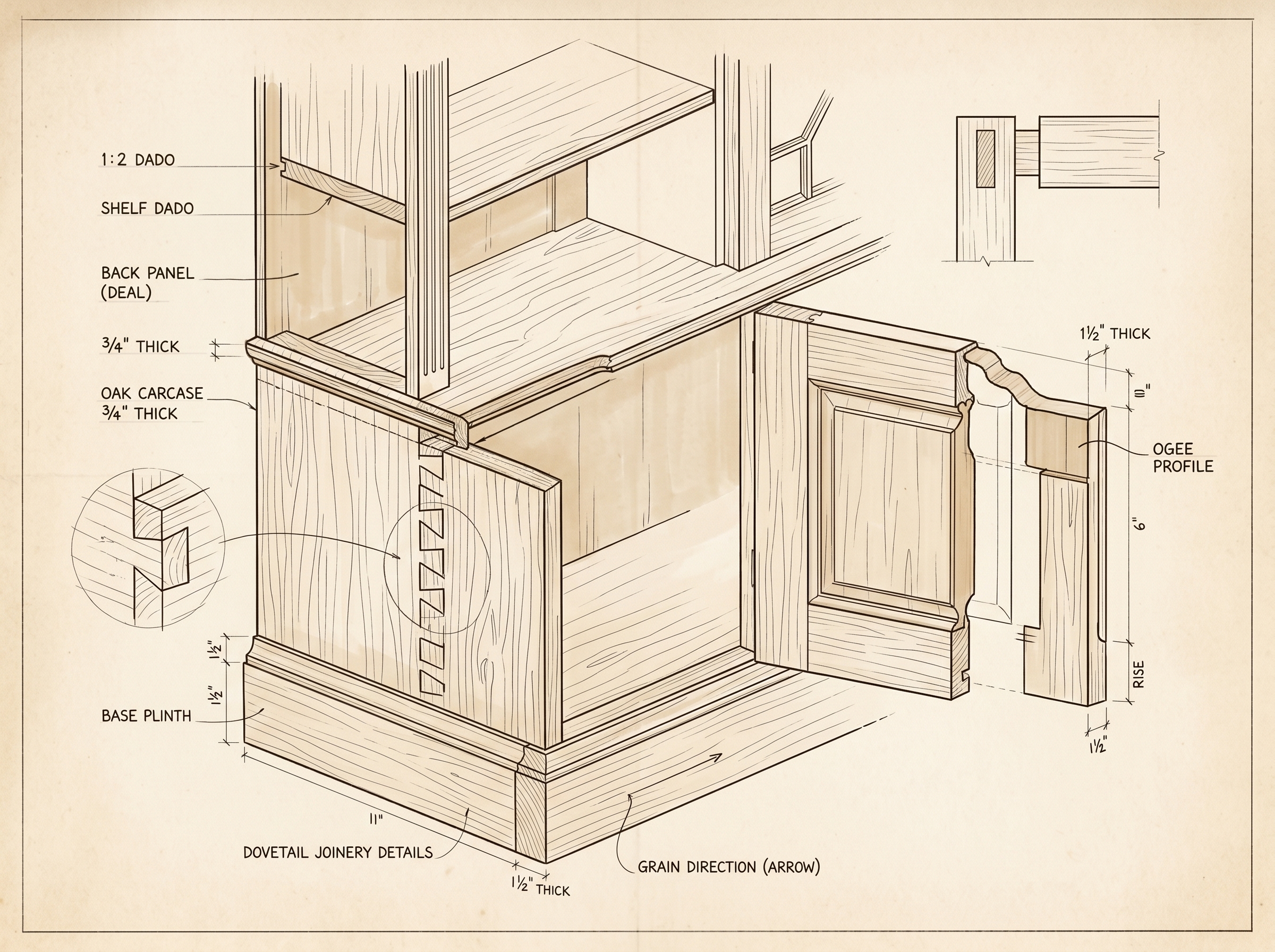
Flip a bookcase forward carefully or photograph the back and underside. Hand-cut dovetails with slightly irregular spacing and width suggest pre-1880 manufacture. Machine-cut dovetails appear perfectly uniform and became standard after 1890.
Shelf attachment reveals age too. Fixed shelves dadoed (grooved) into the sides indicate earlier construction. Adjustable shelves with evenly spaced holes drilled for pins became common after 1880. Victorian bookcases sometimes have both: fixed lower shelves and adjustable upper ones.
Back panel construction matters. Thin tongue-and-groove boards running vertically suggest quality work from any era. A single plywood sheet indicates post-1900 manufacture at earliest, more likely post-1920. Many fine antique bookcases have no back panel at all—they stood against walls and didn't need one.
Wood Species and Secondary Wood
The wood choices reveal both era and origin. Georgian library bookcases were often mahogany or walnut throughout. Victorian makers used more variety: oak, rosewood, or walnut for visible parts with pine or poplar for internal construction.
Check the wood on the back, shelf undersides, and drawer bottoms if present. Oak secondary wood suggests English or American manufacture. European makers often used beech or pine secondaries. Matching primary and secondary woods can indicate either very high quality or relatively recent manufacture—context from other clues matters.
Quarter-sawn oak with prominent ray fleck was especially popular for Arts and Crafts bookcases (1880-1920). If you see dramatic tiger-stripe figuring in oak combined with exposed joinery and copper or iron hardware, you're likely looking at that period.
What Photos to Take for Antique Bookcase Identification
Start with the glazing pattern. Photograph straight-on at eye level to capture the muntin arrangement without distortion. If the bookcase has two or more doors, photograph all of them—variations between doors can indicate repairs or replacements.
Capture the cornice in profile from the side, not just from below. The shadow line and layering of moldings shows best from a 45-degree angle with good lighting.
Photograph any joinery you can access without disassembly. Open doors to show hinges (butt hinges, H-hinges, or quadrant hinges all suggest different eras). If you can safely tilt the piece or look underneath, photograph dovetails on drawers or shelf attachment methods.
Shoot the back panel with enough light to show wood grain direction and any saw marks. Circular saw marks indicate post-1840 manufacture, while straight marks from pit saws or hand planes suggest earlier work.
Get close-ups of hardware: locks, escutcheons, door pulls, and shelf supports. Brass hardware with a patina generally predates chrome or nickel plating. Original screws have off-center hand-filed slots until about 1850, then perfectly centered machine-cut slots.
If there are labels, stamps, or maker's marks anywhere—inside doors, on the back, under shelves—photograph them clearly. Many Victorian manufacturers marked their work.
Common Misidentifications
The most frequent mistake is calling any old bookcase "Victorian" because it looks dark and formal. Many heavy oak bookcases that feel Victorian actually date to the 1920s-1940s, when Jacobean Revival and Tudor styles dominated middle-class furniture. True Victorian library furniture often used walnut or mahogany, not always oak.
Glazing patterns confuse people regularly. Decorative diamond or hexagonal muntins don't automatically mean "very old"—many were reproduced in the 1920s-1950s. The thickness of the glazing bars and the wood species provide better age clues than pattern alone.
Barrister bookcases are frequently misdated as Victorian when they're actually Edwardian. The stackable barrister design with lift-front glass doors became popular around 1900, not earlier. Companies like Globe-Wernicke and Macey made millions of them through the 1930s.
People often assume bookcases with adjustable shelves must be modern, but shelf pin systems existed by 1880. The regularity of the holes and whether they're drilled or hand-bored matters more than their mere presence.
The "secretary bookcase" or "bookcase desk" combination gets confused with standalone bookcases. If there's a fall-front writing surface or drawer desk below glass-fronted book storage above, that's a different furniture form with its own identification markers—see our guide on antique secretary desk identification.
What Tocuro Can Help Resolve
Identifying antique bookcases from photos works well when you know which details to examine, but synthesizing all those clues—glazing patterns plus joinery plus hardware plus wood species—takes practice. Tocuro's image recognition compares your bookcase against thousands of documented examples, matching the specific combination of features that pinpoint both era and style.
Upload photos showing the glazing bars, cornice profile, joinery details, and any maker's marks. Tocuro identifies the likely period, style, and origin based on those visible characteristics, then provides an estimated value range based on current market signals. That estimated value isn't a formal appraisal, but it gives you a realistic starting point grounded in what similar pieces actually sell for.
The platform works for more than just bookcases—once you understand how photos reveal age in one furniture type, you can apply similar principles to chairs, chests, or sideboards.
Get Your Bookcase Identified
Whether you've inherited a glass-fronted library cabinet or found a barrister bookcase at an estate sale, the quickest path to confident identification is showing the right details. Take clear photos of glazing bars, cornice profiles, joinery, and hardware, then let Tocuro's recognition system match those features against documented examples.
Identify your antique bookcase by uploading photos now. You'll get era, style, and estimated value in seconds—no guesswork required.
Photo identification
Identify Your Furniture
Use Tocuro to identify your item from a photo and get an estimated value range when market data is available.