
Antique Bed Frame Identification: How to Read Headboard and Rail Construction Clues
Identifying antique bed frames requires examining headboard and rail construction, joinery methods, hardware styles, and wood species. This guide shows which details reveal a bed's age and maker, which photos to capture, and how to avoid common misidentifications.
What Clues Matter in Antique Bed Frame Identification
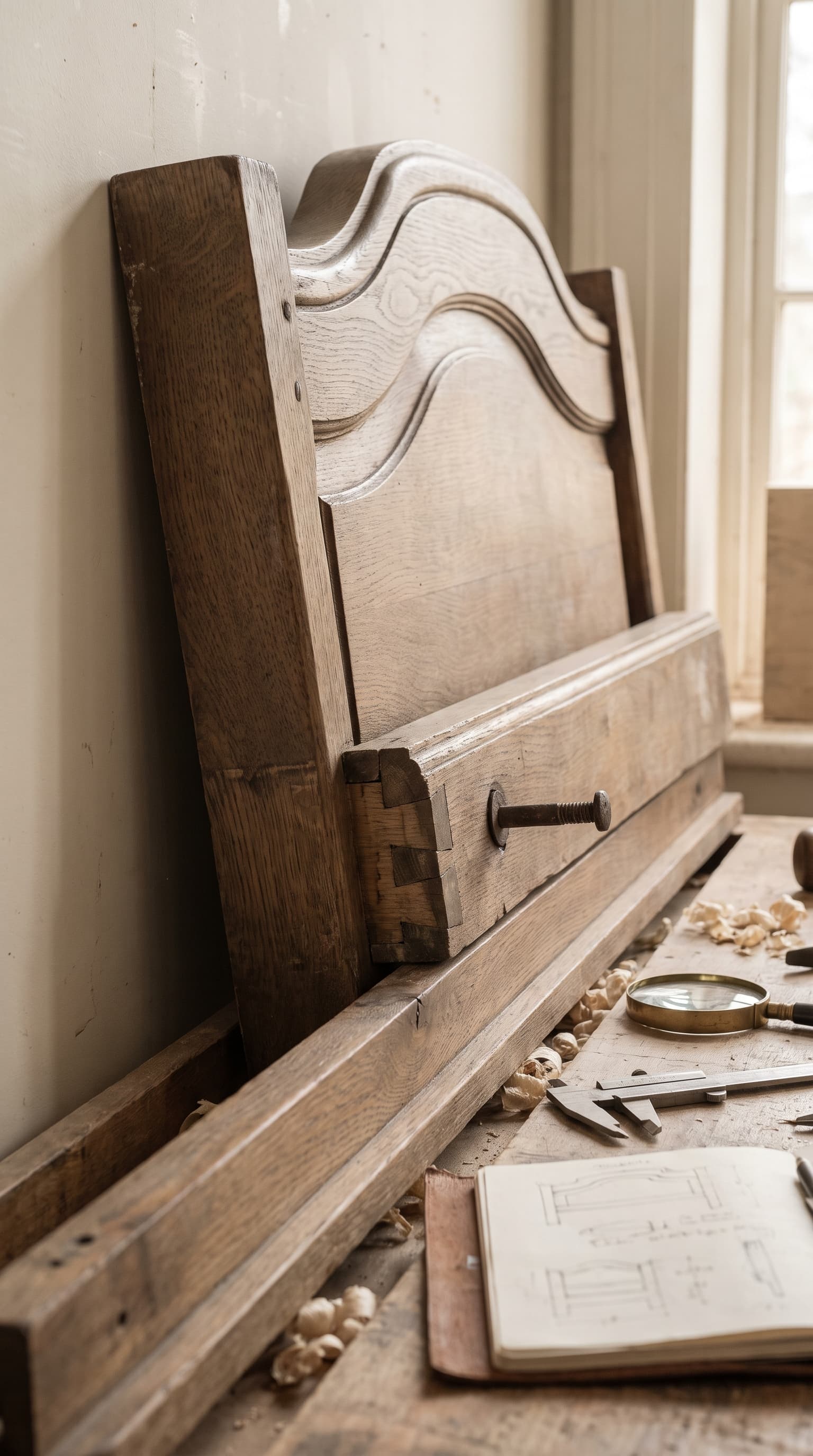
Antique bed frame identification starts with the headboard and rails—not the mattress size or decorative carving alone. The way a bed is built tells you far more about its age than its ornamental style. Start by examining the joinery where the headboard meets the side rails and footboard, then look at the hardware that holds everything together.
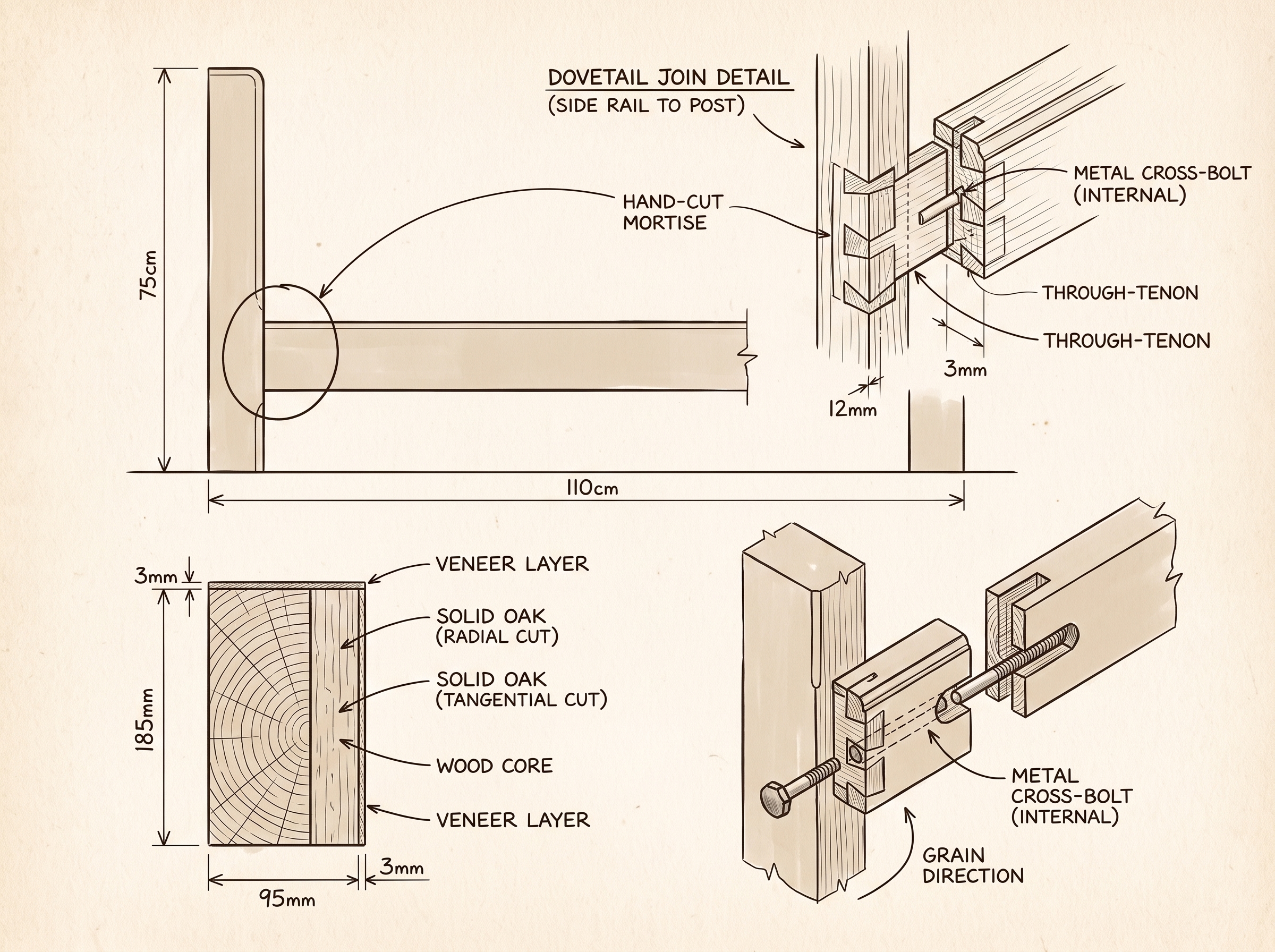
Pre-1850s beds often feature hand-cut mortise-and-tenon joints with wooden pegs holding the frame together. You'll see irregular plane marks on hidden surfaces and hand-forged nails or screws in the corner blocks. Rope beds, common through the early 19th century, have holes drilled through the side rails where rope wove across to support the mattress. These holes are typically spaced 4-6 inches apart and run the full length of each rail.
Victorian-era beds (1840s-1900s) switched to cast-iron or brass beds alongside wooden frames. Wooden Victorian beds usually have machine-cut dovetails on drawer components if the bed includes storage, plus machine-made screws with centered slots and uniform threads. The rails attach with hook-and-slot hardware or L-brackets, replacing earlier rope systems. Wooden slat supports become standard in this period.
Early 20th-century beds introduce metal bed frame hardware: spring clips, adjustable rail brackets, and stamped steel corner plates. Headboards may be veneered plywood or solid wood, but the joinery is more standardized. Look for manufacturer labels or stamps on the rails—companies like Simmons, National Furniture, and Jamestown began marking their products consistently.
Mid-century modern beds (1945-1970s) often feature platform construction with no box spring, low-profile headboards, and minimalist rail design. Joinery shifts to bolted connections with Allen screws or cam locks. Woods like walnut, teak, and birch are common, often with oil or Danish finishes rather than shellac or heavy varnish.
What Photos to Take for Antique Bed Frame Identification
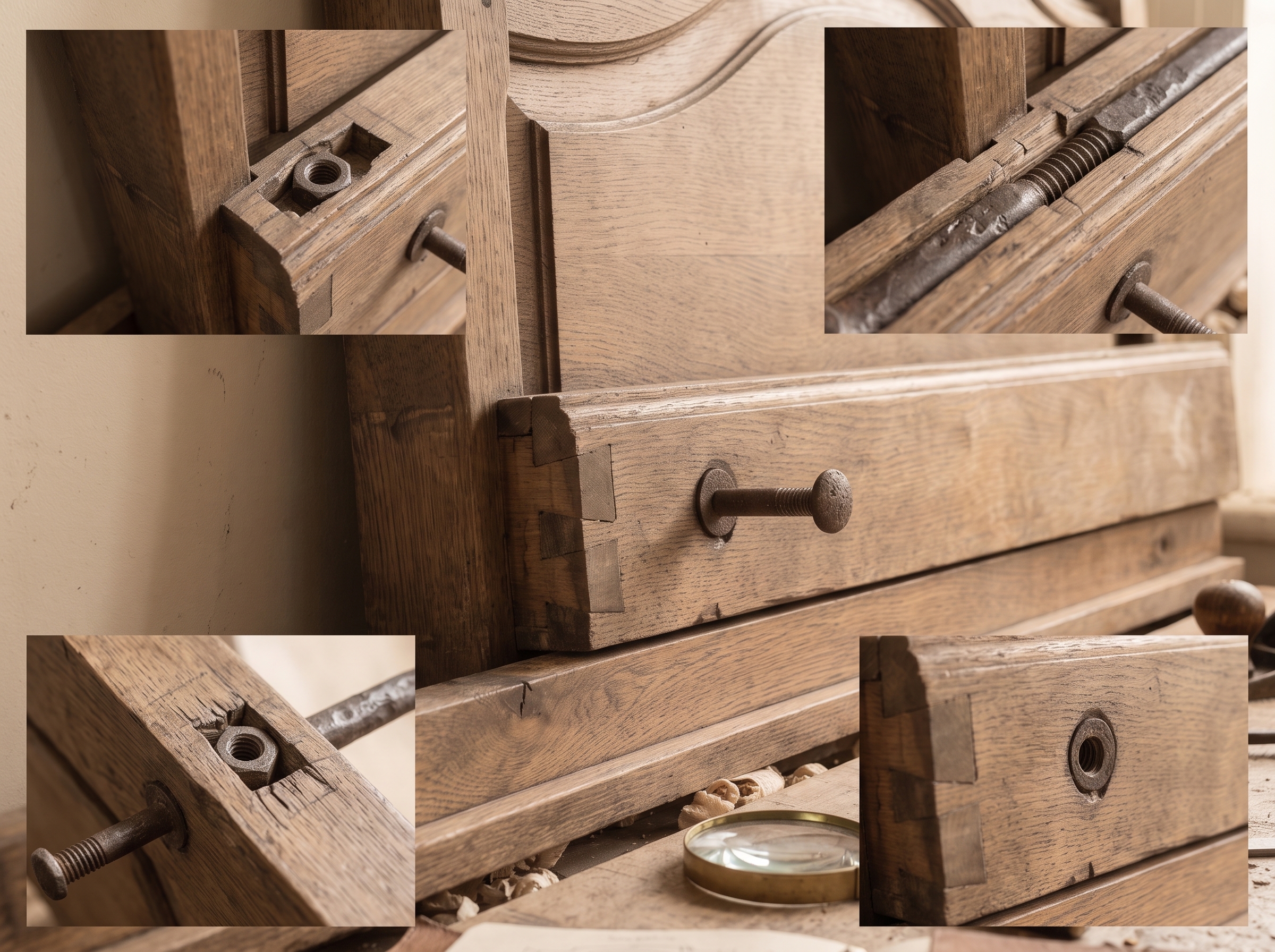
Capture the rail-to-headboard connection hardware from multiple angles. This is where you'll find the most telling construction details. Photograph both the interior side (where the hardware attaches) and the exterior decorative face. Get close enough that screw heads, bolt styles, and bracket shapes are clearly visible.
Take detailed shots of any rope holes, slat supports, or spring clips along the side rails. Measure and note the spacing between holes or slats—this helps narrow down the era. If the bed has a footboard, photograph its joinery and how it connects to the rails, using the same close-up approach.
Document any maker's marks, labels, or stamps. These appear most often on the inside face of the headboard or along the top edge of the side rails. Look for burned-in brands, paper labels (even fragments), or stamped numbers. Paper labels fade and peel, so capture whatever's left, even if it's just a corner.
Photograph wood grain and finish on both decorative and hidden surfaces. The back of the headboard or the underside of rails shows original wood color and tool marks without later refinishing. Saw marks, plane ridges, or circular saw patterns are visible here. Take a straight-on shot with good lighting so the texture reads clearly.
Include overall profile shots from the side and front. Bed height, headboard shape, and proportions change by era. A tall four-poster looks very different from a low Arts and Crafts frame, and those silhouettes help confirm what the hardware and joinery suggest.
Common Misidentifications in Bed Frame Dating
Rope beds get mislabeled as "colonial" when many were made well into the 1860s, especially in rural areas. Rope construction alone doesn't guarantee early dating—you need to check the wood species, saw marks, and overall proportions. A rope bed with circular saw marks is mid-19th century at earliest.
Ornate carving leads people to assume a bed is older than it actually is. Victorian revival styles from the 1920s-1940s copied earlier Rococo and Renaissance designs, but the joinery and hardware are 20th century. Check the screws, the precision of the dovetails, and whether there's any plywood or veneer. Hand-carved doesn't mean hand-built.
Metal beds often get attributed to the wrong manufacturer. Dozens of companies made similar brass and iron beds from 1880-1930, and many didn't mark their products. Without a clear maker's mark, you can identify the era and general quality level, but pinning down a specific maker is difficult. Don't assume every ornate brass bed is a high-end manufacturer without documentation.
Platform beds are frequently called "Danish modern" when they're mass-market American pieces from the 1960s-70s. True Danish imports or licensed American-made designer beds have specific joinery, wood quality, and often a maker's mark or remnants of a label. Generic platform beds in teak-stained finishes are plentiful and much less valuable.
Size confusion happens constantly. Antique beds were built for mattress sizes that no longer match modern standards. A "full" antique bed might measure 52 inches wide instead of today's 54 inches, and "double" beds vary widely. When identifying a bed, measure the actual interior rail dimensions rather than assuming a modern size category.
What Tocuro Can Help Resolve
Antique bed frame identification often stalls when you can't interpret the hardware, don't recognize a joinery style, or find a partial maker's mark you can't trace. Tocuro identifies items from photos and cross-references construction details, wood types, and hardware styles to narrow down the period and potential makers.
Upload clear photos of your bed's rail connections, headboard joinery, any labels or marks, and the overall frame. Tocuro analyzes these details and provides an identification with an estimated value range based on current market signals—not a formal appraisal, but a practical sense of what similar beds are selling for. You get 7 free identifications per day, and the count resets daily, so you can photograph multiple details or compare a few different pieces.
When you're stuck on whether a bed is original or heavily restored, whether the hardware is period-correct, or whether a maker's mark fragment is legible enough to trace, Tocuro's photo-based identification gives you a starting point grounded in real market data.
Ready to Identify Your Bed Frame?
Bed frames reveal their age through construction, not just style. Once you know where to look—the rail hardware, the joinery, the tool marks—you can move past guesswork and get a reliable identification.
Identify your antique bed frame now with photos. Tocuro walks you through what matters and gives you an estimated value range based on current market activity.
If you're working through other furniture pieces, the same close-up approach applies. Check out antique desk identification for more on hardware and joinery clues, or explore mid-century chair identification for tips on recognizing modern-era construction details.
Photo identification
Identify Your Furniture
Use Tocuro to identify your item from a photo and get an estimated value range when market data is available.