
What to Look for When Buying Antique Furniture: A Collector's Checklist
A practical guide to evaluating antique furniture before purchase, covering construction details, condition checks, and authenticity markers that help collectors make confident decisions in shops, estates, and online marketplaces.
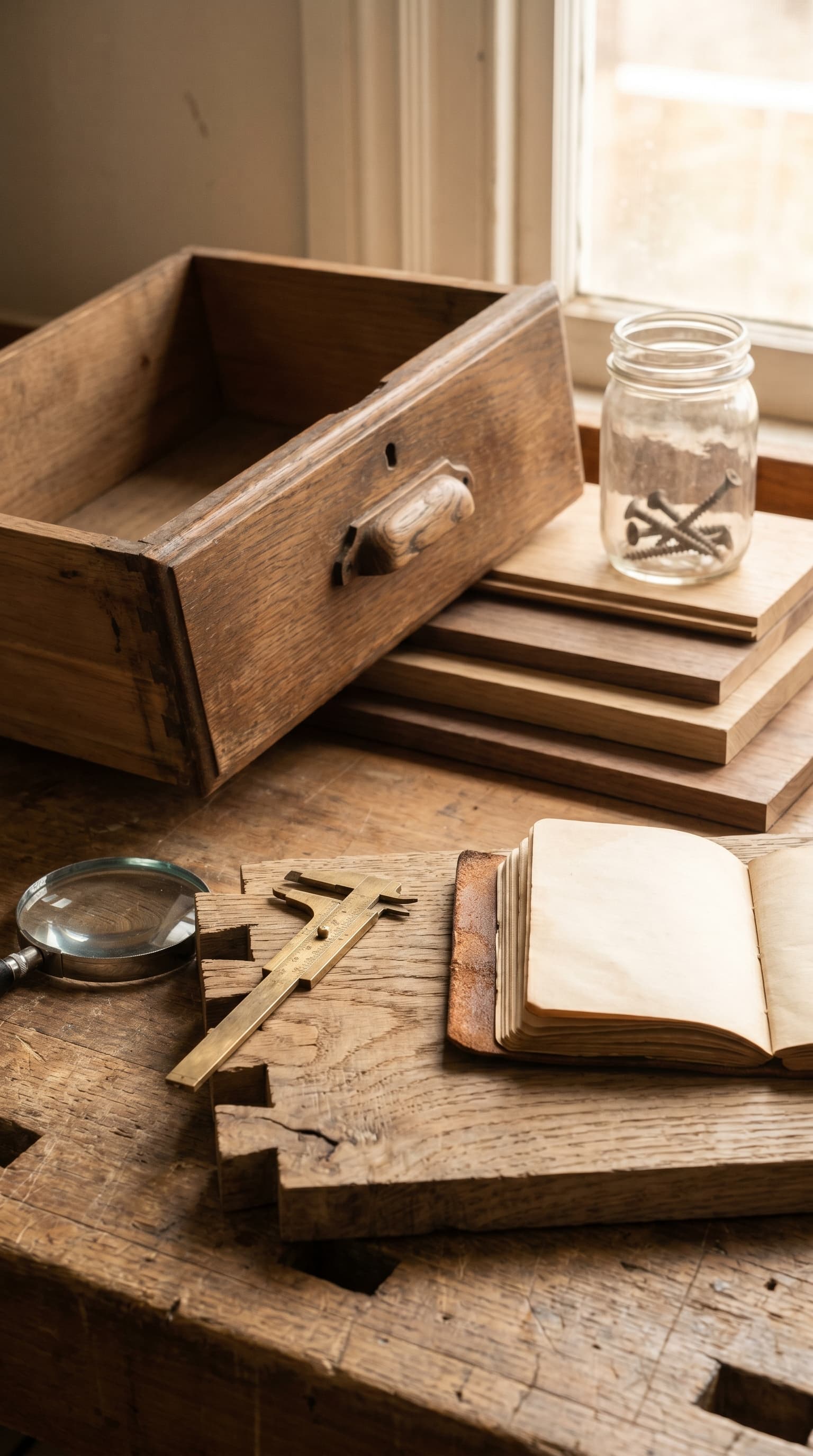
What to Look for When Buying Antique Furniture: A Collector's Checklist
You're at an estate sale, auction preview, or dealer's showroom. You've spotted a piece that catches your eye—maybe a walnut dresser, a Federal-style sideboard, or a Windsor chair. The question isn't whether you like it. The question is: what should you actually check before handing over money?
Knowing what to look for when buying antique furniture helps you move quickly when something's worth it and walk away when it's not. This isn't about becoming an expert overnight. It's about building a mental checklist you can run through in five minutes, whether you're shopping in person or evaluating photos online.
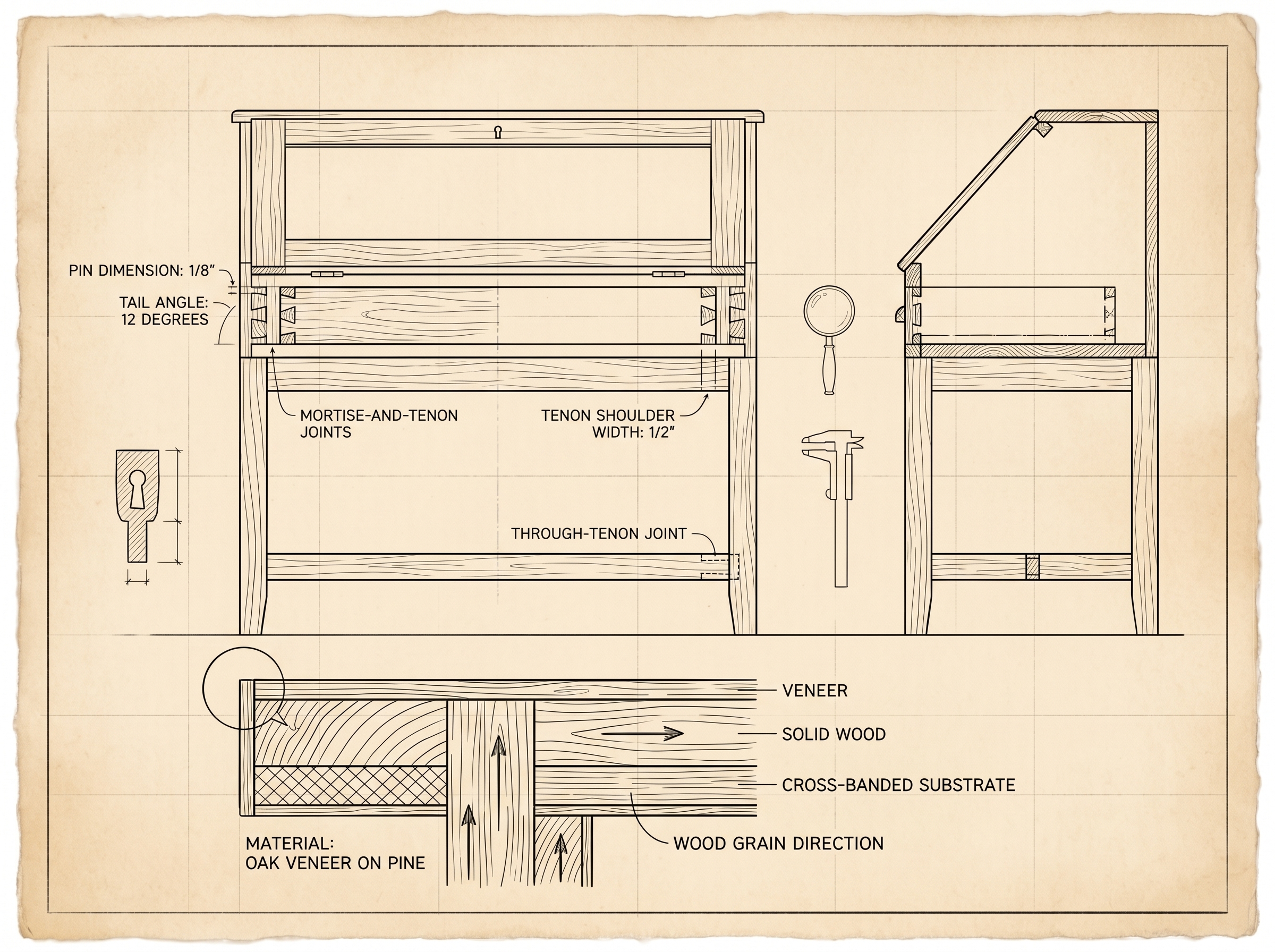
What to Check Fast: Your First-Pass Scan
When you're standing in front of a piece—or scrolling through listing photos—start with the features that reveal the most about age, authenticity, and condition.
Construction and joinery
Flip the piece over, open the drawers, look at the back panels. Handcut dovetails (irregular spacing, slightly different angles) usually signal pre-1890 work. Machine-cut dovetails are uniform and appeared after the 1860s. Mortise-and-tenon joints, wooden pegs, and hand-planed surfaces point to earlier construction. If you see staples, particle board, or Phillips-head screws, you're looking at 20th-century work or later repairs.
Hardware and fasteners
Original hardware adds value and confirms age. Hand-forged nails and screws with off-center slots suggest 18th or early 19th century. Machine-cut nails (rectangular with blunt ends) were common from the 1830s to 1890s. Modern round wire nails date to the 1890s onward. Pulls, hinges, and escutcheons should show appropriate wear and patina. Replacements aren't disqualifying, but they affect value and authenticity.
Wood and finish
Look at unexposed areas—drawer bottoms, undersides, backs—to see the wood in its natural state. Solid wood throughout is a good sign. Veneer over solid secondary wood is period-appropriate for many styles. Veneer over plywood or composite isn't. The finish should show consistent wear in logical places: edges, drawer fronts, armrests. If the patina looks thin in high-contact areas but thick in protected spots, that's normal. If it's evenly thick everywhere, someone may have refinished it recently.
Condition red flags
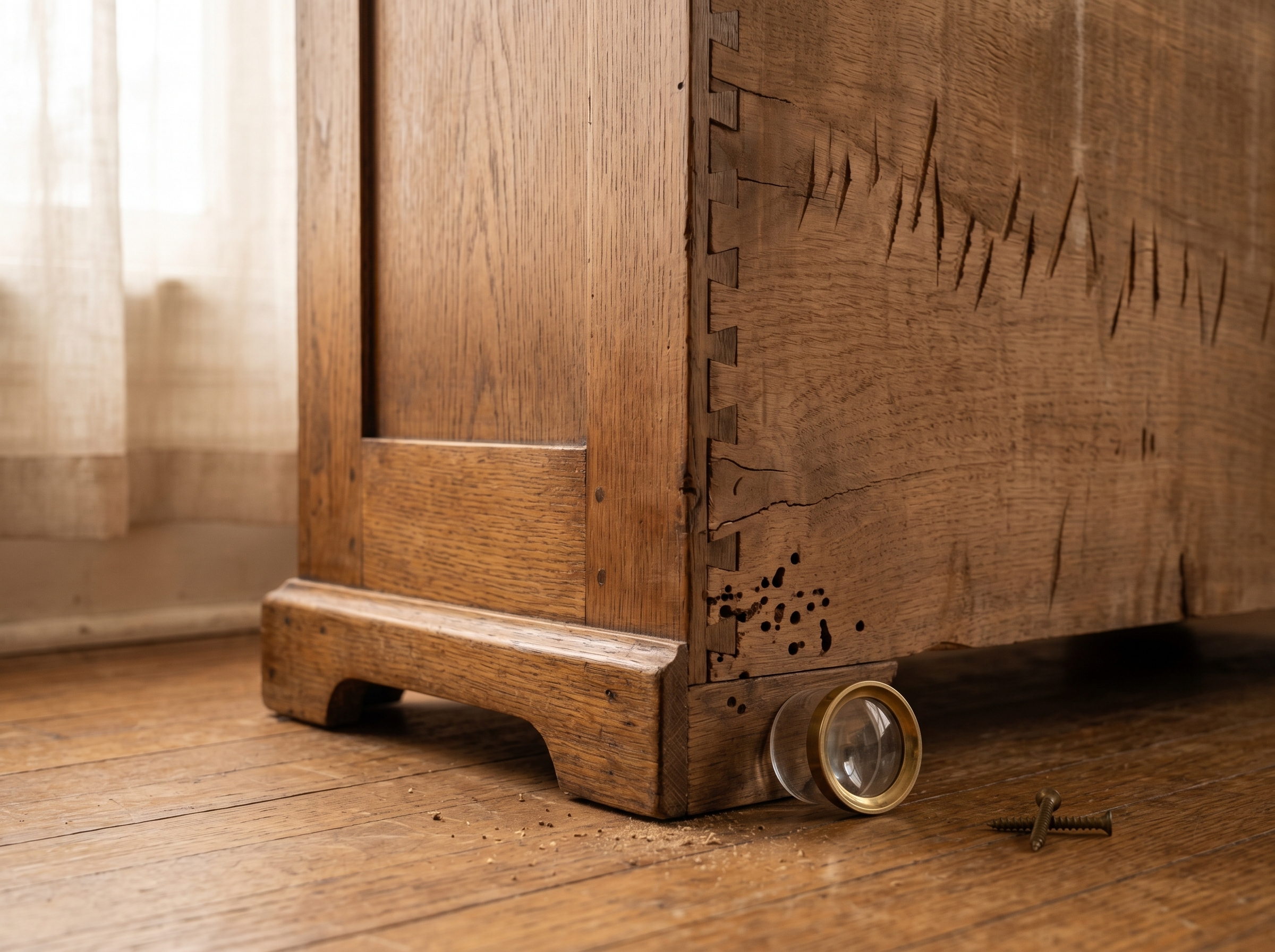
Check for structural issues that cost more to fix than the piece is worth. Wobbly joints, cracked legs, missing veneer, active woodworm holes (fresh sawdust is a giveaway), and water damage all affect both usability and value. Surface wear is expected. Structural compromise is a negotiation point or a deal-breaker.
What's Worth Saving or Researching
Some details require a second look or a quick photo check before you decide.
Maker's marks and labels
Lift cushions, check drawer interiors, look inside cabinets. Paper labels, branded stamps, stenciled names, and chalk marks can identify makers, retailers, or regional workshops. Even a partial label is worth photographing. Some marks are well-documented and add significant value. Others are harder to trace but still help with provenance.
Style consistency
Does the piece look right for its claimed period? Victorian pieces shouldn't have Art Deco hardware. Federal furniture shouldn't have chunky Empire-style feet. Marriages—combining parts from different pieces—happen often. They're not always obvious at first glance, but mismatched wood grain, inconsistent joinery, or style clashes are clues.
Repairs and alterations
Older furniture has often been repaired or modified. That's normal. What matters is the quality and reversibility of the work. Professional conservation maintains value. Amateur fixes with wrong-era materials don't. Look for added feet (common on chests), replaced legs, glued splits, and mismatched wood patches. If a repair is well-executed and honest, it's part of the piece's history. If it's deceptive, walk away.
Proportions and weight
Period furniture often feels heavier and more solid than reproductions. The wood is typically denser, the construction more robust. If something feels light or flimsy, check more carefully. Reproductions and later adaptations sometimes cut corners on materials. Proportions also matter—some reproductions look close but get dimensions slightly wrong.
How Tocuro Fits Into Your Shopping Workflow
You don't always have time to research at the point of sale. Auctions move fast. Estate sales get picked over within hours. Even when shopping online, you're competing with other buyers.
This is where taking photos pays off. Snap clear shots of joinery, hardware, any marks, the overall piece, and condition issues. Upload them to Tocuro and you'll get an identification along with an estimated value range based on current market signals. It's not a formal appraisal, but it gives you a realistic benchmark before you commit.
Tocuro helps when you're deciding between two similar pieces, verifying a seller's claims, or checking if a price is in the ballpark. You get 7 free identifications per day, and the count resets daily, so you can check multiple items during a shopping trip without burning through credits.
If you're shopping online and the seller's photos don't show enough detail, ask for more. Request shots of drawer construction, underside marks, and close-ups of hardware. Any hesitation to provide them is a yellow flag.
When to Walk Away
Not every piece is worth buying, even if it's old. Here's when to pass:
- •Structural damage that's expensive to fix: Split tops, broken legs, missing supports, or severe woodworm damage often cost more to repair than the piece is worth.
- •Refinished to the point of erasing character: Heavy sanding, modern stain over original finish, or thick polyurethane coats reduce value and appeal.
- •Reproductions sold as period pieces: If the construction, materials, and wear don't match the claimed age, trust your instincts.
- •Price wildly above market: Use Antique Furniture Valuation signals as a reality check. If a dealer is asking twice the market range, you're either looking at something exceptional or something overpriced.
What Makes a Piece Worth Buying
The best antique furniture purchases balance condition, authenticity, and price. You're looking for pieces that:
- •Show honest age and wear without major structural issues
- •Have original or period-appropriate hardware and finishes
- •Match their claimed style and era in construction details
- •Fit your space and collecting goals
- •Are priced within or below current market ranges
You don't need perfection. You need transparency. A piece with disclosed repairs and honest wear is often a better buy than one that's been over-restored or misrepresented.
Using Photos to Make Faster Decisions
Whether you're shopping in person or online, photos are your shortcut to better decisions. Take close-ups of what matters most: joinery, hardware, labels, finish condition, and any red flags. Good photos let you research after the fact, compare multiple pieces, and get input from identification tools or other collectors.
How to Identify Antique Furniture walks through what photos reveal about age and origin. If you're trying to distinguish true antiques from high-quality vintage pieces, How to Identify Vintage Furniture explains the differences.
And if you're concerned about reproductions, How to Tell If Furniture Is Authentic covers the tells that separate period pieces from later copies.
Start Your Next Purchase With Confidence
Knowing what to look for when buying antique furniture turns shopping from guesswork into strategy. You move faster, negotiate smarter, and avoid costly mistakes.
Next time you're evaluating a piece, snap a few photos and identify it with Tocuro. You'll get an ID and estimated value range in minutes—before you pay, not after you regret it.
Photo identification
Identify Your Furniture
Use Tocuro to identify your item from a photo and get an estimated value range when market data is available.