
What to Look for at Estate Sales: A Collector's Screening Guide
Estate sales offer concentrated hunting grounds for collectors, but the window is short and competition is real. This guide shows what to screen for quickly, which categories typically reward close attention, and how to build a research workflow that turns estate sale finds into a meaningful collection.
Why Estate Sales Reward Fast, Focused Collectors
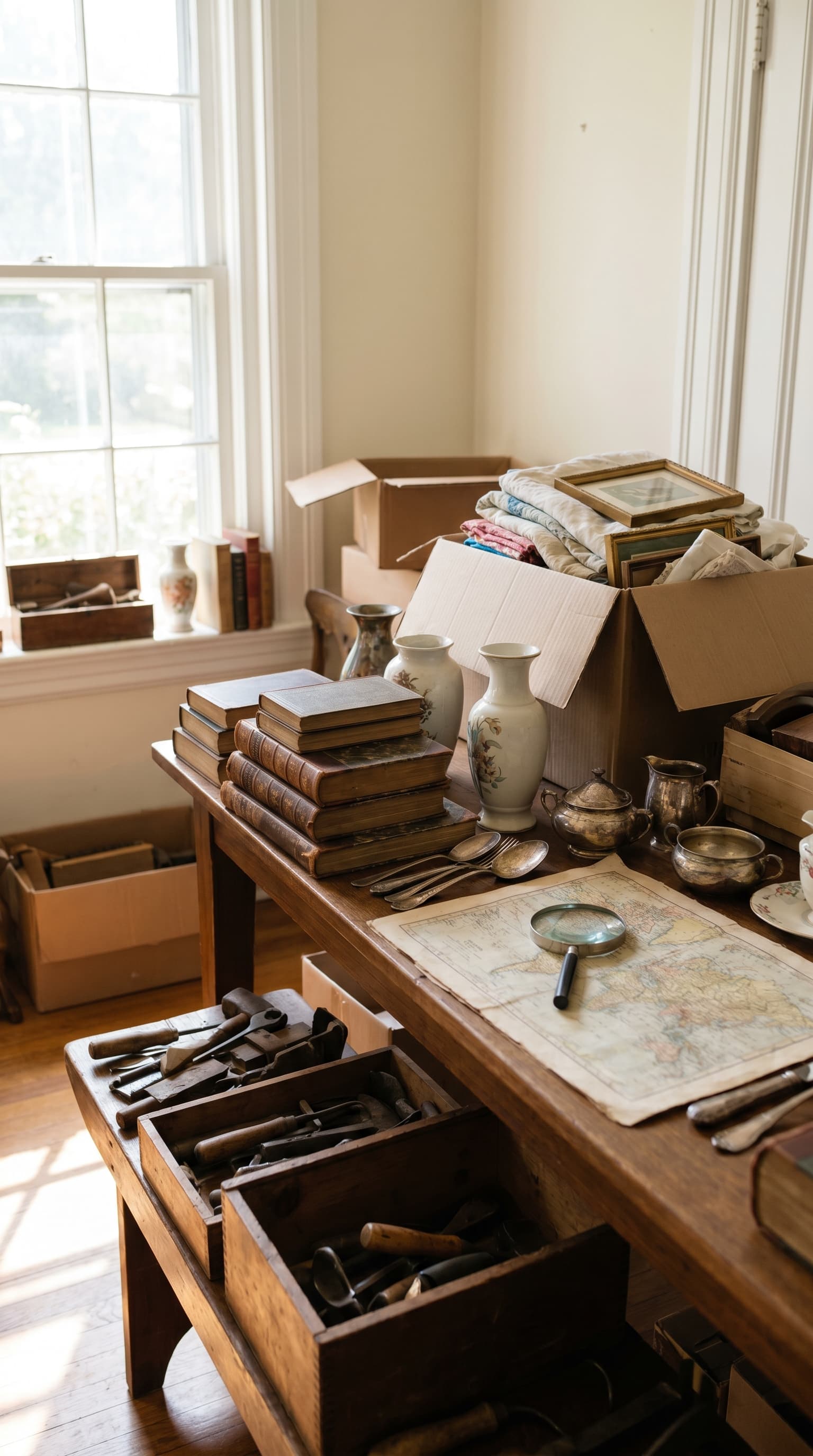
Estate sales compress an entire household into a few shopping days, which means real treasure often sits alongside everyday clutter. Knowing what to look for at estate sales lets you move quickly through rooms, identify the pieces worth closer inspection, and skip the stuff that looks good from across the room but won't hold value or interest once you're home.
Unlike thrift stores, estate sales typically preserve original context—furniture still arranged in rooms, collections grouped together, and accessories displayed as they were used. That context can help you spot quality, spot patterns, and move faster than shoppers who treat every item like a mystery.
What to Screen for Quickly
Your goal in the first pass is to separate possibilities from definite passes. Look for these signals as you walk through:
Solid wood construction. Knock on furniture. Solid wood sounds dense and dull; veneer over particle board sounds hollow. Check drawer sides, backs of cabinets, and underside edges. Dovetail joints, hand-cut or machine-cut, indicate furniture worth a second look.
Maker's marks, stamps, and signatures. Flip over pottery, check the base of lamps, pull out drawers to check for branded stamps, inspect the backs of framed art. Any mark is a research opportunity. Photograph it even if you don't recognize it.
Weight and heft. Heavier glass, ceramic, and metal pieces often indicate older production methods or higher-quality materials. A surprisingly heavy bowl or vase deserves a closer look at the base and any decorative details.
Intact sets and groupings. Complete tea sets, matched glassware in original boxes, or book collections signal that someone cared. Sets are often worth more together than apart, and they're easier to research when you can see the whole pattern.
Unusual materials or techniques. Hand-blown glass, hand-painted details, carved wood, inlaid marquetry, cast bronze hardware. Anything that required skill or labor usually means someone thought it was worth the effort.
What to Look for at Estate Sales by Category
Certain categories consistently reward attention at estate sales. Here's what to prioritize:
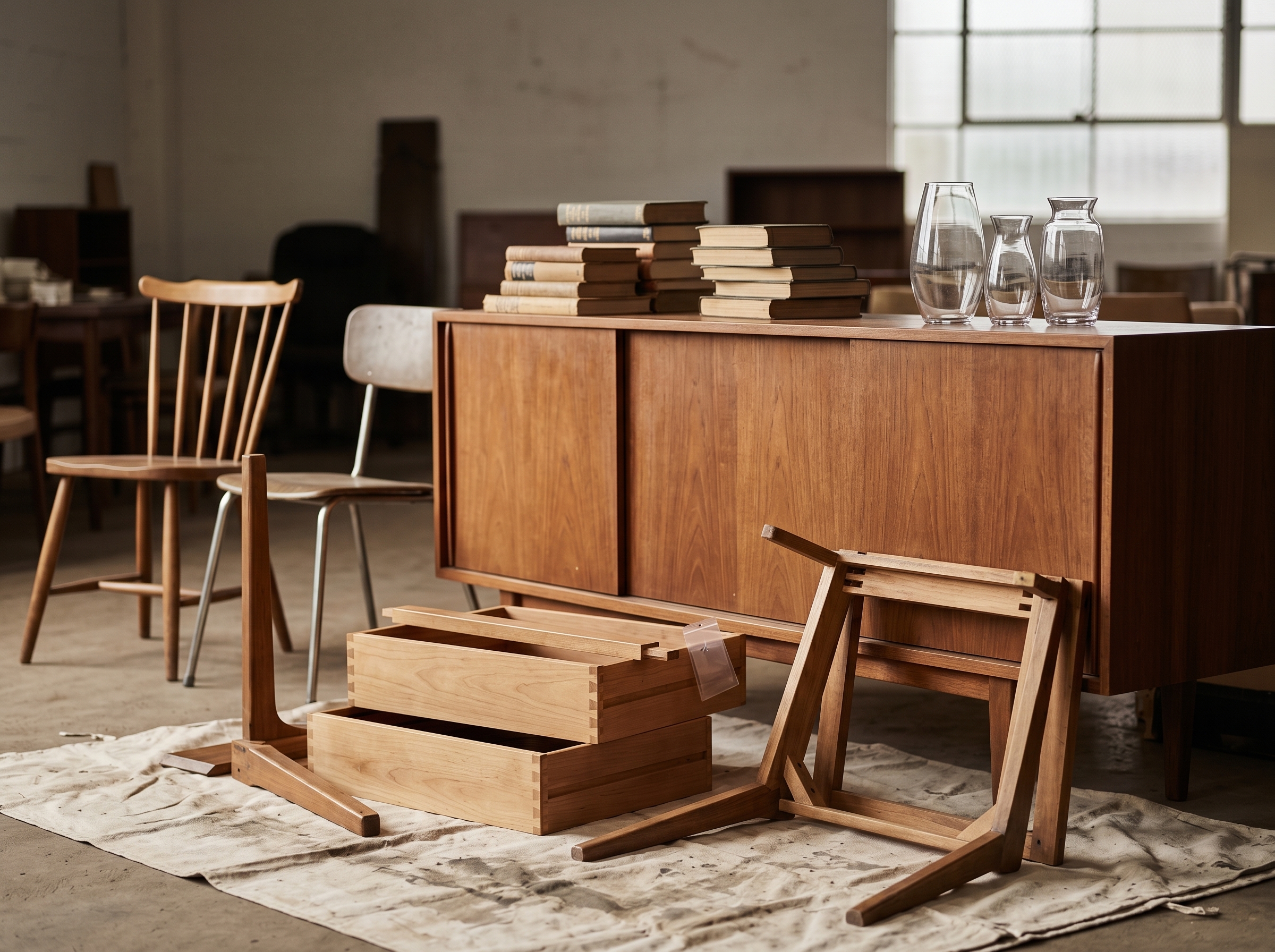
Furniture with visible joinery
Dovetailed drawers, mortise-and-tenon joints, or hand-planed surfaces suggest age and quality. Check under tables, inside drawers, and behind backing panels. Original finish, even if worn, often adds more value than a refinished piece.
Mid-century and vintage glassware
Look for colored glass, unusual shapes, or pressed patterns. Brands like Fenton, Blenko, Murano, and Depression-era patterns turn up regularly. Check for chips along rims and bases—they dramatically affect value.
Pottery and ceramics with marks
American art pottery (Roseville, McCoy, Weller), studio pottery with artist signatures, and European porcelain all appear at estate sales. Even unmarked pieces can be valuable if the glaze, form, or decoration suggests a known maker.
Sterling silver and fine jewelry
Check for hallmarks: "925," "sterling," or maker's marks. Weigh silver in your hand—solid pieces feel substantial. Costume jewelry with designer names (Trifari, Eisenberg, Miriam Haskell) can be worth as much as or more than unmarked gold-filled pieces.
Original artwork and prints
Look for signatures, edition numbers, and framing quality. Original oils and watercolors, signed lithographs, and etchings all appear. Check the back of frames for gallery labels, exhibition stickers, or provenance notes.
Vintage textiles and linens
Hand-embroidered tablecloths, quilts with documented patterns, and designer scarves often get overlooked. Check for condition—stains and holes matter more here than in most categories—but don't dismiss pieces with minor issues if the workmanship is exceptional.
What's Worth Photographing and Researching Later
You can't research everything on-site, especially if the sale is crowded. Photograph anything that shows:
- •Clear maker's marks, signatures, or labels
- •Construction details (joinery, hardware, backing materials)
- •Overall form and decorative elements
- •Condition issues (cracks, repairs, missing pieces)
- •Price tags, so you remember what the ask was
These photos let you research while the sale is still running, decide whether to return for a second pass, or compare what you saw across multiple sales. Over time, this builds your visual library and sharpens your eye for what matters in each category.
How Tocuro Fits Into the Estate Sale Workflow
When you're standing in a crowded house trying to decide whether a pottery vase or a wood side table is worth the asking price, you need answers fast. Tocuro identifies items from photos and provides estimated value ranges based on current market signals, so you can screen pieces in real time without leaving the sale.
Snap a photo of the maker's mark on the bottom of a piece of glassware, the joinery inside a drawer, or the overall form of a chair. Tocuro analyzes the image, identifies the likely maker or style, and shows you a value range drawn from recent sales data. You get 7 free identifications per day, and the count resets daily, so you can check the most promising pieces without committing to anything.
This workflow turns estate sale shopping from guesswork into a screening process. You photograph, identify, research, and decide—all while the sale is still happening. The pieces that check out become part of your collection. The ones that don't stay on the shelf for someone else.
Building a Collection That Reflects Your Interests
Knowing what to look for at estate sales isn't just about finding valuable items. It's about recognizing which categories speak to you, which makers you want to learn more about, and which pieces fit into the collection you're building.
Maybe you're drawn to studio pottery and want to learn the regional styles. Maybe mid-century furniture fits your home and your aesthetic. Maybe you collect a specific glass pattern and estate sales are where you fill gaps in your set. The more focused your interests, the faster you can move through a sale and the more confident you'll feel when you do find something worth bringing home.
Start by choosing one or two categories to focus on. Learn the marks, the construction methods, and the condition issues that matter. Check pieces against your phone while you're on-site. Over time, you'll recognize quality at a glance and know which makers are worth a second look.
Ready to Start Building Your Collection?
Estate sales move fast, but that's what makes them rewarding. When you know what to screen for and have a system for researching on the spot, you can walk into any sale with confidence. Start identifying and tracking the pieces you find as you build a collection that reflects your eye, your interests, and the stories you want to preserve.
Frequently Asked Questions
What should I look for first at an estate sale?
Start with furniture and larger pieces that show visible joinery, maker's marks, or solid wood construction. Then move to smaller collectibles like glass, pottery, and jewelry. Photograph any marks or signatures you find for later research.
How do I know if something is valuable at an estate sale?
Look for maker's marks, quality materials, hand-crafted details, and intact condition. Weight, construction methods, and original finishes all signal potential value. Use photos to research pieces on-site before committing.
What categories are best for beginner collectors at estate sales?
Mid-century glassware, marked pottery, and solid wood furniture offer clear learning curves and visible quality signals. These categories appear frequently, have active resale markets, and reward careful inspection.
Should I buy unmarked items at estate sales?
It depends. Unmarked pieces can still be valuable if the form, glaze, construction, or materials suggest a known maker or period. Photograph details and research before buying unless the price is low enough that the risk is acceptable.
How do I research items quickly while at an estate sale?
Photograph maker's marks, construction details, and overall form. Use an identification tool like Tocuro to get fast answers based on current market data. This lets you screen pieces in real time and decide whether to buy before the sale ends.
Collector workflow
Start Collecting
Save your finds, track what you own, and turn one-off discoveries into a collection.