
Vintage Jewelry Value: How to Get a Realistic Price Estimate Fast
Understanding vintage jewelry value starts with knowing what you're really asking—resale price, insurance value, or replacement cost. This guide walks through the factors that affect price, when a photo-based estimate is enough, and how to get a quick value range before deciding whether you need a formal appraisal.
Vintage Jewelry Value: How to Get a Realistic Price Estimate Fast
When you're holding a piece of vintage jewelry—whether it's an estate sale find, an inherited brooch, or a marked ring from your grandmother's collection—the first question is usually "What's it worth?" But before you can get a useful answer, you need to know which kind of vintage jewelry value you're actually asking about.
What People Mean When They Ask About Vintage Jewelry Value
Most people use "value" as shorthand for several different numbers:
Resale value is what you'd likely get if you sold the piece today—through an online marketplace, consignment shop, or dealer. This is usually the lowest number and the one most collectors care about when deciding whether to sell.
Insurance replacement value is what it would cost to replace the piece with something comparable. Insurers use this for coverage, and it's typically higher than resale because it includes retail markup and finding costs.
Auction estimate is the range an auction house expects a piece to sell for, usually somewhere between resale and insurance value. It depends heavily on venue, timing, and buyer audience.
Sentimental value doesn't convert to dollars, but it matters. A $200 bracelet from your grandmother might be priceless to you and ordinary to everyone else.
For most situations—deciding whether to sell, insure, or just understand what you have—you're looking for a realistic resale range. That's what a good estimate gives you.
What Affects Vintage Jewelry Value
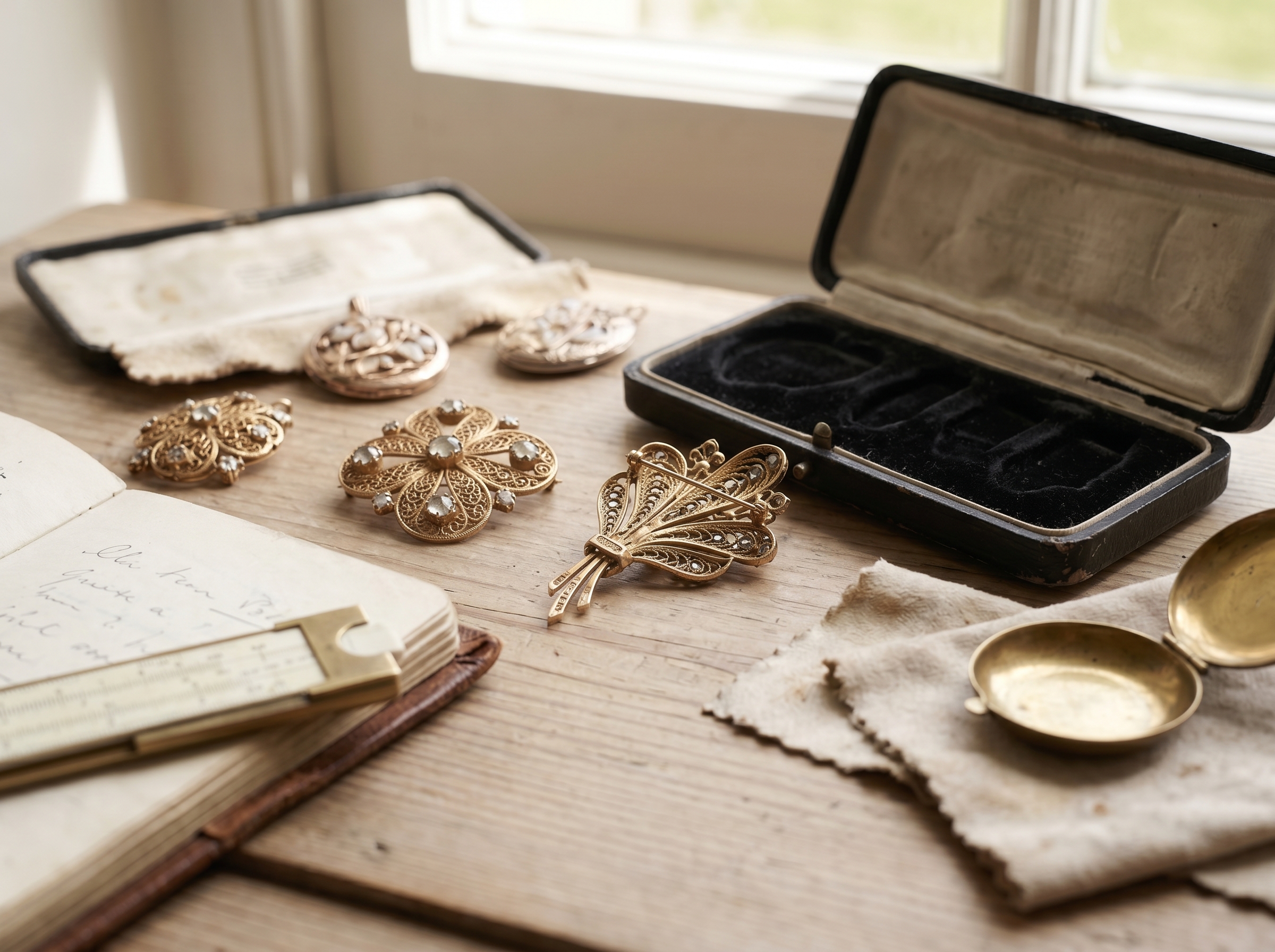
Vintage jewelry prices depend on a mix of materials, maker, condition, and market demand. Here's what moves the number:
Materials and gemstones
Gold weight, silver purity, and gemstone quality form the baseline. A piece with genuine diamonds, rubies, or sapphires will be worth more than one with glass or synthetic stones. Platinum commands a premium over gold. Solid gold beats gold-filled or gold-plated.
But materials aren't everything. A beautifully designed piece in silver can be worth more than a plain gold band.
Maker and marks
Signed pieces from known makers—Trifari, Eisenberg, Cartier, Tiffany, Georg Jensen—almost always command higher prices than unsigned work. A maker's mark, hallmark, or signature tells you who made it and often when.
Even unsigned pieces can have value if the style, construction, and materials point to a quality maker or desirable period.
Era and style
Art Deco, Victorian, Edwardian, Retro, and Mid-Century Modern periods all have their collectors. Right now, Art Deco and Mid-Century pieces tend to perform well, but trends shift. A piece that's currently out of fashion might climb in value as tastes change.
Style matters, too. Bold, wearable designs usually sell better than damaged or overly delicate pieces that can't be worn.
Condition and wearability
Missing stones, broken clasps, bent prongs, or worn plating all reduce value. Repairs can help, but they cost money. Buyers pay more for pieces they can wear immediately.
That said, some damage is acceptable depending on age and rarity. A rare Victorian piece with minor wear is still collectible. A 1980s costume brooch with the same issues is harder to move.
Market demand
Vintage jewelry value fluctuates with collector interest, fashion cycles, and availability. Bakelite bangles were hot in the 1990s, cooled off, and have warmed again. Cameos go in and out of favor. Engagement ring styles shift every decade.
Online marketplaces have made pricing more transparent but also more competitive. If twenty similar brooches are listed, yours needs to stand out or be priced right.
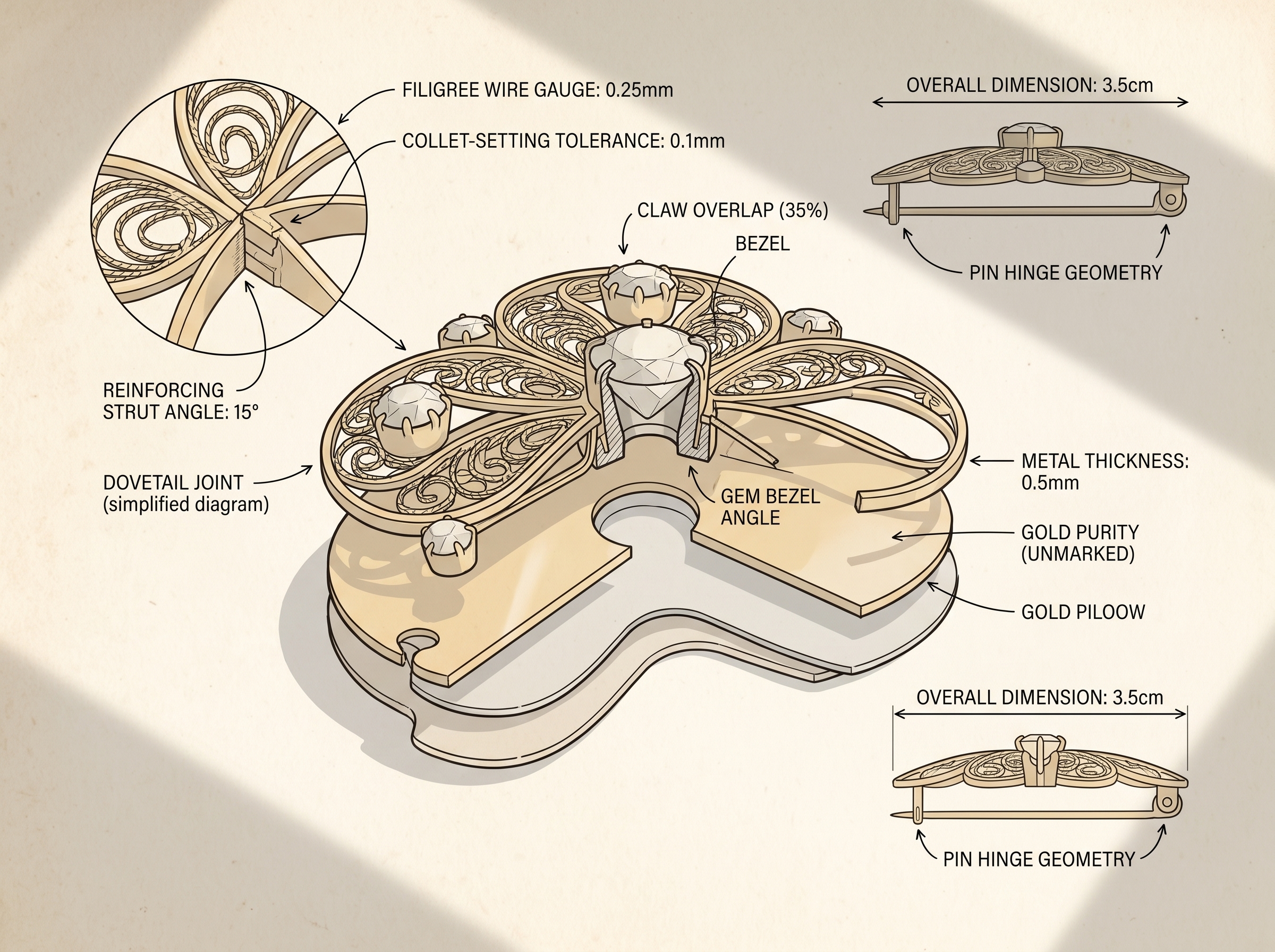
Photo Estimate Versus Formal Appraisal
You don't always need a formal appraisal to understand vintage jewelry value. Here's when each approach makes sense:
Photo-based estimate
A photo estimate—like the kind Tocuro provides—gives you a realistic market value range based on what similar pieces have sold for recently. It's faster, cheaper (often free), and good enough for most decisions.
Use a photo estimate when you're:
- •Deciding whether to sell a piece
- •Checking if an estate sale or thrift store find is worth buying
- •Getting a general sense of value before investing in a formal appraisal
- •Sorting through inherited jewelry to identify which pieces merit further research
Photo estimates work well when you can capture clear images of marks, construction details, and overall condition. They're not legally binding and shouldn't be used for insurance claims, but they give you a realistic starting point.
Formal appraisal
A formal appraisal from a certified appraiser involves in-person examination, gemstone testing, weight measurement, and a written document. It costs anywhere from $75 to $300+ per piece, depending on complexity.
You need a formal appraisal when you're:
- •Insuring high-value jewelry
- •Dividing an estate or handling legal matters
- •Donating jewelry and need documentation for tax purposes
- •Selling a piece worth several thousand dollars or more
Appraisals are overkill for most casual situations. If you're just curious about a brooch from an estate sale, start with a photo estimate.
When an App Is Enough Versus When You Need an Expert
A photo-based identification and estimate tool like Tocuro works well for the majority of vintage jewelry value questions. It's especially useful when you're:
- •Researching multiple pieces quickly
- •Learning about jewelry you've inherited or found
- •Comparing potential purchases before you buy
- •Building knowledge about what you own
The app can identify maker's marks, date pieces to era, spot common design patterns, and provide estimated value ranges based on current market signals. For most collectors, that's enough information to decide next steps.
You'll want to consult a specialist when:
- •The piece appears to be worth several thousand dollars or more
- •You're seeing conflicting information about authenticity or maker
- •Gemstones need laboratory testing to confirm type and quality
- •You need legal documentation for insurance, estate, or tax purposes
- •The piece is unusual enough that comparable sales are scarce
Even in those cases, starting with a photo estimate helps you understand whether the specialist's fee is justified. No point paying $150 for an appraisal on a $75 brooch.
How to Use Tocuro as Your First Step in Understanding Vintage Jewelry Value
Tocuro helps you identify and value vintage jewelry from photos, giving you a realistic price range based on actual market signals. Here's how to get the most useful information:
Take clear photos of all marks and signatures. Maker's marks, hallmarks, and stamps are often the most valuable clues. Photograph them close-up with good lighting.
Capture the overall piece from multiple angles. Front, back, side views, and any decorative details help with identification and condition assessment.
Include scale and context. A photo next to a ruler or coin helps estimate size, which affects value.
Show condition honestly. Photograph any damage, missing stones, or wear. Accurate condition assessment leads to a more realistic value range.
Tocuro provides estimated value ranges, not formal appraisals. These estimates reflect what similar pieces have sold for in current markets—the resale range you'd likely see if you listed the piece online or took it to a dealer. That's exactly what most people need to make informed decisions about their vintage jewelry.
The jewelry identification app can help you understand what you're looking at before you worry about value, and if you're working with a collection, the free jewelry identification app gives you seven free identifications per day to start building your knowledge.
Ready to Find Out What Your Vintage Jewelry Is Worth?
Understanding vintage jewelry value starts with knowing what you have. Upload clear photos to get a fast, realistic value estimate based on current market signals—no appointment needed, no guesswork.
Upload a Photo for a Fast Estimate
Frequently Asked Questions
Is vintage jewelry worth more than new jewelry?
It depends entirely on the piece. Vintage jewelry from a prestigious maker in excellent condition can be worth more than modern equivalents, especially if materials or craftsmanship are superior. But most vintage jewelry is worth less than comparable new pieces unless there's collector demand for the era, style, or maker.
How can I tell if my vintage jewelry is valuable?
Look for maker's marks, solid precious metals, genuine gemstones, and good condition. Signed pieces from known makers tend to be worth more. Start with a photo-based estimate to get a realistic range, then consider a formal appraisal if the value appears high.
Do I need an appraisal to sell vintage jewelry?
No. Most vintage jewelry sells without formal appraisals. Buyers care more about clear photos, accurate descriptions, and fair pricing based on recent sales. An appraisal is useful for high-value pieces or legal documentation but unnecessary for typical resale.
What's the difference between vintage and antique jewelry?
Vintage generally means 20–100 years old, while antique means over 100 years old. The terms affect collector interest and sometimes value, but condition, maker, and materials matter more than age alone.
Where can I sell vintage jewelry for the best price?
Online marketplaces like eBay, Etsy, and Ruby Lane reach the most buyers. Consignment shops and local jewelry dealers are faster but take a cut or offer lower prices. Auction houses work well for high-value or rare pieces. Start by understanding realistic value so you know whether an offer is fair.
Photo-based estimate
Estimate Your Jewelry Value
Use Tocuro to identify your item from a photo and get an estimated value range when market data is available.