
Silver Hallmarks Identification: How to Read and Photograph Marks That Matter
Silver hallmarks are tiny stamps that tell the story of who made your piece, where, and when—but only if you know where to look and how to read them. This guide covers where hallmarks hide on different silver items, what information they actually provide (and what they don't), the most common misreads that trip up collectors, and why a clear photo of your marks can unlock accurate identification faster than any reference book.
Where to Find Silver Hallmarks
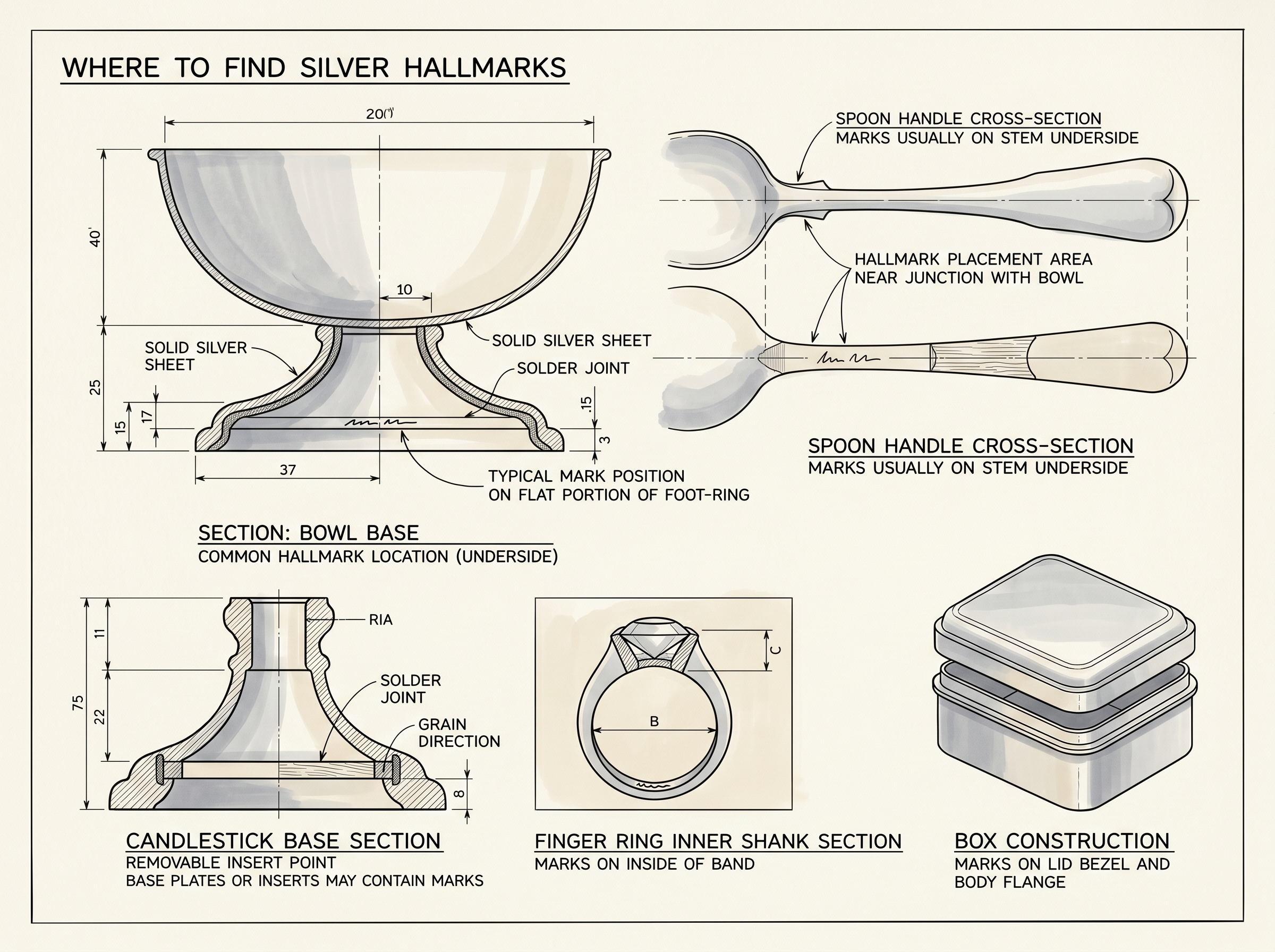
Silver hallmarks identification starts with knowing where to look. Silversmiths didn't place marks randomly—they followed conventions that varied by country, period, and item type.
On flatware, check the back of handles near the base. Spoons and forks typically show marks on the reverse side where the handle meets the bowl or tines. Knives often have marks on the collar or ferrule rather than the blade itself.
Holloware—teapots, trays, bowls, pitchers—usually carries marks on the underside of the base. Larger pieces may have marks near the rim or on removable components like lids. Always check both the body and any separate parts, as legitimate pieces should show consistent marking.
For jewelry, look inside rings, on bracelet clasps, along the back of brooches, or near the clasp on necklaces. Small items like thimbles, napkin rings, and matchbox covers typically show marks on the interior or along an inconspicuous edge.
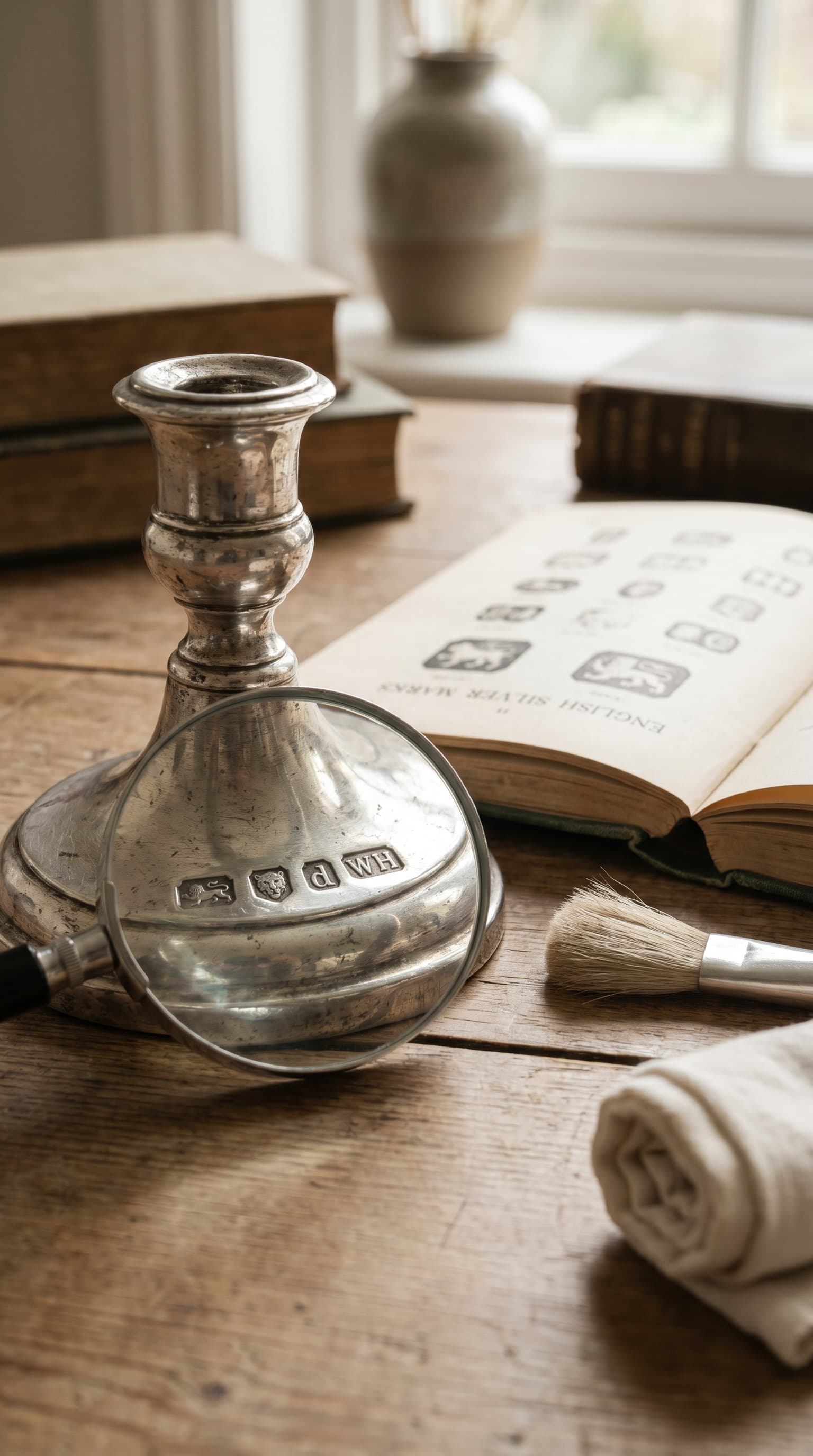
British silver often groups marks in a row—sometimes four or five small stamps clustered together. American silver tends toward fewer marks, often just a maker's mark and a quality standard like "STERLING" or "925." Continental European silver can appear anywhere between these extremes, with French and German pieces often showing multiple marks including town marks, date letters, and maker's initials.
What Silver Hallmarks Can and Cannot Tell You
Proper silver hallmarks identification reveals specific information, but collectors often expect more than marks can deliver.
What marks tell you:
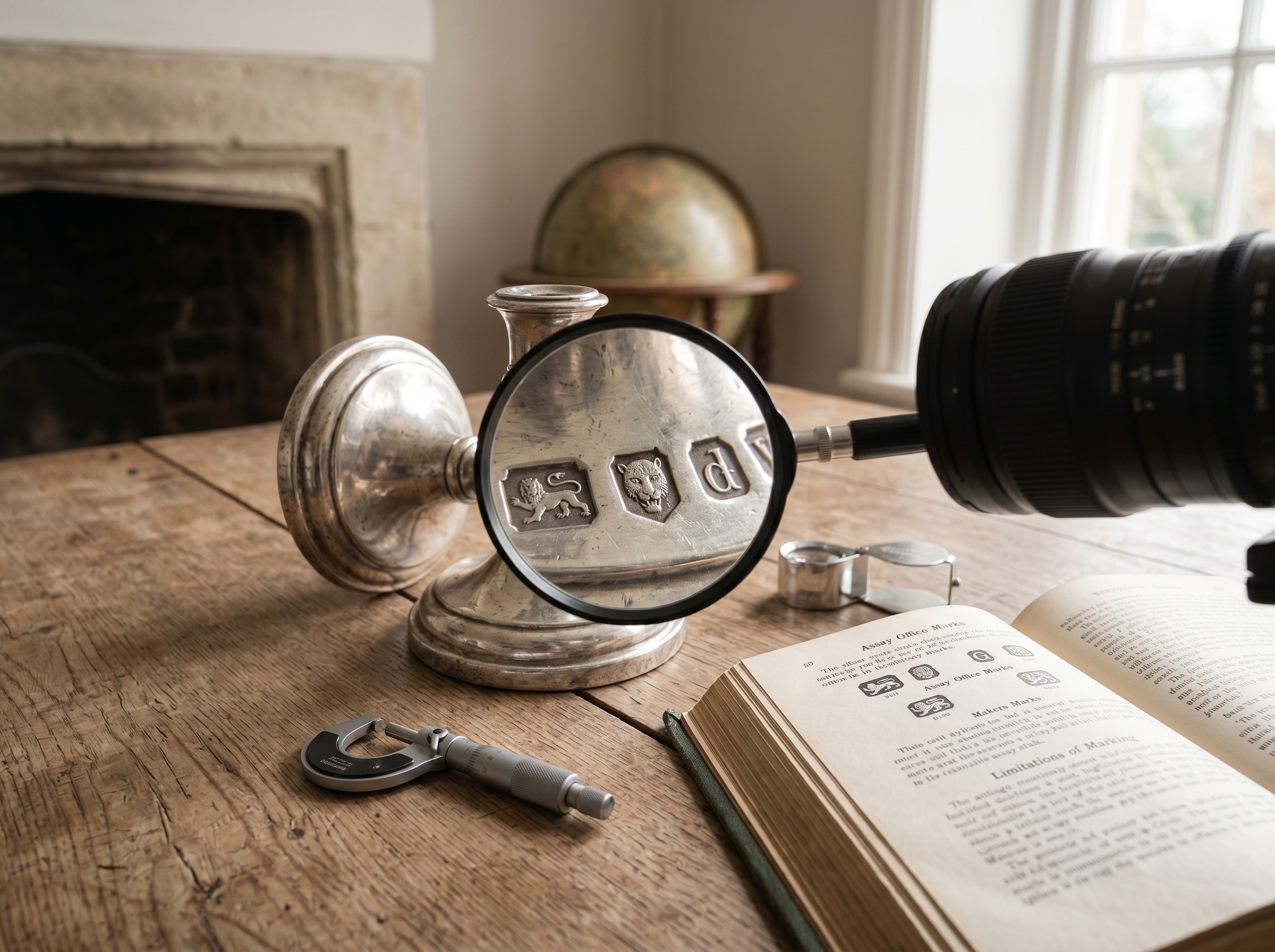
- •Metal purity: Numbers like 925 (sterling silver), 800, or 835 indicate silver content by parts per thousand. British lion passant marks also confirm sterling standard.
- •Maker identity: Maker's marks—initials, symbols, or full names—identify who produced the piece. These can be cross-referenced in hallmark directories.
- •Place of assay: British town marks (leopard's head for London, anchor for Birmingham, rose for Sheffield) show where the piece was tested. Continental marks often include town symbols.
- •Date: British date letters change annually, providing precise dating. American date marks are rare outside of specific manufacturers.
- •Duty marks: Small monarch head stamps on British silver indicate duty was paid, helping narrow date ranges.
What marks don't tell you:
- •Exact manufacturing date: A piece assayed in 1887 might have been made months earlier and sold years later.
- •Designer versus maker: Many pieces were designed by one person, made by another, and retailed by a third. Marks typically show only the maker or sponsor.
- •Condition-adjusted value: Hallmarks confirm authenticity and age, but don't account for damage, repairs, or alterations.
- •Rarity within a maker's output: A clear mark identifies the silversmith but not whether this particular pattern or form is common or scarce.
- •Wholesale versus retail origin: Identical marks can appear on high-end retail pieces and bulk trade goods.
Marks confirm what something is made of and often when and where it was made. They're a starting point for research, not a complete story.
Common Silver Hallmarks Identification Mistakes
Even experienced collectors misread silver marks. Here's what trips people up most often.
Confusing plated marks for solid silver
"EPNS" (electroplated nickel silver), "EPBM" (electroplated Britannia metal), and "A1" don't mean solid silver. They indicate plating. Silver plate can be beautiful and collectible, but it's not the same as sterling or coin silver. Similarly, "German silver" or "nickel silver" contains no silver at all—it's a copper-nickel-zinc alloy.
Misreading worn or struck-over marks
Hallmarks on heavily used pieces wear down. A worn lion passant might look like a blob. A partial date letter might appear to be a different letter entirely. Overstruck marks—where a silversmith stamped twice or corrected a mistake—create confusing double images that don't match reference books exactly.
Assuming all marks are hallmarks
Not every stamp on silver is a hallmark. Pattern numbers, order codes, retailer marks, and inventory stamps appear on many pieces. "925" is a purity mark, but surrounding numbers might just be catalog references. British registry marks (diamond shapes with letters and numbers) indicate design registration, not silver content.
Mixing up country systems
British hallmarks follow strict legal standards with multiple required marks. American silver often shows only a maker's mark and "STERLING." French silver uses different symbols and numbering systems. Applying British hallmark logic to Continental pieces—or vice versa—leads to wrong conclusions.
Trusting fake marks
Reproductions exist. Forgers add spurious marks to plate or base metal. Legitimate old marks get "transplanted" from damaged pieces onto newer items. If marks seem too perfect, too numerous, or appear on a form that doesn't match the supposed date, proceed cautiously.
How Photos of Silver Hallmarks Improve Identification Results
A clear photograph of your silver hallmarks often accomplishes more than an hour with reference books—if you know what to capture.
Lighting matters most. Hallmarks are tiny, often no more than a few millimeters across. Direct overhead light creates glare that obscures detail. Instead, angle your light source from the side. Raking light—where the light comes in at a low angle—creates shadows that make shallow stamped marks visible. Natural daylight near a window works well.
Get close without losing focus. Modern smartphone cameras handle macro photography surprisingly well, but you need to trigger the close-up mode. Fill your frame with the marks. If your camera struggles to focus, try pulling back slightly or using a macro lens attachment. Slightly out-of-focus photos waste everyone's time.
Capture all marks together first, then individually. Start with a shot showing the full group of hallmarks in context—this shows their relationship and spacing, which matters for identification. Then photograph each individual mark. British marks often include four or five separate stamps, and each one carries information.
Include scale. A coin, ruler, or even your fingertip in the frame provides size reference. Tiny marks on a thimble require different reading techniques than large strikes on a serving tray.
Photograph from multiple angles. If marks are on a curved surface or inside a ring, one shot often can't capture everything. Two or three images from different angles provide complete information.
Don't over-clean before photographing. Light tarnish in mark recesses actually improves contrast and readability. Aggressive polishing can blur mark edges and destroy detail. If you must clean, use only gentle methods after documenting the marks as-found.
When you upload clear hallmark photos to Tocuro, the system can identify maker's marks, date letters, and purity standards from multiple countries. You get 7 free identifications per day, and the count resets daily—enough to document a small collection or verify a few pieces you're considering purchasing. The estimated value ranges Tocuro provides are based on current market signals, not formal appraisals, but they give you a realistic starting point for understanding what your silver is worth today.
FAQ
Can I identify silver hallmarks without a magnifying glass?
Sometimes, but a simple loupe or magnifying glass helps tremendously. Many hallmarks are only 2-3mm tall, and detail matters. A 10x jeweler's loupe costs less than $15 and reveals mark details invisible to the naked eye. If you're serious about silver hallmarks identification, it's worth the investment.
Do all countries use the same hallmarking system?
No. Britain has the most formalized system with legally required marks. America follows looser standards, typically just marking "STERLING" or "925" plus a maker's mark. France, Germany, and other European countries each developed their own systems. Learning one country's marks doesn't automatically translate to reading another's.
What if my silver has no marks at all?
Unmarked silver exists. Small pieces sometimes escaped marking. American coin silver from the early 1800s might carry only a maker's name or initials. Non-Western silver often follows different conventions. However, the absence of marks raises authenticity questions—test the metal independently before assuming an unmarked piece is solid silver.
Are online hallmark databases reliable?
The best ones are excellent resources. Sites maintained by museums, collector associations, and established auction houses generally provide accurate information. Crowdsourced databases vary in quality. Cross-reference multiple sources when possible, and remember that photographing your marks and getting expert review often works faster than manual database searches, especially when marks are worn or unusual.
Can hallmarks tell me if my silver is valuable?
They provide clues. Rare maker's marks, early date letters, or marks from prestigious makers suggest value. But condition, form, size, and current market demand matter as much as marks alone. Two pieces by the same maker from the same year can have wildly different values based on what they are and their condition. For realistic value ranges that account for current market conditions, see how much your silver is actually worth.
Photo identification
Identify a Silver Hallmark
Use Tocuro to identify your item from a photo and get an estimated value range when market data is available.