
Jewelry Identification App: How Photo Recognition Works for Rings, Brooches, and More
A jewelry identification app analyzes photos of rings, necklaces, brooches, and other pieces to identify maker's marks, materials, style periods, and construction methods. While useful for quick research and initial estimates, formal gemstone grading and high-value authentication still require professional appraisal.
What a Jewelry Identification App Actually Does
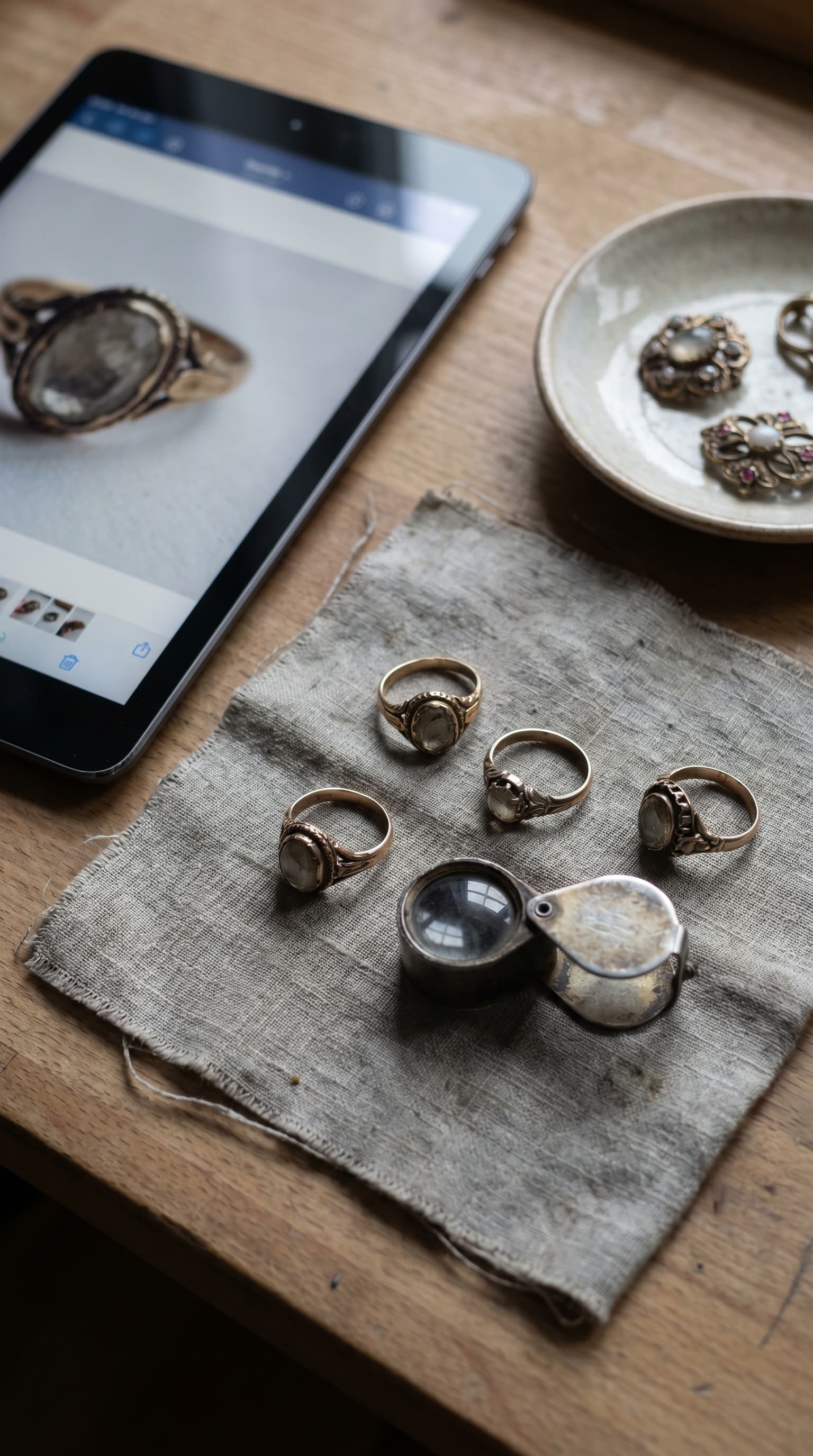
You've inherited a brooch, found a ring at an estate sale, or pulled a necklace from a forgotten jewelry box—and you have no idea what you're looking at. A jewelry identification app lets you photograph the piece and get information about maker's marks, materials, style periods, construction methods, and estimated value ranges without leaving home or booking an appointment.
Unlike searching Google Images or scrolling through eBay listings for hours, a jewelry identification app analyzes multiple visual details at once: hallmarks, clasp styles, stone settings, metalwork techniques, and design motifs. It's faster than manual research and more focused than a general image search.
But it's not magic. Photo-based identification works best for pieces with visible marks, recognizable styles, or documented construction methods. It can point you in the right direction, flag red flags, and give you a realistic value range—but it won't replace a gemologist's report or a formal insurance appraisal.
How Tocuro Identifies Jewelry from Photos
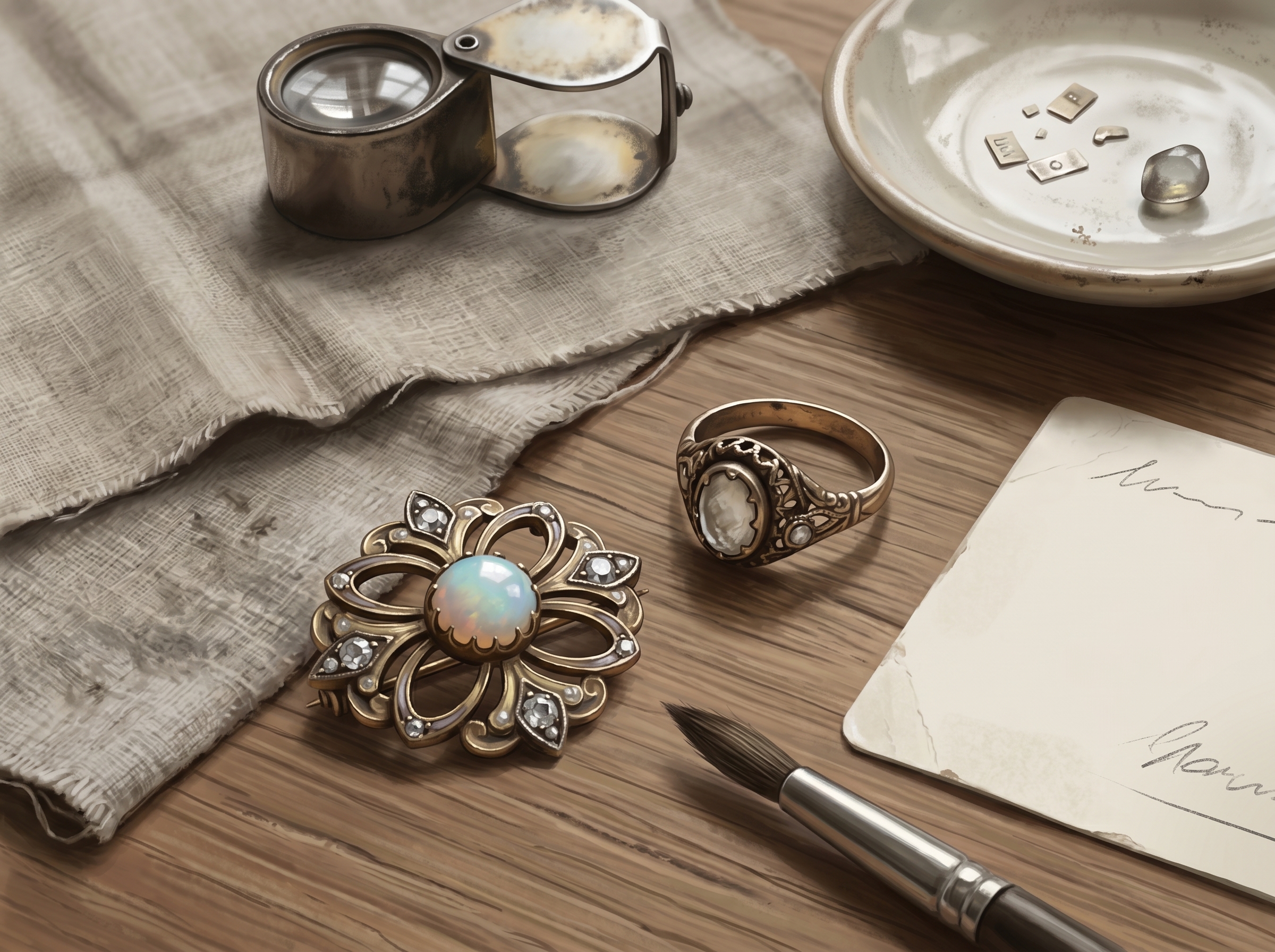
Tocuro analyzes photos of jewelry to identify maker's marks, style periods, materials, and construction details. Upload a clear image of your piece, and the app examines:
- •Hallmarks and maker's marks: stamps, signatures, country marks, and purity symbols
- •Style characteristics: Art Deco geometry, Victorian naturalism, Retro-era volume, Mid-Century modernism
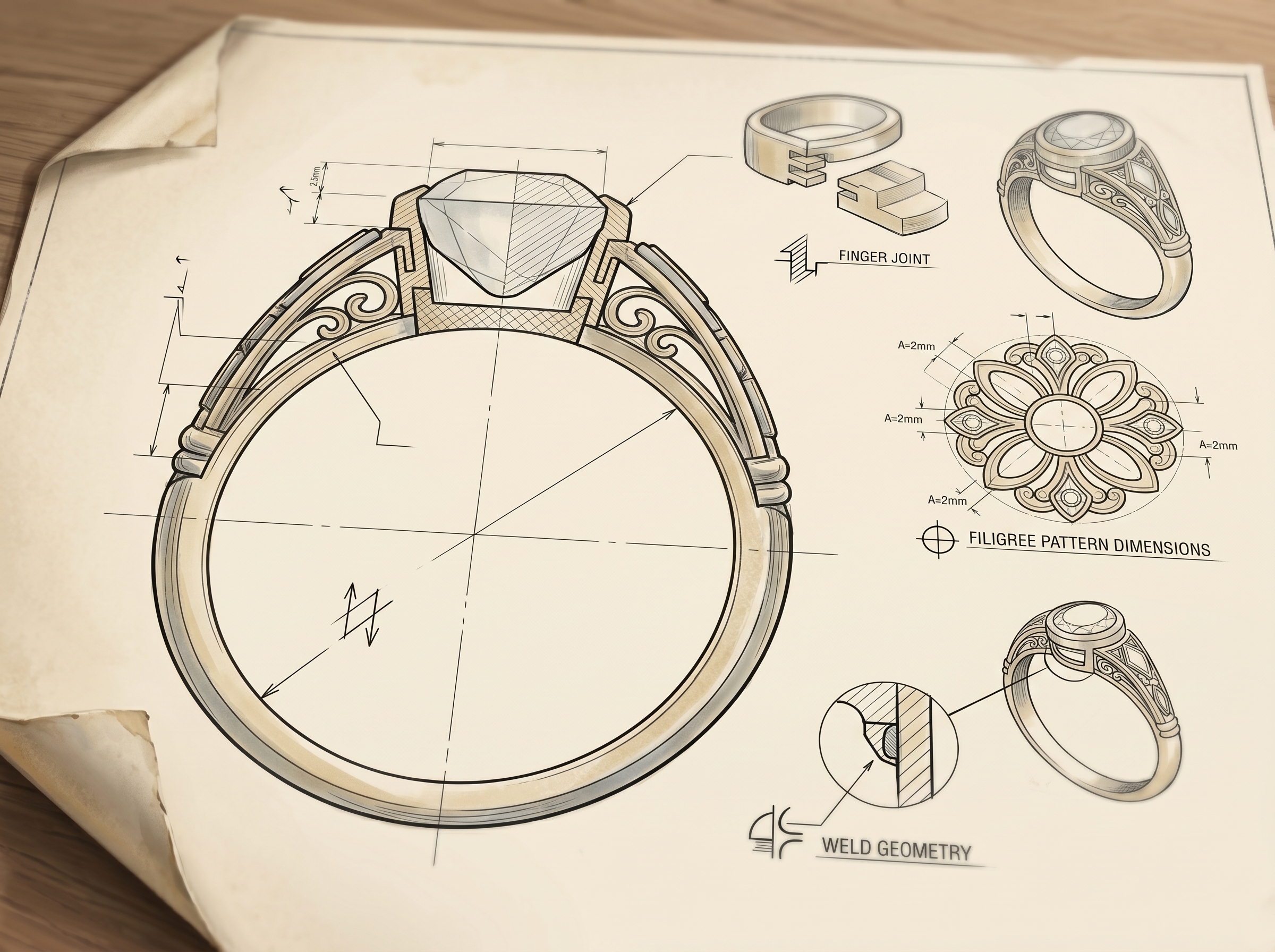
- •Construction clues: hand-forged versus machine-made, solder marks, pin mechanisms, findings
- •Materials: gold, silver, platinum, base metals, gemstone types, paste, enamel work
- •Setting techniques: prong, bezel, channel, pave, and how they evolved over time
You'll get an estimated value range based on market signals—not a formal appraisal—along with context about the period, maker, and what similar pieces have sold for. The app also flags potential reproductions or unmarked pieces that need closer inspection.
What You Get Free
Tocuro gives you 7 free identifications per day, and the count resets daily. That's enough to photograph multiple angles of a piece, try different lighting, or identify several items from an inherited collection without hitting a paywall immediately.
Each identification includes:
- •Style period and design context
- •Maker or manufacturer information if marks are visible
- •Material identification based on visual cues
- •Market value range estimates based on recent comparable sales
- •Condition considerations that affect value
- •Suggestions for follow-up research or professional review
The free daily limit works well for casual research, estate sorting, or deciding whether a piece warrants professional appraisal before you spend money on expert services.
What Photo Quality Works Best for Jewelry Identification
Jewelry is small, shiny, and full of fine detail. Good photos make all the difference.
Hallmarks and maker's marks
- •What to capture: Close-ups of any stamps, signatures, or engraved marks on clasps, bands, backs, or pin stems
- •Lighting tip: Use indirect natural light or a flashlight at an angle to make shallow marks more visible
Overall design and style
- •What to capture: Full view of the front, showing proportions, motifs, and overall composition
- •Lighting tip: Even lighting without harsh shadows; avoid direct flash that washes out detail
Clasp, findings, and construction
- •What to capture: Back view showing how the piece opens, closes, or attaches; solder marks, prongs, hinges
- •Lighting tip: Natural light from the side to reveal texture and three-dimensional structure
Gemstones and materials
- •What to capture: Close-up of stones showing cut, setting, and any visible inclusions or wear
- •Lighting tip: Bright, indirect light to show color accurately without glare
Condition and wear patterns
- •What to capture: Areas of tarnish, repair, replaced stones, worn prongs, or damage
- •Lighting tip: Side lighting to emphasize surface irregularities
Multiple angles help. Jewelry changes dramatically depending on light and perspective, so three to five photos usually tell a fuller story than one.
Limitations and When to Seek Professional Help
A jewelry identification app is a research tool, not a substitute for professional expertise. Here's where it works—and where it doesn't.
Photo identification works well for:
- •Recognizing documented maker's marks and hallmarks
- •Dating pieces to broad style periods (Victorian, Edwardian, Art Deco, etc.)
- •Identifying construction techniques that signal hand-fabrication versus mass production
- •Estimating market value for costume jewelry, signed vintage pieces, and mid-range estate jewelry
- •Flagging obvious reproductions or fantasy marks
Photo identification can't replace expert evaluation for:
- •Gemstone identification and grading: photos can't determine if a stone is natural, synthetic, or treated
- •Precious metal purity: a hallmark might say "14K," but testing confirms it
- •High-value pieces: anything potentially worth thousands needs in-person appraisal
- •Insurance documentation: insurers require formal appraisals, not app-based estimates
- •Authentication of rare or contentious pieces: fakes exist, and some require lab testing
- •Legal or estate purposes: courts and executors need certified appraisals
If your piece has large or high-quality gemstones, lacks marks entirely, or comes with a dramatic origin story, start with the app for context—then consult a gemologist, appraiser, or auction house specialist.
When a Jewelry Identification App Is Most Useful
You'll get the most value from a jewelry identification app when:
- •Sorting inherited collections: quickly separate costume jewelry from pieces worth professional appraisal
- •Estate sale shopping: on-site research to decide if something is worth the asking price
- •Researching before selling: understanding what you have helps you price intelligently or choose the right sales channel
- •Identifying unmarked pieces: style analysis can narrow down period and origin even without hallmarks
- •Learning as you collect: building familiarity with marks, styles, and construction over time
The app won't make you an expert overnight, but it accelerates the learning curve and helps you make smarter decisions faster.
Start Identifying Your Jewelry Today
Whether you're sorting a jewelry box, researching a flea market find, or trying to understand what you inherited, Tocuro's jewelry identification app gives you useful answers from photos. You'll get style context, maker information when marks are present, and realistic value ranges—all without leaving home.
Try 7 Free IDs Today and see what your photos reveal about the pieces you're curious about.
Photo identification
Identify Your Jewelry
Use Tocuro to identify your item from a photo and get an estimated value range when market data is available.