
How to Read Furniture Stamps: A Collector's Guide to Decoding Maker's Marks
Furniture stamps are like fingerprints—they tell you who made a piece, when, and sometimes where. This guide walks you through finding stamps, interpreting the information they contain, and using that data to authenticate and value your furniture. You'll learn what different stamp formats mean, how to research obscure marks, and when a stamp actually matters for value.
How to Read Furniture Stamps: A Collector's Guide to Decoding Maker's Marks
You flip over a chair, peek inside a drawer, or check the back of a dresser—and there it is: a stamp, partially faded, with a jumble of letters, numbers, or symbols. It feels like a secret message waiting to be cracked. And in many ways, it is. Learning how to read furniture stamps transforms you from a casual observer into an informed collector who can identify makers, date pieces, and spot valuable finds others might overlook.
:::summary
TL;DR: Furniture stamps are like fingerprints—they tell you who made a piece, when, and sometimes where. This guide walks you through finding stamps, interpreting the information they contain, and using that data to authenticate and value your furniture. You'll learn what different stamp formats mean, how to research obscure marks, and when a stamp actually matters for value.
:::
Where to Find Furniture Stamps and Maker's Marks
Before you can read a stamp, you need to find it. Manufacturers placed marks in predictable spots, but not always obvious ones.
Check underneath tabletops, inside drawers (on the bottom or sides), on the back panels of case pieces, and under chair seats. Turn pieces upside down when possible. Use a flashlight—many stamps are faint or hidden in shadows.
Some makers used paper labels instead of stamps, especially in the early-to-mid 20th century. These can peel off or fade, so look carefully for remnants. Metal tags, branded marks burned into wood, and even penciled signatures all count as maker's marks worth investigating.
Don't confuse stamps with other markings. Inventory numbers, price tags, and previous owner notations appear frequently. If you see a stamp that looks like a date followed by initials, it might be a factory inspector's mark or quality control notation rather than the maker's primary stamp.
How to Read Furniture Stamps: Breaking Down the Information
Once you've found a stamp, the real detective work begins. Most furniture stamps contain several types of information, though not every stamp includes all of these elements.
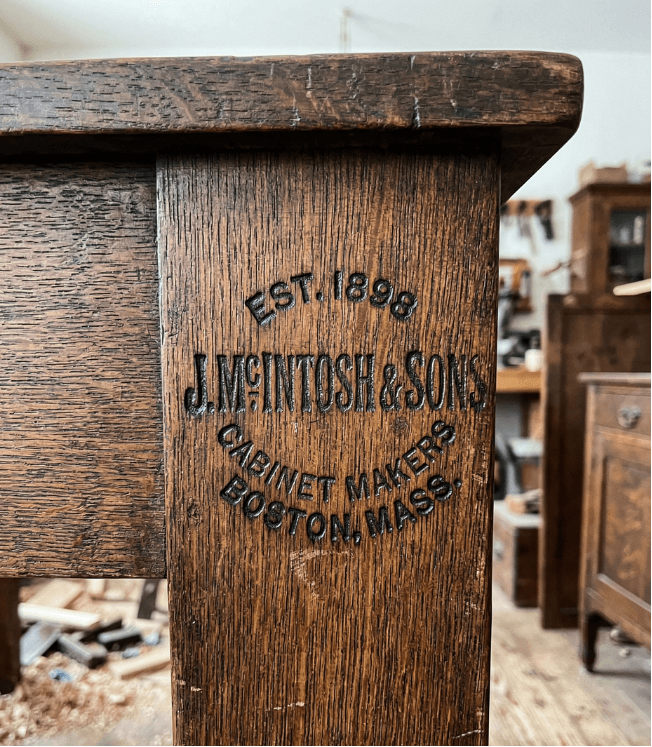
Company name or logo: This is often the most prominent element. It might be spelled out fully ("Grand Rapids Chair Company") or abbreviated. Some high-end makers used distinctive logos or symbols instead of text.
Location: Many stamps include a city or city-state combination. "Grand Rapids, Mich." or "High Point, N.C." tell you manufacturing centers. This information helps narrow down time periods, since some locations dominated furniture production during specific eras.
Model or pattern numbers: These alphanumeric codes identified specific designs in a manufacturer's catalog. They're incredibly useful for researching a piece's original name, finding catalog images, or locating matching pieces.
Date codes: Some manufacturers used date stamps, though they're less common than you'd hope. These might be straightforward ("1952") or coded. Certain makers used letter-number combinations where the letter indicated year and the number indicated month.
Patent information: Phrases like "Pat. Pending" or specific patent numbers appear on pieces featuring innovative construction or mechanisms. Patent dates help establish the earliest possible manufacture date, though production could have continued for decades.
When you read furniture stamps, write down every detail—even elements that seem meaningless. That random number might be a catalog page reference. Those cryptic initials could be a designer's signature.
For more context on different types of maker's marks and how they evolved over time, check out our comprehensive guide on furniture makers marks.
Researching and Interpreting Stamp Information
Having the stamp information is just the beginning. Now you need to figure out what it means.
Start with the company name. Search online for the exact text from the stamp plus "furniture maker" or "furniture company." Look for company histories, catalog archives, and collector forums. Many defunct furniture companies have dedicated enthusiast websites documenting their marks and production dates.
Cross-reference location information with known manufacturing centers. Grand Rapids, Michigan produced quality furniture from the 1870s through the 1950s. High Point, North Carolina became a major center in the 20th century. Knowing these regional patterns helps you understand context and quality expectations.
Patent numbers are goldmines for dating. Search the U.S. Patent Office database using the number from the stamp. The patent filing will show you the earliest your piece could have been made, the inventor's name, and often detailed drawings of the design or mechanism.
Model numbers require catalog research. Check auction house archives, collector websites, and digitized vintage catalogs. Sometimes you'll get lucky and find your exact piece pictured with its original name and retail price.
If you're struggling to read a faded stamp, try different lighting angles. Raking light (held at a low angle) often reveals details invisible in direct light. Take a clear photo and adjust contrast digitally to make faint text more readable.
Understanding how to read furniture stamps works hand-in-hand with other identification methods. Combine stamp information with style analysis by reviewing how to identify antique furniture styles to build a complete picture of your piece.
When Furniture Stamps Actually Matter for Value
Not all stamps are created equal. Some dramatically increase value; others barely register.
High-value stamps come from renowned makers: Gustav Stickley, Herman Miller, Knoll, Baker, Kindel, Dunbar, and other premium manufacturers. A verified Stickley stamp can multiply a piece's value several times over. Mid-century modern pieces with Knoll or Herman Miller stamps command significant premiums.
Moderate-value stamps identify quality regional makers or well-respected mass manufacturers. Names like Widdicomb, Berkey & Gay, or Heywood-Wakefield indicate solid construction and collector interest, though they won't necessarily make you rich.
Low-impact stamps come from generic manufacturers or very common makers. A stamp from a department store's furniture line or an obscure factory that produced thousands of identical pieces doesn't add much to value. The furniture needs to stand on its own merits.
Condition matters enormously. A perfect Stickley stamp on a heavily damaged piece doesn't restore full value. Conversely, an exceptional unmarked piece in pristine condition can be worth more than a marked but mediocre example.
Authenticity concerns mean stamps actually require verification. Fakes exist, especially for high-value makers. Learn the correct stamp formats, locations, and variations for important manufacturers. Compare your stamp against known authentic examples.
For practical guidance on assessing overall value beyond just maker's marks, explore how to find value of furniture.
Comparison: Stamp Types and What They Tell You
Full company name with location
- •Information provided: Manufacturer identity, production region, helps narrow era
- •Research ease: Usually straightforward to research; city names provide additional clues
Logo or trademark symbol
- •Information provided: Brand identity, often indicates higher-end maker
- •Research ease: Can be challenging without existing knowledge; reverse image search helps
Model/pattern numbers only
- •Information provided: Specific design identification, catalog research possible
- •Research ease: Difficult without maker name; requires catalog cross-referencing
Patent numbers or dates
- •Information provided: Precise earliest manufacture date, inventor information
- •Research ease: Very easy—searchable databases provide exact dates
Paper labels (vs. stamps)
- •Information provided: Often more detailed than stamps; may include care instructions
- •Research ease: Similar to stamps, but fragility means many are damaged or missing
Frequently Asked Questions
Can I identify furniture without a stamp or maker's mark?
Absolutely. Many quality pieces never had stamps, or they've worn away over time. You can still identify and date furniture using construction methods, hardware, wood types, and style characteristics. Our guide on how to date antique furniture covers alternative identification methods that work when stamps aren't available.
Does a stamp always mean my furniture is valuable?
Not necessarily. A stamp confirms the manufacturer, which is helpful, but value depends on the maker's reputation, the piece's condition, rarity, style desirability, and current market demand. Some stamped pieces from mass manufacturers are worth less than exceptional unmarked examples from skilled craftsmen. Think of stamps as one piece of information rather than a value guarantee.
What if my furniture stamp doesn't match any online search results?
This happens often with smaller regional makers, short-lived companies, or private labels made for retailers. Try searching variations of the name, check vintage business directories for the city mentioned, or post photos in collector forums where experienced enthusiasts might recognize obscure marks. Sometimes stamps identify retailers rather than manufacturers, which adds another layer of research.
Start Identifying Your Furniture Today
Learning how to read furniture stamps opens up a world of information hiding in plain sight. Every stamp you decipher adds another piece to your collecting knowledge, helping you spot valuable finds and avoid overpriced mistakes.
Ready to identify and value your furniture with confidence? Sign up for Tocuro and get instant help identifying pieces, researching makers, and understanding what your furniture is really worth. Our community of collectors and experts can help you crack even the toughest stamp mysteries.
Photo identification
Identify Your Item
Use Tocuro to identify your item from a photo and get an estimated value range when market data is available.