
How to Identify Antique Tables: A Practical Guide to Dating and Valuing Your Piece
Identifying antique tables starts with examining construction details—look for hand-cut dovetails, mortise-and-tenon joints, and signs of hand planing. Check the wood type and patina, inspect hardware and fasteners, and match stylistic elements to known periods. True antiques show irregular tool marks, natural wear patterns, and construction methods that predate modern machinery. With practice, you can date a table within a few decades and spot the difference between genuine age and reproduction work.
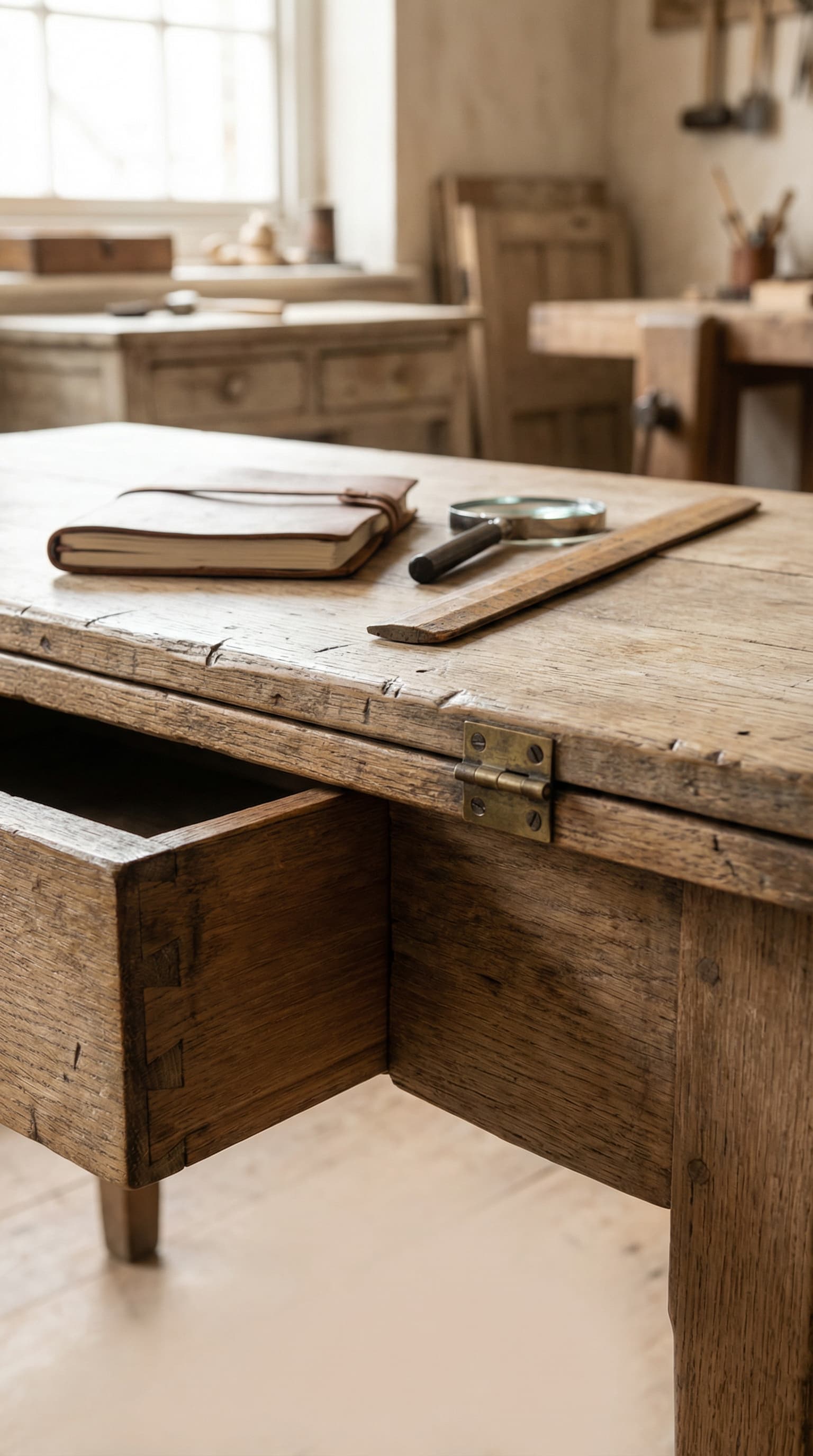
How to Identify Antique Tables: A Practical Guide to Dating and Valuing Your Piece
You've inherited a dining table from your grandmother, or spotted something interesting at an estate sale. The wood feels substantial, the craftsmanship looks impressive—but is it actually antique? And if so, what period does it come from? Learning how to identify antique tables isn't about memorizing endless style names. It's about training your eye to spot the telltale signs of age, construction methods, and design elements that reveal when and where a piece was made.
TL;DR: Quick Summary
Identifying antique tables starts with examining construction details—look for hand-cut dovetails, mortise-and-tenon joints, and signs of hand planing. Check the wood type and patina, inspect hardware and fasteners, and match stylistic elements to known periods. True antiques show irregular tool marks, natural wear patterns, and construction methods that predate modern machinery. With practice, you can date a table within a few decades and spot the difference between genuine age and reproduction work.
How to Identify Antique Tables by Construction Methods
The way a table is built tells you more about its age than almost anything else. Start by flipping the table over or looking underneath. This is where makers left their most honest work—no need to hide tool marks or rough surfaces where no one would see them.
Hand-cut dovetails on drawer fronts (if your table has them) show irregular spacing and slight variations in angle. Machine-cut dovetails, common after the 1870s, look perfectly uniform. For table aprons and leg attachments, mortise-and-tenon joints were the gold standard before modern fasteners. You'll see wooden pegs securing these joints, sometimes protruding slightly from the surface as the wood aged and shifted.
Run your hand across the underside of the tabletop. Genuinely old pieces often show irregular plane marks—subtle waves and ridges from hand tools. Perfectly smooth, uniform surfaces suggest modern power tools. Look for saw marks on edges and unexposed areas. Circular saw marks indicate post-1840s construction, while straight, irregular marks from pit saws or frame saws suggest earlier work.
Table legs reveal construction era too. Turned legs made before the mid-1800s often show slight asymmetries—each leg is close but not identical to its siblings. Later machine turning produced perfect copies. Check how legs attach to the frame. Glue blocks in corners, especially hand-shaped ones, are good signs of age.
Examining Wood, Patina, and Wear Patterns
The wood itself holds valuable clues when you're learning how to identify antique tables. Old-growth timber, common in furniture made before 1900, has tighter grain patterns and greater density than modern lumber. Run your fingers across the surface—authentic age creates a patina that can't be perfectly faked, a mellowing of the wood's color and a slight smoothness from decades of handling and cleaning.
Flip the table again. The underside should be noticeably darker or lighter than the top surface if it's genuinely old. Consistent color all around suggests recent staining. Look for oxidation patterns—areas exposed to air darken differently than protected spots. If there's a leaf or extension mechanism, the wood underneath should show less oxidation than exposed surfaces.
Wear patterns tell honest stories. Antique tables show wear where people actually used them—along the edges where hands rested, near drawer pulls, around feet where boots and brooms made contact. Be suspicious of uniform distressing or wear in odd places. Real age creates specific, logical wear. The stretchers between table legs should show scuffs and scratches from centuries of foot traffic, not random dings that don't match how people interact with furniture.
Check for shrinkage. Solid wood moves across the grain as it ages. Tabletops often show gaps between boards or cracks running with the grain. Drawer fronts may no longer be perfectly flush. These aren't flaws—they're authenticity markers.
Dating Antique Tables Through Style and Hardware
Once you've examined construction, style elements help narrow down the era. Different periods favored specific leg shapes, edge profiles, and proportions. Queen Anne tables (early 1700s) feature cabriole legs and pad feet. Chippendale pieces (mid-1700s) show ball-and-claw feet or straight, squared legs. Federal and Hepplewhite styles (late 1700s to early 1800s) preferred delicate, tapered legs with inlay decoration.
Victorian tables (mid-to-late 1800s) often feature heavier, more ornate turned legs and substantial proportions. Arts and Crafts tables (1890s-1920s) emphasize visible joinery, straight lines, and quarter-sawn oak. Each style has dozens of specific markers, but you don't need to memorize them all. Learning how to identify antique furniture styles becomes easier as you examine more pieces and develop pattern recognition.
Hardware provides specific dating clues. Hand-forged nails and screws suggest pre-1800s construction. Early machine-cut nails (1790s-1890s) have rectangular shafts and off-center heads. Modern wire nails became standard after 1890. If your table has screws, examine them closely. Hand-filed screws with irregular threads and off-center slots indicate pre-1850s work. Perfectly uniform, pointed screws are modern.
Casters, if present, evolved over time too. Early casters (pre-1840s) typically featured brass or wood wheels with hand-forged pins. Later versions show more sophisticated bearing systems. Understanding furniture maker's marks can help identify specific manufacturers and narrow dating even further.
Key Features: What to Look for When Identifying Antique Tables
Joinery and fasteners
- •Pre-1850s pieces typically show: Hand-cut dovetails, mortise-and-tenon joints secured with wooden pegs, hand-forged nails or screws
- •Post-1850s construction usually features: More uniform machine-cut joinery, standardized screws, eventually glue and modern fasteners
Wood and finish characteristics
- •Genuine antiques display: Uneven patina between exposed and hidden surfaces, old-growth tight grain, authentic oxidation patterns
- •Reproductions often have: Uniform color throughout, artificially distressed surfaces, modern lumber with wider grain
Tool marks and surface texture
- •Hand-worked pieces show: Irregular plane marks underneath, asymmetrical turned legs, pit saw or frame saw marks on hidden edges
- •Machine-made construction reveals: Perfectly smooth surfaces, identical turned elements, uniform circular saw marks
Wear patterns and age indicators
- •Authentic wear appears: Where hands and feet naturally contact the piece, in logical patterns from decades of use, with wood shrinkage and movement
- •Artificial aging looks: Random or overly uniform, in illogical locations, without corresponding structural age signs
FAQ
How can I tell if my old table is actually antique or just vintage?
Antique typically means 100+ years old, while vintage refers to pieces 20-99 years old. The distinction matters for value, but focus on construction methods first. Pre-1920s tables should show mostly hand-worked joinery, hand-planed surfaces underneath, and old-growth wood. Vintage mid-century tables (1940s-1960s) show modern construction but can still be valuable based on designer, style, and condition.
What are the most valuable types of antique tables?
Value depends on several factors: age, maker, wood type, condition, and rarity. Generally, signed pieces from known makers, tables with original finish and hardware, and examples representing important style periods command higher prices. A simple pine farmhouse table might sell for a few hundred dollars, while a documented 18th-century Newport tea table could reach auction prices in the tens of thousands. Determining furniture value requires evaluating multiple factors together, not just age alone.
Should I refinish an antique table to increase its value?
Usually no. Original finish, even when worn, often preserves more value than refinishing. Collectors and dealers specifically look for untouched patina and original surfaces. Refinishing removes evidence of age and can significantly decrease value, especially on high-end pieces. Focus on cleaning and stabilizing the existing finish instead. If the table has already been refinished or is in poor structural condition, thoughtful restoration can help, but document everything and consider consulting an expert before making irreversible changes.
Ready to Identify Your Antique Table?
Learning how to identify antique tables takes practice, but you've now got the framework to start evaluating pieces confidently. The next time you examine a table, you'll know to check underneath for joinery, look for authentic wear patterns, and match construction methods to time periods.
Want expert help identifying and valuing your tables or other furniture? Tocuro's app connects you with knowledgeable collectors and provides AI-powered identification tools to help you understand what you own. Snap a photo, get insights, and join a community of people who appreciate the stories furniture tells. Sign up free and start identifying your pieces today.
Photo identification
Identify Your Item
Use Tocuro to identify your item from a photo and get an estimated value range when market data is available.