
How to Identify Antique Cabinets: A Collector's Guide to Dating and Valuing Your Piece
Identifying antique cabinets requires examining construction details, hardware, wood characteristics, and style elements. Look for hand-cut dovetails, wrought iron or brass hardware, solid wood construction with irregular saw marks, and period-specific design features. True antiques are 100+ years old and show authentic age markers like shrinkage, patina, and wear patterns. Cabinet styles evolved from simple Jacobean forms through ornate Victorian pieces, each with distinctive traits that help pinpoint era and origin.
How to Identify Antique Cabinets: A Collector's Guide to Dating and Valuing Your Piece
You've found a beautiful old cabinet at an estate sale, inherited one from a relative, or spotted something promising at an auction. But is it genuinely antique? Reproduction? A valuable period piece or a charming but common example? Learning how to identify antique cabinets means knowing where to look, what details matter, and which clues separate a true treasure from a well-made copy.
TL;DR
- •Age matters: True antiques are 100+ years old; look for hand-cut joinery, irregular tool marks, and authentic patina
- •Construction tells the story: Hand-cut dovetails, mortise-and-tenon joints, and solid wood (not plywood) indicate pre-1900s craftsmanship
- •Hardware reveals era: Wrought iron, hand-forged nails, and early brass styles help date pieces accurately
- •Style follows trends: Cabinet designs evolved distinctly through periods from Jacobean to Victorian, each with signature details
- •Condition affects value: Original finish, intact hardware, and minimal alterations typically increase worth
Understanding Cabinet Construction to Identify Antique Pieces
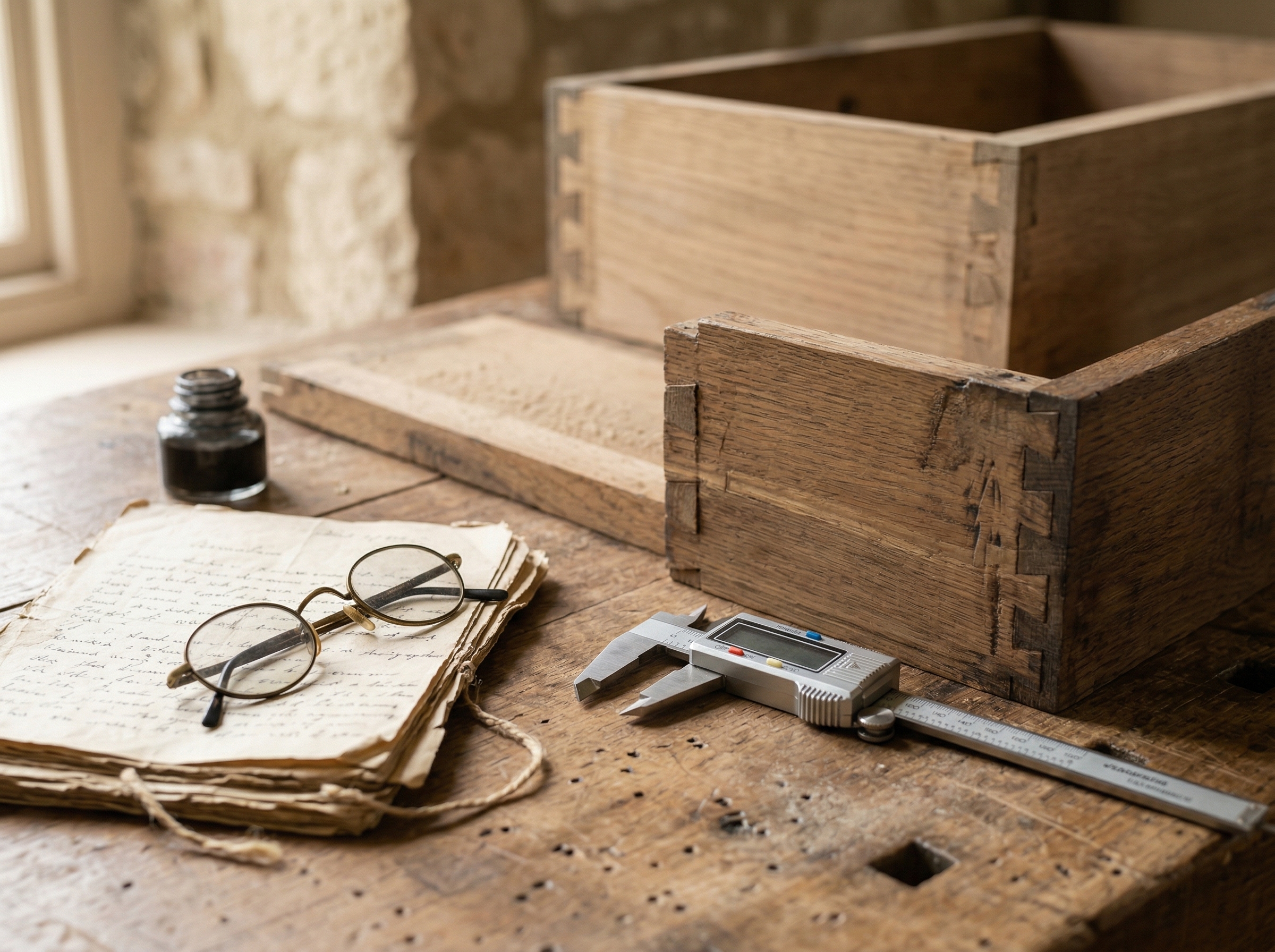
The way a cabinet is built offers the most reliable clues for identification. When examining how to identify antique cabinets, flip the piece over, open every door, and pull out drawers to inspect construction methods.
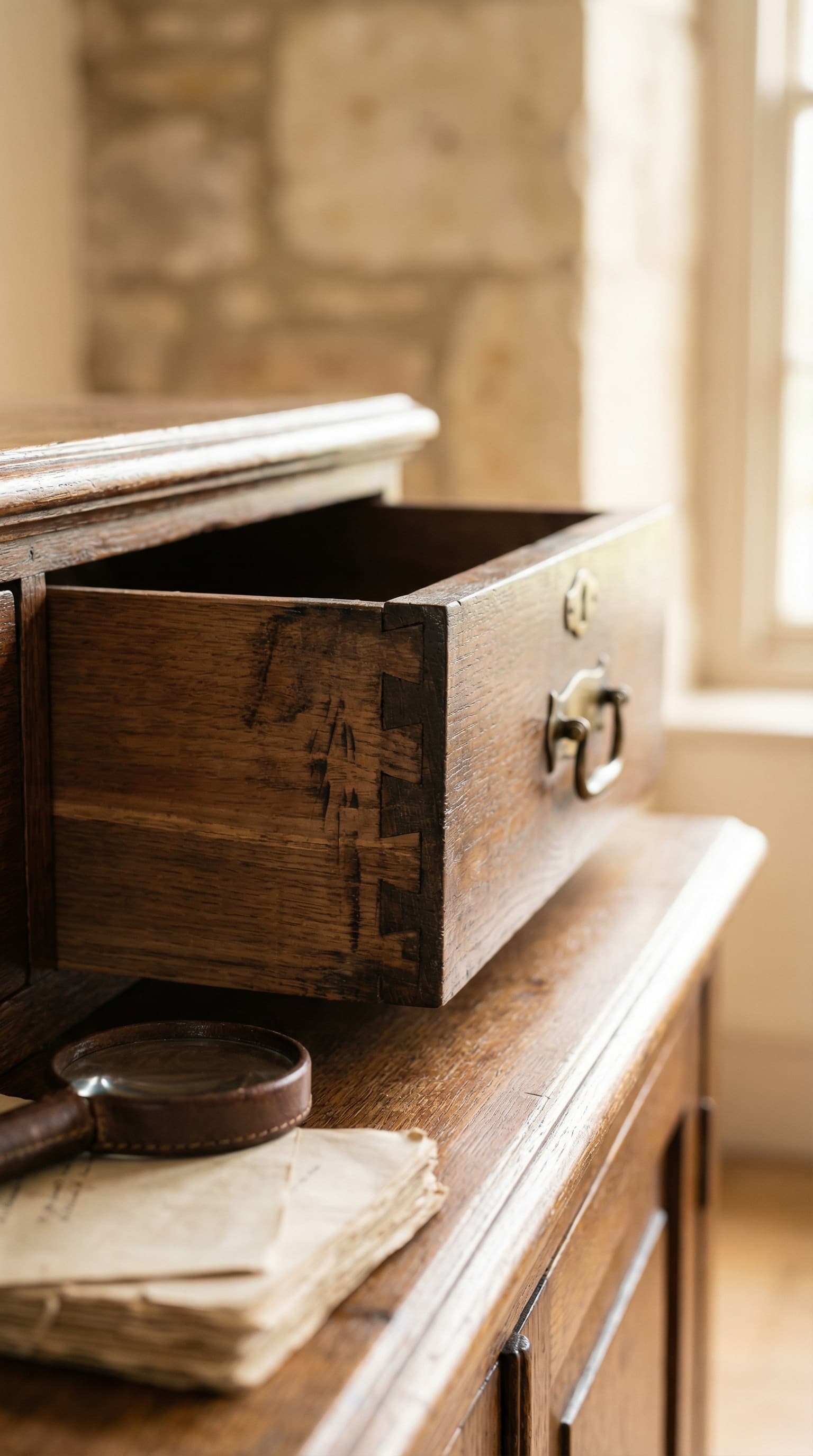
Joinery techniques changed dramatically over centuries. Hand-cut dovetails—those interlocking joints connecting drawer sides—show irregularity before the 1890s. Each tail varies slightly in size and spacing because craftsmen cut them individually. Machine-cut dovetails, introduced in the late 1800s, appear uniform and perfectly spaced. Mortise-and-tenon joints, where one piece fits into another, were standard for cabinet frames and doors through the 19th century.
Wood selection and preparation also evolved. Antique cabinets typically use solid wood throughout—primary wood for visible surfaces, secondary wood (often pine or poplar) for hidden areas like drawer bottoms and backs. You'll see growth rings, knots, and natural variation. The wood shrinks over time, so gaps between boards, slightly warped doors, or drawers that fit loosely all indicate age. Plywood wasn't commercially available until the 1900s, so any laminated wood suggests a later piece.
Tool marks matter tremendously. Run your hand along the inside of a cabinet or underneath. Circular saw marks (perfectly uniform lines) indicate post-1840s construction. Hand plane marks create subtle, irregular ridges. Pit saw marks—parallel straight lines from two-man sawing—suggest pre-1840s origin. These marks often get hidden on finished surfaces but remain visible on unexposed wood.
Similar principles apply when you're learning how to identify antique dressers or other case pieces—the construction fundamentals remain consistent across furniture forms.
Examining Hardware and Fasteners for Dating Antique Cabinets
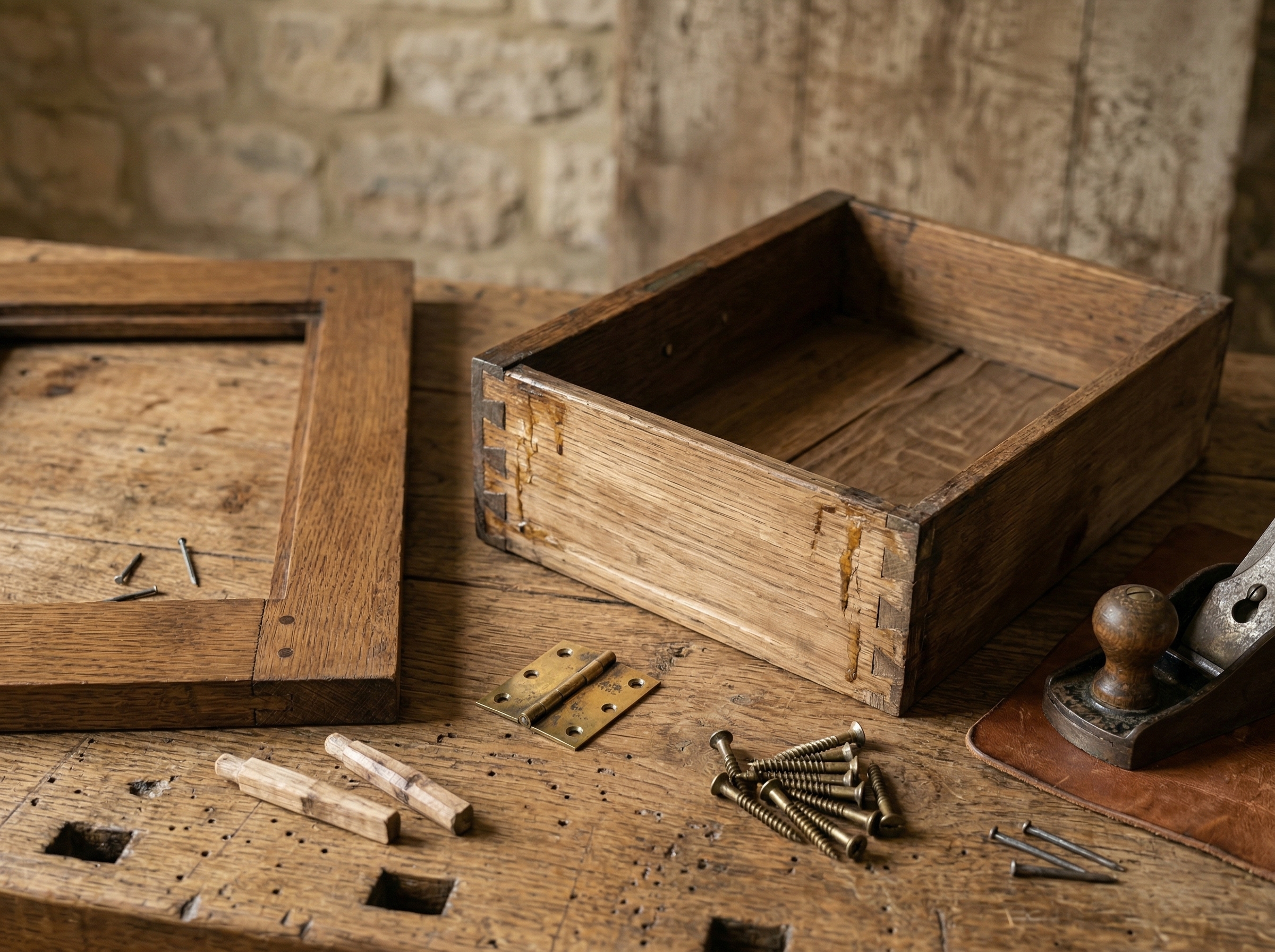
Hardware serves as one of the most definitive dating tools when you identify antique cabinets. Original hardware significantly increases value, while replaced pieces can decrease worth.
Hinges tell stories. Early cabinets (1600s-1700s) used wrought iron strap hinges or butterfly hinges, hand-forged with irregular surfaces and visible hammer marks. Cast brass hinges became popular in the 1700s. Victorian-era cabinets (1840s-1900) featured elaborate cast iron or brass hinges with decorative patterns. Modern reproduction hinges look too perfect, with uniform coloring and machine-precise edges.
Nails and screws provide timeline markers. Hand-forged nails (pre-1800s) have irregular shanks and off-center heads. Cut nails (1800s-1890s) show rectangular shanks with tapered sides. Wire nails, still used today, appeared around 1890. For screws, hand-filed threads with off-center slots indicate pre-1850s construction. Machine-made screws with even threads and centered slots became standard after 1850. Phillips-head screws didn't exist until 1936.
Pulls and knobs evolved through distinct periods. Early pieces featured simple wooden knobs or brass bail pulls (those U-shaped handles with decorative backplates). Victorian cabinets often showcase ornate pressed brass or porcelain knobs. If hardware seems suspiciously shiny or shows no wear where fingers naturally grip, it's likely been replaced. Understanding furniture makers marks on hardware can sometimes help identify the manufacturer and era.
Locks and escutcheons (keyhole surrounds) also date pieces. Hand-filed locks with complex mechanisms suggest quality 18th or 19th century work. Simple stamped locks indicate later or less expensive pieces.
Recognizing Cabinet Styles and Design Elements Across Eras
Style identification helps narrow down when and where a cabinet originated. Cabinet forms evolved alongside broader antique furniture styles, each period leaving distinctive design signatures.
Jacobean and William & Mary cabinets (1600s-early 1700s) feature heavy, architectural forms with geometric moldings, turned legs, and minimal decoration. Court cupboards and kas (large Dutch-American wardrobes) exemplify this era's substantial, rectilinear designs.
Queen Anne and Chippendale periods (1720s-1780s) introduced refined proportions and curved elements. Look for cabriole legs, shell carvings, and more delicate moldings. Corner cabinets became popular, often with arched doors and carved finials.
Federal and Empire styles (1780s-1840s) emphasized classical motifs—columns, acanthus leaves, paw feet. Cabinets from this era often feature rich veneers, inlay work with contrasting woods, and brass galleries or mounts. Glass-front display cabinets gained popularity for showing china and collectibles.
Victorian cabinets (1840s-1900) encompass several sub-styles but generally feature elaborate ornamentation, applied carvings, marble tops, mirrors, and sometimes multiple woods in contrasting colors. Eastlake cabinets show geometric incised carving, while Renaissance Revival pieces display heavy architectural details.
Regional variations matter too. Pennsylvania German pieces feature painted decoration and distinctive construction. Southern cabinets often use different secondary woods adapted to climate. Understanding these nuances takes time, but each detail adds to the identification puzzle.
How Cabinet Types Compare for Identification
Different cabinet forms present varying identification challenges. Here's what to expect:
Complexity of dating
- •Simple storage cabinets: Easier—fewer decorative elements mean construction and hardware become primary dating tools
- •Specialized forms: Harder—pie safes, apothecary cabinets, and display cases may have unique features requiring specialized knowledge
Availability of maker information
- •Higher-end pieces: More likely to have labels, stamps, or signatures that aid identification
- •Vernacular/country pieces: Rarely signed but often show distinctive regional construction methods
Value considerations
- •Original condition: Commands highest prices when finish, hardware, and structure remain unaltered
- •Restored pieces: Can still hold value if restoration was professionally done with period-appropriate methods
Regional identification
- •Urban workshop pieces: Often follow documented style progressions with clear periods
- •Rural or provincial cabinets: May lag behind style trends or combine elements from multiple periods
When comparing what you find to antique vs vintage furniture, remember that true antiques show cumulative age markers that reproductions and newer pieces simply can't replicate.
Frequently Asked Questions
How can I tell if my cabinet is a reproduction?
Examine construction closely. Reproductions typically show uniform machine dovetails, modern screws, perfectly consistent wood thickness, and hardware without authentic wear. The finish often looks too perfect, without the patina that develops over a century. Wood won't show the shrinkage gaps that age creates. Many reproductions also feel lighter because they use less substantial wood or modern engineered materials. If the piece looks like it could have been made yesterday, it probably was.
What makes an antique cabinet valuable?
Value depends on several factors: age, maker (signed pieces bring premiums), condition, style desirability, wood quality, and rarity of form. Original finish and hardware significantly increase worth. Unusual or specialized cabinet types—like early spice cabinets, painted pieces, or well-documented regional forms—typically command higher prices. Conversely, extensive repairs, replaced parts, or common Victorian forms may limit value regardless of age. For broader context on furniture worth, check out what is this furniture worth.
Should I refinish an antique cabinet?
Generally, no. Original finish, even if worn or damaged, preserves authenticity and value. Refinishing removes patina—that aged surface quality collectors prize—and can decrease worth by 50% or more on many pieces. If the finish is truly problematic, consult a conservator who specializes in antique furniture rather than a standard refinisher. Sometimes simple cleaning and stabilization accomplish what's needed without removing original surfaces. The antique market increasingly values preservation over restoration.
Ready to Identify Your Cabinet?
Identifying antique cabinets takes practice, but these fundamentals will guide you toward accurate dating and valuation. Every cabinet tells a story through its construction, hardware, and style—you just need to know how to read the clues.
Want expert help identifying and valuing your cabinet? Tocuro's furniture identification app connects you with knowledgeable collectors and dealers who can analyze your piece, date its construction, and provide realistic value estimates. Snap a few photos, share the details you've gathered, and get answers from people who live and breathe antique furniture. Sign up today and discover what you really have.
Photo identification
Identify Your Item
Use Tocuro to identify your item from a photo and get an estimated value range when market data is available.